vendredi 27 septembre 2013

Dawn Reality-Checks Telescope Studies of Asteroids


NASA - Dawn Mission patch.

Sept. 27, 2013

 Full View of Vesta

As NASA's Dawn spacecraft takes off for its next destination, this mosaic synthesizes some of the best views the spacecraft had of the giant asteroid Vesta. Dawn studied Vesta from July 2011 to September 2012. The towering mountain at the south pole -- more than twice the height of Mount Everest -- is visible at the bottom of the image. The set of three craters known as the "snowman" can be seen at the top left.

These images are the last in Dawn's Image of the Day series during the cruise to Dawn's second destination, Ceres. A full set of Dawn data is being archived at http://pds.nasa.gov/.

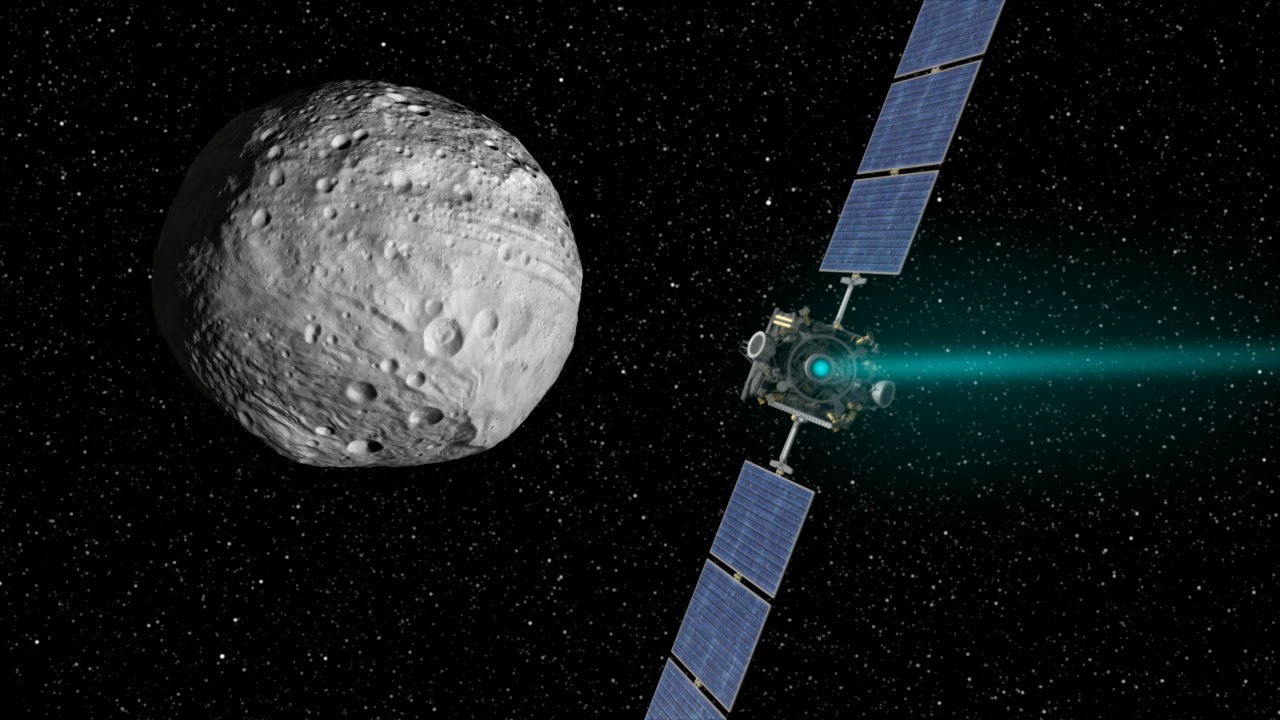
Artist's view of the NASA's Dawn spacecraft approaching Vesta

The Dawn mission to Vesta and Ceres is managed by NASA's Jet Propulsion Laboratory, a division of the California Institute of Technology in Pasadena, for NASA's Science Mission Directorate, Washington D.C. UCLA is responsible for overall Dawn mission science. The Dawn framing cameras were developed and built under the leadership of the Max Planck Institute for Solar System Research, Katlenburg-Lindau, Germany, with significant contributions by DLR German Aerospace Center, Institute of Planetary Research, Berlin, and in coordination with the Institute of Computer and Communication Network Engineering, Braunschweig. The Framing Camera project is funded by the Max Planck Society, DLR, and NASA/JPL.

More information about Dawn is online at http://dawn.jpl.nasa.gov.

Images, Text, Credits: NASA / Georgia Southern University / NASA / JPL-Caltech / UCAL / MPS / DLR / IDA.

Greetings, Orbiter.ch

jeudi 26 septembre 2013

Science Gains From Diverse Landing Area of Curiosity


NASA - Mars Science Laboratory (MSL) patch.

Sept 26, 2013

NASA's Curiosity rover is revealing a great deal about Mars, from long-ago processes in its interior to the current interaction between the Martian surface and atmosphere.

Examination of loose rocks, sand and dust has provided new understanding of the local and global processes on Mars. Analysis of observations and measurements by the rover's science instruments during the first four months after the August 2012 landing are detailed in five reports in the Sept. 27 edition of the journal Science.

A key finding is that water molecules are bound to fine-grained soil particles, accounting for about 2 percent of the particles' weight at Gale Crater where Curiosity landed. This result has global implications, because these materials are likely distributed around the Red Planet.

High-Resolution Self-Portrait by Curiosity Rover Arm Camera

Image above: On Sol 84 (Oct. 31, 2012), NASA's Curiosity rover used the Mars Hand Lens Imager (MAHLI) to capture this set of 55 high-resolution images, which were stitched together to create this full-color self-portrait. Image Credit: NASA/JPL-Caltech/Malin Space Science Systems.

Curiosity also has completed the first comprehensive mineralogical analysis on another planet using a standard laboratory method for identifying minerals on Earth. The findings about both crystalline and non-crystalline components in soil provide clues to the planet's volcanic history.

Information about the evolution of the Martian crust and deeper regions within the planet comes from Curiosity's mineralogical analysis of a football-size igneous rock called "Jake M." Igneous rocks form by cooling molten material that originated well beneath the crust. The chemical compositions of the rocks can be used to infer the thermal, pressure and chemical conditions under which they crystallized.

"No other Martian rock is so similar to terrestrial igneous rocks," said Edward Stolper of the California Institute of Technology, lead author of a report about this analysis. "This is surprising because previously studied igneous rocks from Mars differ substantially from terrestrial rocks and from Jake M."

Target: Jake Matijevic Rock

Image above: This image shows where NASA's Curiosity rover aimed two different instruments to study a rock known as "Jake Matijevic." Image Credit: NASA/JPL-Caltech/MSSS.

The other four reports include analysis of the composition and formation process of a windblown drift of sand and dust, by David Blake of NASA's Ames Research Center at Moffett Field, Calif., and co-authors.

Curiosity examined this drift, called Rocknest, with five instruments, preforming an onboard laboratory analysis of samples scooped up from the Martian surface. The drift has a complex history and includes sand particles with local origins, as well as finer particles that sample windblown Martian dust distributed regionally or even globally.

The rover is equipped with a laser instrument to determine material compositions from some distance away. This instrument found that the fine-particle component in the Rocknest drift matches the composition of windblown dust and contains water molecules. The rover tested 139 soil targets at Rocknest and elsewhere during the mission's first three months and detected hydrogen -- which scientists interpret as water -- every time the laser hit fine-particle material.

"The fine-grain component of the soil has a similar composition to the dust distributed all around Mars, and now we know more about its hydration and composition than ever before," said Pierre-Yves Meslin of the Institut de Recherche en Astrophysique et Planétologie in Toulouse, France, lead author of a report about the laser instrument results.

Scoop Marks in the Sand at 'Rocknest'

Image above: This is a view of the third (left) and fourth (right) trenches made by the 1.6-inch-wide (4-centimeter-wide) scoop on NASA's Mars rover Curiosity in October 2012. Image Credit: NASA/JPL-Caltech/MSSS.

A laboratory inside Curiosity used X-rays to determine the composition of Rocknest samples. This technique, discovered in 1912, is a laboratory standard for mineral identification on Earth. The equipment was miniaturized to fit on the spacecraft that carried Curiosity to Mars, and this has yielded spinoff benefits for similar portable devices used on Earth. David Bish of Indiana University in Bloomington co-authored a report about how this technique was used and its results at Rocknest.

X-ray analysis not only identified 10 distinct minerals, but also found an unexpectedly large portion of the Rocknest composition is amorphous ingredients, rather than crystalline minerals. Amorphous materials, similar to glassy substances, are a component of some volcanic deposits on Earth.

Another laboratory instrument identified chemicals and isotopes in gases released by heating the Rocknest soil in a tiny oven. Isotopes are variants of the same element with different atomic weights. These tests found water makes up about 2 percent of the soil, and the water molecules are bound to the amorphous materials in the soil.

"The ratio of hydrogen isotopes in water released from baked samples of Rocknest soil indicates the water molecules attached to soil particles come from interaction with the modern atmosphere," said Laurie Leshin of Rensselaer Polytechnic Institute in Troy, N.Y., lead author of a report about analysis with the baking instrument.

Baking and analyzing the Rocknest sample also revealed a compound with chlorine and oxygen, likely chlorate or perchlorate, which previously was known to exist on Mars only at one high-latitude site. This finding at Curiosity's equatorial site suggests more global distribution.

Data obtained from Curiosity since the first four months of the rover's mission on Mars are still being analyzed. NASA's Jet Propulsion Laboratory, a division of Caltech in Pasadena, Calif., manages the mission for NASA's Science Mission Directorate in Washington. The mission draws upon international collaboration, including key instrument contributions from Canada, Spain, Russia and France.

For more information about the mission, visit http://www.nasa.gov/msl and http://mars.jpl.nasa.gov/msl .

Images (mentioned), Text, Credits: NASA / Dwayne Brown / JPL / Guy Webster.

Greetings, Orbiter.ch

Several NASA Spacecraft Track Energy Through Space


NASA - Themis Mission patch.


Sept 26, 2013

Scientists have provided the most comprehensive details yet of the journey energy from the sun takes as it hurtles around Earth's magnetosphere. Understanding the changes energy from the sun undergoes as it travels away and out into space is crucial for scientists to achieve their goal of some day predicting the onset of space weather that creates effects such as the shimmering lights of the aurora or interruptions in radio communications at Earth.


Image above: On July 3, 2012, eight spacecraft were lined up on the night side of Earth, enabling scientists to track how magnetic energy from the sun moved around Earth, reconnected at a point about half way to the moon, and then spread through the back end of Earth’s magnetic environment, the magnetotail. Image Credit: NASA/SVS.

Taking advantage of an unprecedented alignment of eight satellites through the vast magnetic environment that surrounds Earth in space, including NASA’s ARTEMIS and THEMIS, scientists now have comprehensive details of the energy’s journey through a process that forms the aurora, called a substorm. Their results, published in the journal Science on Sept. 27, 2013, showed that small events unfolding over the course of a millisecond can result in energy flows that last up to half an hour and cover an area 10 times larger than Earth.

“One of the unique features of our research field is that microscopic things can sometimes run the whole show,” says David Sibeck, the project scientist for ARTEMIS and THEMIS at NASA’s Goddard Space Flight Center in Greenbelt, Md. “The tiniest causes may have global consequences. That’s not typical in terrestrial weather where you don’t have to look at a tiny spot on a weather map to understand a whole hurricane.”

Trying to understand how gigantic explosions on the sun can create space weather effects involves tracking energy from the original event all the way to Earth. It’s not unlike keeping tabs on a character in a play with many costume changes, because the energy changes form frequently along its journey: magnetic energy causes eruptions that lead to kinetic energy as particles hurtle away, or thermal energy as the particles heat up. Near Earth, the energy can change through all these various forms once again.

Most of the large and small features of substorms take place largely in the portion of Earth’s magnetic environment called the magnetotail. Earth sits inside a large magnetic bubble called the magnetosphere. As Earth orbits around the sun, the solar wind from the sun streams past the bubble, stretching it outward into a teardrop. The magnetotail is the long point of the teardrop trailing out to more than 1 million miles on the night side of Earth. The moon orbits Earth much closer, some 240,000 miles away, crossing in and out of the magnetotail.

Tracking how such small events can have large-scale space weather effects requires observatories located throughout the whole system. To help with this endeavor, in July 2011, two of the five THEMIS (Time History of Events and Macroscale Interactions during Substorms) spacecraft moved into place around the moon for a different vantage point on the magnetotail, through which the moon travels once a month. NASA renamed these two spacecraft the ARTEMIS mission for Acceleration, Reconnection, Turbulence and Electrodynamics of the Moon’s Interaction with the Sun. Once per year, all the orbits of the THEMIS and ARTEMIS spacecraft line up in the magnetotail together. On the most recent conjunction, in July 2012, a substorm occurred. During the same period, the joint  Japan Aerospace Exploration Agency/NASA mission Geotail and the National Oceanic and Atmospheric Administration’s GOES 13 and GOES 15 were also in the magnetotail.

Tracking Energy through Space

Video above: This narrated simulation shows how energy moves around on the night side of Earth. Video Credit: NASA/Goddard Space Flight Center.

With eight spacecraft making observations at once, the scientists had a comprehensive view of how the energy in any given region moved around and transformed into other kinds of energy.

“It’s a meticulous accounting job,” says Vassilis Angelopoulos, the principle investigator of ARTEMIS and THEMIS at the University of California in Los Angeles and the first author on the Science paper. “With all these spacecraft measuring what’s going on continuously throughout the system, we can track the total energy and see where and when it’s converted into different kinds of energy. And the effort paid off handsomely!”

Scientists have observed much of the energy’s journey through a substorm before. When the solar wind streams off the sun it can connect with the front of Earth’s magnetosphere. As the two sets of magnetic fields come together, a process called magnetic reconnection turns the energy of the forward-moving solar wind into an explosion that sends particles and magnetic fields moving around the planet to the far side of Earth. Here, the fields reconnect again creating a burst that turns magnetic energy into acceleration of particles and heating. Just where and how this energy converted to particle movement, however, has been unclear.

The details of what happened next required observations from many spacecraft simultaneously. While the magnetic reconnection event itself happened in a specific place somewhere halfway between Earth and moon’s orbit in a region just a couple hundreds of miles across, this is not the main place where the energy was converted. Regions, labeled as “reconnection fronts” in the paper, surged away from the original reconnection point -- one propagated toward Earth and one moved away, past the moon and down the magnetotail. These fronts are like sheets of current, a wall hurtling in each direction, continuing to convert energy for up to 30 minutes afterward. The energy moving in toward Earth helps to create the aurora and it also funnels into the giant donuts of radiation around Earth called the radiation belts.

Artist's view of the NASA’s ARTEMIS and THEMIS spacecrafts. Image Credit: NASA

“The amount of power being converted is comparable to the electric power generation on Earth from all sources at any moment in time. And it happens over 30 minutes,” says Angelopoulos. “The amount of energy released is equivalent to a 7.1 Richter scale earthquake.”

The fact that this energy can move around so dramatically is not in and of itself surprising. Scientists have certainly previously suggested such things based on computer models. But it is only with a fleet of spacecraft that scientists can confirm the location and exact nature of the process, not to mention learning something new such as how continuous and long term the energy conversion process is after the initial magnetic reconnection event.

In late 2014, NASA will add a new mission to their Heliophysics fleet. The Magnetospheric Multiscale or MMS mission will put spacecraft directly in the magnetic reconnection areas on both the day- and night-sides of Earth.

“Understanding where to look for the energy conversion, opens up a new window for research,” says Sibeck. “MMS will be focusing on tracking just this kind of observation.”

Work like this lays the groundwork for a full mapping of the transfer of energy from sun to Earth. Once MMS launches there will be even more opportunities to add observations to the yearly ARTEMIS and THEMIS spacecraft conjunctions along with other space assets in orbit, forming a veritable global space weather station network. These will be able to observe and study the constantly changing solar energy along its journey through Earth’s near space environment, in the upcoming solar maximum. This knowledge is critical for improving future modeling and prediction of space weather fronts as meteorologists do now for weather fronts on Earth.

For more information about NASA’s THEMIS and ARTEMIS visit: http://www.nasa.gov/THEMIS

Images (mentioned), Video (mentioned), Text, Credits: NASA's Goddard Space Flight Center/Karen C. Fox.

Best regards, Orbiter.ch

Neutron Star Undergoes Wild Behavior Changes


NASA - Chandra X-ray Observatory patch.

Sept. 26, 2013


These two images from NASA's Chandra X-ray Observatory show a large change in X-ray brightness of a rapidly rotating neutron star, or pulsar, between 2006 and 2013. The neutron star − the extremely dense remnant left behind by a supernova − is in a tight orbit around a low mass star.  This binary star system, IGR J18245-2452 is a member of the globular cluster M28.

As described (in this blog, link below) in a press release from the European Space Agency, IGR J18245-2452 provides important information about the evolution of pulsars in binary systems. Pulses of radio waves have been observed from the neutron star as it makes a complete rotation every 3.93 milliseconds (an astonishing rate of 254 times every second), identifying it as a "millisecond pulsar."

The widely accepted model for the evolution of these objects is that matter is pulled from the companion star onto the surface of the neutron star via a disk surrounding it. During this so-called accretion phase, the system is described as a low-mass X-ray binary because bright X-ray emission from the disk is observed. Spinning material in the disk falls onto the neutron star, increasing its rotation rate. The transfer of matter eventually slows down and the remaining material is swept away by the whirling magnetic field of the neutron star as a millisecond radio pulsar forms.

The complete evolution of a low-mass X-ray binary into a millisecond pulsar should happen over several billion years, but in the course of this evolution, the system might switch rapidly between these two states.  The source IGR J18245-2452 provides the first direct evidence for such drastic changes in behavior. In observations from July 2002 to May 2013 there are periods when it acts like an X-ray binary and the radio pulses disappear, and there are times when it switches off as an X-ray binary and the radio pulses turn on.

The latest observations with both X-ray and radio telescopes show that the transitions between an X-ray binary and a radio pulsar can take place in both directions and on a time scale that is shorter than expected, maybe only a few days. They also provide powerful evidence for an evolutionary link between X-ray binaries and radio millisecond pulsars.

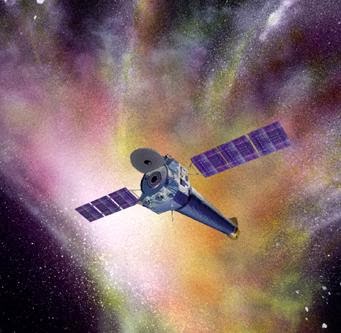
Chandra X-ray Observatory

The X-ray observations contained data from Chandra, ESA's XMM-Newton, the International Gamma-Ray Astrophysics Laboratory (INTEGRAL) and NASA's Swift/XRT and the radio observations used the Australia Telescope Compact Array, the Green Bank Telescope, Parkes radio telescope and the Westerbok Synthesis Radio Telescope.

The observations of IGR J18245-2452 and their implications are described in a paper published in the September 26th, 2013 issue of Nature. The first author is Alessandro Papitto from the Institute of Space Sciences in Barcelona, Spain. The co-authors are C. Ferrigno and E. Bozzo from Universite´ de Gene`ve, Versoix, Switzerland; N. Rea from the Institute of Space Sciences in Barcelona, Spain; L. Pavan from Universite´ de Gene`ve, Versoix, Switzerland; L. Burderi from Universit´a di Cagliari, Monserrato, Italy; M. Burgay from INAF-Osservatorio Astronomico di Cagliari, Capoterra, Italy; S. Campana from INAF-Osservatorio Astronomico di Brera, Lecco, Italy; T. Di Salvo from Universit´a di Palermo, Palermo, Italy; M. Falanga from International Space Science Institute, Bern, Switzerland; M. Filipovi´c from University of Western Sydney, Penrith, Australia; P. Freire from Max-Planck-Institut f´ur Radioastronomie, Bonn, Germany; J. Hessels from Netherlands Institute for Radio Astronomy, Dwingeloo, The Netherlands; A. Possenti from INAF-Osservatorio Astronomico di Cagliari, Capoterra, Italy; S. Ransom from National Radio Astronomy Observatory, Charlottesville, VA; A. Riggio from Universit´a di Cagliari, Monserrato, Italy; P. Romano from INAF-Istituto di Astrosica Spaziale e Fisica Cosmica, Palermo, Italy; J. Sarkissian from CSIRO Astronomy and Space Science, Epping, Australia; I. Stairs from University of British Columbia, Vancouver, Canada; L. Stella from INAF-Osservatorio Astronomico di Roma, Roma, Italy; D. Torres from the Institute of Space Sciences in Barcelona, Spain; M. Wieringa from CSIRO Astronomy and Space Science, Narrabri, Australia and G. Wong from University of Western Sydney, Penrith, Australia.

NASA's Marshall Space Flight Center in Huntsville, Ala., manages the Chandra Program for NASA's Science Mission Directorate in Washington. The Smithsonian Astrophysical Observatory controls Chandra's science and flight operations from Cambridge, Mass.

Related links:

Volatile pulsar reveals millisecond missing link: http://orbiterchspacenews.blogspot.ch/2013/09/volatile-pulsar-reveals-millisecond.html

View large image: http://www.chandra.harvard.edu/photo/2013/igr/

Chandra on Flickr: http://www.flickr.com/photos/nasamarshall/sets/72157606205297786/

Images, Text, Credits: X-ray: NASA / CXC / ICE / A. Papitto et al.

Cheers, Orbiter.ch

New Expedition 37 Crew Arrives at Space Station


ROSCOSMOS - Soyuz TMA-10M Mission patch / ISS - Expedition 37 Mission patch.

Sept 25, 2013

 Soyuz Spacecraft Approaches International Space Station. Image Credit: NASA

New Expedition 37 crew members Oleg Kotov, Mike Hopkins and Sergey Ryazanskiy were welcomed aboard the International Space Station Thursday at 12:34 a.m. EDT. They docked to the Poisk mini-research module Wednesday at 10:45 p.m. EDT aboard a Soyuz TMA-10M spacecraft.

They launched just four orbits earlier at 4:58 p.m. from the Baikonur Cosmodrome, Kazakhstan. After the hatches opened the new residents were greeted by Expedition 37 Commander Fyodor Yurchikhin and Flight Engineers Karen Nyberg and Luca Parmitano.

Expedition 37 Arrives at Station, Docks to Poisk

Video above: The Soyuz TMA-10M spacecraft carrying a new trio of Expedition 37 crew members docked Wednesday at 10:45 p.m.EDT. Video Credit: NASA TV.

Kotov, Hopkins and Ryazanskiy are scheduled for a 5-1/2 month stay in space living and working inside the orbital laboratory. They are due to return home in March 2014 landing in Kazakhstan inside the same Soyuz spacecraft they arrived in.


Image above: The new residents were greeted by Expedition 37 Commander Fyodor Yurchikhin and Flight Engineers Karen Nyberg and Luca Parmitano. Image Credit: NASA TV.

This is Kotov’s third space station mission. He served as a flight engineer for Expedition 15 in 2007. Kotov was also commander in 2010 for Expedition 23. Hopkins and Ryazanskiy are both on their first space mission.

Yurchikhin, Nyberg and Parmitano have been aboard the space station since May 28. They have seen the arrival of two international resupply ships and one commercial cargo craft.


Image above: The International Space Station is seen from a Soyuz TMA-10M camera as it approaches for docking. Image Credit: NASA TV.

Since they began their mission, Yurchikhin has participated in three Russian spacewalks. Parmitano conducted two U.S. spacewalks. Nyberg captured Japan’s Kounotori-4 resupply ship while at the controls of the Canadarm2.

For information on the International Space Station, visit: http://www.nasa.gov/station

To follow Twitter updates from Expedition 37 astronauts, visit:
http://twitter.com/AstroKarenN and http://twitter.com/AstroIllini and http://www.twitter.com/astro_luca

Images (mentioned), Video, Text, Credits: NASA / NASA TV.

Greetings, Orbiter.ch

mercredi 25 septembre 2013

Volatile pulsar reveals millisecond missing link


ESA - Integral Mission patch / ESA - XMM-Newton Mission patch.

25 September 2013

 The radio-bright phase of a pulsar accreting matter from a companion star. Credit: ESA.

For the first time, astronomers have caught a pulsar in a crucial transitional phase that explains the origin of the mysterious millisecond pulsars. These pulsars spin much faster than expected for their old age, and astronomers believe their rotation receives a boost as they accrete matter in a binary system. The newly found pulsar swings back and forth between accretion-powered X-ray emission and rotation-driven radio emission, bringing conclusive evidence for their 'rejuvenation'. The discovery was made possible by the coordinated efforts of ESA's two missions that scan the high-energy sky: INTEGRAL and XMM-Newton.

Pulsars are the highly magnetised, spinning remnants of massive stars and are primarily observed as pulsating sources of radio waves. The radio emission is powered by the rotating magnetic field and focused in two beams stemming from the magnetic poles. As the pulsar rotates, the effect is similar to that of a rotating lighthouse beacon, resulting in distant observers seeing regular pulses of radio waves.

The emission mechanism of pulsars transforms kinetic rotational energy into radiation, and as this energy is radiated over time, the rotation is slowed down. Whilst pulsars spin rapidly at birth, they tend to rotate more slowly – with periods of up to a few seconds – as they age. For this reason, astronomers in the 1980s were puzzled by the discovery of millisecond pulsars – old but extremely quickly rotating pulsars with periods of a few thousandths of a second.


Video above: Animation showing an ordinary pulsar evolving into a millisecond pulsar. Credit: ESA.

The mysterious millisecond pulsars are explained through a theoretical model known as the 'recycling' scenario. If a pulsar is part of a binary system and is accreting matter from a stellar companion via an accretion disc, then it may also gain angular momentum. This process can 'rejuvenate' old pulsars, boosting their rotation and making their periods as short as a few milliseconds.

This scenario relied on the existence of accreting pulsars in binary systems, which can be detected through the X-rays emitted in the accretion process. The discovery of millisecond pulsars in X-ray bright, binary systems in the 1990s brought additional support to this model. But until early 2013, astronomers had not found conclusive evidence of a direct link between X-ray bright millisecond pulsars in binary systems and the radio-emitting millisecond pulsars which they had been investigating since the 1980s.

"With our discovery of a millisecond pulsar that, within only a few weeks, switched from being accretion-powered and X-ray bright to rotation-powered and bright in radio waves, the search is finally over," says Alessandro Papitto from the Institut de Ciències de l'Espai (ICE; IEEC/CSIC) in Barcelona, Spain.

Papitto led the team of astronomers that detected this key source, which is located in the globular cluster M28. Their results are published in Nature.

"With its twofold behaviour, this millisecond pulsar has a similar role to that of the platypus or the echidna in the animal world, which lay eggs but also produce milk to feed their offspring – a living evolutionary link between reptiles and mammals," he adds.

The new discovery is based on a fruitful synergy between ESA's two missions probing the high-energy Universe: INTEGRAL and XMM-Newton.

"We first discovered the pulsar's X-ray outburst with the wide-field IBIS/ISGRI imager on board INTEGRAL, which observes large portions of the sky at once. This makes it the ideal instrument to detect transient sources like this swinging pulsar," explains co-author Enrico Bozzo from the ISDC Data Centre for Astrophysics at the University of Geneva, Switzerland.


Image above: INTEGRAL detection at X-ray wavelengths of the millisecond pulsar IGR J18245-2452 with the IBIS/ISGRI instrument. Credit: ESA / INTEGRAL / IBIS.

"The INTEGRAL data are provided almost in real-time to the scientific community. This is a crucial feature for planning follow-up observations with other facilities: so we looked at our pulsar in greater detail with XMM-Newton," adds Bozzo.

With XMM-Newton's great sensitivity and temporal resolution, the astronomers were able to determine the pulsar's period, which amounts to 3.9 milliseconds. This means that the pulsar spins about its axis more than 250 times every second, clearly identifying it as an X-ray bright millisecond pulsar.

"But it wasn't until we compared the spin period and the orbital parameters of this object to those of other known pulsars belonging to the same globular cluster and listed in astronomical catalogues, that we noticed something peculiar must be going on," says Papitto.

The astronomers realised that the numbers matched perfectly those of another pulsar that was detected a few years ago – but at radio wavelengths, not in X-rays. The only available observations of this pulsar were published in a graduate thesis in 2006.

"Nobody had conducted follow-up observations of that radio pulsar, because it did not seem in any way interesting at the time – it appeared to be just another millisecond radio pulsar," notes Papitto.

"But when we compared it to our pulsar, we realised immediately that this source, which had once been bright in radio waves and was now shining in X-rays, was no ordinary pulsar."

The astronomers kept monitoring it with X-ray telescopes but also started a series of radio observations. They thought that, sooner or later, the pulsar might change behaviour again and switch back to being bright in radio waves.

"What we didn't expect was that this would happen within a few weeks," comments Papitto.

The pulsar, which had been first detected on 28 March 2013, was bright in X-rays for the entire month of April. Then, as its X-ray emission started to decline, radio waves were detected as soon as early May.

An X-ray bright pulsar accreting matter from a companion star. Credit: ESA.

"But it wasn't just good fortune: the synergy between all the observatories involved in this study, and in particular the complementarity of INTEGRAL's large field of view and XMM-Newton's great sensitivity, was crucial for us to detect and correctly identify this object in time."

Not only did these observations prove the evolutionary link between accretion-powered, X-ray bright millisecond pulsars and their rotation-driven, radio-bright counterparts, as predicted by the recycling scenario. The data also showed that during this evolutionary process, which may last several hundreds of millions of years overall, the pulsars go through an intermediate phase that involves swinging back and forth between the two states several times, emitting alternately X-rays and radio waves, until finally becoming purely rotation-powered, radio-emitting millisecond pulsars. The astronomers ran a background check on archival data from NASA's Chandra X-ray Observatory, and found that the same source was also bright in X-ray in 2006, and they expect it will flip back again in the next few years.

This bouncing behaviour is caused by a rhythmical interplay between the pulsar's magnetic field and the pressure of accreted matter. When accretion is more intense, the high density of accreted matter inhibits the acceleration of particles that cause radio emission, so the pulsar is not visible in radio waves but only through the X-rays radiated by the accreted matter. When the accretion rate decreases, the magnetosphere expands and pushes matter away from the pulsar: as a consequence, the X-ray emission becomes weaker and weaker, while the radio emission intensifies.

"The discovery of this transitional pulsar completes a quest that has gone on for a couple of decades," comments Erik Kuulkers, INTEGRAL Project Scientist at ESA.

"In spite of the long time required for this detection, we believe that pulsars in such binary systems are fairly common, so we're looking forward to finding more," concludes Norbert Schartel, XMM-Newton Project Scientist at ESA.

Background information

The results described in this article are reported by A. Papitto and colleagues in the paper "Swings between rotation and accretion power in a binary millisecond pulsar", published in Nature, 501, 517-520, 26 September 2013. The study is based on data from a number of space-borne, high-energy observatories, as well as ground-based radio telescopes.

The source IGR J18245-2452 was first detected as an X-ray transient with the wide-field IBIS/ISGRI imager on board ESA's INTEGRAL mission on 28 March 2013. Subsequent observations with ESA's XMM-Newton and the X-ray Telescope (XRT) on board NASA's Swift mission confirmed that this source is a millisecond pulsar with a period of 3.93185 milliseconds. The X-ray outburst activity is caused by the pulsar as it accretes mass from its companion, a low-mass star with a mass around 0.2 times that of the Sun. This millisecond pulsar is located in the globular cluster M28, at a distance of about 18 000 light-years from Earth.

Comparison with data from other pulsars allowed the astronomers to identify IGR J18245-2452 with another object that had been observed in the past, the rotation-powered, radio-emitting pulsar PSR J1824-2452I. The properties of this pulsar were reported in the graduate thesis of Steve Bégin, completed at the University of British Columbia, Canada, in 2006.

Additional X-ray observations were performed with NASA's Chandra X-ray Observatory in April 2013. Archival data from Chandra of the same field, dating back to 2002, 2006 and 2008, were also available, showing that this pulsar had exhibited variable behaviour in X-rays also in the past.

The pulsar has been also monitored in radio waves using the Australia Telescope Compact Array, the Green Bank Telescope, the Parkes radio telescope, and the Westerbork Synthesis Radio Telescope, from April 2013 onwards. The pulsar became active at radio wavelengths again on 2 May 2013.

The International Gamma-ray Astrophysics Laboratory (INTEGRAL) was launched on 17 October 2002. It is an ESA project with the instruments and a science data centre funded by ESA Member States (especially the Principal Investigator countries: Denmark, France, Germany, Italy, Spain, Switzerland) and Poland, and with the participation of Russia and the USA. The mission is dedicated to the fine spectroscopy (E/∆E = 500) and fine imaging (angular resolution: 12 arcmin FWHM) of celestial gamma-ray sources in the energy range 15 keV to 10 MeV with concurrent source monitoring in the X-ray (4-35 keV) and optical (V-band, 550 nm) energy ranges.

The European Space Agency's X-ray Multi-Mirror Mission, XMM-Newton, was launched in December 1999. It is the biggest scientific satellite to have been built in Europe and uses over 170 wafer-thin cylindrical mirrors spread over three high throughput X-ray telescopes. Its mirrors are among the most powerful ever developed. XMM-Newton's orbit takes it almost a third of the way to the Moon, allowing for long, uninterrupted views of celestial objects.

For more information about ESA Integral Mission, visit: http://sci.esa.int/integral/

For more information about ESA XMM-Newton Mission, visit: http://sci.esa.int/xmm-newton/

Images (mentioned), Video (mentioned), Text, Credits: ESA.

Best regards, Orbiter.ch

New Crew Heads to International Space Station


ROSCOSMOS - Soyuz TMA-10M Mission patch.

Sept 25, 2013

 New Expedition 37 Crew Launches to Space Station

Three new Expedition 37 crew members lifted off from the Baikonur Cosmodrome in Kazakhstan at 4:58 p.m. EDT Wednesday, Sept. 25 (2:58 a.m. Kazakh time, Thursday, Sept. 26) on a six-hour trek to the International Space Station.

New Space Station Crew Launches

Expedition 37 Flight Engineer Michael Hopkins of NASA and Soyuz Commander Oleg Kotov and Flight Engineer Sergey Ryazanskiy of the Russian Federal Space Agency (Roscosmos) are scheduled to dock their Soyuz spacecraft to the orbiting laboratory's Poisk module at 10:48 p.m. EDT. NASA Television will provide live coverage of the rendezvous and docking beginning at 10 p.m.

The crew is scheduled to open the hatches between the Soyuz spacecraft and the space station at about 12:25 a.m. Thursday Sept. 26. Hatch opening coverage begins on NASA TV at midnight.

Hopkins, Kotov and Ryazanskiy will be greeted by three Expedition 37 crew members who have been aboard the space station since late May: Commander Fyodor Yurchikin of Rosmosmos and Flight Engineers Karen Nyberg of NASA and Luca Parmitano of the European Space Agency.


Image above: The Soyuz TMA-10M spacecraft is seen on its launch pad hours before its launch to the International Space Station, Sept. 25, 2013, at the Baikonur Cosmodrome in Kazakhstan.

The new crew will remain aboard the station until mid-March. Yurchikhin, Nyberg and Parmitano will return to Earth Nov. 11.


Image above: Russian cosmonaut Oleg Kotov (center), Expedition 37 flight engineer and Expedition 38 commander; along with NASA astronaut Michael Hopkins (left) and Russian cosmonaut Sergey Ryazanskiy, both Expedition 37/38 flight engineers.

Expedition 37 will add several critical scientific investigations to the more than 1,600 experiments that have taken place so far aboard the space station. Several new investigations will focus on human health and human physiology. The crew will examine the effects of long-term exposure to microgravity on the immune system, provide metabolic profiles of the astronauts and collect data to help scientists understand how the human body changes shape in space. The crew also will conduct 11 investigations from the Student Spaceflight Experiments Program on antibacterial resistance, hydroponics, cellular division, microgravity oxidation, seed germination, photosynthesis and the food making process in microgravity.

For information on the International Space Station, visit: http://www.nasa.gov/station

To follow Twitter updates from Expedition 37 astronauts, visit:
http://twitter.com/AstroKarenN and http://twitter.com/AstroIllini and http://www.twitter.com/astro_luca

For NASA TV streaming video, scheduling and downlink information, visit: http://www.nasa.gov/nasatv

Images, Video, Text, Credits: NASA /Carla Cioffi / ROSCOSMOS / ROSCOSMOS TV.

Greetings, Orbiter.ch