jeudi 5 novembre 2020

CHEOPS telescope avoided collision with space debris


CHEOPS - Characterising Exoplanet Satellite logo.


Nov. 5, 2020

Debris from a faulty Chinese satellite (pleonasm) threatened to pass within a few hundred meters of CHEOPS on October 2. The thrusters of the Swiss telescope had to be ignited in order to avoid at all costs a collision which would have been destructive.

Scientists were informed on September 30 that space debris was on the collision course with CHEOPS, the University of Geneva said in a statement on Thursday. Two days later, debris from the faulty Chinese satellite Fengyun 1C was to pass CHEOPS.

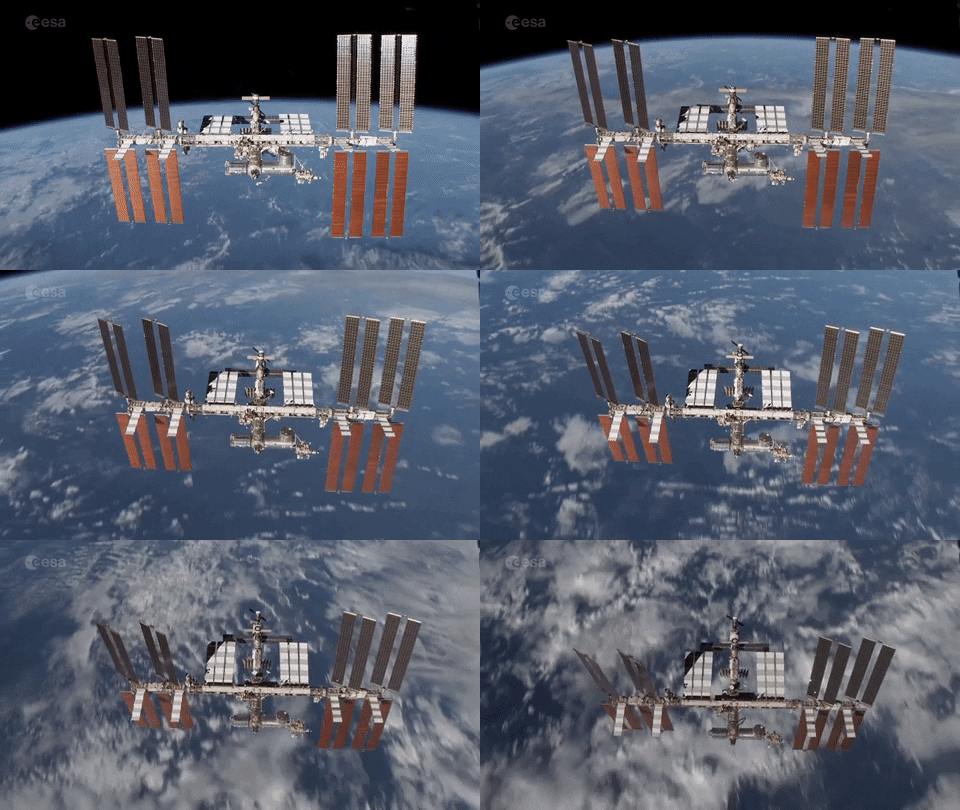
Space debris. Animation Credit: ESA

According to the University of Geneva, such approaches can be extremely dangerous, as objects in Earth orbit move through space at a speed several times that of a rifle bullet. A piece of one centimeter in diameter colliding with another object releases the energy of an exploding hand grenade.

According to calculations, the piece of debris from the Chinese satellite was at a dangerous distance of 500 meters from the CHEOPS telescope. The probability of a collision is then 1: 10,000.

“It may not seem very dramatic at first glance. But at enormous satellite speeds, minimal orbit deviation can have fatal consequences, ”said Christopher Broeg, manager of the CHEOPS mission at the University of Bern quoted in the statement. In the event of a collision, it could have meant the destruction of CHEOPS.

Corrected orbit

"We decided to orbit 56 meters below the previous orbit," explains Christopher Broeg. To correct the trajectory, the instrument had to be stopped on October 1 for safety reasons.

Characterising Exoplanet Satellite or CHEOPS. Image Credit: ESA

On October 2 at 12:52 a.m., the on-board computer turned on the CHEOPS control thrusters for 1.5 seconds and successfully corrected the orbit. The debris finally flew over CHEOPS on October 2 at 1:41 a.m. at a relative speed of 3140 meters per second at a distance of about one kilometer without causing damage.

High tension

When planning the mission, it was assumed that there would be a maximum of three collision warnings per year and effective orbit correction. "For the CHEOPS team, that was the first warning, which is why the tension was high at the start," exclaims Christopher Broeg.

CHEOPS aims to analyze known exoplanets to determine, among other things, whether they meet the conditions for the development of life. This project of the European Space Agency and Switzerland is placed under the responsibility of the University of Bern in collaboration with the University of Geneva.

Related links:

CHEOPS Mission Home Page: https://cheops.unibe.ch/

ESA CHEOPS: https://www.esa.int/Science_Exploration/Space_Science/Cheops

Animation (mentioned), Image (mentioned), Text, Credits: ATS/University of Geneva/Orbiter.ch Aerospace/Roland Berga.

Greetings, Orbiter.ch

mercredi 4 novembre 2020

Space Agriculture and Spacesuit Studies During Spacewalk Preps


ISS - Expedition 64 Mission patch.


November 4, 2020

International Space Station (ISS). Animation Credit: ESA

Space botany and spacesuit studies were back on the research schedule aboard the International Space Station today. Meanwhile, the Expedition 64 crew is staying focused on an upcoming spacewalk while the SpaceX commercial crew begins its quarantine period.

NASA astronaut and Flight Engineer Kate Rubins started her day on a space agriculture study that explores how microbes and fungi can improve soil health and crop production. She serviced samples for the experiment that seeks to improve food production in space and increase crop yields on Earth.


Image above: The Earth’s limb, or horizon, is pictured as the space station orbited above the north Pacific near Alaska’s Aleutian Islands. Image Credit: NASA.

In the afternoon, Rubins moved on to a spacesuit study installing research components in an EXPRESS science rack. The experiment looks at water evaporation as means to cool spacesuits and prevent contamination and corrosion of parts inside the suits.

Two cosmonauts continue gearing up for their mission’s first spacewalk. Commander Sergey Ryzhikov and Flight Engineer Sergey Kud-Sverchkov were gathering and organizing a variety of spacewalk gear today for staging inside the orbiting lab’s Poisk module. They are due to exit Poisk in their Orlan spacesuits on Nov. 18 and spend about six hours during the spacewalk working on maintenance and science tasks.

Image above: Orbiting more than 200 miles above Earth, the planet we call home, the crew aboard the International Space Station snapped this image of the Earth's limb, or horizon, with the Sun's glint beaming off the Pacific Ocean and San Francisco Bay on Nov. 1, 2020. Image Credit: NASA.

Following the spacewalk preps, Ryzhikov worked on a Russian oxygen generator then wrapped up the day with a hearing test. Kud-Sverchkov configured communications gear and cleaned smoke detectors.

Commander Michael Hopkins with Pilot Victor Glover and Mission Specialists Shannon Walker and Soichi Noguchi are in Florida for final training before they launch on Nov. 14 aboard the SpaceX Crew Dragon to the station. The four commercial crew astronauts began their official quarantine period on Saturday which is a routine “flight crew health stabilization” before missions to the orbiting lab.

Related links:

Expedition 64: https://www.nasa.gov/mission_pages/station/expeditions/expedition64/index.html

Space agriculture study: https://www.nasa.gov/mission_pages/station/research/experiments/explorer/Investigation.html?#id=8305

Spacesuit study: https://www.nasa.gov/mission_pages/station/research/experiments/explorer/Investigation.html?#id=7514

EXPRESS science rack: https://www.nasa.gov/mission_pages/station/research/experiments/explorer/Facility.html?#id=598

Poisk module: https://www.nasa.gov/mission_pages/station/structure/elements/poisk-mini-research-module-2

Official quarantine period: https://blogs.nasa.gov/commercialcrew/2020/11/03/astronauts-enter-quarantine-for-upcoming-crew-1-mission/

Space Station Research and Technology: https://www.nasa.gov/mission_pages/station/research/overview.html

International Space Station (ISS): https://www.nasa.gov/mission_pages/station/main/index.html

Animation (mentioned), Images (mentioned), Text, Credits: NASA/Mark Garcia/Yvette Smith.

Best regards, Orbiter.ch

NASA Missions Help Pinpoint the Source of a Unique X-ray, Radio Burst


NASA Goddard Space Flight Center logo.


Nov. 4, 2020

On April 28, a supermagnetized stellar remnant known as a magnetar blasted out a simultaneous mix of X-ray and radio signals never observed before. The flare-up included the first fast radio burst (FRB) ever seen from within our Milky Way galaxy and shows that magnetars can produce these mysterious and powerful radio blasts previously only seen in other galaxies.

NASA Missions Team Up to Study Unique Magnetar Outburst

Video above: On April 28, space- and ground-based observatories detected powerful, simultaneous X-ray and radio bursts from a source in our galaxy. Watch to see how this unique event helps solve the long-standing puzzle of fast radio bursts observed in other galaxies. Video Credits: NASA’s Goddard Space Flight Center.

“Before this event, a wide variety of scenarios could explain the origin of FRBs,” said Chris Bochenek, a doctoral student in astrophysics at Caltech who led one study of the radio event. “While there may still be exciting twists in the story of FRBs in the future, for me, right now, I think it's fair to say that most FRBs come from magnetars until proven otherwise.”

A magnetar is a type of isolated neutron star, the crushed, city-size remains of a star many times more massive than our Sun. What makes a magnetar so special is its intense magnetic field. The field can be 10 trillion times stronger than a refrigerator magnet’s and up to a thousand times stronger than a typical neutron star’s. This represents an enormous storehouse of energy that astronomers suspect powers magnetar outbursts.

The X-ray portion of the synchronous bursts was detected by several satellites, including NASA’s Wind mission.

The radio component was discovered by the Canadian Hydrogen Intensity Mapping Experiment (CHIME), a radio telescope located at Dominion Radio Astrophysical Observatory in British Columbia and led by McGill University in Montreal, the University of British Columbia, and the University of Toronto.

Image above: This aerial view shows the Canadian Hydrogen Intensity Mapping Experiment (CHIME), a radio telescope located at Dominion Radio Astrophysical Observatory in British Columbia. Image Credits: Richard Shaw/UBC/CHIME Collaboration.

A NASA-funded project called Survey for Transient Astronomical Radio Emission 2 (STARE2) also detected the radio burst seen by CHIME. Consisting of a trio of detectors in California and Utah and operated by Caltech and NASA’s Jet Propulsion Laboratory in Southern California, STARE 2 is led by Bochenek, Shri Kulkarni at Caltech, and Konstantin Belov at JPL. They determined the burst’s energy was comparable to FRBs.

By the time these bursts occurred, astronomers had already been monitoring their source for more than half a day.

Late on April 27, NASA’s Neil Gehrels Swift Observatory spotted a new round of activity from a magnetar called SGR 1935+2154 (SGR 1935 for short) located in the constellation Vulpecula. It was the object’s most prolific flare-up yet – a storm of rapid-fire X-ray bursts, each lasting less than a second. The storm, which raged for hours, was picked up at various times by Swift, NASA’s Fermi Gamma-ray Space Telescope, and NASA’s Neutron star Interior Composition Explorer (NICER), an X-ray telescope mounted on the International Space Station.

About 13 hours after the storm subsided, when the magnetar was out of view for Swift, Fermi and NICER, one special X-ray burst erupted. The blast was seen by the European Space Agency’s INTEGRAL mission, the China National Space Administration’s Huiyan X-ray satellite, and the Russian Konus instrument on Wind. As the half-second-long X-ray burst flared, CHIME and STARE2 detected the radio burst, which lasted only a thousandth of a second.

“The radio burst was far brighter than anything we had seen before, so we immediately knew it was an exciting event,” said Paul Scholz, a researcher at the University of Toronto‘s Dunlap Institute for Astronomy & Astrophysics and a member of the CHIME/FRB Collaboration. “We've studied magnetars in our galaxy for decades, while FRBs are an extragalactic phenomenon whose origins have been a mystery. This event shows that the two phenomena are likely connected.”

Papers from both the CHIME/FRB Collaboration and the STARE2 team were published on Nov. 4 in the journal Nature.

SGR 1935’s distance remains poorly established, with estimates ranging from 14,000 to 41,000 light-years. Assuming it lies at the nearer end of this range, the X-ray portion of the simultaneous bursts carried as much energy as our Sun produces over a month. Intriguingly, however, it was not as powerful as some of the flares in the magnetar’s storm eruption.

Image above: STARE2 is an array of three radio detectors located in California and Utah. This image shows the one located at the Goldstone Deep Space Communications Complex in California’s Mojave Desert. Image Credits: NASA/JPL-Caltech.

“The bursts seen by NICER and Fermi during the storm are clearly different in their spectral characteristics from the one associated with the radio blast,” said George Younes, a researcher at George Washington University in Washington and the lead author of two papers analyzing the burst storm that are now undergoing peer review. “We attribute this difference to the location of the X-ray flare on the star’s surface, with the FRB-associated burst likely occurring at or close to the magnetic pole. This may be key to understanding the origin of the exceptional radio signal.”

SGR 1935’s radio burst was thousands of times brighter than any radio emissions from magnetars in our galaxy. If this event had occurred in another galaxy, it would have been indistinguishable from some of the weaker FRBs observed.

In addition, the radio pulse arrived during an X-ray burst, something that has never before been seen in association with FRBs. Taken together, the observations strongly suggest that SGR 1935 produced the Milky Way’s equivalent of an FRB, which means magnetars in other galaxies likely produce at least some of these signals.

For ironclad proof of the magnetar connection, researchers ideally would like to find an FRB outside of our galaxy that coincides with an X-ray burst from the same source. This combination may only be possible for nearby galaxies, which is why CHIME, STARE2 and NASA’s high-energy satellites will keep watching the skies.

Related links:

NASA’s Wind mission: https://wind.nasa.gov/

Canadian Hydrogen Intensity Mapping Experiment (CHIME): https://chime-experiment.ca/

NASA’s Neil Gehrels Swift Observatory: https://www.nasa.gov/mission_pages/swift/main

NASA’s Fermi Gamma-ray Space Telescope: https://www.nasa.gov/content/fermi-gamma-ray-space-telescope

NASA’s Neutron star Interior Composition Explorer (NICER): https://www.nasa.gov/nicer

ESA's INTEGRAL mission: https://www.cosmos.esa.int/web/integral

Dunlap Institute for Astronomy & Astrophysics: https://www.dunlap.utoronto.ca/

CHIME/FRB Collaboration: https://www.nature.com/articles/s41586-020-2863-y

STARE2 team: https://www.nature.com/articles/s41586-020-2872-x

NASA's Goddard Space Flight Center (GSFC): https://www.nasa.gov/centers/goddard/home/index.html

Images (mentioned), Video (mentioned), Text, Credits: NASA’s Goddard Space Flight Center, Claire Andreoli/By Francis Reddy.

Greetings, Orbiter.ch

Hubble Finds ‘Greater Pumpkin’ Galaxy Pair


NASA - Hubble Space Telescope patch.


Nov. 4, 2020

Sorry Charlie Brown, NASA's Hubble Space Telescope is taking a peek at what might best be described as the "Greater Pumpkin," that looks like a Halloween decoration tucked away in a patch of sky cluttered with stars. What looks like two glowing eyes and a crooked carved smile is a snapshot of the early stages of a collision between two galaxies. The entire view is nearly 109,000 light-years across, approximately the diameter of our Milky Way.

The overall pumpkin-ish color corresponds to the glow of aging red stars in two galaxies, cataloged as NGC  2292 and NGC  2293, which only have a hint of spiral structure. Yet the smile is bluish due to newborn star clusters, spread out like pearls on a necklace, along a newly forming dusty arm. The glowing eyes are concentrations of stars around a pair of supermassive black holes. The scattering of blue foreground stars makes the "pumpkin" look like it got all glittery for a Halloween party.

What's going on in this pumpkin-like pair?


Image above: This is a Hubble Space Telescope snapshot of the early stages of a collision between two galaxies that resembles a Halloween carved pumpkin. The "pumpkin's" glowing “eyes” are the bright, star-filled cores of each galaxy that contain supermassive black holes. An arm of newly forming stars give the imaginary pumpkin a wry smirk. The two galaxies, cataloged as NGC  2292 and NGC  2293, are located about 120 million light-years away in the constellation Canis Major. Image Credits: NASA, ESA, and W. Keel (University of Alabama).

If you mix two fried eggs together, you get something resembling scrambled eggs. The same goes for galaxy collisions throughout the universe. They lose their flattened spiral disk and the stars are scrambled into a football-shaped volume of space, forming an elliptical galaxy. But this interacting pair is a very rare example of what may turn out to result in a bigger fried egg—the construction of a giant spiral galaxy. It may depend on the specific trajectory the colliding galaxy pair is following. The encounter scenario must be rare because there's only a handful of other examples in the universe, say astronomers.

The ghostly arm making the "smile" may be just the beginning of the process of rebuilding a spiral galaxy, say researchers. The arm embraces both galaxies. It most likely formed when interstellar gas was compressed as the two galaxies began to merge. The higher density precipitates new star formation.

The dynamic duo hides out 120 million light-years away in the constellation Canis Major, so it is seen far behind the star-filled foreground plane of our Milky Way galaxy. Therefore, it's a difficult area to pinpoint far-flung distant background galaxies from the plethora of stars seen in the field.

Hubble Spots Giant Space ‘Pumpkin’

Video above: Halloween is scarier with Hubble! What looks like two glowing eyes and a crooked carved smile is a snapshot of the early stages of a collision between two galaxies. This new image is just one of several spooky views Hubble has captured in the universe. Video Credits: NASA's Goddard Space Flight Center.

The galaxy pair was similar to objects tagged by the citizen-science project Galaxy Zoo, where volunteers go hunting for oddball-looking galaxies. Astronomer William Keel, of the University of Alabama in Tuscaloosa, included several of these in the "Gems of the Galaxy Zoos" Hubble program, which is observing several kinds of rare galaxies during short gaps between other scheduled Hubble observations. The Hubble image brought out new details of the close encounter.

Hubble Space Telescope (HST). Animation Credits: NASA/ESA

Keel speculates that the ultimate destiny for this pair will be to merge into a giant luminous spiral galaxy like UGC 2885, Rubin's Galaxy, which is over twice the diameter of our Milky Way. Hubble has caught a snapshot of the groundbreaking early stages of a galactic makeover.

The Hubble Space Telescope is a project of international cooperation between NASA and ESA (European Space Agency). NASA's Goddard Space Flight Center in Greenbelt, Maryland, manages the telescope. The Space Telescope Science Institute (STScI) in Baltimore, Maryland, conducts Hubble science operations. STScI is operated for NASA by the Association of Universities for Research in Astronomy in Washington, D.C.

Hubble Space Telescope (HST): https://www.nasa.gov/mission_pages/hubble/main/index.html

Image (mentioned), Animation (mentioned), Video (mentioned), Text, Credits: NASA/Lynn Jenner/pace Telescope Science Institute/Ray Villard/University of Alabama/William Keel.

Best regards, Orbiter.ch

New Evidence Our Neighborhood in Space Is Stuffed With Hydrogen


NASA - New Horizons Mission patch.


Nov. 4, 2020

Only the two Voyager spacecraft have ever been there, and it took than more than 30 years of supersonic travel. It lies well past the orbit of Pluto, through the rocky Kuiper belt, and on for four times that distance. This realm, marked only by an invisible magnetic boundary, is where Sun-dominated space ends: the closest reaches of interstellar space.


Image above: New Horizons probe on interstellar space. Image Credit: NASA.

In this stellar no-man’s land, particles and light shed by our galaxy’s 100 billion stars jostle with ancient remnants of the big bang. This mixture, the stuff between the stars, is known as the interstellar medium. Its contents record our solar system’s distant past and may foretell hints of its future.

Measurements from NASA’s New Horizons spacecraft are revising our estimates of one key property of the interstellar medium: how thick it is. Findings published today in the Astrophysical Journal share new observations that the local interstellar medium contains approximately 40% more hydrogen atoms than some prior studies suggested. The results unify a number of otherwise disparate measurements and shed new light on our neighborhood in space.

Slogging through interstellar fog

Just as Earth moves around the Sun, so our entire solar system hurtles through the Milky Way, at speeds exceeding 50,000 miles per hour. As we cruise through a fog of interstellar particles, we’re shielded by the magnetic bubble around our Sun known as the heliosphere. Many interstellar gases flow around this bubble, but not all.

Our heliosphere repels charged particles, which are guided by magnetic fields. But more than half of local interstellar gases are neutral, meaning they have a balanced number of protons and electrons. As we plow into them the interstellar neutrals seep right through, adding bulk to the solar wind.

“It's like you're running through a heavy mist, picking up water,” said Eric Christian, space physicist at NASA’s Goddard Space Flight Center in Greenbelt, MD. “As you run, you’re getting your clothes all soggy and it’s slowing you down.”

Animation above: An animation of the heliosphere. Animation Credits: NASA's Goddard Space Flight Center/Conceptual Image Lab/Walt Feimer.

Soon after those interstellar atoms drift into our heliosphere, they are zapped by sunlight and slammed by solar wind particles. Many lose their electrons in the tumult, becoming positively-charged “pickup ions.” This new population of particles, though changed, carry with them secrets of the fog beyond.

“We don’t have direct observations of interstellar atoms from New Horizons, but we can observe these pickup ions,” said Pawel Swaczyna, postdoctoral researcher at Princeton University and lead author of the study. “They are stripped of an electron, but we know they came to us as neutrals atoms from outside the heliosphere.”

NASA’s New Horizons spacecraft, launched in January 2006, is the one best suited to measure them. Now five years past its rendezvous with Pluto, where it captured the first up-close images of the dwarf planet, today it ventures through the Kuiper belt at the edge of our solar system where pickup ions are the freshest. The spacecraft’s Solar Wind Around Pluto, or SWAP instrument, can detect these pickup ions, distinguishing them from the normal solar wind by their much higher energy.


Image above: Enhanced color global view of Pluto, taken when NASA’s New Horizons spacecraft was 280,000 miles (450,000 kilometers) away. Image Credits: NASA/JHUAPL/SwRI.

The amount of pickup ions New Horizons detects reveals the thickness of the fog we’re passing through. Just as a jogger gets wetter running through thicker fog, the more pickup ions New Horizons observes, the denser the interstellar fog must be outside.

Diverging measurements

Swaczyna used SWAP’s measurements to derive the density of neutral hydrogen at the termination shock, where the solar wind butts up against the interstellar medium and abruptly slows down. After months of careful checks and tests, the number they found was 0.127 particles per cubic centimeter, or about 120 hydrogen atoms in a space the size of a quart of milk.

This result confirmed a 2001 study which used Voyager 2 – about 4 billion miles away – to measure how much the solar wind had slowed by the time it arrived at the spacecraft. The slowdown, largely due to intervening interstellar medium particles, suggested a matching interstellar hydrogen density, about 120 hydrogen atoms in a quart-sized space.

But newer studies converged around a different number. Scientists using data from NASA’s Ulysses mission, from a distance slightly closer to the Sun than Jupiter, measured pickup ions and estimated a density of about 85 hydrogen atoms in a quart of space. A few years later, a different study combining Ulysses and Voyager data found a similar result.

“You know, if you discover that something different than previous work, the natural tendency is to start looking for your errors,” said Swaczyna.

But after a little digging, the new number began to look like the right one. The New Horizons measurements fit better with observations based on faraway stars. The Ulysses measurements, on the other hand, had a shortcoming: they were made much closer to the Sun, where pickup ions are rarer and measurements more uncertain.

“The inner heliosphere pickup ions observations go through billions of miles of filtering,” Christian said. “Being most of the way out there, where New Horizons is, makes a huge difference.”

As for the combined Ulysses/Voyager results, Swaczyna noticed that one of the numbers in the calculation was outdated, 35% lower than the current consensus value. Recalculating with the currently accepted value gave them an approximate match with the New Horizons measurements and the 2001 study.

“This confirmation of our old, almost forgotten result comes as a surprise,” said Arik Posner, author of the 2001 study at NASA Headquarters in Washington, D.C. “We thought our rather simple methodology for measuring the slowdown of the solar wind had been overcome by more sophisticated studies conducted since, but not so.”

A new lay of the land

Going from 85 atoms in a quart of milk to 120 may not seem like much. Yet in a model-based science like heliophysics, a tweak to one number affects every other.

The new estimate may help explain one of the biggest mysteries in heliophysics of the last few years. Not long after NASA’s Interstellar Boundary Explorer or IBEX mission returned its first complete dataset, scientists noticed a strange stripe of energetic particles coming from the forward edge of our heliosphere. They called it the “IBEX ribbon.”

“The IBEX ribbon was a big surprise – this structure at the edge of our solar system a billion miles wide, 10 billion miles long, that no one knew was there,” Christian said. “But even as we developed the models for why it was there, all of the models were showing that it shouldn't be as bright as it is.”


Image above: The ribbon remains one of IBEX’s biggest discoveries. It refers to a vast, diagonal swath of energetic neutrals, painted across the front of the heliosphere. Image Credits: NASA/IBEX.

“The 40% higher interstellar density observed in this study is absolutely critical” said David McComas, professor of astrophysical sciences at Princeton University, principal investigator for NASA’s IBEX mission and coauthor of the study. “Not only does this show that our Sun is embedded in a much denser part of interstellar space, it also may explain a significant error in our simulation results compared to the actual observations from IBEX.”

Most of all, though, the result gives an improved picture of our local stellar neighborhood.

“It’s the first time we’ve had instruments observe pickup ions this far away, and our picture of the local interstellar medium is matching those from other astronomical observations,” said Swaczyna. “It’s a good sign.”

Related:

Uncovering Our Solar System’s Shape: https://www.nasa.gov/feature/goddard/2020/uncovering-our-solar-system-s-shape

NASA’s IBEX Charts 11 Years of Change at Boundary to Interstellar Space​: https://www.nasa.gov/feature/goddard/2020/nasa-ibex-charts-11-years-change-at-boundary-interstellar-space-heliosphere-sun

IBEX (Interstellar Boundary Explorer): http://www.nasa.gov/mission_pages/ibex/index.html

New Horizons: http://www.nasa.gov/mission_pages/newhorizons/main/index.html

Images (mentioned), Animation (mentioned), Text, Credits: NASA/GSFC/By Miles Hatfield.

Greetings, Orbiter.ch

A transportable antiproton trap to unlock the secrets of antimatter


CERN - European Organization for Nuclear Research logo.


Nov. 4, 2020

The BASE collaboration is developing a transportable antiproton trap to make higher-precision measurements of the properties of antimatter


Image above: The layout of the transportable antiproton trap that BASE is developing. The device features a first trap for injection and ejection of the antiprotons produced at CERN’s Antiproton Decelerator, and a second trap for storing the antiprotons. (Image: Christian Smorra).

The BASE collaboration at CERN has bagged more than one first in antimatter research. For example, it made the first ever more precise measurement for antimatter than for matter, it kept antimatter stored for a record time of more than a year, and it conducted the first laboratory-based search for an interaction between antimatter and a candidate particle for dark matter called the axion. Now, the BASE team is developing a device that could take antimatter research to new heights – a transportable antiproton trap to carry antimatter produced at CERN’s Antimatter Decelerator (AD) to another facility at CERN or elsewhere, for higher-precision antimatter measurements. These measurements could uncover differences between matter and antimatter.

The Big Bang should have created equal amounts of matter and antimatter, yet the present-day universe is made almost entirely of matter, so something must have happened to create the imbalance. The Standard Model of particle physics predicts a certain difference between matter and antimatter, but this difference is insufficient to explain the imbalance, prompting researchers to look for other, as-yet-unseen differences between the two forms of matter. This is exactly what the teams behind BASE and other experiments located at CERN’s AD hall are trying to do.

BASE, in particular, investigates the properties of antiprotons, the antiparticles of protons. It first takes antiprotons produced at the AD – the only place in the world where antiprotons are created daily– and then stores them in a device called a Penning trap, which holds the particles in place with a combination of electric and magnetic fields. Next, BASE feeds the antiprotons one by one into a multi-Penning-trap set-up to measure two frequencies, from which the properties of antiprotons such as their magnetic moment can be deduced and then compared with that of protons. These frequencies are the cyclotron frequency, which describes a charged particle’s oscillation in a magnetic field, and the Larmor frequency, which describes the so-called precessional motion in the trap of the intrinsic spin of the particle.

The BASE team has been making ever more precise measurements of these frequencies, but the precision is ultimately limited by external disturbances to the set-up’s magnetic field. “The AD hall is not the calmest of the magnetic environments,” says BASE spokesperson Stefan Ulmer. “To get an idea, my office at CERN is 200 times calmer than the AD hall” he says, smiling.

Hence the BASE team’s proposal of making a transportable antiproton trap to take antiprotons produced at the AD to a measurement laboratory with a calmer magnetic environment. The device, called BASE-STEP and led by BASE deputy spokesperson Christian Smorra, will consist of a Penning-trap system inside the bore of a superconducting magnet that can withstand transport-related forces. In addition, it will have a liquid-helium cooling system, which allows it to be transported for several hours without the need of electrical power to keep it cool. The Penning-trap system will feature a first trap to receive and release the antiprotons produced at the AD, and a second trap to store the antiprotons.

The overall device will be 1.9 metres long, 0.8 metres wide, 1.6 metres high and at most 1000 kg in weight. “These compact dimensions and weight mean that we could in principle load the trap into a small truck or van and transport it from the AD hall to another facility located at CERN or elsewhere, to further our understanding of antimatter,” says Smorra, who received a European Research Council Starting Grant to conduct the project.

The BASE team has started to develop the device’s first components and expects to complete it in 2022, pending decisions and approvals. Stay tuned for more developments.

Read more about BASE-STEP in this Experimental Physics newsletter article: https://ep-news.web.cern.ch/node/3200

See also this story on making antimatter transportable for nuclear-physics research: https://home.cern/news/news/physics/making-antimatter-transportable

Note:

CERN, the European Organization for Nuclear Research, is one of the world’s largest and most respected centres for scientific research. Its business is fundamental physics, finding out what the Universe is made of and how it works. At CERN, the world’s largest and most complex scientific instruments are used to study the basic constituents of matter — the fundamental particles. By studying what happens when these particles collide, physicists learn about the laws of Nature.

The instruments used at CERN are particle accelerators and detectors. Accelerators boost beams of particles to high energies before they are made to collide with each other or with stationary targets. Detectors observe and record the results of these collisions.

Founded in 1954, the CERN Laboratory sits astride the Franco–Swiss border near Geneva. It was one of Europe’s first joint ventures and now has 23 Member States.

Related links:

Antimatter Decelerator (AD): https://home.cern/science/accelerators/antiproton-decelerator

Standard Model: https://home.cern/science/physics/standard-model

Antimatter: https://home.cern/science/physics/antimatter

Dark matter: https://home.cern/science/physics/dark-matter

For more information about European Organization for Nuclear Research (CERN), Visit: https://home.cern/

Image (mentioned), Text, Credits: CERN/By Ana Lopes.

Best regards, Orbiter.ch

About Half of Sun-Like Stars Could Host Rocky, Potentially Habitable Planets


NASA - Kepler Space Telescope or K2 Mission logo.


Nov. 4, 2020

Since astronomers confirmed the presence of planets beyond our solar system, called exoplanets, humanity has wondered how many could harbor life. Now, we’re one step closer to finding an answer. According to new research using data from NASA’s retired planet-hunting mission, the Kepler space telescope, about half the stars similar in temperature to our Sun could have a rocky planet capable of supporting liquid water on its surface.


Image above: This illustration depicts Kepler-186f, the first validated Earth-size planet to orbit a distant star in the habitable zone. Image Credits: NASA Ames/JPL-Caltech/T. Pyle.

Our galaxy holds at least an estimated 300 million of these potentially habitable worlds, based on even the most conservative interpretation of the results in a study released today and to be published in The Astronomical Journal. Some of these exoplanets could even be our interstellar neighbors, with at least four potentially within 30 light-years of our Sun and the closest likely to be at most about 20 light-years from us. These are the minimum numbers of such planets based on the most conservative estimate that 7% of Sun-like stars host such worlds. However, at the average expected rate of 50%, there could be many more.

This research helps us understand the potential for these planets to have the elements to support life. This is an essential part of astrobiology, the study of life’s origins and future in our universe.

The study is authored by NASA scientists who worked on the Kepler mission alongside collaborators from around the world. NASA retired the space telescope in 2018 after it ran out of fuel. Nine years of the telescope’s observations revealed that there are billions of planets in our galaxy – more planets than stars.

"Kepler already told us there were billions of planets, but now we know a good chunk of those planets might be rocky and habitable," said the lead author Steve Bryson, a researcher at NASA's Ames Research Center in California's Silicon Valley. "Though this result is far from a final value, and water on a planet's surface is only one of many factors to support life, it's extremely exciting that we calculated these worlds are this common with such high confidence and precision."

For the purposes of calculating this occurrence rate, the team looked at exoplanets between a radius of 0.5 and 1.5 times that of Earth's, narrowing in on planets that are most likely rocky. They also focused on stars similar to our Sun in age and temperature, plus or minus up to 1,500 degrees Fahrenheit.

That's a wide range of different stars, each with its own particular properties impacting whether the rocky planets in its orbit are capable of supporting liquid water. These complexities are partly why it is so difficult to calculate how many potentially habitable planets are out there, especially when even our most powerful telescopes can just barely detect these small planets. That's why the research team took a new approach.

Rethinking How to Identify Habitability

This new finding is a significant step forward in Kepler's original mission to understand how many potentially habitable worlds exist in our galaxy. Previous estimates of the frequency, also known as the occurrence rate, of such planets ignored the relationship between the star's temperature and the kinds of light given off by the star and absorbed by the planet.

The new analysis accounts for these relationships, and provides a more complete understanding of whether or not a given planet might be capable of supporting liquid water, and potentially life. That approach is made possible by combining Kepler's final dataset of planetary signals with data about each star's energy output from an extensive trove of data from the European Space Agency's Gaia mission.

"We always knew defining habitability simply in terms of a planet's physical distance from a star, so that it's not too hot or cold, left us making a lot of assumptions," said Ravi Kopparapu, an author on the paper and a scientist at NASA's Goddard Space Flight Center in Greenbelt, Maryland. "Gaia's data on stars allowed us to look at these planets and their stars in an entirely new way."


Animation above: This illustration depicts one possible appearance of the planet Kepler-452b, the first near-Earth-size world to be found in the habitable zone of a star similar to our Sun. Animation Credits: NASA Ames/JPL-Caltech/T. Pyle.

Gaia provided information about the amount of energy that falls on a planet from its host star based on a star's flux, or the total amount of energy that is emitted in a certain area over a certain time. This allowed the researchers to approach their analysis in a way that acknowledged the diversity of the stars and solar systems in our galaxy.

"Not every star is alike," said Kopparapu. "And neither is every planet."

Though the exact effect is still being researched, a planet's atmosphere figures into how much light is needed to allow liquid water on a planet's surface as well. Using a conservative estimate of the atmosphere's effect, the researchers estimated an occurrence rate of about 50% — that is, about half of Sun-like stars have rocky planets capable of hosting liquid water on their surfaces. An alternative optimistic definition of the habitable zone estimates about 75%.

Kepler's Legacy Charts Future Research

This result builds upon a long legacy of work of analyzing Kepler data to obtain an occurrence rate and sets the stage for future exoplanet observations informed by how common we now expect these rocky, potentially habitable worlds to be. Future research will continue to refine the rate, informing the likelihood of finding these kinds of planets and feeding into plans for the next stages of exoplanet research, including future telescopes.

"Knowing how common different kinds of planets are is extremely valuable for the design of upcoming exoplanet-finding missions," said co-author Michelle Kunimoto, who worked on this paper after finishing her doctorate on exoplanet occurrence rates at the University of British Columbia, and recently joined the Transiting Exoplanet Survey Satellite, or TESS, team at the Massachusetts Institute of Technology in Cambridge, Massachusetts. "Surveys aimed at small, potentially habitable planets around Sun-like stars will depend on results like these to maximize their chance of success.


Image above: An illustration representing the legacy of NASA's Kepler space telescope. After nine years in deep space collecting data that revealed our night sky to be filled with billions of hidden planets – more planets even than stars – NASA’s Kepler space telescope ran out of fuel needed for further science operations in 2018. Image Credits: NASA/Ames Research Center/W. Stenzel/D. Rutter.

After revealing more than 2,800 confirmed planets outside our solar system, the data collected by the Kepler space telescope continues to yield important new discoveries about our place in the universe. Though Kepler's field of view covered only 0.25% of the sky, the area that would be covered by your hand if you held it up at arm's length towards the sky, its data has allowed scientists to extrapolate what the mission's data means for the rest of the galaxy. That work continues with TESS, NASA's current planet hunting telescope.

"To me, this result is an example of how much we've been able to discover just with that small glimpse beyond our solar system," said Bryson. "What we see is that our galaxy is a fascinating one, with fascinating worlds, and some that may not be too different from our own."

Editor's note:

This story was updated on Nov. 2 to provide clarity regarding the statistics used to estimate the number of potentially habitable worlds in our galaxy based on these results.

Related links:

The Astronomical Journal: https://arxiv.org/abs/2010.14812

Kepler and K2: https://www.nasa.gov/mission_pages/kepler/main/index.html

Images (mentioned), Animation (mentioned), Text, Credits: NASA/Frank Tavares.

Greetings, Orbiter.ch