mercredi 17 juillet 2013

Curiosity Mars Rover Passes Kilometer of Driving


NASA - Mars Science Laboratory (MSL) patch.

July 17, 2013


Image above: NASA's Curiosity Mars rover captured this image with its left front Hazard-Avoidance Camera (Hazcam) just after completing a drive that took the mission's total driving distance past the 1 kilometer (0.62 mile) mark. Image credit: NASA/JPL-Caltech.

The latest drive by NASA's Curiosity Mars rover brought the total distance that the rover has driven on Mars to more than 1 kilometer. One kilometer is about 0.62 mile.

The drive covered about 38 meters (125 feet) and brought the mission's odometry to about 1.029 kilometers (3,376 feet). The drive was completed in the early afternoon of the rover's 335th Martian day, or sol, of work on Mars (July 17). It continued progress in a multi-month trek begun this month toward a mountain destination.

"When I saw that the drive had gone well and passed the kilometer mark, I was really pleased and proud," said rover driver Frank Hartman of NASA's Jet Propulsion Laboratory, Pasadena, Calif. "Hopefully, this is just the first of many kilometers to come."

Yesterday was is halfway through the mission's prime mission of one Martian year. Two weeks ago, Curiosity finished investigating science targets in the Glenelg area, about half a kilometer (500 yards) east of where the one-ton rover landed on Aug. 5, 2012, PDT (Aug. 6, Universal Time). The mission's next major destination is at the lower layers of Mount Sharp, about 8 kilometers (5 miles) southwest of Glenelg.

NASA's Curiosity Mars rover or Mars Science Laboratory (MSL). Image credit: NASA/JPL-Caltech

Mount Sharp, in the middle of Gale Crater, exposes many layers where scientists anticipate finding evidence about how the ancient Martian environment changed and evolved. At targets in the Glenelg area, the rover already accomplished the mission's main science objective by finding evidence for an ancient wet environment that had conditions favorable for microbial life.

JPL, a division of the California Institute of Technology, Pasadena, manages the Mars Science Laboratory Project for NASA's Science Mission Directorate, Washington. JPL designed and built the project's Curiosity rover.

More information about Curiosity is online at http://www.nasa.gov/msl and http://mars.jpl.nasa.gov/msl/ . You can follow the mission on Facebook at http://www.facebook.com/marscuriosity and on Twitter at http://www.twitter.com/marscuriosity .

Images (mentioned), Text, Credits: NASA / JPL / Guy Webster.

Cheers, Orbiter.ch

Ripped Apart by a Black Hole


ESO - European Southern Observatory logo.

17 July 2013

 Images of gas cloud being ripped apart by the black hole at the centre of the Milky Way

VLT watches in real time as gas cloud makes closest approach to the monster at the centre of the Milky Way

New observations from ESO’s Very Large Telescope show for the first time a gas cloud being ripped apart by the supermassive black hole at the centre of the galaxy. The cloud is now so stretched that its front part has passed the closest point and is travelling away from the black hole at more than 10 million km/h, whilst the tail is still falling towards it.

Simulation of gas cloud being ripped apart by the black hole at the centre of the Milky Way

In 2011 ESO's Very Large Telescope (VLT) discovered a gas cloud with several times the mass of the Earth accelerating towards the black hole at the centre of the Milky Way (eso1151) [1]. This cloud is now making its closest approach and new VLT observations show that it is being grossly stretched by the black hole’s extreme gravitational field.

Gas cloud being ripped apart by the black hole at the centre of the Milky Way

"The gas at the head of the cloud is now stretched over more than 160 billion kilometres around the closest point of the orbit to the black hole. And the closest approach is only a bit more than 25 billion kilometres from the black hole itself — barely escaping falling right in," explains Stefan Gillessen (Max Planck Institute for Extraterrestrial Physics, Garching, Germany) who led the observing team [2]. "The cloud is so stretched that the close approach is not a single event but rather a process that extends over a period of at least one year."

As the gas cloud is stretched its light gets harder to see. But by staring at the region close to the black hole for more than 20 hours of total exposure time with the SINFONI instrument on the VLT — the deepest exposure of this region ever with an integral field spectrometer [3] — the team was able to measure the velocities of different parts of the cloud as it streaks past the central black hole [4].

Gas cloud being ripped apart by the black hole at the centre of the Milky Way (annotated)

"The most exciting thing we now see in the new observations is the head of the cloud coming back towards us at more than 10 million km/h along the orbit — about 1% of the speed of light," adds Reinhard Genzel, leader of the research group that has been studied this region for nearly twenty years. "This means that the front end of the cloud has already made its closest approach to the black hole."

Images of gas cloud being ripped apart by the black hole at the centre of the galaxy (click for enlarge)

The origin of the gas cloud remains mysterious, although there is no shortage of ideas [5]. The new observations narrow down the possibilities.

Simulation of gas cloud being ripped apart by the black hole at the centre of the Milky Way

"Like an unfortunate astronaut in a science fiction film, we see that the cloud is now being stretched so much that it resembles spaghetti. This means that it probably doesn’t have a star in it," concludes Gillessen. "At the moment we think that the gas probably came from the stars we see orbiting the black hole."

Gas cloud being ripped apart by the black hole at the centre of the Milky Way

The climax of this unique event at the centre of the galaxy is now unfolding and being closely watched by astronomers around the world. This intense observing campaign will provide a wealth of data, not only revealing more about the gas cloud [6], but also probing the regions close to the black hole that have not been previously studied and the effects of super-strong gravity.

Gas cloud falling in towards the black hole at the centre of the Milky Way

Notes:
[1] The black hole at the centre of the Milky Way is estimated to have a mass of about four million times that of the Sun and is formally known as Sgr A* (pronounced Sagittarius A star). It is the closest supermassive black hole known by far and hence is the best place to study black holes in detail. The study of the supermassive black hole at the centre of the galaxy and its environment is rated number one in the list of ESO's top ten astronomical discoveries.

[2] The distance of closest approach is about five times the distance of the planet Neptune from the Sun. This is much too close for comfort to a black hole with a mass four million times that of the Sun!

[3] In an integral field spectrometer the light recorded in each pixel is separately spread out into its component colours and so spectra are recorded for each pixel. The spectra can then be analysed individually and used to create maps of the velocities and the chemical properties of each part of the object, for example.

[4] The team is also hoping to see evidence of how the rapidly moving cloud interacts with any ambient gas around the black hole. So far nothing has been found, but further observations are planned to look for such effects.

[5] Astronomers thought that the gas cloud might have been created by stellar winds from the stars orbiting the black hole. Or possibly even be the result of a jet from the galactic centre. Another option was that a star was at the centre of the cloud. In this case the gas would come either from a wind from the star, or from a planet-forming disc of gas and dust around the star.

[6] As this event at the centre of the galaxy unfolds, astronomers expect to see that the evolution of the cloud switches from purely gravitational and tidal to complex, turbulent hydrodynamics.

More information:

This research was presented in a paper "Pericenter passage of the gas cloud G2 in the Galactic Center", by S. Gillessen et al, to appear in the Astrophysical Journal.

The team is composed of S. Gillessen (Max Planck Institute for Extraterrestrial Physics, Garching, Germany [MPE]), R. Genzel (MPE; Departments of Physics and Astronomy, University of California, Berkeley, USA), T. K. Fritz (MPE), F. Eisenhauer (MPE), O. Pfuhl (MPE), T. Ott (MPE), M. Schartmann (Universitätssternwarte der Ludwig-Maximilians-Universität, Munich, Germany [USM]; MPE), A. Ballone (USM; MPE) and A. Burkert (USM; MPE).

ESO is the foremost intergovernmental astronomy organisation in Europe and the world’s most productive ground-based astronomical observatory by far. It is supported by 15 countries: Austria, Belgium, Brazil, the Czech Republic, Denmark, France, Finland, Germany, Italy, the Netherlands, Portugal, Spain, Sweden, Switzerland and the United Kingdom. ESO carries out an ambitious programme focused on the design, construction and operation of powerful ground-based observing facilities enabling astronomers to make important scientific discoveries. ESO also plays a leading role in promoting and organising cooperation in astronomical research. ESO operates three unique world-class observing sites in Chile: La Silla, Paranal and Chajnantor. At Paranal, ESO operates the Very Large Telescope, the world’s most advanced visible-light astronomical observatory and two survey telescopes. VISTA works in the infrared and is the world's largest survey telescope and the VLT Survey Telescope is the largest telescope designed to exclusively survey the skies in visible light. ESO is the European partner of a revolutionary astronomical telescope ALMA, the largest astronomical project in existence. ESO is currently planning the 39-metre European Extremely Large optical/near-infrared Telescope, the E-ELT, which will become "the world's biggest eye on the sky".

Links:

Research paper: http://www.eso.org/public/archives/releases/sciencepapers/eso1332/eso1332a.pdf

Photos of the VLT: http://www.eso.org/public/images/archive/category/paranal/

MPE web page on the Galactic Centre: http://www.mpe.mpg.de/ir/GC

Press release from MPE:
(English): http://www.mpe.mpg.de/2189104/News_20130717
(German): http://www.mpe.mpg.de/2188727/News_20130717

Images, Videos, Text, Credits: ESO / S. Gillessen / MPE / Marc Schartmann.

Greetings, Orbiter.ch

Proba-2 eye-to-eye with typhoon Soulik


ESA - Proba-2 Mission logo.

17 July 2013

 Proba-2 image of Typhoon Soulik

The swirling eye of Typhoon Soulik as it approached Taiwan last Friday is caught by a tiny espresso cup-sized camera on one of ESA’s smallest satellites, Proba-2.

The following day Typhoon Soulik brought torrential rainfall and winds exceeding 120 km/h to Taiwan and China, triggering mass evacuations.

Less than a cubic metre in size, Proba-2 focuses on observing solar activity and space weather. But it also keeps a small eye on its homeworld.

Among the 17 experimental technologies hosted on Proba-2 is the compact Exploration Camera, X-Cam. Housed on the underside of the satellite, the monochrome X-Cam observes in the visible and infrared with a 100° field of view.

Proba-2's small X-Cam

X-Cam comes with embedded intelligence to let it judge the best automatic exposures for optimised image quality.

Similar compact imagers could in future keep watch on satellite surfaces to look out for damage or environmental effects.

Swiss manufacturer Micro-Cameras & Space Exploration Swiss manufacturer Micro-Cameras & Space Exploration is due to fly cameras on ESA's Sentinel-1 Earth Observation mission – launching this year – as well as the ExoMars and BepiColombo science missions later this decade.

And in 2014 the company’s miniature imager on Rosetta’s lander should provide us with our closest view yet of a comet’s surface.

This X-Cam image of Typhoon Soulik was acquired on 12 July at 10:14 GMT.

More information:

About Proba-2: http://www.esa.int/Our_Activities/Technology/Proba_Missions/About_Proba-2

X-Cam on Proba-2: http://www.microcameras.ch/files/proba2.htm

Micro-Cameras and Space Exploration: http://www.microcameras.ch/

Images, Text, Credits: ESA / Micro-Cameras & Space Exploration.

Best regards, Orbiter.ch

mardi 16 juillet 2013

Tuesday Spacewalk Ended Early


ISS - Expedition 36 Mission patch.

July 16, 2013

A little more than one hour into Tuesday's spacewalk, Luca Parmitano of the European Space Agency reported water floating behind his head inside his helmet. The water was not an immediate health hazard for Parmitano, but Mission Control decided to end the spacewalk early.


Image above: Flight Engineers Chris Cassidy of NASA and Luca Parmitano of the European Space Agency. Credit: NASA TV.

Flight Director David Korth directed that both Chris Cassidy and Parmitano return to the Quest airlock and re-enter the station. Cassidy took care of clean-up procedures before returning to the airlock. The spacewalk officially began at 7:57 a.m. EDT, and ended at 9:39 a.m. when the airlock was repressurized, for a total duration of 1 hour, 32 minutes.

Cassidy and Parmitano had planned to complete a number of tasks to prepare for the arrival of a new Russian Multipurpose Laboratory Module later this year,  replace a video camera on the Japanese Exposed Facility experiment platform, relocate wireless television camera equipment, troubleshoot a balky door cover over electronic relay boxes on the station’s truss and reconfigure a thermal insulation over a failed electronics box that was removed from the station’s truss last year.

Water Leak in Astronaut Helmet Cuts Spacewalk. Credit: NASA TV

Mission managers will work to identify when the unfinished tasks will be completed. None of those tasks are urgent, and the crew and station are not in any danger.

This spacewalk was the second shortest in space station history. It was the 171st spacewalk in support of station assembly and maintenance, totaling 1,075 hours, 22 minutes.

Cassidy now holds 31 hours and 14 minutes during six spacewalks, and Parmitano now holds 7 hours and 39 minutes during two spacewalks.

View the spacewalk timeline (4 Mb PDF): http://www.nasa.gov/sites/default/files/files/us_eva23_timeline2.pdf

Read more about Expedition 36: http://www.nasa.gov/mission_pages/station/expeditions/expedition36/index.html

Image (mentioned), Video (mentioned), Text, Credit: NASA.

Greetings, Orbiter.ch

China launch a Long March 2C rocket carrying experimental orbiter SJ-11-05


China Aerospace Science and Technology Corporation logo.

July 16, 2013

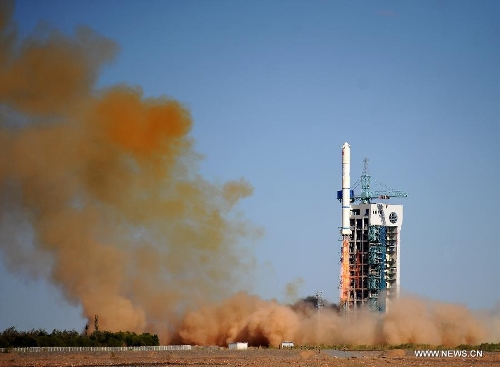
 Long March 2C rocket launch

A Long March 2C rocket carrying experimental orbiter SJ-11-05 was launched from Jiuquan Launch Center on july 15, 2013.

After the successful completion of the Shenzhou-10 mission to the Tangong-1 orbital module, China embarked for the second half of 2013 with the successful launch of another mysterious satellite on the Shijian-11 series. The launch of Shijian 11-05 took place at 09:27UTC on Monday using a Long March 2C launch vehicle from the 603 launch pad of the LC43 launch complex from the Jiuquan Satellite Launch Center.

Long March 2C rocket launch

According to the Chinese media, this mission involved an “experimental satellite” developed by the DongFangHong Satellite Company of the China Aerospace Science and Technology Corp.

Experimental orbiter SJ-11-05

As with the previous Shijian-11 satellites, the true mission of Shijian 11-05 was not revealed by the Chinese authorities. However, some observers noted that the Shijian-11 series could be related with a constellation of operational early warning satellites.


Image above: The position of the 4 ballistic early-warning satellites in the space,to detect missiles coming from North America, Europe, Indian Ocean, West Pacific.

This launch was the 178th Chinese orbital launch, the 178th launch of the Chang Zheng launch vehicle family. It was also the 59th orbital launch from the Jiuquan Satellite launch Center and the fourth orbital launch from China this year.

Images, Text, Credits: CASC / CCTV / China News.

Greetings, Orbiter.ch

lundi 15 juillet 2013

Hubble Finds New Neptune Moon


NASA - Hubble Space Telescope patch.

July 15, 2013

 Hubble Finds New Moon Orbiting Neptune

NASA's Hubble Space Telescope has discovered a new moon orbiting the distant blue-green planet Neptune. This brings the number of known satellites circling the giant planet to 14.

The body is estimated to be no more than 12 miles across, making it the smallest known moon in the Neptunian system. It's so small that it escaped detection by NASA's Voyager 2 spacecraft, which flew by Neptune in 1989 and surveyed the planet's system of moons and rings.

 Orbit of Neptune's Newly Discovered Moon

Mark Showalter of the SETI Institute in Mountain View, Calif., discovered the moon on July 1, while studying the faint ring-arcs of Neptune. "The moons and arcs orbit very quickly, so we had to devise a way to follow their motion in order to bring out the details of the system," he said. "It's the same reason a sports photographer tracks a running athlete — the athlete stays in focus, but the background blurs."

On a whim, Showalter extended his analysis outward to regions well beyond the ring system, and noticed an extra white dot about 65,400 miles from Neptune, located between the orbits of the moons Larissa and Proteus.

Neptune

Showalter next analyzed over 150 archival Neptune photographs taken by Hubble from 2004 to 2009. The same white dot appeared over and over again. He then plotted a circular orbit for the moon, which completes one revolution around Neptune every 23 hours.

The moon, designated S/2004 N 1, is so small and dim that it is roughly one hundred million times fainter than the faintest star that can be seen with the naked eye.

Compass and Scale Image for S/2004 N 1

Neptune's largest moon, Triton, which is nearly the size of Earth's moon, may be a captured icy dwarf planet from the Kuiper Belt at the outer rim of our solar system. This capture would have gravitationally torn up any original satellite system Neptune possessed. Many of the moons now seen orbiting the planet probably formed after Triton settled into its unusual retrograde orbit about Neptune.

The Hubble Space Telescope is a cooperative project between NASA and the European Space Agency. NASA's Goddard Space Flight Center in Greenbelt, Md., manages the telescope. The Space Telescope Science Institute (STScI) in Baltimore, Md., conducts Hubble science operations. STScI is operated by the Association of Universities for Research in Astronomy Inc., in Washington.

For images and more information about Neptune's new moon, visit: http://hubblesite.org/news/2013/30

For more information about NASA / ESA Hubble Space Telescope: http://www.nasa.gov/hubble and http://www.spacetelescope.org/

Images, Text, Credits: NASA, ESA, and M. Showalter (SETI Institute).

Cheers, Orbiter.ch

Fly Through a canyon on Mars


ESA - Mars Express Mission patch.

15 July 2013

Fly-through movie of Hebes Chasma 

Glide through part of the largest canyon on Mars, Valles Marineris, in this stunning colour movie from ESA’s Mars Express.

Valles Marineris is not just the largest canyon on Mars, but at 4000 km long, 200 km wide and 10 km deep it is the largest in the entire Solar System.

The movie focuses on an enclosed 8 km-deep trough in the northern most part of Valles Marineris, called Hebes Chasma.

The movie glides over impact craters pockmarking the plains separating the troughs, down cliff faces scarred by landslides, and along the rough valley floor.

Mars Express

In some parts of the valley Mars Express has detected water-bearing minerals, suggesting that significant quantities of water may have once flowed here.

The formation of Hebes Chasma is likely connected to the nearby volcanic Tharsis region, home to the planet’s vast Olympus Mons volcano.

During periods of intense volcanism the whole region stretched upwards, causing tremendous stress in the crust further way. Unable to withstand the strain, the crust ripped open, collapsing into the chasms found in and around Valles Marineris.

The movie was first published by DLR in 2008.

Related links:

Mars Express overview: http://www.esa.int/Our_Activities/Space_Science/Mars_Express_overview

Mars Express 10 year brochure: http://esamultimedia.esa.int/multimedia/publications/BR-312/

High Resolution Stereo Camera: http://berlinadmin.dlr.de/Missions/express/indexeng.shtml

Behind the lens: http://www.esa.int/Our_Activities/Space_Science/Mars_Express/Behind_the_lens

Frequently asked questions: http://www.esa.int/Our_Activities/Space_Science/Mars_Express/Frequently_asked_questions

Image, Video, Text, Credits: ESA / DLR / FU Berlin (G. Neukum).

Greetings, Orbiter.ch