mardi 26 août 2014

Sentinel-1 poised to monitor motion


ESA - Sentinel-1 Mission logo.

Aug. 26, 2014

Although it was only launched a few months ago and is still being commissioned, the new Sentinel-1A radar satellite has already shown that it can be used to generate 3D models of Earth’s surface and will be able to closely monitor land and ice surface deformation.

As the first in a fleet of satellite missions for Europe’s Copernicus environmental monitoring programme, Sentinel-1A was launched on 3 April. It carries an advanced radar instrument to image Earth’s surface through cloud and rain, regardless of whether it is day or night.

New views from Sentinel-1A (Italy’s Gulf of Genoa)

Among its many applications it will routinely monitor shipping zones, map sea ice and provide information on winds and waves for marine traffic, track changes in the way land is being used, provide imagery for rapid response to disasters such as floods, and monitor uplift and subsidence.

The satellite reached its operational orbit on 7 August and just 12 days later, its radar images were used to generate ‘interferograms’ that map the topography of parts of Italy and Norway.

Etna slopes

Synthetic aperture radar interferometry – or InSAR – is a technique where two or more satellite radar images acquired over the same area are combined to produce an interferogram.

These are important products for mapping topography to produce ‘digital elevation models’ and to monitor surface deformation caused by, for example, mining, earthquakes, volcanic activity, melting permafrost and glacial flow.

The rainbow-coloured fringes in these new images demonstrate the excellent phase stability of Sentinel-1A’s radar instrument and image processor, as well as that the satellite is in its correct orbit and ready for delivering data for applications and science.

Radar vision

ESA’s Sentinel-1 Project Manager, Ramón Torres, said, “I’m delighted to see these first interferograms, demonstrating the excellent capabilities of Sentinel-1A’s radar instrument. They certainly show the satellite’s outstanding performance in synthetic aperture radar interferometry with its large 250 km-swath.”

Radar images are the best way of tracking land subsidence and structural damage. Systematic observations mean that ground movement barely noticeable in everyday life can be detected and closely monitored.

For example, the animation shows an area of northern Norway that is particularly prone to landslides. Large landslides that suddenly shift rock into the sea could potentially create tsunami-like waves. In 1810, such a wave destroyed a village, and, history shows that this kind of natural disaster occurs a couple of times every 100 years in Norway.

Norwegian fringes

InSAR is an important tool used by the Norwegian authorities to map rockslide hazards nationwide. The unprecedented coverage offered by the Sentinel-1 mission will significantly increase the value of InSAR data for this purpose.

The satellite passes over the same spot on the ground every 12 days. However, once its identical twin, Sentinel-1B, is launched in 2016, this will be cut to just six days, so that changes can be mapped even faster.

Norway relief

Pierre Potin, ESA’s Sentinel-1 Mission Manager, noted, “It is clear that Sentinel-1 will be a fantastic tool for interferometry-based applications.

“These first results are really promising, especially with the satellite’s mapping capability and the performance of the ground segment in mind. This will enable many operational services to be set up as well as advancing various scientific domains.” 

Related links:

Sentinel-1: http://www.esa.int/Our_Activities/Observing_the_Earth/Copernicus/Sentinel-1

Data access & technical information: https://sentinel.esa.int/web/sentinel/home

European Commission Copernicus site: http://www.copernicus.eu/

Northern Research Institute: http://norut.no/en

DLR–Remote Sensing Technology Institute: http://www.dlr.de/eoc/en/desktopdefault.aspx/tabid-5279/8913_read-16239/

DLR–Microwaves and Radar Institute: http://www.dlr.de/hr/en/desktopdefault.aspx

Scientific exploitation of operational missions: http://seom.esa.int/

Images, Video, Text, Credits: Copernicus data (2014)/ESA/DLR Remote Sensing Technology Institute/ATG medialab/Norut–SEOM Insarap study.

Greetings, Orbiter.ch

Best view yet of merging galaxies in distant Universe


ESA - Hubble Space Telescope logo.

26 August 2014

Hubble goes Sherlock Holmes

Merging galaxies in the distant Universe through a gravitational magnifying glass

Using the NASA/ESA Hubble Space Telescope and many other telescopes on the ground and in space, an international team of astronomers has obtained the best view yet of a collision that took place between two galaxies when the Universe was only half its current age. They enlisted the help of a galaxy-sized magnifying glass to reveal otherwise invisible detail. These new studies of the galaxy H-ATLAS J142935.3-002836 have shown that this complex and distant object looks like the well-known local galaxy collision, the Antennae Galaxies.

The famous fictional detective Sherlock Holmes used a magnifying lens to reveal barely visible but important evidence. Astronomers are now combining the power of many telescopes on Earth and in space [1] with a vastly larger form of lens to study a case of vigorous star formation in the early Universe.

How gravitational lensing acts as a magnifying glass — diagram

"While astronomers are often limited by the power of their telescopes, in some cases our ability to see detail is hugely boosted by natural lenses, created by the Universe," explains lead author Hugo Messias of the Universidad de Concepción (Chile) and the Centro de Astronomia e Astrofísica da Universidade de Lisboa (Portugal), "Einstein predicted in his theory of general relativity that, given enough mass, light does not travel in a straight line but will be bent in a similar way to light refracted by a normal lens."

These cosmic lenses are created by massive structures like galaxies and galaxy clusters, which deflect the light from objects behind them due to their strong gravity — an effect, called gravitational lensing. The magnifying properties of this effect allow astronomers to study objects that would not be visible otherwise and to directly compare local galaxies with much more remote ones, seen when the Universe was significantly younger.


Image above: Wide-field view of the sky around the gravitationally lensed galaxy merger H-ATLAS J142935.3-002836.

But for these gravitational lenses to work, the lensing galaxy, and the one far behind it, need to be very precisely aligned.

"These chance alignments are quite rare and tend to be hard to identify," adds Messias, "but, recent studies have shown that by observing at far-infrared and millimetre wavelengths we can find these cases much more efficiently."

H-ATLAS J142935.3-002836 (or just H1429-0028 for short) is one of these sources and was found in the Herschel Astrophysical Terahertz Large Area Survey (H-ATLAS). It is among the brightest gravitationally lensed objects in the far-infrared regime found so far, even though we are seeing it at a time when the Universe was just half its current age.

Zooming in on a gravitationally lensed galaxy merger in the distant Universe

Probing this object was at the limit of what is possible, so the international team of astronomers started an extensive follow-up campaign using the NASA/ESA Hubble Space Telescope alongside other space telescopes and some of the most powerful telescopes on the ground — including the Atacama Large Millimeter/submillimeter Array (ALMA), the Keck Observatory, the Karl Jansky Very Large Array (JVLA), and others. The different telescopes provided different views, which could be combined to get the best insight yet into the nature of this unusual object.

The Hubble and Keck images revealed a detailed gravitationally-induced ring of light around the foreground galaxy. These high resolution images also showed that the lensing galaxy is an edge-on disc galaxy — similar to our galaxy, the Milky Way — which obscures parts of the background light due to the large dust clouds it contains.

Artist's impression of gravitational lensing of a distant merger

"We need to observe with Hubble to find cases of gravitational lensing and to highlight in high resolution the clues left by these huge cosmic lenses", adds Rob Ivison, co-author and ESO's Director for Science

But, it is not possible to see past the large dust clouds of the foreground galaxy with Hubble. The obscuration was overcome by ALMA and the JVLA, since these two facilities observe the sky at longer wavelengths, which are unaffected by dust. Using the combined data the team discovered that the background system was actually an ongoing collision between two galaxies.

Further characterisation of the object was undertaken by ALMA which traced carbon monoxide, allowing for detailed studies of star formation mechanisms in galaxies and for the motion of the material in the galaxy to be measured. This confirmed that the lensed object is indeed an ongoing galactic collision forming hundreds of new stars each year, and that one of the colliding galaxies still shows signs of rotation; an indication that it was a disc galaxy just before this encounter.

The system of these two colliding galaxies resembles the Antennae Galaxies an object much closer to us than H1429-0028 and which Hubble has imaged several times before in stunning detail. This is a spectacular collision between two galaxies, which are believed to have had a disc structure in the past. While the Antennae system is forming stars with a total rate of only a few tens of times the mass of our Sun each year, H1429-0028 each year turns more than 400 times the mass of the Sun of gas into new stars each year.

Ivison concludes: "With the combined power of Hubble and these other telescopes we have been able to locate this very fortunate alignment, take advantage of the foreground galaxy's lensing effects and characterise the properties of this distant merger and the extreme starburst within it. It is very much a testament to the power of telescope teamwork."

Notes:

[1] The telescopes and surveys that were employed were: the NASA/ESA Hubble Space Telescope, ALMA, APEX, VISTA, the Gemini South telescope, the Keck-II telescope, the NASA Spitzer Space Telescope, the Jansky Very Large Array, CARMA, IRAM, and SDSS and WISE.

More information:

The Hubble Space Telescope is a project of international cooperation between ESA and NASA.

This research was presented in a paper entitled "Herschel-ATLAS and ALMA HATLAS J142935.3-002836, a lensed major merger at redshift 1.027", by Hugo Messias et al., to appear online on 26 August 2014 in the journal Astronomy & Astrophysics.

The team is composed of Hugo Messias (Universidad de Concepción, Barrio Universitario, Chile, and Centro de Astronomia e Astrofísica da Universidade de Lisboa, Portugal), Simon Dye (School of Physics and Astronomy, University of Nottingham, UK), Neil Nagar (Universidad de Concepción, Barrio Universitario, Chile), Gustavo Orellana (Universidad de Concepción, Barrio Universitario, Chile), R. Shane Bussmann (Harvard-Smithsonian Center for Astrophysics, USA), Jae Calanog (Department of Physics & Astronomy, University of California, USA), Helmut Dannerbauer (Universität Wien, Institut für Astrophysik, Austria), Hai Fu (Astronomy Department, California Institute of Technology, USA), Edo Ibar (Pontificia Universidad Católica de Chile, Departamento de Astronomía y Astrofísica, Chile), Andrew Inohara (Department of Physics & Astronomy, University of California, USA), R. J. Ivison (Institute for Astronomy, University of Edinburgh, Royal Observatory, UK; ESO, Garching, Germany), Mattia Negrello (INAF, Osservatorio Astronomico di Padova, Italy), Dominik A. Riechers (Astronomy Department, California Institute of Technology, USA; Department of Astronomy, Cornell University, USA),Yun-Kyeong Sheen (Universidad de Concepción, Barrio Universitario, Chile), Simon Amber (The Open University, UK), Mark Birkinshaw (H H Wills Physics Laboratory, University of Bristol, UK; Harvard-Smithsonian Center for Astrophysics, USA), Nathan Bourne (School of Physics and Astronomy, University of Nottingham, UK), Dave L. Clements (Astrophysics Group, Imperial College London, UK), Asantha Cooray (Department of Physics & Astronomy, University of California, USA; Astronomy Department, California Institute of Technology, USA), Gianfranco De Zotti (INAF, Osservatorio Astronomico di Padova, Italy), Ricardo Demarco (Universidad de Concepción, Barrio Universitario, Chile), Loretta Dunne (Department of Physics and Astronomy, University of Canterbury, New Zealand; Institute for Astronomy, University of Edinburgh, Royal Observatory, UK), Stephen Eales (School of Physics and Astronomy, Cardiff University,UK) , Simone Fleuren (School of Mathematical Sciences, University of London, UK), Roxana E. Lupu (Department of Physics and Astronomy, University of Pennsylvania, USA), Steve J. Maddox (Department of Physics and Astronomy, University of Canterbury, New Zealand; Institute for Astronomy, University of Edinburgh, Royal Observatory, UK), Michał J. Michałowski (Institute for Astronomy, University of Edinburgh, Royal Observatory, UK), Alain Omont (Institut d'Astrophysique de Paris, UPMC Univ. Paris, France), Kate Rowlands (School of Physics & Astronomy, University of St Andrews, UK), Dan Smith (Centre for Astrophysics Research, Science & Technology Research Institute, University of Hertfordshire, UK), Matt Smith (School of Physics and Astronomy, Cardiff University,UK) and Elisabetta Valiante (School of Physics and Astronomy, Cardiff University, UK).

Links:

Images of Hubble: http://www.spacetelescope.org/images/archive/category/spacecraft/

ESO press release: http://www.eso.org/public/news/eso1426/

Research paper: http://www.eso.org/public/archives/releases/sciencepapers/eso1426/eso1426a.pdf

Images, Text, Credits: NASA/ESA/ESO/M. Kornmesser/W. M. Keck Observatory/Digitized Sky Survey 2. Acknowledgement: Davide De Martin/Videos: NASA/ESA/W. M. Keck Observatory/Digitized Sky Survey 2/Hubble & ESO/M. Kornmesser. Music: movetwo.

Best regards, Orbiter.ch

Eta Carinae: Our Neighboring Superstars


NASA - Chandra X-ray Observatory patch.

Aug. 26, 2014

Eta Carinae: Our Neighboring Superstars

The Eta Carinae star system does not lack for superlatives. Not only does it contain one of the biggest and brightest stars in our galaxy, weighing at least 90 times the mass of the sun, it is also extremely volatile and is expected to have at least one supernova explosion in the future.

As one of the first objects observed by NASA’s Chandra X-ray Observatory after its launch some 15 years ago, this double star system continues to reveal new clues about its nature through the X-rays it generates.

Astronomers reported extremely volatile behavior from Eta Carinae in the 19th century, when it became very bright for two decades, outshining nearly every star in the entire sky. This event became known as the “Great Eruption.” Data from modern telescopes reveal that Eta Carinae threw off about ten times the sun’s mass during that time. Surprisingly, the star survived this tumultuous expulsion of material, adding “extremely hardy” to its list of attributes.

Today, astronomers are trying to learn more about the two stars in the Eta Carinae system and how they interact with each other. The heavier of the two stars is quickly losing mass through  wind streaming away from its surface at over a million miles per hour. While not the giant purge of the Great Eruption, this star is still losing mass at a very high rate that will add up to the sun’s mass in about a millennium.

Though smaller than its partner, the companion star in Eta Carinae is also massive, weighing in at about 30 times the mass of the sun. It is losing matter at a rate that is about a hundred times lower than its partner, but still a prodigious weight loss compared to most other stars. The companion star beats the bigger star in wind speed, with its wind clocking in almost ten times faster.

When these two speedy and powerful winds collide, they form a bow shock – similar to the sonic boom from a supersonic airplane – that then heats the gas between the stars. The temperature of the gas reaches about ten million degrees, producing X-rays that Chandra detects.

 Eta Carinae Our Neighboring Superstars

The Chandra image of Eta Carinae shows low energy X-rays in red, medium energy X-rays in green, and high energy X-rays in blue. Most of the emission comes from low and high energy X-rays. The blue point source is generated by the colliding winds, and the diffuse blue emission is produced when the material that was purged during the Great Eruption reflects these X-rays. The low energy X-rays further out show where the winds from the two stars, or perhaps material from the Great Eruption, are striking surrounding material. This surrounding material might consist of gas that was ejected before the Great Eruption.   

An interesting feature of the Eta Carinae system is that the two stars travel around each other along highly elliptical paths during their five-and-a-half-year long orbit. Depending on where each star is on its oval-shaped trajectory, the distance between the two stars changes by a factor of twenty. These oval-shaped trajectories give astronomers a chance to study what happens to the winds from these stars when they collide at different distances from one another.

Throughout most of the system's orbit, the X-rays are stronger at the apex, the region where the winds collide head-on. However, when the two stars are at their closest during their orbit (a point that astronomers call “periastron”), the X-ray emission dips unexpectedly.

To understand the cause of this dip, astronomers observed Eta Carinae with Chandra at periastron in early 2009. The results provided the first detailed picture of X-ray emission from the colliding winds in Eta Carinae. The study suggests that part of the reason for the dip at periastron is that X-rays from the apex are blocked by the dense wind from the more massive star in Eta Carinae, or perhaps by the surface of the star itself.

Chandra X-ray Observatory. Image Credit: NASA / CXC.

Another factor responsible for the X-ray dip is that the shock wave appears to be disrupted near periastron, possibly because of faster cooling of the gas due to increased density, and/or a decrease in the strength of the companion star’s wind because of extra ultraviolet radiation from the massive star reaching it. Researchers are hoping that Chandra observations of the latest periastron in August 2014 will help them determine the true explanation.

These results were published in the April 1, 2014 issue of The Astrophysical Journal and are available online. The first author of the paper is Kenji Hamaguchi of Goddard Space Flight Center in Greenbelt, MD, and his co-authors are Michael Corcoran of Goddard Space Flight Center (GSFC); Christopher Russell of University of Delaware in Newark, DE; A. Pollock from the European Space Agency in Madrid, Spain; Theodore Gull, Mairan Teodoro, and Thomas I. Madura from GSFC; Augusto Damineli from Universidade de Sao Paulo in Sao Paulo, Brazil and Julian Pittard from the University of Leeds in the UK.

NASA's Marshall Space Flight Center in Huntsville, Alabama, manages the Chandra program for NASA's Science Mission Directorate in Washington, DC. The Smithsonian Astrophysical Observatory in Cambridge, Massachusetts, controls Chandra's science and flight operations.

For more information about Chandra X-ray Observatory, visit: http://www.nasa.gov/chandra/

Chandra on Flickr: http://www.flickr.com/photos/nasamarshall/sets/72157606205297786/

Images, Video, Text, Credits: NASA/CXC/GSFC/K.Hamaguchi, et al.

Cheers, Orbiter.ch

lundi 25 août 2014

NASA Rainfall Satellite Out Of Fuel, but Continues to Provide Data


NASA - TRMM Mission patch.

August 25, 2014


Image above: Artist's visualization of the TRMM satellite in space over a tropical cyclone. Image Credit: NASA.

Pressure readings from the Tropical Rainfall Measuring Mission's (TRMM) fuel tank on July 8 indicated that the satellite was nearly at the end of its fuel supply. As a result, NASA has ceased maneuvers to keep the satellite at its operating altitude of 402 kilometers (~250 miles). With its speed decreasing, TRMM has begun to drift downward. A small amount of fuel remains to conduct debris avoidance maneuvers to ensure the satellite remains safe.

TRMM's slow descent will continue over the next 2 to 3 years. It will continue to collect useful data as its orbit descends to about 350 (217.5 miles) over the next 18 months.  Once TRMM reaches an altitude of 150 to 120 kilometers (93 to 75 miles), it will re-enter the atmosphere.

The TRMM satellite, a joint mission between NASA and the Japan Aerospace Exploration Agency (JAXA), was launched in 1997 to measure precipitation over the tropics, carrying the first precipitation radar into space.

"TRMM has met and exceeded its original goal of advancing our understanding of the distribution of tropical rainfall and its relation to the global water and energy cycles," said Scott Braun, the mission's project scientist at NASA's Goddard Space Flight Center in Greenbelt, Maryland.


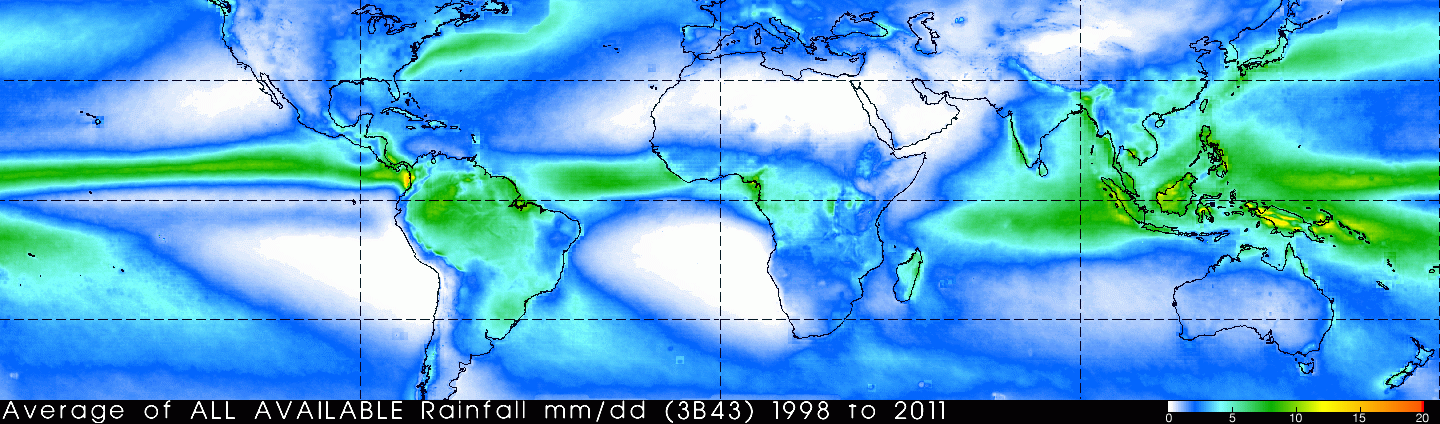
Image above: TRMM's long term rainfall data gives scientists a better understanding of global rainfall patterns. Shown here is TRMM data merged with other satellites' rain data from 40N to 40S latitude. The colors show the average of all the monthly rain averages from 1998 to 2010. Image Credit: Precipitation Processing System/NASA Goddard.

Its planned three-year mission has already lasted 17 years and provided researchers with an unprecedented data set that combined more traditional radiometer measurements with 3-dimensional radar scans across the tropical ocean and into the lower mid-latitudes from 35N to 35S latitude. Also unique to TRMM is its inclined orbit that allows it to cut across the paths of polar orbiting satellites and revisit locations at different times of day, which is important for understanding how rainfall evolves with the day/night cycle. TRMM provided the first measurements of this type over the tropical ocean.

Scientists have used TRMM data to provide high quality climatology of rainfall, including variability on day/night, monthly, seasonal, and yearly time scales. Scientists also use TRMM to study extreme convection and precipitation events including tropical cyclones, floods, landslides, and drought, the impact of humans on precipitation. TRMM data have also allowed researchers to map lightning in many regions. In addition, TRMM rainfall estimates have been used in a number of applications including hydrological modeling to monitor floods, stream flow, and drought; tropical cyclone tracking and forecasting; climate and weather model validation and improvement; disease monitoring in flooded areas; and fire detection.

Some TRMM observations will continue as the spacecraft descends to 335 kilometers (~208 miles), at which time the satellite will be shut down, currently estimated to be February 2016. This date may change depending on solar activity, since energetic particles in solar flares heat the upper atmosphere, which expands the atmosphere toward space so that the satellite flies through thicker atmosphere, increasing drag and lowering the spacecraft more quickly. After being shut down, TRMM has a 95 percent probability of re-entering the atmosphere in a time window between May 2016 and November 2017. Its current projected re-entry date is around November 2016.

The TRMM Microwave Imager (TMI) and Lightning Imaging System will continue operating during the entire drift down period, although TMI data will be affected. The angle at which TMI views Earth's surface will be changing as will the field of view. However, the science team expects data to continue to be useful for rain estimates, and tropical cyclone and flood monitoring and prediction.

Because of how the Precipitation Radar works, useful science data can only be collected within narrow altitude ranges near 400 (250 miles) and 350 (217.5 miles) kilometers. JAXA, which manages the Precipitation Radar data, has indicated that they may stop distribution of the radar data outside of those ranges.

A gap in precipitation data coverage from satellites will not occur because NASA and JAXA launched TRMM's successor mission, the Global Precipitation Measurement (GPM) Core Observatory, on Feb. 27, 2014.

The GPM Core Observatory began its prime mission on May 29, and will have several additional months of overlap with TRMM data as it descends. The GPM Core Observatory continues and expands upon TRMM's capabilities, carrying an advanced GPM Microwave Imager and Dual-frequency Precipitation Radar.

The GPM Core Observatory's area of coverage extends beyond TRMM's, covering the area from the Arctic Circle to the Antarctic Circle. While this means fewer observations of the tropics, it also means that GPM will be able to observe hurricanes, like Sandy in 2012, that travel north (or south) farther into the mid-latitudes. GPM will also be able to detect light rain and snowfall, a major source of available fresh water in some regions. The joint NASA/JAXA mission will study rain and snow around the world, joining with an international network of partner satellites to provide global precipitation datasets on half hourly and longer time scales.

GPM data are already in use by hurricane forecasting agencies.

For more information about TRMM mission, visit: http://trmm.gsfc.nasa.gov/ and http://pmm.nasa.gov/node/158

Related links:

NASAs Tropical Ranifal Measuring Mission Turns 15: http://www.nasa.gov/topics/earth/features/trmm-15.html

Images (mentioned), Text, Credits: NASA's Goddard Space Flight Center / Rani Gran.

Greetings, Orbiter.ch

NASA Captures Images of a Late Summer Flare


NASA - Solar Dynamics Observatory (SDO) patch.

August 25, 2014


Image above: A bright solar flare can be seen on the left side of the sun in this image captured by NASA's Solar Dynamics Observatory on Aug. 24, 2014.
Image Credit: NASA/SDO.

On Aug. 24, 2014, the sun emitted a mid-level solar flare, peaking at 8:16 a.m. EDT. NASA's Solar Dynamics Observatory captured images of the flare, which erupted on the left side of the sun. Solar flares are powerful bursts of radiation. Harmful radiation from a flare cannot pass through Earth's atmosphere to physically affect humans on the ground, however -- when intense enough -- they can disturb the atmosphere in the layer where GPS and communications signals travel.

To see how this event may affect Earth, please visit NOAA's Space Weather Prediction Center at http://spaceweather.gov, the U.S. government's official source for space weather forecasts, alerts, watches and warnings.

This flare is classified as an M5 flare. M-class flares are ten times less powerful than the most intense flares, called X-class flares.


Image above: This close-up of a moderate flare on Aug. 24, 2014, shows light in the 131 and 171 Angstrom wavelengths. The former wavelength, usually colorized in teal, highlights the extremely hot material of a flare. The latter, usually colorized in gold, highlights magnet loops in the sun's atmosphere. Image Credit: NASA/SDO.

Magnetic Connections

Video above: Magnetic field lines arched and twisted above a small group of active regions and even reached out to connect to each other (Aug. 18-20, 2014). The field lines are revealed in extreme ultraviolet light by charged particles that spiral along them. Sometimes the forces are strong enough to cause an active region to reach out and connect with other active regions, as was the case here. This is most clearly seen between the two topmost regions. Credit: Solar Dynamics Observatory/NASA.

For more views and an animation of this event, visit our Scientific Visualization Studio page: http://svs.gsfc.nasa.gov/goto?11629

For more information about Solar Dynamics Observatory (SDO), visit: http://sdo.gsfc.nasa.gov/ and https://www.nasa.gov/mission_pages/sdo/main/

Updates will be provided as needed.

Images (mentioned), Video (mentioned), Text, Credits: NASA's Goddard Space Flight Center / Karen C. Fox.

Cheers, Orbiter.ch

NASA’s New Horizons Spacecraft Crosses Neptune Orbit En Route to Historic Pluto Encounter


NASA - New Horizons Mission logo.

August 25, 2014

NASA’s Pluto-bound New Horizons spacecraft has traversed the orbit of Neptune. This is its last major crossing en route to becoming the first probe to make a close encounter with distant Pluto on July 14, 2015.

The sophisticated piano-sized spacecraft, which launched in January 2006, reached Neptune’s orbit -- nearly 2.75 billion miles from Earth -- in a record eight years and eight months. New Horizons’ milestone matches precisely the 25th anniversary of the historic encounter of NASA’s Voyager 2 spacecraft with Neptune on Aug. 25, 1989.

“It’s a cosmic coincidence that connects one of NASA’s iconic past outer solar system explorers, with our next outer solar system explorer,” said Jim Green, director of NASA’s Planetary Science Division, NASA Headquarters in Washington. “Exactly 25 years ago at Neptune, Voyager 2 delivered our ‘first’ look at an unexplored planet. Now it will be New Horizons' turn to reveal the unexplored Pluto and its moons in stunning detail next summer on its way into the vast outer reaches of the solar system.”

New Horizons now is about 2.48 billion miles from Neptune -- nearly 27 times the distance between the Earth and our sun -- as it crosses the giant planet’s orbit at 10:04 p.m. EDT Monday. Although the spacecraft will be much farther from the planet than Voyager 2’s closest approach, New Horizons' telescopic camera was able to obtain several long-distance “approach” shots of Neptune on July 10.


Image above: NASA's Pluto-bound New Horizons spacecraft captured this view of the giant planet Neptune and its large moon Triton on July 10, 2014, from a distance of about 2.45 billion miles (3.96 billion kilometers) - more than 26 times the distance between the Earth and sun. Image Credit: NASA/Johns Hopkins University Applied Physics Laboratory.

“NASA’s Voyager 1 and 2 explored the entire middle zone of the solar system where the giant planets orbit,” said Alan Stern, New Horizons principal investigator at the Southwest Research Institute in Boulder, Colorado. “Now we stand on Voyager’s broad shoulders to explore the even more distant and mysterious Pluto system.”

Several senior members of the New Horizons science team were young members of Voyager’s science team in 1989. Many remember how Voyager 2’s approach images of Neptune and its planet-sized moon Triton fueled anticipation of the discoveries to come. They share a similar, growing excitement as New Horizons begins its approach to Pluto.

“The feeling 25 years ago was that this was really cool, because we’re going to see Neptune and Triton up-close for the first time,” said Ralph McNutt of the Johns Hopkins University Applied Physics Laboratory (APL) in Laurel, Maryland, who leads the New Horizons energetic-particle investigation and served on the Voyager plasma-analysis team. “The same is happening for New Horizons. Even this summer, when we’re still a year out and our cameras can only spot Pluto and its largest moon as dots, we know we’re in for something incredible ahead.”

Voyager’s visit to the Neptune system revealed previously unseen features of Neptune itself, such as the Great Dark Spot, a massive storm similar to, but not as long-lived, as Jupiter’s Great Red Spot. Voyager also, for the first time, captured clear images of the ice giant’s ring system, too faint to be clearly viewed from Earth. “There were surprises at Neptune and there were surprises at Triton,” said Ed Stone, Voyager’s long-standing project scientist from the California Institute of Technology in Pasadena. “I’m sure that will continue at Pluto.”

Many researchers feel the 1989 Neptune flyby -- Voyager’s final planetary encounter -- might have offered a preview of what’s to come next summer. Scientists suggest that Triton, with its icy surface, bright poles, varied terrain and cryovolcanoes, is a Pluto-like object that Neptune pulled into orbit. Scientists recently restored Voyager’s footage of Triton and used it to construct the best global color map of that strange moon yet -- further whetting appetites for a Pluto close-up.

“There is a lot of speculation over whether Pluto will look like Triton, and how well they’ll match up,” McNutt said. “That’s the great thing about first-time encounters like this -- we don’t know exactly what we’ll see, but we know from decades of experience in first-time exploration of new planets that we will be very surprised.”

New Horizons Spacecraft. Image Credit: NASA

Similar to Voyager 1 and 2's historic observations, New Horizons also is on a path toward potential discoveries in the Kuiper Belt, which is a disc-shaped region of icy objects past the orbit of Neptune, and other unexplored realms of the outer solar system and beyond.

“No country except the United States has the demonstrated capability to explore so far away,” said Stern. “The U.S. has led the exploration of the planets and space to a degree no other nation has, and continues to do so with New Horizons. We’re incredibly proud that New Horizons represents the nation again as NASA breaks records with its newest, farthest and very capable planetary exploration spacecraft.”

Voyager 1 and 2 were launched 16 days apart in 1977, and one of the spacecraft visited Jupiter, Saturn, Uranus and Neptune. Voyager 1 now is the most distant human-made object, about 12 billion miles (19 billion kilometers) away from the sun. In 2012, it became the first human-made object to venture into interstellar space. Voyager 2, the longest continuously operated spacecraft, is about 9 billion miles (15 billion kilometers) away from our sun.

New Horizons is the first mission in NASA’s New Frontiers program. APL manages the mission for NASA’s Science Mission Directorate at NASA Headquarters. APL also built and operates the New Horizons spacecraft.

The Voyager spacecraft were built and continue to be operated by NASA's Jet Propulsion Laboratory in Pasadena, California. The Voyager missions are part of NASA's Heliophysics System Observatory, sponsored by the Heliophysics Division of the Science Mission Directorate.

To view the Neptune images taken by New Horizons and learn more about the mission, visit: http://www.nasa.gov/newhorizons

For more information about the Voyager spacecraft, visit: http://www.nasa.gov/voyager

Images (mentioned), Text, Credits: NASA / Dwayne Brown / JPL / Preston Dyches / Johns Hopkins University Applied Physics Laboratory / Michael Buckley.

Greetings, Orbiter.ch

Rosetta: Landing site search narrows


ESA - Rosetta Mission patch.

25 August 2014

Using detailed information collected by ESA’s Rosetta spacecraft during its first two weeks at Comet 67P/Churyumov-Gerasimenko, five locations have been identified as candidate sites to set down the Philae lander in November – the first time a landing on a comet has ever been attempted.

Before arrival, Comet 67P/Churyumov-Gerasimenko had never been seen close up and so the race to find a suitable landing site for the 100 kg lander could only begin when Rosetta rendezvoused with the comet on 6 August.

The landing is expected to take place in mid-November when the comet is about 450 million km from the Sun, before activity on the comet reaches levels that might jeopardise the safe and accurate deployment of Philae to the comet’s surface, and before surface material is modified by this activity.

Philae candidate landing sites

The comet is on a 6.5-year orbit around the Sun and today is 522 million km from it. At their closest approach on 13 August 2015, just under a year from now, the comet and Rosetta will be 185 million km from the Sun, meaning an eightfold increase in the light received from the Sun.

While Rosetta and its scientific instruments will watch how the comet evolves as heating by the Sun increases, observing how its coma develops and how the surface changes over time, the lander Philae and its instruments will be tasked with making complementary in situ measurements at the comet’s surface. The lander and orbiter will also work together using the CONSERT experiment to send and detect radio waves through the comet’s interior, in order to characterise its internal structure.

Choosing the right landing site is a complex process. That site must balance the technical needs of the orbiter and lander during all phases of the separation, descent, and landing, and during operations on the surface with the scientific requirements of the 10 instruments on board Philae.

A key issue is that uncertainties in the navigation of the orbiter close to the comet mean that it is only possible to specify any given landing zone in terms of an ellipse – covering up to one square kilometre – within which Philae might land.

Philae touchdown

For each possible zone, important questions must be asked: Will the lander be able to maintain regular communications with Rosetta? How common are surface hazards such as large boulders, deep crevasses or steep slopes? Is there sufficient illumination for scientific operations and enough sunlight to recharge the lander’s batteries beyond its initial 64-hour lifetime, while not so much as to cause overheating?

To answer these questions, data acquired by Rosetta from about 100 km distance have been used, including high-resolution images of the surface, measurements of the comet’s surface temperature, and the pressure and density of gas around the nucleus. In addition, measurements of the comet’s orientation with respect to the Sun, its rotation, mass and surface gravity have been determined. All of these factors influence the technical feasibility of landing at any specific location on the comet.

This weekend, the Landing Site Selection Group (comprising engineers and scientists from Philae’s Science, Operations and Navigation Centre at CNES, the Lander Control Centre at DLR, scientists representing the Philae Lander instruments and ESA’s Rosetta team) met at CNES, Toulouse, to consider the available data and determine a shortlist of five candidate sites.

Philae's mission at comet 67P

“This is the first time landing sites on a comet have been considered,” says Stephan Ulamec, Lander Manager at DLR.

“Based on the particular shape and the global topography of Comet 67P/ Churyumov-Gerasimenko, it is probably no surprise that many locations had to be ruled out. The candidate sites that we want to follow up for further analysis are thought to be technically feasible on the basis of a preliminary analysis of flight dynamics and other key issues – for example they all provide at least six hours of daylight per comet rotation and offer some flat terrain. Of course, every site has the potential for unique scientific discoveries.”

“The comet is very different to anything we’ve seen before, and exhibits spectacular features still to be understood,” says Jean-Pierre Bibring, a lead lander scientist and principal investigator of the CIVA instrument.

“The five chosen sites offer us the best chance to land and study the composition, internal structure and activity of the comet with the ten lander experiments.”

The sites were assigned a letter from an original pre-selection of 10 possible sites, which does not signify any ranking. Three sites (B, I and J) are located on the smaller of the two lobes of the comet and two sites (A and C) are located on the larger lobe.

Summary of the five candidate sites

Site A

Site A is an interesting region located on the larger lobe, but with a good view of the smaller lobe. The terrain between the two lobes is likely the source of some outgassing. Higher-resolution imaging is needed to study potential surface hazards such as small depressions and slopes, while the illumination conditions also need to be considered further.

Candidate landing site A

Site B

Site B, within the crater-like structure on the smaller lobe, has a flat terrain and is thus considered relatively safe for landing, but illumination conditions may pose a problem when considering the longer-term science planning of Philae. Higher-resolution imaging will be needed to assess the boulder hazards in more detail. In addition, the boulders are also thought to represent more recently processed material and therefore this site may not be as pristine as some of the others.

Candidate landing site B

Site C

Site C is located on the larger lobe and hosts a range of surface features including some brighter material, depressions, cliffs, hills and smooth plains, but higher-resolution imaging is needed to assess the risk of some of these features. It is also well illuminated, which would benefit the long-term scientific planning for Philae.

Candidate landing site C

Site I

Site I is a relatively flat area on the smaller lobe that may contain some fresh material, but higher-resolution imaging is needed to assess the extent of the rough terrain. The illumination conditions should also allow for longer-term science planning.

Candidate landing site I

Site J

Site J is similar to site I, and also on the smaller lobe, offering interesting surface features and good illumination. It offers advantages for the CONSERT experiment compared with Site I, but higher-resolution imaging is needed to determine the details of the terrain, which shows some boulders and terracing.

Candidate landing site J

The next step is a comprehensive analysis of each of the candidate sites, to determine possible orbital and operational strategies that could be used for Rosetta to deliver the lander to any of them. At the same time, Rosetta will move to within 50 km of the comet, allowing a more detailed study of the proposed landing sites.

By 14 September, the five candidate sites will have been assessed and ranked, leading to the selection of a primary landing site, for which a fully detailed strategy for the landing operations will be developed, along with a backup.

During this phase, Rosetta will move to within 20–30 km of the comet, allowing even more detailed maps of the boulder distributions at the primary and backup landing sites to be made. This information could be important in deciding whether to switch from primary to backup.

The Rosetta mission team are working towards a nominal landing date of 11 November, but confirmation of the primary landing site and the date will likely only come on 12 October. This will be followed by a formal Go/No Go from ESA, in agreement with the lander team, after a comprehensive readiness review on 14 October.

“The process of selecting a landing site is extremely complex and dynamic; as we get closer to the comet, we will see more and more details, which will influence the final decision on where and when we can land,” says Fred Jansen, ESA Rosetta mission manager.

“We had to complete our preliminary analysis on candidate sites very quickly after arriving at the comet, and now we have just a few more weeks to determine the primary site. The clock is ticking and we now have to meet the challenge to pick the best possible landing site.”

More about Rosetta:
Rosetta is an ESA mission with contributions from its Member States and NASA. Rosetta’s Philae lander is provided by a consortium led by DLR, MPS, CNES and ASI. Rosetta will be the first mission in history to rendezvous with a comet, escort it as it orbits the Sun, and deploy a lander.

Comets are time capsules containing primitive material left over from the epoch when the Sun and its planets formed. By studying the gas, dust and structure of the nucleus and organic materials associated with the comet, via both remote and in situ observations, the Rosetta mission should become the key to unlocking the history and evolution of our Solar System, as well as answering questions regarding the origin of Earth’s water and perhaps even life. 

More informations:

Rosetta overview: http://www.esa.int/Our_Activities/Space_Science/Rosetta_overview

Rosetta factsheet: http://www.esa.int/Our_Activities/Space_Science/Rosetta/Rosetta_factsheet

Frequently asked questions: http://www.esa.int/Our_Activities/Space_Science/Rosetta/Frequently_asked_questions

Rosetta Blog: http://blogs.esa.int/rosetta/

Related links:

Rosetta at Astrium: http://www.astrium.eads.net/en/programme/rosetta-1go.html

Rosetta at DLR: http://www.dlr.de/dlr/en/desktopdefault.aspx/tabid-10394/

Ground-based comet observation campaign: http://www.rosetta-campaign.net/home

Images, Video, Text, Credits: ESA/Rosetta/MPS for OSIRIS Team MPS/UPD/LAM/IAA/SSO/INTA/UPM/DASP/IDA/ATG medialab.

Best regards, Orbiter.ch