mercredi 18 mars 2020

On the Origin of Massive Stars


ESA - Hubble Space Telescope logo.

18 March 2020

A massive laboratory

This scene of stellar creation, captured by the NASA/ESA Hubble Space Telescope, sits near the outskirts of the famous Tarantula Nebula. This cloud of gas and dust, as well as the many young and massive stars surrounding it, is the perfect laboratory to study the origin of massive stars.

The bright pink cloud and the young stars surrounding it in this image taken with the NASA/ESA Hubble Space Telescope have the uninspiring name LHA 120-N 150. This region of space is located on the outskirts of the Tarantula Nebula, which is the largest known stellar nursery in the local Universe. The nebula is situated over 160 000 light-years away in the Large Magellanic Cloud, a neighbouring irregular dwarf galaxy that orbits the Milky Way.

Wide-field view of the Tarantula Nebula and its surroundings (ground-based image)

The Large Magellanic Cloud has had one or more  close encounters in the past, possibly with the Small Magellanic Cloud. These interactions have caused an episode of energetic star formation in our tiny neighbour — part of which is visible as the Tarantula Nebula.

Also known as 30 Doradus or NGC 2070, the Tarantula Nebula owes its name to the arrangement of bright patches that somewhat resemble the legs of a tarantula. It measures nearly 1000 light-years across. Its proximity, the favourable inclination of the Large Magellanic Cloud, and the absence of intervening dust make the Tarantula Nebula one of the best laboratories in which to study the formation of stars, in particular massive stars. This nebula has an exceptionally high concentration of massive stars, often referred to as super star clusters.

Zoom-in on LHA 120-N150

Astronomers have studied LHA 120-N 150 to learn more about the environment in which massive stars form. Theoretical models of the formation of massive stars suggest that they should form within clusters of stars; but observations indicate that up to ten percent of them also formed in isolation. The giant Tarantula Nebula with its numerous substructures is the perfect laboratory in which to resolve this puzzle as in it massive stars can be found both as members of clusters and in isolation.

With the help of Hubble, astronomers try to find out whether the isolated stars visible in the nebula truly formed alone or just moved away from their stellar siblings. However, such a study is not an easy task; young stars, before they are fully formed — especially massive ones — look very similar to dense clumps of dust.

Pan across LHA 120-N150

LHA 120-N 150 contains several dozen of these objects. They are a mix of unclassified sources — some probably young stellar objects and others probably dust clumps. Only detailed analysis and observations will reveal their true nature and that will help to finally solve the unanswered question of the origin of massive stars.

Hubble has observed the Tarantula Nebula and its substructures in the past — always being interested in the formation and evolution of stars.

Hubble Space Telescope (HST)

More information:

The Hubble Space Telescope is a project of international cooperation between ESA and NASA.

The scientific results of this observation were previously published in the Astrophyiscal Journal: https://ui.adsabs.harvard.edu/abs/2017ApJ...834...94S/abstract

Links:

Images of Hubble: http://www.spacetelescope.org/images/archive/category/spacecraft/

Images of the Tarantula Nebula: https://www.spacetelescope.org/images/?search=Tarantula+Nebula

NASA/ESA Hubble Space Telescope: https://www.spacetelescope.org/

Images, Animation Credits: ESA/Bethany Downer/Hubble, NASA, I. Stephens/NASA, ESA, Digitized Sky Survey 2. Acknowledgement: Davide De Martin/Videos Credits: ESA/Hubble, NASA, Digitized Sky Survey 2. Acknowledgement: Davide De Martin.

Best regards, Orbiter.ch

mardi 17 mars 2020

Space Impacts on Heart and Bones May Provide Earth Therapies


ISS - Expedition 62 Mission patch.

March 17, 2020

International Space Station (ISS). Animation Credit: NASA

Human research and space biology dominated the research schedule aboard the International Space Station today. The Expedition 62 crew investigated how microgravity impacts heart and bone cells and head and eye pressure.

All three crewmembers tested a unique suit Tuesday that draws body fluids, such as blood and water, towards the feet. This counteracts space-caused fluid shifts toward the head that create pressure on an astronaut’s eyes and cranium. One visible symptom, called “puffy face,” is a redder and rounder face due to those shifts. However, astronauts have reported vision problems after living in space for months at a time.


Image above: The aurora australis, or “southern lights,” highlights a starry nighttime orbital pass above the Indian Ocean southwest of Australia from June 2019. Image Credit: NASA.

Flight Engineer Andrew Morgan put on the suit with help from Commander Oleg Skripochka in the station’s Zvezda service module. NASA astronaut Jessica Meir then scanned Morgan’s eyes, head and chest with an ultrasound device to measure blood flow through his veins and arteries. Doctors on Earth monitored the activities to learn more about the effectiveness of the negative pressure body suit.

Morgan then moved on to cardiac research, learning how to create and culture heart cells on the space station. Results could provide advanced therapies to prevent heart conditions on Earth and in space. Meir continued more bone research servicing bone samples to help scientists better understand Earth ailments such as osteoporosis.


Image above: Flying over South Pacific Ocean, seen by EarthCam on ISS, speed: 27'553 Km/h, altitude: 426,87 Km, image captured by Roland Berga (on Earth in Switzerland) from International Space Station (ISS) using ISS-HD Now Live application with EarthCam's from ISS on March 17, 2020 at 20:11 UTC. Image Credits: Orbiter.ch Aerospace/Roland Berga.

The commander stayed in the station’s Russian segment inventorying cargo from a Russian resupply ship. Skripochka, a veteran of three station missions, made space in the Progress 74 cargo craft temporarily stowing goods and rearranging hardware to reduce clutter aboard the orbiting lab.

Related links:

Expedition 62: https://www.nasa.gov/mission_pages/station/expeditions/expedition62/index.html

Fluid shifts: https://www.nasa.gov/mission_pages/station/research/experiments/explorer/Investigation.html?#id=1126

Zvezda service module: https://www.nasa.gov/mission_pages/station/structure/elements/zvezda-service-module.html

Negative pressure body suit: https://blogs.nasa.gov/ISS_Science_Blog/2015/06/02/rubber-vacuum-pants-that-suck/

Cardiac research: https://www.nasa.gov/mission_pages/station/research/experiments/explorer/Investigation.html?#id=7725

Bone research: https://www.nasa.gov/mission_pages/station/research/experiments/explorer/Investigation.html?#id=1149

Progress 74: https://www.nasa.gov/feature/progress-launches-arrivals-and-departures/

Space Station Research and Technology: https://www.nasa.gov/mission_pages/station/research/index.html

International Space Station (ISS): https://www.nasa.gov/mission_pages/station/main/index.html

Images (mentioned), Animation (mentioned), Text, Credits: NASA/Mark Garcia/Orbiter.ch Aerospace/Roland Berga.

Best regards, Orbiter.ch
Growing stem cells for deep space exploration


ESA - European Space Agency patch.

March 17, 2020

Radiation protection is the final frontier in human space exploration.

Space Station emerges from the darkness

Earth’s magnetosphere protects us from the most harmful cosmic rays that bombard our planet but beyond this natural shield, astronauts are subjected to radiation that is a hundred times more than at sea level.

The risks of radiation are in the spotlight of ESA’s research efforts. The first ‘radiation summer school’ took place last year to train students and stimulate novel ideas for research into the effects of space radiation on humans.

Terrestrial planet magnetospheres

Young researchers received an introduction to radiation physics and biology and had to think of biological experiments to run in a number of ESA’s partner particle accelerators around Europe. The best proposals won the opportunity to fire up the accelerator and shoot atomic particles at their experiment.

Irradiating stem cells

The first prize of the 2019 radiation summer school went to Emiliano Bolesani, a researcher based in Germany, who is eager to identify the patho-physiological response of heart cells when exposed to cosmic radiation. To do this, Emiliano proposed to use stem cells for growing structures of heart tissue that will then be placed at the receiving end of the particle accelerator of the GSI Helmholtz centre for heavy ion research in Darmstadt, Germany.

Heavy but fast

The novelty of this approach is growing heart microtissues to mimic the cellular composition of the human heart.

Emiliano wants to find out what type of cells are most susceptible to radiation damage – cardiomyocytes, endothelial cells, smooth muscle cells or fibroblasts – and identify how they influence one another. The data will help create an analytical model to predict how the cells will interact with each other in the face of radiation.

Space radiation on Earth

“I am hopeful that the system could also be used in the future to screen for molecules that might prevent cells from radiation damage,” says Emiliano, from the Hannover Medical School.

“It is exciting to use the exclusive facilities on offer, but even more that this research could have direct implications in limiting unwanted effects on the cardiovascular system after radiotherapy. This strategy could be extended to other organs in the future and may help in safeguarding astronauts’ health while exploring deep space”.

Next… astronaut cells

Emiliano has worked with a team to propose a more detailed idea for collecting cells from astronauts before and after a spaceflight. Tissues and organs grown from the astronauts’ cells could be placed under the beam of a particle accelerator to see their reaction to simulated space radiation.

Space risks – Radiation

This study could shed light on the cellular and molecular clues underlying the individual response to space radiation.

“Each of us has a different susceptibility to radiation,” explains Emiliano, “this is a problem for radiation therapy as it can influence how efficient treatments are on Earth, as well as having implications for astronauts exposed to space radiation.

“The other question behind this potential follow-on study is whether cells adapt during spaceflight and ‘remember’ after coming back to Earth – are epigenetic and physiological changes longer lasting? In other words, is spaceflight “captured” as a footprint in our DNA?”

Related links:

GSI Helmholtz centre for heavy ion research in Darmstadt: https://www.gsi.de/en/researchaccelerators/accelerator_facility.htm

Human and Robotic Exploration: http://www.esa.int/Science_Exploration/Human_and_Robotic_Exploration

Science & Exploration: http://www.esa.int/Science_Exploration

Images, Text, Credits: ESA/NASA/Gabi Otto/GSI Helmholtzzentrum für Schwerionenforschung GmbH/Jan Michael Hosan.

Greetings, Orbiter.ch

Roscosmos - Soyuz-2.1b launches GLONASS-M navigation satellite


GLONASS Navigation Satellite System patch.

March 17, 2020

Soyuz-2.1b launches GLONASS-M navigation satellite

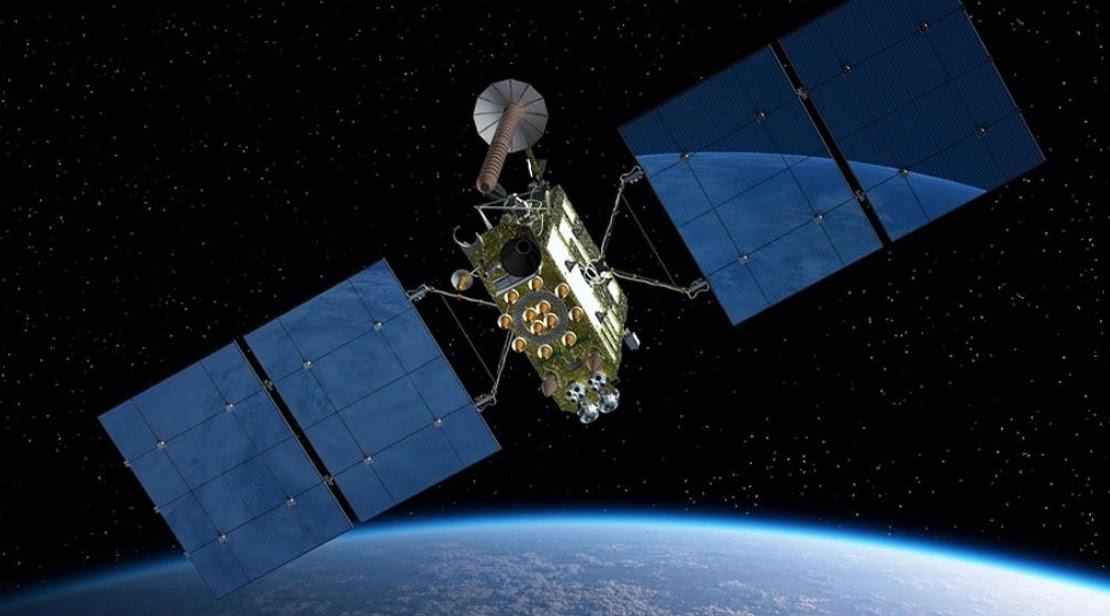
A Soyuz-2.1b rocket launched a new GLONASS-M satellite from the Plesetsk Cosmodrome, Russia, on 16 March 2020, at 18:28 UTC (21:28 local time). According to official sources, the navigation satellite was placed into the desired orbit and is functioning normally.

Soyuz-2.1b launches GLONASS-M navigation satellite

A Russian government Soyuz rocket with a Fregat upper stage launches a Glonass M navigation satellite. The Soyuz rocket fly in the Soyuz-2.1b configuration. GLONASS-M (ГЛОНАСС-М), also known as Uragan-M (Ураган-М) is part of the Russian GLONASS satellite navigation system.

GLONASS-M

The Glonass-M spacecraft launched into orbit has replenished the orbital grouping of the Russian Glonass Global Navigation Satellite System and is at the stage of entry into the system. At present, the Glonass orbital group comprises 27 spacecraft, of which one spacecraft of the new generation, Glonass-K, is undergoing flight tests and one Glonass-M spacecraft is in orbital reserve.

For more information about GLONASS network, visit: http://www.russianspaceweb.com/uragan.html

Roscosmos Press Release: http://www.roscosmos.ru/28196/

Images, Video, Text, Credits: Roscosmos/Ministry of Defence of the Russian Federation/SciNews/Orbiter.ch Aerospace/Roland Berga.

Greetings, Orbiter.ch

lundi 16 mars 2020

Massive Beauty


NASA - JUNO Mission logo.

March 16, 2020


NASA’s Juno mission captured this look at the southern hemisphere of Jupiter on Feb. 17, 2020, during the spacecraft’s most recent close approach to the giant planet.

Not only is Jupiter the largest planet orbiting the Sun, it contains more than twice the amount of material of all other objects in the solar system combined — including all the planets, moons, asteroids and comets. In composition, Jupiter resembles a star, and scientists estimate that if it had been at least 80 times more massive at its formation, it could have become a type of star called a red dwarf rather than a planet.

While the universe’s most common elements, hydrogen and helium, make up most of Jupiter’s mass, the striking clouds that are visible at the top of its atmosphere are composed mostly of ammonia and hydrogen sulfide.

This high-resolution view is a composite of four images captured by the JunoCam imager and assembled by citizen scientist Kevin M. Gill. The images were taken on Feb. 17, 2020, between 10:31 a.m. and 11:00 a.m. PST (1:31 p.m. and 2:00 p.m. EST). During that time, the spacecraft was between about 30,700 and 62,400 miles (49,500 and 100,400 kilometers) from the tops of the planet’s clouds, at latitudes between about 50 and 68 degrees South.

Juno spacecraft orbiting Jupiter

JunoCam's raw images are available for the public to peruse and process into image products at https://missionjuno.swri.edu/junocam/processing.   

More information about Juno is at https://www.nasa.gov/juno and https://missionjuno.swri.edu.

Image credit: Image data: NASA/JPL-Caltech/SwRI/MSSS/Image processing by Kevin M. Gill, © CC BY/Animation Credit: NASA/Text Credits: NASA/Tony Greicius.

Greetings, Orbiter.ch

Crew Explores Heart Cells, Genetic Expression for Earth and Space Benefits


ISS - Expedition 62 Mission patch.

March 16, 2020

The Expedition 62 crew focused on a variety of human research and space biology studies aboard the International Space Station today. Back on Earth, three new crewmembers are in training in Russia before their mission begins in April.

Microgravity shifts the flow of body fluids, such as blood and water, which accumulate in an astronaut’s head creating pressure in the cranium and on the eyes. Doctors are continuously studying this phenomenon to counteract the effects and keep long-term space crews healthy.


Image above: Expedition 62 Commander Oleg Skripochka of Roscosmos, in the middle, is flanked by NASA Flight Engineers Andrew Morgan and Jessica Meir inside U.S. Destiny laboratory module. Image Credit: NASA.

In preparation for upcoming operations with the ongoing Fluid Shifts study, NASA astronaut Andrew Morgan collected medical hardware, such as an ultrasound device, sensors and cables. He transferred the research gear to the Russian segment, where they will be used to test a specialized body suit that draws fluids toward the lower body expanding veins and tissues.

Morgan then moved on to a Japanese study that looks at how weightlessness affects genetic expression in mice.  Results may inform future therapies that keep crews safe in space and prevent muscle atrophy conditions on Earth.


Image above: Flying over Atlantic Ocean, seen by EarthCam on ISS, speed: 27'555 Km/h, altitude: 429,89 Km, image captured by Roland Berga (on Earth in Switzerland) from International Space Station (ISS) using ISS-HD Now Live application with EarthCam's from ISS on March 15, 2020 at 17:36 UTC. Image Credits: Orbiter.ch Aerospace/Roland Berga.

NASA Flight Engineer Jessica Meir relaxed on Monday aboard the orbiting lab after working Saturday afternoon on cardiac research. She serviced heart cells being manipulated and analyzed with magnet-sensors and stowed them in a science freezer. The space samples are being compared to cell cultures on the ground possibly benefitting human cardiac function on Earth and in space.

Commander Oleg Skripochka began his morning on a long-running Russian study exploring how cosmonauts will pilot spacecraft and even robotic rovers on future planetary missions. During the afternoon, he turned his attention to life support maintenance.

Next Space Station Crew Takes a Break From Training

Image above: At the Gagarin Cosmonaut Training Center in Star City, Russia, Expedition 63 crewmembers Chris Cassidy of NASA (left) and Anatoly Ivanishin (center) and Ivan Vagner of Roscosmos (right) pose for pictures in front of a Soyuz trainer during the second day of Soyuz qualification exams March 12. They are scheduled to launch April 9 on the Soyuz MS-16 spacecraft from the Baikonur Cosmodrome in Kazakhstan for a six-and-a-half month mission on the International Space Station. Image Credit: Andrey Shelepin/Gagarin Cosmonaut Training Center.

Over in Russia, three Expedition 63 crewmembers are getting ready for their launch to the space station on April 9. NASA astronaut Chris Cassidy and Roscosmos cosmonauts Anatoly Ivanishin and Ivan Vagner wrapped up two days of Soyuz qualification exams last week. They will have a news conference this Friday before heading out to the Baikonur Cosmodrome in Kazakhstan on Tuesday, March 24. Once there, the crew will be in final preparations ahead of their 195-day mission in space.

Related links:

Expedition 62: https://www.nasa.gov/mission_pages/station/expeditions/expedition62/index.html

Expedition 63: https://www.nasa.gov/mission_pages/station/expeditions/expedition63/index.html

Fluid Shifts: https://www.nasa.gov/mission_pages/station/research/experiments/explorer/Investigation.html?#id=1126

Specialized body suit: https://blogs.nasa.gov/ISS_Science_Blog/2015/06/02/rubber-vacuum-pants-that-suck/

Genetic expression: https://www.nasa.gov/mission_pages/station/research/experiments/explorer/Investigation.html?#id=8150

Cardiac research: https://www.nasa.gov/mission_pages/station/research/experiments/explorer/Investigation.html?#id=7725

Space Station Research and Technology: https://www.nasa.gov/mission_pages/station/research/index.html

International Space Station (ISS): https://www.nasa.gov/mission_pages/station/main/index.html

Images (mentioned), Text, Credits: NASA/Mark Garcia/Orbiter.ch Aerospace/Roland Berga.

Best regards, Orbiter.ch

dimanche 15 mars 2020

What is the Fatigue Countermeasures Lab?


NASA logo.

March 15, 2020

For many of us, it’s OK to feel a little sleepy at your desk after lunch. But for people with jobs where it’s critical to be alert and able to think quickly and clearly, feeling fatigued from sleep loss, jet lag, shift work or waking up groggy can be a problem.


Image above: View of Japan Aerospace Exploration Agency's (JAXA) Koichi Wakata, Expedition 38 Flight Engineer, strapped into his sleeping bag in his sleep station located in the Node 2. Image Credit: NASA.

The Fatigue Countermeasures Lab at NASA’s Ames Research Center, in California’s Silicon Valley, studies the way fatigue affects people with complex tasks to perform. The realms for these tasks can be as diverse as aviation and spaceflight, NASA space mission operations, military settings and operating self-driving cars.

In aviation, pilots face the challenges of early rises, long shifts and jet lag on the job. The lab studies ways to optimize their schedules to minimize these effects. In space, how sleep might be different away from Earth is an area of ongoing study, and the Fatigue Countermeasures Lab works closely with NASA’s astronaut program. For these primary areas of the FCL’s research, the process is the same: test solutions in the lab and then put them to use in the aviation or spaceflight environment. If this field testing reveals new problems, the team goes back to the lab to refine the approach.

By learning how sleep and its bedfellows interact – that includes alertness and circadian phase, or where you fall in your usual sleep/wake cycle at a given moment – the FCL team can explore solutions to help people manage fatigue and do their jobs safely.

Aviation Studies


Image above: Two pilots in the cockpit of a flight simulator at the Crew-Vehicle Systems Research Facility at NASA's Ames Research Center in California's Silicon Valley. The Fatigue Countermeasures Lab studies ways to optimize pilot schedules to minimize the effects of fatigue. Image Credits: NASA/Ames Research Center/Dominic Hart.

Work Start Time and Pilot Performance

In a study with a short-haul airline, the Fatigue Countermeasures Lab investigated how starting work early or ending work late affects performance. They found that pilots get less sleep and feel sleepier when they have to start work early in the morning compared to later in the day. The lab is now working to see if providing pilots with bright light in the morning, to mimic sunrise, will help them get more sleep and perform better when they must get up early.

Optimal Timing for Pilots to Rest

In a joint study with American Airlines, Washington State University and United Airlines, the FCL is working on determining the optimal time for pilots to rest during long-haul flights. On flights of 10 to 15 hours, pilots take turns sleeping in a bunk, and this work is looking at the best way to time those rest breaks for pilots who will handle the task of landing, ensuring they feel rested and alert.

Spaceflight Studies

Extended Loss of Sleep

The Fatigue Countermeasures Lab completed a study in the Human Exploration Research Analog facility at NASA’s Johnson Space Center in Houston. Missions here are treated like real space missions, with a crew of four simulating many aspects of astronaut life – including sleep loss. Sleep restriction in this mission was defined as getting five hours or less per night, and the FCL studied how alertness and performance are affected over 45 days of a restricted sleep schedule. The results are under review for future publication.

Sleep Deprivation

How will astronauts perform certain manual tasks if they get behind on sleep? In a recent study, the lab tested participants deprived of sleep for 24 hours on their performance controlling a robotic arm, using the same simulator that helps astronauts train for missions to the International Space Station. The results, looking at their success with the task, speed and accuracy are now being analyzed.

The FCL also now receives sleep data from all of the astronauts on every space station mission. The lab will be analyzing it to see if characteristics of the mission influence how long they sleep.

NASA Operations Work

A NASA mission to space can mean a lot of work back here on Earth. The Fatigue Countermeasures Lab recently worked with the team sending NASA’s VIPER rover to explore the Moon’s south pole as part of the Artemis program. The goal was to determine how long the drivers on this planet will be able to maneuver the rover before needing a break. Rover controllers completed a simulated lunar drive for five hours during the day and for five hours at night. The researchers are now analyzing the data to recommend ways to schedule the drivers and their tasks.

Studies in the Lab

Self-driving Cars

The team at the Fatigue Countermeasures Lab studied what happens regarding individuals’ alertness when they supervise self-driving cars, compared to manually driving themselves. Understanding how the brain and body respond when vehicles are on autopilot could ultimately help with the design of safety alerts in these cars. But the FCL researchers can also take what they learn from drivers – who are far more numerous than pilots – and apply that to the aviation world. More sophisticated automated controls may be proposed for planes, and the lab will be able to study how pilots interact with them in a targeted way.


Image above: Erin Flynn-Evans, a research psychologist and director of the Fatigue Countermeasures Laboratory at NASA's Ames Research Center, holds a cap that measures brain wave activity. Her team uses the cap as one tool in its studies of the way fatigue affects people on the job in diverse fields such as aviation, spaceflight and NASA mission operations. Image Credits: NASA/Ames Research Center/Dominic Hart.

Eye Movement as a Window to the Brain

In collaboration with colleagues at NASA Ames, the FCL has evaluated how eye movements change during sleep deprivation, following caffeine intake during the night, during chronic sleep restriction (five hours per night for a week) and following sleep inertia, the grogginess that you feel upon waking. The specific results are now being analyzed, but the team has found the eyes can show what’s happening in the brain and help reveal when someone is compromised by fatigue, even if they can’t recognize it themselves.

Sleep Inertia

The grogginess we often feel in the morning is a major challenge for spaceflight, aviation and military settings, where people need to perform at a high level upon waking. This is called sleep inertia and the FCL studied ways to overcome it, including exposure to special lights and breathing in a specific scent. The results are now being analyzed.

Related links:

VIPER rover: https://www.nasa.gov/viper

Artemis program: https://www.nasa.gov/specials/artemis/

Learn more:

Erin Flynn-Evans, Fatigue Countermeasures (NASA in Silicon Valley Podcast episode, October 2016): https://www.nasa.gov/ames/nisv-podcast-Erin-Flynn-Evans

Goodbye HERA, Hello Sleep: NASA’s HERA XIII Crew Returns Home to Slumber (NASA story, July 2017).

For researchers:

Fatigue Countermeasures Laboratory - About Us: https://hsi.arc.nasa.gov/groups/fatigue/aboutus.php

Aeronautics: https://www.nasa.gov/topics/aeronautics/index.html

Humans in Space: https://www.nasa.gov/topics/humans-in-space

Ames Research Center: https://www.nasa.gov/centers/ames/home/index.html

Images (mentioned), Text, Credits: NASA/Abigail Tabor.

Greetings, Orbiter.ch