vendredi 7 août 2020

Hubble Sees Near and Far


NASA - Hubble Space Telescope patch.

Aug. 7, 2020


The barred spiral galaxy known as NGC 4907 shows its starry face from 270 million light-years away to anyone who can see it from the Northern Hemisphere. This is a new image from the NASA/ESA Hubble Space Telescope of the face-on galaxy, displaying its beautiful spiral arms, wound loosely around its central bright bar of stars.

Shining brightly below the galaxy is a star that is actually within our own Milky Way galaxy. This star appears much brighter than the billions of stars in NGC 4907 as it is 100,000 times closer, residing only 2,500 light-years away.

NGC 4907 is also part of the Coma Cluster, a group of over 1,000 galaxies, some of which can be seen around NGC 4907 in this image. This massive cluster of galaxies lies within the constellation of Coma Berenices, which is named for the locks of Queen Berenice II of Egypt: the only constellation named after a historical person.

Hubble Space Telescope (HST)

For more information about Hubble, visit:

http://hubblesite.org/

http://www.nasa.gov/hubble

http://www.spacetelescope.org/

Text Credits: ESA (European Space Agency)/NASA/Rob Garner/Image, Animation Credits: ESA/Hubble & NASA, M. Gregg.

Greetings, Orbiter.ch

Cluster’s 20 years of studying Earth’s magnetosphere


ESA - Cluster Mission logo.

August 7, 2020

Despite a nominal lifetime of two years, ESA’s Cluster is now entering its third decade in space. This unique four-spacecraft mission has been revealing the secrets of Earth’s magnetic environment since 2000 and, with 20 years of observations under its belt, is still enabling new discoveries as it explores our planet’s relationship with the Sun.

Cluster

As the only planet known to host life, Earth occupies a truly unique place in the Solar System. The Cluster mission, launched in the summer of 2000, was designed and built to study perhaps the one main thing that makes Earth a unique habitable world where life can thrive. This one life-enabling thing is Earth’s powerful magnetosphere, which protects the planet from the bombardment by cosmic particles but also interacts with them, creating spectacular phenomena, such as polar lights.

Earth’s magnetosphere, a tear drop-shaped region that begins some 65,000 kilometres away from the planet on the day side and extends up to 6,300,000 kilometers on the night side, is a result of the interaction between the planet’s magnetic field, generated by the motions of its molten metal core, and the solar wind. Cluster is the first mission to have studied, modelled and three-dimensionally mapped this region and the processes within it in detail. By doing so, it helped to advance our understanding of space weather phenomena, which arise from the interplay between the magnetosphere and the energetic particles forming the solar wind. These phenomena can damage not only living organisms, but also electronic equipment, whether on the ground or in orbit.

Rumba, Salsa, Samba and Tango

Earth’s bow shock and magnetosphere

The Cluster mission comprises four spacecraft flying in a pyramid-like formation on an elliptical polar orbit. The four spacecraft, called Rumba, Salsa, Samba and Tango, each carrying the same payload of 11 advanced instruments, were dispatched to orbit with two rocket launches on 16 July and 9 August 2000.

Although the mission has become an enormous success, having enabled numerous scientific breakthroughs, it’s early days didn’t go off without a hitch. An under-performance of the first stage of the Soyuz launcher left Rumba and Tango in an incorrect orbit, forcing them to rely on their own propulsion, as well as the Fregat upper stage of Soyuz, to get to the right position to join Salsa and Samba. The mishap followed the failed launch of the original Cluster I quartet in 1996.

“ESA was a bit worried 20 years ago, during the launch of the second pair of spacecraft,” admits Philippe Escoubet, Cluster Project Scientist at ESA “Ever since then, the mission has made huge progress, and it is far from finished.”

Over the past two decades, Cluster observations have uncovered details about the processes in the magnetosphere, revealed how the atmosphere supports life, and provided essential insights into space weather needed to enable safe satellite communications and space or air travel.

A unique architecture

The key to the mission’s power is not just its four-spacecraft configuration but also the fact that operators can adjust the distance between the four satellites from 3 up to 60 000 kilometres depending on the scientific objective.

“This multi-spacecraft design is key to Cluster’s success,” explains Philippe. “By using four spacecraft instead of one, Cluster is able to uniquely measure multiple areas of space – and gain multiple perspectives on a particular event or activity, such as a solar storm – simultaneously.”

When closer together, the Cluster spacecraft can dig into the finer magnetic structures in near-Earth space; when more separated, they can obtain a broader view of wider-scale activity. Across its orbit, Cluster flies both within and outside of Earth’s magnetosphere, allowing it to investigate the phenomena on both sides of our planet’s magnetic shield.

Polar power

Cluster and Image during aurora observation

While most missions exploring Earth’s magnetic phenomena focus on the equator where many electric currents flow, the Cluster quartet circles the Earth in a polar orbit, which allows it to pass periodically above both Earth’s poles. The polar regions are magnetically extremely dynamic. Solar wind in this area can penetrate deeper into Earth’s upper atmosphere through the polar cusps, funnel-like openings in the magnetosphere above the poles, giving rise to the spectacular auroras.

Cluster’s ability to observe higher latitudes than other missions made the mission a key player in forming a global magnetospheric map.

One element of this was accurately mapping the position and extent of so-called cold plasma (slow-moving charged particles) around Earth in three dimensions. Such plasma – which Cluster found to, surprisingly, dominate the magnetosphere’s volume up to 70% of the time – is thought to play a key role in how stormy space weather affects our planet. Cluster has also studied how the inner parts of Earth’s magnetosphere work to replenish other parts with fresh plasma, observing not only sporadic plumes that push plasma outwards, but also a steady atmospheric leak of almost 90 thousand kilograms of material per day.

20 years of discovery

AURORA OVER ICELANDIC LAKE

Through its mapping of Earth’s magnetic field, and comparison of this to Mars’ lacklustre present-day magnetism, Cluster has reaffirmed the importance of our magnetosphere in shielding us from the solar wind.

Cluster has revealed more about the dynamics within the magnetotail, the part of the magnetosphere extending ‘behind’ our planet away from the Sun. The mission identified that the magnetic field in this region oscillates in amplitude due to internal ‘kink-like’ waves, and solved a long-standing mystery by determining that the phenomenon of ‘equatorial noise’ (noisy plasma waves found near the equatorial plane of Earth’s magnetic field) is generated by protons.

By investigating the spatial characteristics of the outer region of the magnetosphere, Cluster has brought a deeper understanding of how solar wind particles can penetrate our magnetic ‘shield’. The solar wind is a stream of charged particles flooding out into space from the Sun, moving at speeds of up to 2000 kilometres per hour. Cluster identified tiny swirls of turbulence that affect how energy (heat) is distributed throughout this wind, and discovered that, while it protects us from incoming particles, our magnetosphere is quite porous and sieve-like, allowing super-heated solar wind particles to drill through.

By collaborating with other missions, Cluster has helped reveal the workings of high-latitude ‘theta’ auroras and less familiar ‘black auroras’, enabling a detailed understanding of how different regions of space exchange particles. The mission also discovered the origin of so-called ‘killer electrons’, energetic particles in Earth’s outer belt of radiation that can cause havoc for satellites, by observing this process first-hand. Cluster found these electrons to arise as solar storm-related shock waves compress Earth’s magnetic field lines, resulting in these lines vibrating and accelerating electrons to high, and dangerous, speeds.

Cluster has investigated the dynamics of a process known as magnetic reconnection, providing the first in situ observations of magnetic field lines breaking and reforming – a finding that required multiple simultaneous observations, as only Cluster could provide at the time. Cluster data also showed that energy is released in unexpected ways during reconnection events, helping scientists to build a fuller understanding of plasma dynamics.

Space weather and geomagnetic storms, phenomena driven by Earth’s relationship with the Sun, have been a topic of focus for Cluster. The mission has modelled Earth’s magnetic field at both low and high altitudes, and identified the complex dynamics at play in the solar wind itself, with the goal of enabling more informed and accurate ‘space weather forecasting’. Late last year, by analysing Cluster’s comprehensive Science Archive, scientists were also able to release the eerie ‘song’ emitted by Earth when it is hit by a solar storm, created by magnetic field waves.

A treasure trove of data

Across its many years of operation, Cluster has amassed an unprecedented repository of data about Earth’s environment. In fact, by drawing on 18 years of this data, scientists recently found that iron is widely, and surprisingly, distributed throughout our planet’s vicinity, demonstrating the enduring power of Cluster in facilitating novel scientific discovery.

“Having such a long baseline of data has enabled a number of truly ground-breaking findings,” adds Arnaud Masson, Deputy Project Scientist for the Cluster mission at ESA. “By continually monitoring and recording the dynamics and properties of Earth’s magnetosphere over two decades, Cluster has created brand new opportunities for scientists to spot new or longer-term trends on differing spatial and temporal scales.”

Cluster, along with other ESA spacecraft, is also paving the way for forthcoming missions such as the European-Chinese Solar wind-Magnetosphere-Ionosphere Link Explorer (SMILE), which is scheduled for launch in 2023. SMILE will dig deeper into the Sun-Earth connection, and will build upon the remarkable work of Cluster to reveal even more about the complex and intriguing magnetic environment surrounding our planet.

“For two decades now, Cluster has been an exciting and truly cutting-edge mission, sending back all manner of new information about the Universe around us,” says Philippe. “Thanks to its unique design, long lifetime, and advanced capabilities, Cluster has unlocked a wealth of secrets about the environment around Earth. Cluster is still going strong, and will continue to help us characterise the phenomena we see around us for – hopefully! – years to come.”

Further information:

Cluster science archive: https://csa.esac.esa.int

Related links:

Cluster: https://www.esa.int/Science_Exploration/Space_Science/Cluster

European-Chinese Solar wind-Magnetosphere-Ionosphere Link Explorer (SMILE): https://sci.esa.int/web/smile

Images, Text, Credits: ESA/CC BY-SA 3.0 IGO/AOES Medialab/NASA/SOHO/LASCO/EIT/C. Gauna.

Greetings, Orbiter.ch

jeudi 6 août 2020

Station Crew Works Japanese and Russian Research


ISS - Expedition 63 Mission patch.

August 6, 2020

Advanced space science, cargo transfers and orbital maintenance kept the three Expedition 63 crew members occupied Thursday aboard the International Space Station.

Commander Chris Cassidy spent a good portion of his day working inside JAXA’s (Japan Aerospace Exploration Agency) Kibo laboratory module. The experienced shuttle and station astronaut retrieved the Handhold Experiment Platform-2 (HXP-2), packed with several experiments, from inside Kibo’s airlock.


Image above: Russia’s Progress 76 resupply ship is pictured docked to the International Space Station’s Pirs docking compartment. Below the orbiting lab are the city lights of southeastern Europe. Image Credit: NASA.

The HXP-2 was grappled by Japan’s robotic arm, removed from Kibo’s Exposed Facility and placed inside the airlock last week. The small research platform housed a variety of experiment samples exposed to the vacuum of space for observation.

Russia’s newest resupply ship, the Progress 76 (76P) which delivered nearly three tons of food, fuel and supplies last month, continued to be offloaded today. Cosmonauts Anatoly Ivanishin and Ivan Vagner unpacked electronics gear from the 76P and updated the space station’s inventory system.

A Starry Sky Above the Earth's Atmospheric Glow

Image above: This long-exposure photograph captures a starry sky above the Earth's atmospheric glow as the International Space Station orbited above the Indian Ocean about halfway between South Africa and Australia. Image Credit: NASA.

Ivanishin then moved on to science exploring how bone marrow and enzymes adapt to weightlessness and studied Earth’s upper atmosphere. Vagner checked station smoke detectors and transferred waste fluids into the Progress 75 cargo craft.

Related links:

Expedition 63: https://www.nasa.gov/mission_pages/station/expeditions/expedition63/index.html

Kibo laboratory module: https://www.nasa.gov/mission_pages/station/structure/elements/japan-kibo-laboratory

Exposed Facility: https://iss.jaxa.jp/en/kibo/about/kibo/jef/

Bone marrow and enzymes: https://www.energia.ru/en/iss/researches/biology/24.html

Earth’s upper atmosphere: https://www.energia.ru/en/iss/researches/study/15.html

Space Station Research and Technology: https://www.nasa.gov/mission_pages/station/research/overview.html

International Space Station (ISS): https://www.nasa.gov/mission_pages/station/main/index.html

Images (mentioned), Text, Credits: NASA/Mark Garcia/Yvette Smith.

Best regards, Orbiter.ch

NASA’s MAVEN Observes Martian Night Sky Pulsing in Ultraviolet Light


NASA - MAVEN Mission patch.

Aug. 6, 2020

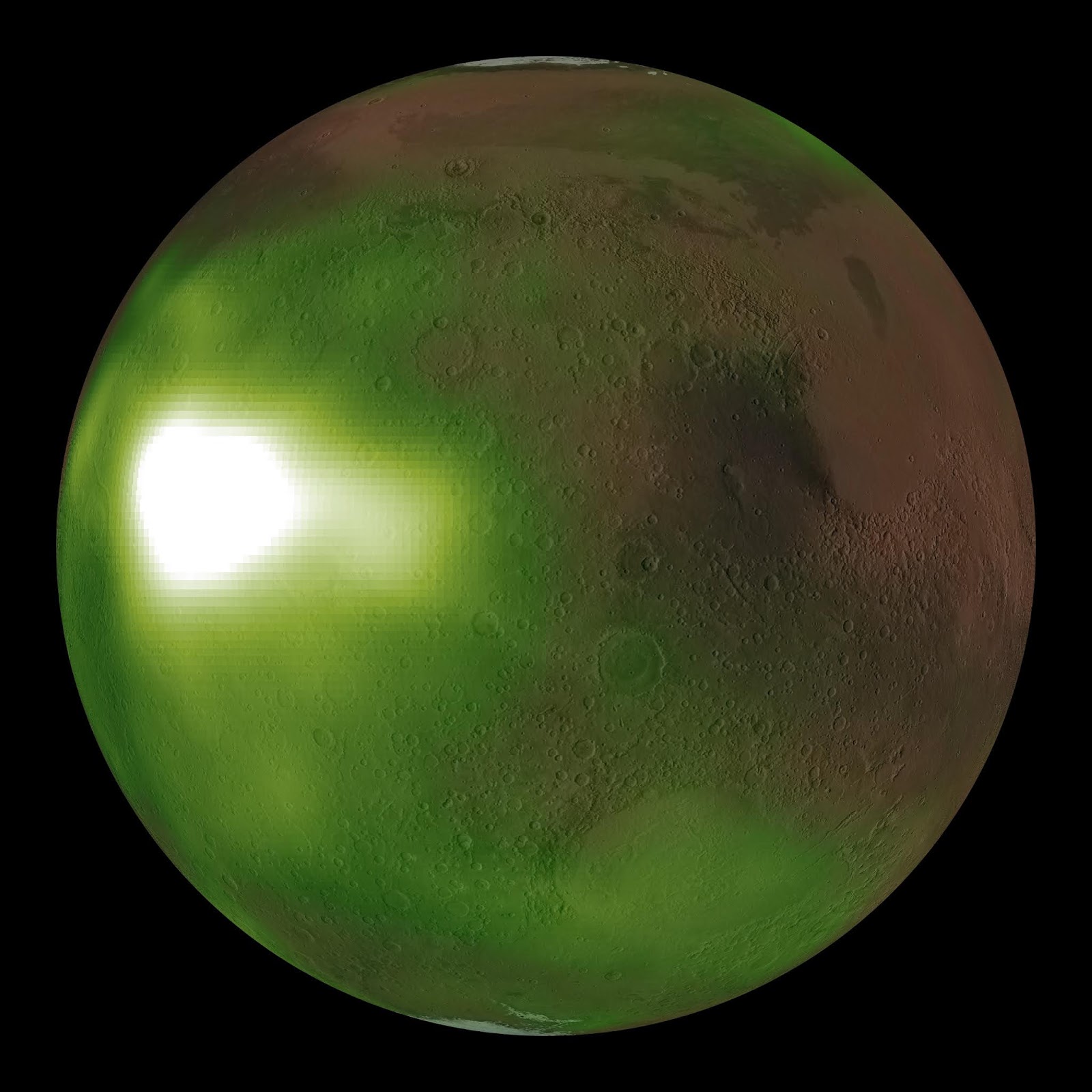
Vast areas of the Martian night sky pulse in ultraviolet light, according to images from NASA’s MAVEN spacecraft. The results are being used to illuminate complex circulation patterns in the Martian atmosphere.

Mars Nightglow Animation from MAVEN Observations

Video above: Mars’ nightside atmosphere glows and pulsates in this data animation from MAVEN spacecraft observations. Green-to-white false color shows the enhanced brightenings on Mars’ ultraviolet “nightglow" measured by MAVEN’s Imaging UltraViolet Spectrograph at about 70 kilometers (approximately 40 miles) altitude. A simulated view of the Mars globe is added digitally for context, with ice caps visible at the poles. Three nightglow brightenings occur over one Mars rotation, the first much brighter than the other two. All three brightenings occur shortly after sunset, appearing on the left of this view of the night side of the planet. The pulsations are caused by downwards winds which enhance the chemical reaction creating nitric oxide which causes the glow. Months of data were averaged to identify these patterns, indicating they repeat nightly. Video Credits: NASA/MAVEN/Goddard Space Flight Center/CU/LASP.

The MAVEN team was surprised to find that the atmosphere pulsed exactly three times per night, and only during Mars’ spring and fall. The new data also revealed unexpected waves and spirals over the winter poles, while also confirming the Mars Express spacecraft results that this nightglow was brightest over the winter polar regions.


Image above: This is an image of the ultraviolet “nightglow” in the Martian atmosphere. Green and white false colors represent the intensity of ultraviolet light, with white being the brightest. The nightglow was measured at about 70 kilometers (approximately 40 miles) altitude by the Imaging UltraViolet Spectrograph instrument on NASA’s MAVEN spacecraft. A simulated view of the Mars globe is added digitally for context. The image shows an intense brightening in Mars’ nightside atmosphere. The brightenings occur regularly after sunset on Martian evenings during fall and winter seasons, and fade by midnight. The brightening is caused by increased downwards winds which enhance the chemical reaction creating nitric oxide which causes the glow. Image Credits: NASA/MAVEN/Goddard Space Flight Center/CU/LASP.

“MAVEN’s images offer our first global insights into atmospheric motions in Mars’ middle atmosphere, a critical region where air currents carry gases between the lowest and highest layers,” said Nick Schneider of the University of Colorado's Laboratory for Atmospheric and Space Physics (LASP), Boulder, Colorado. The brightenings occur where vertical winds carry gases down to regions of higher density, speeding up the chemical reactions that create nitric oxide and power the ultraviolet glow. Schneider is instrument lead for the MAVEN Imaging Ultraviolet Spectrograph (IUVS) instrument that made these observations, and lead author of a paper on this research appearing August 6 in the Journal of Geophysical Research, Space Physics. Ultraviolet light is invisible to the human eye but detectable by specialized instruments.


Image above: The diagram explains the cause of Mars’ glowing nightside atmosphere. On Mars’ dayside, molecules are torn apart by energetic solar photons. Global circulation patterns carry the atomic fragments to the nightside, where downward winds increase the reaction rate for the atoms to reform molecules. The downwards winds occur near the poles at some seasons and in the equatorial regions at others. The new molecules hold extra energy which they emit as ultraviolet light. Image Credits: NASA/MAVEN/Goddard Space Flight Center/CU/LASP.

“The ultraviolet glow comes mostly from an altitude of about 70 kilometers (approximately 40 miles), with the brightest spot about a thousand kilometers (approximately 600 miles) across, and is as bright in the ultraviolet as Earth’s northern lights,” said Zac Milby, also of LASP. “Unfortunately, the composition of Mars’ atmosphere means that these bright spots emit no light at visible wavelengths that would allow them to be seen by future Mars astronauts. Too bad: the bright patches would intensify overhead every night after sunset, and drift across the sky at 300 kilometers per hour (about 180 miles per hour).”

The pulsations reveal the importance of planet-encircling waves in the Mars atmosphere. The number of waves and their speed indicates that Mars’ middle atmosphere is influenced by the daily pattern of solar heating and disturbances from the topography of Mars’ huge volcanic mountains. These pulsating spots are the clearest evidence that the middle atmosphere waves match those known to dominate the layers above and below.

“MAVEN’s main discoveries of atmosphere loss and climate change show the importance of these vast circulation patterns that transport atmospheric gases around the globe and from the surface to the edge of space.” said Sonal Jain, also of LASP.


Image above: This is an image of the ultraviolet “nightglow” in the Martian atmosphere over the south pole. Green and white false colors represent the intensity of ultraviolet light, with white being the brightest. The nightglow was measured at about 70 kilometers (approximately 40 miles) altitude by the Imaging UltraViolet Spectrograph instrument on NASA’s MAVEN spacecraft. A simulated view of the Mars globe is added digitally for context, and the faint white area in the center of the image is the polar ice cap. The image shows an unexpectedly bright glowing spiral in Mars’ nightside atmosphere. The cause of the spiral pattern is unknown. Image Credits: NASA/MAVEN/Goddard Space Flight Center/CU/LASP.

Next, the team plans to look at nightglow “sideways”, instead of down from above, using data taken by IUVS looking just above the edge of the planet. This new perspective will be used to understand the vertical winds and seasonal changes even more accurately.

MAVEN (Mars Atmosphere and Volatile Evolution). Animation Credit: NASA

The Martian nightglow was first observed by the SPICAM instrument on the European Space Agency’s Mars Express spacecraft. However, IUVS is a next-generation instrument better able to repeatedly map out the nightside glow, finding patterns and periodic behaviors. Many planets including Earth have nightglow, but MAVEN is the first mission to collect so many images of another planet’s nightglow.

The research was funded by the MAVEN mission. MAVEN's principal investigator is based at the University of Colorado's Laboratory for Atmospheric and Space Physics, Boulder, and NASA Goddard manages the MAVEN project. NASA is exploring our Solar System and beyond, uncovering worlds, stars, and cosmic mysteries near and far with our powerful fleet of space and ground-based missions.

Related link:

MAVEN (Mars Atmosphere and Volatile Evolution): https://www.nasa.gov/mission_pages/maven/main/index.html

Video (mentioned), Images (mentioned), Animation (mentioned), Text, Credits: NASA/GSFC/Bill Steigerwald/Nancy Jones.

Greetings, Orbiter.ch

NASA’s OSIRIS-REx is One Rehearsal Away from Touching Asteroid Bennu


NASA - OSIRIS-REx Mission patch.

Aug. 6, 2020

NASA’s first asteroid sampling spacecraft is making final preparations to grab a sample from asteroid Bennu’s surface. Next week, the OSIRIS-REx mission will conduct a second rehearsal of its touchdown sequence, practicing the sample collection activities one last time before touching down on Bennu this fall.

On Aug. 11, the mission will perform its “Matchpoint” rehearsal – the second practice run of the Touch-and-Go (TAG) sample collection event. The rehearsal will be similar to the Apr. 14 “Checkpoint” rehearsal, which practiced the first two maneuvers of the descent, but this time the spacecraft will add a third maneuver, called the Matchpoint burn, and fly even closer to sample site Nightingale – reaching an altitude of approximately 131 ft (40 m) – before backing away from the asteroid.


Image above: This artist’s concept shows the trajectory and configuration of NASA’s OSIRIS-REx spacecraft during Matchpoint rehearsal, which is the final time the mission will practice the initial steps of the sample collection sequence before touching down on asteroid Bennu. Image Credits: NASA/Goddard/University of Arizona.

This second rehearsal will be the first time the spacecraft executes the Matchpoint maneuver to then fly in tandem with Bennu’s rotation. The rehearsal also gives the team a chance to become more familiar navigating the spacecraft through all of the descent maneuvers, while verifying that the spacecraft’s imaging, navigation and ranging systems operate as expected during the event.

During the descent, the spacecraft fires its thrusters three separate times to make its way down to the asteroid’s surface. The spacecraft will travel at an average speed of around 0.2 mph (0.3 kph) during the approximately four-hour excursion. Matchpoint rehearsal begins with OSIRIS-REx firing its thrusters to leave its 0.5-mile (870-m) safe-home orbit. The spacecraft then extends its robotic sampling arm – the Touch-And-Go Sample Acquisition Mechanism (TAGSAM) – from its folded, parked position out to the sample collection configuration. Immediately following, the spacecraft rotates to begin collecting navigation images for the Natural Feature Tracking (NFT) guidance system. NFT allows OSIRIS-REx to autonomously navigate to Bennu’s surface by comparing an onboard image catalog with the real-time navigation images taken during descent. As the spacecraft approaches the surface, the NFT system updates the spacecraft’s predicted point of contact depending on OSIRIS-REx’s position in relation to Bennu’s landmarks.

The spacecraft’s two solar panels then move into a “Y-wing” configuration that safely positions them up and away from the asteroid’s surface. This configuration also places the spacecraft’s center of gravity directly over the TAGSAM collector head, which is the only part of the spacecraft that will contact Bennu’s surface during the sample collection event.

When OSIRIS-REx reaches an altitude of approximately 410 ft (125 m), it performs the Checkpoint burn and descends more steeply toward Bennu’s surface for another eight minutes. At approximately 164 ft (50 m) above the asteroid, the spacecraft fires its thrusters a third time for the Matchpoint burn. This maneuver slows the spacecraft’s rate of descent and adjusts its trajectory to match Bennu’s rotation as the spacecraft makes final corrections to target the touchdown spot. OSIRIS-REx will continue capturing images of Bennu’s landmarks for the NFT system to update the spacecraft’s trajectory for another three minutes of descent. This brings OSIRIS-REx to its targeted destination around 131 ft (40 m) from Bennu – the closest it has ever been to the asteroid. With the rehearsal complete, the spacecraft executes a back-away burn, returns its solar panels to their original position and reconfigures the TAGSAM arm back to the parked position.

During the rehearsal, the one-way light time for signals to travel between Earth and the spacecraft will be approximately 16 minutes, which prevents the live commanding of flight activities from the ground. So prior to the rehearsal’s start, the OSIRIS-REx team will uplink all of the event’s commands to the spacecraft, allowing OSIRIS-REx to perform the rehearsal sequence autonomously after the GO command is given. Also during the event, the spacecraft’s low gain antenna will be its only antenna pointing toward Earth, transmitting data at the very slow rate of 40 bits per second. So while the OSIRIS-REx team will be able to monitor the spacecraft’s vital signs, the images and science data collected during the event won’t be downlinked until the rehearsal is complete. The team will experience these same circumstances during the actual TAG event in October.

OSIRIS-REx collecting sample

Following Matchpoint rehearsal, the OSIRIS-REx team will verify the flight system’s performance during the descent, including that the Matchpoint burn accurately adjusted the spacecraft’s descent trajectory for its touchdown on Bennu. Once the mission team determines that OSIRIS-REx operated as expected, they will command the spacecraft to return to its safe-home orbit around Bennu.

The mission team has spent the last several months preparing for the Matchpoint rehearsal while maximizing remote work as part of its COVID-19 response. On the day of rehearsal, a limited number of personnel will monitor the spacecraft from Lockheed Martin Space’s facility, taking appropriate safety precautions, while the rest of the team performs their roles remotely. The mission implemented a similar protocol during the Checkpoint rehearsal in April.

On Oct. 20, the spacecraft will travel all the way to the asteroid’s surface during its first sample collection attempt. During this event, OSIRIS-REx’s sampling mechanism will touch Bennu’s surface for approximately five seconds, fire a charge of pressurized nitrogen to disturb the surface and collect a sample before the spacecraft backs away. The spacecraft is scheduled to return the sample to Earth on Sept. 24, 2023.

NASA’s Goddard Space Flight Center in Greenbelt, Maryland provides overall mission management, systems engineering, and the safety and mission assurance for OSIRIS-REx. Dante Lauretta of the University of Arizona, Tucson, is the principal investigator, and the University of Arizona also leads the science team and the mission’s science observation planning and data processing. Lockheed Martin Space in Denver built the spacecraft and is providing flight operations. Goddard and KinetX Aerospace are responsible for navigating the OSIRIS-REx spacecraft. OSIRIS-REx is the third mission in NASA’s New Frontiers Program, which is managed by NASA’s Marshall Space Flight Center in Huntsville, Alabama, for the agency’s Science Mission Directorate in Washington.

Related link:

OSIRIS-REx (Origins Spectral Interpretation Resource Identification Security Regolith Explorer): http://www.nasa.gov/mission_pages/osiris-rex/index.html

Image (mentioned), Animation, Text, Credits: NASA/Karl Hille/University of Arizona, by Brittany Enos.

Best regards, Orbiter.ch

Hubble Makes the First Observation of a Total Lunar Eclipse By a Space Telescope


ESA - Hubble Space Telescope logo.

6 August 2020

Hubble Observes the Total Lunar Eclipse (Artist’s Impression)

Taking advantage of a total lunar eclipse, astronomers using the NASA/ESA Hubble Space Telescope have detected ozone in Earth’s atmosphere. This method serves as a proxy for how they will observe Earth-like planets around other stars in the search for life. This is the first time a total lunar eclipse was captured from a space telescope and the first time such an eclipse has been studied in ultraviolet wavelengths.

To prepare for exoplanet research with bigger telescopes that are currently in development, astronomers decided to conduct experiments much closer to home, on the only known inhabited terrestrial planet: Earth. Our planet’s perfect alignment with the Sun and Moon during a total lunar eclipse mimics the geometry of a transiting terrestrial planet with its star. In a new study, Hubble did not look at Earth directly. Instead, astronomers used the Moon as a mirror that reflects the sunlight that has been filtered through Earth’s atmosphere. Using a space telescope for eclipse observations is cleaner than ground-based studies because the data is not contaminated by looking through Earth’s atmosphere.

Lunar Eclipse

These observations were particularly challenging because just before the eclipse the Moon is very bright, and its surface is not a perfect reflector since it’s mottled with bright and dark areas. Furthermore, the Moon is so close to Earth that Hubble had to try and keep a steady eye on one select region, to precisely track the Moon’s motion relative to the space observatory. It is for these reasons that Hubble is very rarely pointed at the Moon.

The measurements detected the strong spectral fingerprint of ozone, a key prerequisite for the presence – and possible evolution – of life as we know it in an exo-Earth. Although some ozone signatures had been detected in previous ground-based observations during lunar eclipses, Hubble’s study represents the strongest detection of the molecule to date because it can look at the ultraviolet light, which is absorbed by our atmosphere and does not reach the ground. On Earth, photosynthesis over billions of years is responsible for our planet’s high oxygen levels and thick ozone layer. Only 600 million years ago Earth’s atmosphere had built up enough ozone to shield life from the Sun’s lethal ultraviolet radiation. That made it safe for the first land-based life to migrate out of our oceans.

Hubble’s Region of Study During the Lunar Eclipse

“Finding ozone in the spectrum of an exo-Earth would be significant because it is a photochemical byproduct of molecular oxygen, which is a byproduct of life,” explained Allison Youngblood of the Laboratory for Atmospheric and Space Physics in Colorado, USA, lead researcher of Hubble’s observations.

Hubble recorded ozone’s ultraviolet spectral signature imprinted on sunlight that filtered through Earth’s atmosphere during a lunar eclipse that occurred on 20-21 January, 2019. Several other telescopes also made spectroscopic observations at other wavelengths during the eclipse, searching for more of Earth’s life-nurturing ingredients, such as oxygen, methane, water, and carbon monoxide.

Hubble Observes the Total Lunar Eclipse (Artist’s Impression)

“To fully characterize exoplanets, we will ideally use a variety of techniques and wavelengths,” explained team member Antonio Garcia Munoz of the Technische Universität Berlin in Germany. ”This investigation clearly highlights the benefits of the ultraviolet spectroscopy in the characterization of exoplanets. It also demonstrates the importance of testing innovative ideas and methodologies with the only habitable planet that we know of to date!”

The atmospheres of some exoplanets can be probed when the alien world passes across the face of its parent star, during a so-called transit. During a transit, starlight filters through the backlit exoplanet’s atmosphere. If viewed close up, the planet’s silhouette would look like it had a thin, glowing “halo” around it caused by the illuminated atmosphere, just as Earth does when seen from space.

Hubble Observes the Total Lunar Eclipse (Artist’s Impression)

Chemicals in the atmosphere leave their telltale signature by filtering out certain colors of starlight. The spectroscopy of transiting planets' atmospheres was pioneered by Hubble astronomers. This was especially innovative because extrasolar planets had not yet been discovered when Hubble was launched in 1990. Therefore, the space observatory was not initially designed for such experiments. So far, astronomers have used Hubble to observe the atmospheres of gas giant planets that transit their stars. But terrestrial planets are much smaller objects and their atmosphere thinner. Therefore, analyzing these signatures is much harder.

That’s why researchers will need space telescopes much larger than Hubble to collect the feeble starlight passing through these small planets’ atmospheres during a transit. These telescopes will need to observe planets for a longer period, many dozens of hours, to build up a strong signal. For Youngblood’s study, Hubble spent five hours collecting data throughout the various phases of the lunar eclipse.

Finding ozone in the skies of a terrestrial extrasolar planet does not guarantee that life exists on the surface. “You would need other spectral signatures in addition to ozone to conclude that there was life on the planet, and these signatures cannot be seen in ultraviolet light,” Youngblood said.

Hubble Space Telescope (HST)

Astronomers must search for a combination of biosignatures, such as ozone and methane, when exploring the possibilities of life. A multiwavelength campaign is needed because many biosignatures—ozone, for example—are more easily detected at specific wavelengths. Astronomers searching for ozone also must consider that it builds up over time as a planet evolves. About 2 billion years ago on Earth, the ozone was a fraction of what it is now.

The upcoming NASA/ESA/CSA James Webb Space Telescope, an infrared observatory scheduled to launch in 2021, will be able to penetrate deep into a planet’s atmosphere to detect methane and oxygen.

“We expect JWST to push the technique of transmission spectroscopy of exoplanet atmospheres to unprecedented limits,” added Garcia Munoz. “In particular, it will have the capacity to detect methane and oxygen in the atmospheres of planets orbiting nearby, small-sized stars. This will open the field of atmospheric characterization to increasingly smaller exoplanets.”

Notes:

[1] This study’s paper will appear in the Astronomical Journal:
https://iopscience.iop.org/journal/1538-3881

Links:

Hubblecast 130 Light: Hubble Studies the Earth during a Total Lunar Eclipse
https://www.spacetelescope.org/videos/heic2013a/

Hubblecast 121: What can we learn from exoplanet transits?
https://www.spacetelescope.org/videos/hubblecast121a/

Images of Hubble: http://www.spacetelescope.org/images/archive/category/spacecraft/

HubbleSite release: https://hubblesite.org/contents/news-releases/2020/news-2020-30

Science paper: http://www.spacetelescope.org/static/archives/releases/science_papers/heic2013/heic2013a.pdf

Link to Space Scoop: http://www.spacescoop.org/en/scoops/2031/a-giant-mirror-called-the-moon/

ESA Hubblesite: http://www.spacetelescope.org/

Images, Video, Text, Credits: ESA/NASA/Hubble/Bethany Downer/Technische Universität Berlin/Antonio Garcia Munoz/Laboratory for Atmospheric and Space Physics Boulder/Allison Youngblood/ESA/Hubble, M. Kornmesser.

Greetings, Orbiter.ch

CASC - Long March-2D launches Gaofen-9 04


CASC - China Aerospace Science and Technology Corporation logo.

August 6, 2020

Long March-2D launches Gaofen-9 04

A Long March-2D launch vehicle launched the Gaofen-9 04 satellite from the Jiuquan Satellite Launch Center, Gansu Province, northwest China, on 6 August 2020, at 04:01 UTC (12:01 local time).

Long March-2D launches Gaofen-9 04

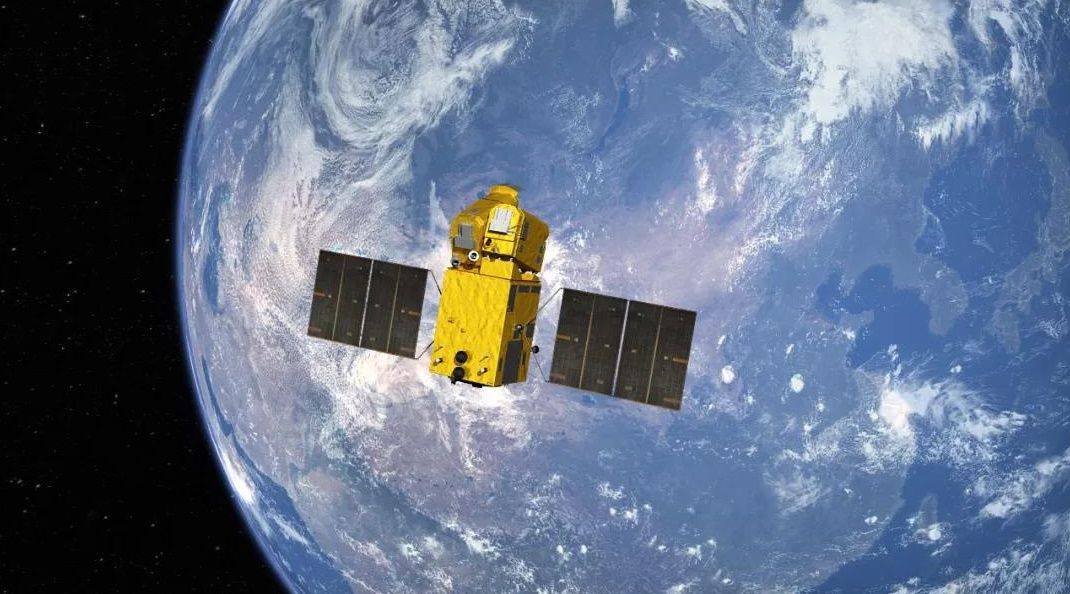
Gaofen-9 04 is a new optical remote-sensing satellite with a resolution up to the sub-meter level.

Gaofen satellite

According to official sources, the satellite entered the planned orbit and will be mainly used for land surveys, crop yield estimation, disaster prevention and mitigation.

Related articles:

CASC - Long March-2D launches Gaofen-9 03 and HEAD-5 satellites
https://orbiterchspacenews.blogspot.com/2020/06/casc-long-march-2d-launches-gaofen-9-03.html

CASC - Long March-2D launches Gaofen-9 02 and HEAD-4 satellites
https://orbiterchspacenews.blogspot.com/2020/05/casc-long-march-2d-launches-gaofen-9-02.html

For more information about China Aerospace Science and Technology Corporation (CASC): http://english.spacechina.com/n16421/index.html

Images, Video, Text, Credits: Credits: China Central Television (CCTV)/China Aerospace Science and Technology Corporation (CASC)/SciNews/Günter Space Page/Orbiter.ch Aerospace/Roland Berga.

Greetings, Orbiter.ch