jeudi 24 septembre 2020

Station Gearing Up for October Cargo and Crew Missions


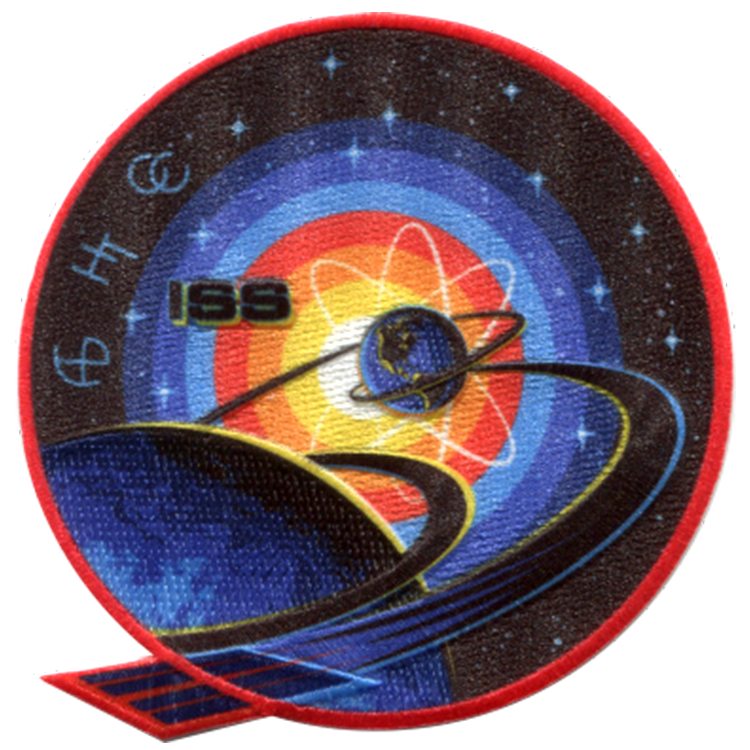
ISS - Expedition 63 Mission patch.


September 24, 2020

October is shaping up to be a busy traffic period as the International Space Station gears up for a space delivery, a crew exchange and a commercial crew mission. Meanwhile, the Expedition 63 crew focused on science, eye exams and leak inspections today.

The next U.S. cargo mission to resupply the station is due to launch on Tuesday at 10:27 p.m. EDT from Virginia.  The Cygnus space freighter from Northrop Grumman will arrive on Saturday, Oct. 3, packed with nearly 8,000 pounds supplies and gear including an advanced space toilet and brand-new science experiments. Cygnus’ preflight events, launch, rendezvous and robotic capture will be broadcast live on NASA TV.


Image above: Expedition 64 crew members (from left) Sergey Kud-Sverchkov, Sergey Ryzhikov and Kate Rubins are pictured during Soyuz qualification exams are the next crew to launch to the station. Image Credit: NASA.

Three new Expedition 64 crew members will then set their sights on their Oct. 14 launch aboard the Soyuz MS-17 crew ship to the orbiting lab. NASA astronaut Kate Rubins will ride alongside cosmonauts Sergei Ryzhikov and Sergey Kud-Sverchkov as they prepare for a 185-day mission in space.

One week later, the new station crew will say goodbye to the Expedition 63 trio that has been living in space since April. Commander Chris Cassidy with Flight Engineers Anatoly Ivanishin and Ivan Vagner will parachute to Earth inside the Soyuz MS-16 spacecraft on Oct. 21 completing a 195-day station research mission.

SpaceX is targeting Oct. 23 for the launch of four astronauts on its first operational Crew Dragon mission. NASA astronaut Mike Hopkins will command the commercial crew vehicle piloted by first-time space flyer Victor Glover. They will be supported by Mission Specialists and veteran astronauts Shannon Walker and Soichi Noguchi for the six-month stay at the orbital lab. The quartet will join the Expedition 64 crew one day after launch.

International Space Station (ISS) flying over Earth. Animation Credit: NASA

Back on the space station today, Cassidy looked at Ivanishin’s retinas using non-invasive light wave technology, or optical coherence tomography. The commander then prepared Astrobee robotic assistants for an upcoming student competition before servicing an incubator and a science freezer. Ivanishin and Vagner continued checking power and life support systems in the station’s Russian segment.

As part of ongoing work to isolate the source of a slight increase above the standard cabin air leak rate, the Expedition 63 crew used specialized detectors to inspect several windows, seals and valves across the space station. Results from their inspections will be analyzed on the ground.

Related links:

NASA TV: https://www.nasa.gov/multimedia/nasatv/index.html#public

Expedition 63: https://www.nasa.gov/mission_pages/station/expeditions/expedition63/index.html

Expedition 64: https://www.nasa.gov/mission_pages/station/expeditions/expedition64/index.html

Advanced space toilet: https://www.nasa.gov/feature/boldly-go-nasa-s-new-space-toilet-offers-more-comfort-improved-efficiency-for-deep-space

Astrobee: https://www.nasa.gov/mission_pages/station/research/experiments/explorer/Facility.html?#id=1891

Incubator: https://www.nasa.gov/mission_pages/station/research/experiments/explorer/Facility.html?#id=1148

Science freezer: https://www.nasa.gov/mission_pages/station/research/experiments/explorer/Facility.html?#id=56

Space Station Research and Technology: https://www.nasa.gov/mission_pages/station/research/overview.html

International Space Station (ISS): https://www.nasa.gov/mission_pages/station/main/index.html

Image (mentioned), Animation (mentioned), Text, Credits: NASA/Mark Garcia.

Best regards, Orbiter.ch

NASA Marks Continued Progress on X-59


NASA - X-59 Mission patch.


Sept. 24, 2020


Image above: NASA’s X-59 Quiet SuperSonic Technology X-plane, or QueSST, is designed to fly faster than the speed of sound, without producing a loud, disruptive sonic boom, which is typically heard on the ground below aircraft flying at such speeds. Instead, with the X-59, people on the ground will hear nothing more than a quiet sonic thump – if they hear anything at all. The X-59 will fly over communities around the United States to demonstrate this technology, providing scientifically valid data from the community overflights to U.S. and international regulators, who will use the information to help them come up with rules based on noise levels that may enable new commercial markets for supersonic flight over land. Image Credit: Lockheed Martin.

Assembly of NASA’s X-59 Quiet SuperSonic Technology aircraft is continuing during 2020 and making good progress, despite challenges such as those imposed by the unexpected global pandemic.

NASA plans as early as 2024 to fly the X-59 over select communities on missions to gather information about how the public will react to the level of quiet supersonic flight noise the aircraft is designed to produce – if they hear anything at all.

Data collected will be shared with federal and international regulators to help them set new rules that may allow supersonic flight over land and enable a whole new market for commercial faster-than-sound air travel.

“This mission is the culmination of decades of research, and with the X-59 we are continuing to pioneer a future of aviation in which we will see drastically reduced flight times for global-travelling passengers,” said Peter Coen, NASA’s Low-Boom Flight Demonstration Mission Integration Manager.

For now, assembly of X-59 is taking place at Lockheed Martin’s Skunk Works facility in Palmdale, California, where with each construction milestone, the airplane is taking shape – literally.

One of those milestones is with the X-59’s eXternal Vision System, or XVS, which is a forward-facing camera and display system that allows the pilot to see outside the aircraft via augmented reality.

The XVS is NASA’s solution to the aircraft’s lack of a forward-facing window – a result of the need to place the cockpit lower and farther back on the airplane because of its unique, elongated nose and fuselage profile.

The innovative XVS system underwent successful flight tests in August 2019 and passed several rounds of qualification testing in January of this year.

Major progress was also made on the aircraft’s wing thanks to the Skunk Works’ Combined Operation: Bolting and Robotic Auto-drill (COBRA) system. This advanced robotic technology enhances production by drilling and inspecting hundreds of holes on the wing that are part of the assembly process.


Image above: The unique, elongated nose for NASA’s X-59 Quiet SuperSonic Technology, or QueSST, aircraft is a critical element in NASA’s design to reduce the loud sonic boom, heard from supersonic aircraft, to no more than a quiet thump. Seen here at Lockheed Martin’s Skunk Works facility in Palmdale, California, the nose for the X-59 is over 30 feet long – long enough for pilots to require an innovative virtual system to see beyond the front of the aircraft. Image Credit: Lockheed Martin.

Meanwhile, pallet brackets were recently installed into the airframe for the XVS and Flight Test Instrumentation Systems, marking the first installation of components supplied directly by NASA for the X-59.

Moreover, the X-59 has achieved several other milestones, including delivery of several major aircraft segments that will soon be installed. These include the F414-GE-100 turbofan engine from General Electric Aviation, the aircraft’s vertical tail, and the one-of-a-kind, extended-length nose.

Although production and assembly have continued at a steady pace in many areas, the development of an all new, full scale experimental aircraft is not without its challenges.

As a result, some schedule updates have been implemented.

NASA now expects the X-59’s assembly to be complete and major ground testing to begin in summer 2021, leading to a target date for first flight in summer 2022.

“The integrated NASA and Lockheed X-59 team is doing an amazing job given the challenging circumstances of COVID-19,” said NASA’s LBFD Project Manager Craig Nickol. “The team has shown remarkable resilience, and we’re excited to see the visible progress on X-59 assembly and integration every day. Although we have had some challenges in 2020, the team has responded well by updating plans and continuing to make progress. We’re looking forward to several important milestones this year.”

These milestones include completion of manufacturing the X-59’s wing and its mating to the aircraft’s fuselage, both expected by the end of 2020.

“We are over half-way complete with the build of this one-of-a-kind X-plane,” said David Richardson, X-59 Program Director, Lockheed Martin Skunk Works. “We will soon complete close-out of the wing, which is the central structural anchor of the aircraft, and we will then prepare for mate of the empennage, fuselage, and the distinctive, super long nose.  The team has done a phenomenal job of advancing aerospace technology and working through challenges to drive progress, all of which has been enabled by our close partnership with NASA.”

None of the schedule adjustments threaten timing of the ultimate goal of delivering results of the community overflights to the International Civil Aviation Organization and Federal Aviation Administration in 2027.

With that information in hand, regulators will be able to decide if a change should be made in rules that prohibit supersonic flight over land – a decision that would be expected in 2028.

Before then, however, and even as the X-59 aircraft is under construction, other teams of NASA’s aeronautical innovators are preparing for their roles in what NASA calls the Low-Boom Flight Demonstration mission.

Once the X-59 begins flying, it will be important to validate that it is capable of producing supersonic shockwaves that will lead to quiet thumps in place of loud sonic booms. This will require tools for shock wave visualization, in-flight pressure measurement, and acoustic validation – technologies which are continuing preparation and testing at NASA, both on the ground and in the air.

These acoustic validation flights are targeted for 2023.

At the same time, critical planning and preparation for the community overflights continues – flights that are expected to begin in late 2024. The effort is taking advantage of lessons learned from a flight series that took place over Galveston, Texas in 2018.


X-59 Assembly Time Lapse, Sept. 2020

Video above: This time lapse video shows progress made on major sections of NASA’s X-59 Quiet SuperSonic Technology, or QueSST, aircraft at Lockheed Martin’s Skunk Works facility in Palmdale, California. Through X-59, NASA will demonstrate the ability to fly supersonic, or faster than the speed of sound, without producing a loud sonic boom typically heard on the ground below aircraft flying at such speeds, instead reducing it to a quiet thump. This may open the door to future faster-than-sound flight over land on a commercial level. Video Credit: Lockheed Martin.

Taken together, this mission work is spread across three projects within NASA’s Aeronautics Research Mission Directorate. They include the Commercial Supersonic Technology project managed out of NASA’s Langley Research Center in Virginia, the Flight Demonstrations and Capabilities project managed out of NASA’s Armstrong Flight Research Center in California, and the Low Boom Flight Demonstrator project, responsible for the X-59 aircraft itself, managed out of Mary W. Jackson NASA Headquarters in Washington, DC.

X-59’s mission to provide regulators with data that may open the future to supersonic flight over land, drastically reducing flight times, is the culmination of decades of NASA supersonic research. While the challenge is there, NASA, as it always has, is pioneering the future of flight through the first “A” in its name – Aeronautics.

Related links:

NASA’s X-59 Quiet SuperSonic Technology aircraft: https://www.nasa.gov/X59

Aeronautics Research Mission Directorate: https://www.nasa.gov/aeroresearch

Commercial Supersonic Technology project: https://www.nasa.gov/aeroresearch/programs/aavp/cst

Langley Research Center: https://www.nasa.gov/langley

Flight Demonstrations and Capabilities project: https://www.nasa.gov/aeroresearch/programs/iasp/fdc

Armstrong Flight Research Center: https://www.nasa.gov/centers/armstrong/home/index.html

Low Boom Flight Demonstrator project: https://www.nasa.gov/aeroresearch/programs/iasp/lbfd

Aeronautics: https://www.nasa.gov/topics/aeronautics/index.html

Images (mentioned), Video (mentioned), Text, Credits: NASA/Lillian Gipson/Armstrong Flight Research Center/Matt Kamlet.

Greetings, Orbiter.ch

NASA’s OSIRIS-REx Begins its Countdown to TAG


NASA - OSIRIS-REx Mission patch.


Sept. 24, 2020

A historic moment is on the horizon for NASA’s OSIRIS-REx mission. In just a few weeks, the robotic OSIRIS-REx spacecraft will descend to asteroid Bennu’s boulder-strewn surface, touch down for a few seconds and collect a sample of the asteroid’s rocks and dust – marking the first time NASA has grabbed pieces of an asteroid, which will be returned to Earth for study.

On Oct. 20, the mission will perform the first attempt of its Touch-And-Go (TAG) sample collection event. This series of maneuvers will bring the spacecraft down to site Nightingale, a rocky area 52 ft (16 m) in diameter in Bennu’s northern hemisphere, where the spacecraft’s robotic sampling arm will attempt to collect a sample. Site Nightingale was selected as the mission’s primary sample site because it holds the greatest amount of unobstructed fine-grained material, but the region is surrounded by building-sized boulders. During the sampling event, the spacecraft, which is the size of a large van, will attempt to touch down in an area that is only the size of a few parking spaces, and just a few steps away from some of these large boulders.


OSIRIS-REx TAG Trailer

Video above: On Oct. 20, the OSIRIS-REx mission will perform the first attempt of its Touch-And-Go (TAG) sample collection event. Not only will the spacecraft navigate to the surface using innovative navigation techniques, but it could also collect the largest sample since the Apollo missions. Video Credits: NASA's Goddard Space Flight Center.

During the 4.5-hour sample collection event, the spacecraft will perform three separate maneuvers to reach the asteroid’s surface. The descent sequence begins with OSIRIS-REx firing its thrusters for an orbit departure maneuver to leave its safe-home orbit approximately 2,500 feet (770 meters) from Bennu's surface. After traveling four hours on this downward trajectory, the spacecraft performs the “Checkpoint” maneuver at an approximate altitude of 410 ft (125 m). This thruster burn adjusts OSIRIS-REx’s position and speed to descend steeply toward the surface. About 11 minutes later, the spacecraft performs the “Matchpoint” burn at an approximate altitude of 177 ft (54 m), slowing its descent and targeting a path to match the asteroid's rotation at the time of contact. The spacecraft then descends to the surface, touches down for less than sixteen seconds and fires one of its three pressurized nitrogen bottles. The gas agitates and lifts Bennu’s surface material, which is then caught in the spacecraft’s collector head. After this brief touch, OSIRIS-REx fires its thrusters to back away from Bennu’s surface and navigates to a safe distance from the asteroid.

After the orbit departure maneuver, the spacecraft undertakes a sequence of reconfigurations to prepare for sampling. First, OSIRIS-REx extends its robotic sampling arm – the Touch-And-Go Sample Acquisition Mechanism (TAGSAM) – from its folded storage position out to the sample collection position. The spacecraft’s two solar panels then move into a “Y-wing” configuration over the spacecraft’s body, which positions them safely up and away from the asteroid’s surface during touch down. This configuration also places the spacecraft’s center of gravity directly over the TAGSAM collector head, which is the only part of the spacecraft that will contact Bennu’s surface during the sample collection event.

OSIRIS-REx colecting sample. Animation Credit: NASA

Because the spacecraft and Bennu are approximately 207 million miles (334 million km) from Earth during TAG, it will take about 18.5 minutes for signals to travel between them. This time lag prevents the live commanding of flight activities from the ground during the TAG event, so the spacecraft is designed to perform the entire sample collection sequence autonomously. Prior to the event’s start, the OSIRIS-REx team will uplink all of the commands to the spacecraft and then send a “GO” command to begin.

To autonomously navigate to site Nightingale, OSIRIS-REx uses the Natural Feature Tracking (NFT) navigation system. The spacecraft begins collecting navigation images about 90 minutes after orbit departure. It then compares these real-time images to an onboard image catalog, using identified surface features to make sure that it’s on the right course toward the site. As the spacecraft approaches the surface, OSIRIS-REx updates the Checkpoint and Matchpoint maneuvers based on the NFT's estimate of the spacecraft’s position and velocity. OSIRIS-REx continues to use the NFT estimates as it descends to the surface after the Matchpoint maneuver to monitor its position and descent rate. The spacecraft will autonomously abort should its trajectory vary outside of predefined limits.

To ensure that the spacecraft touches down on a safe area that avoids the region’s many boulders, the navigation system is equipped with a hazard map of site Nightingale, which delineates areas within the sample site that could potentially harm the spacecraft. If the spacecraft’s NFT system detects that it is on course to touch one of these hazardous zones, the spacecraft will autonomously wave off its approach once it reaches an altitude of 16 ft (5 m). This keeps the spacecraft safe and allows for a subsequent sample collection attempt at a future date.


Image above: This artist’s concept shows NASA’s OSIRIS-REx spacecraft descending towards asteroid Bennu to collect a sample of the asteroid’s surface. Image Credits: NASA/Goddard/University of Arizona.

As the spacecraft performs each event in the sample collection sequence, it will send telemetry updates back to the OSIRIS-REx team, albeit at an extremely slow data rate. The team will monitor the telemetry during the excursion and will be able to confirm that the spacecraft has successfully touched down on Bennu’s surface soon after TAG occurs. The images and other science data collected during the event will be downlinked after the spacecraft has backed away from the asteroid and can point its larger antenna back to Earth to transmit at higher communication rates.

OSIRIS-REx is charged with collecting at least 2 oz. (60 grams) of Bennu’s rocky material to deliver back to Earth – the largest sample return from space since the Apollo program – and the mission developed two methods to verify that this sample collection occurred. On Oct. 22, OSIRIS-REx’s SamCam camera will capture images of the TAGSAM head to see whether it contains Bennu’s surface material. The spacecraft will also perform a spin maneuver on Oct. 24 to determine the mass of collected material. If these measures show successful collection, the decision will be made to place the sample in the Sample Return Capsule (SRC) for return to Earth. If sufficient sample has not been collected from Nightingale, the spacecraft has onboard nitrogen charges for two more attempts. A TAG attempt at the back-up Osprey site would be made no earlier than January 2021.

The mission team has spent the last several months preparing for the sample collection event while maximizing remote work as part of its COVID-19 response. On the day of TAG, a limited number of team members will monitor the spacecraft from Lockheed Martin Space’s Mission Support Area, taking appropriate safety precautions. Other members of the team will also be at other locations on-site to cover the event, while also observing safety protocols.

The spacecraft is scheduled to depart Bennu in 2021 and it will deliver the collected sample to Earth on Sep. 24, 2023.

NASA’s Goddard Space Flight Center in Greenbelt, Maryland, provides overall mission management, systems engineering, and the safety and mission assurance for OSIRIS-REx. Dante Lauretta of the University of Arizona, Tucson, is the principal investigator, and the University of Arizona also leads the science team and the mission’s science observation planning and data processing. Lockheed Martin Space in Denver built the spacecraft and provides flight operations. Goddard and KinetX Aerospace are responsible for navigating the OSIRIS-REx spacecraft. OSIRIS-REx is the third mission in NASA’s New Frontiers Program, which is managed by NASA’s Marshall Space Flight Center in Huntsville, Alabama, for the agency’s Science Mission Directorate in Washington.

To view graphics from the Sept. 24 media telecon, go to: https://svs.gsfc.nasa.gov/13724

To visit the OSIRIS-REx media gallery, go to: https://svs.gsfc.nasa.gov/Gallery/OSIRIS-REx.html

For more information on the OSIRIS-REx mission, visit:

https://www.nasa.gov/osiris-rex and https://www.asteroidmission.org

Image (mentioned), Animation (mentioned), Video (mentioned), Text, Credits: NASA/Karl Hille/University of Arizona/Writer: Brittany Enos.

Best regards, Orbiter.ch

mercredi 23 septembre 2020

Changing the parameters of the next correction of the ISS orbit


ROSCOSMOS - Russian Vehicles patch.


Sept. 23, 2020

In connection with the unscheduled correction of the orbit of the International Space Station to avoid "space debris" held on September 23, 2020, the Mission Control Center (Korolev, Moscow Region) made a decision to form ballistic conditions before the launch of the Soyuz MS-17 manned spacecraft on changing the parameters of the planned ISS orbit correction on October 7, 2020.

According to preliminary data from the ballistic and navigation support service of the Flight Control Center of the Central Research Institute of Mechanical Engineering (part of the Roscosmos State Corporation), the engines of the Progress MS-14 cargo ship docked to the aggregate compartment of the Zvezda module will be turned on at 11:11 Moscow time and will work 403.7 s. After carrying out the corrective maneuver, the average altitude of the station's orbit will decrease by 1.4 km and will be about 418.4 km above the Earth's surface.

International Space Station (ISS)

The launch of the Soyuz-2.1a carrier rocket with the Soyuz MS-17 manned spacecraft and the crew of the 64th long-term expedition to the International Space Station is scheduled for October 14, 2020 from the Baikonur cosmodrome. The prime crew includes Roscosmos cosmonauts Sergei Ryzhikov and Sergei Kud-Sverchkov, as well as NASA astronaut Kathleen Rubins. Back-up crew: Roscosmos cosmonauts Oleg Novitsky, Peter Dubrov and NASA astronaut Mark Vande Hai.

ROSCOSMOS Press Release: https://www.roscosmos.ru/29259/

An unscheduled correction of the ISS orbit was carried out

On the evening of September 22, 2020, the Russian Mission Control Center received information that the International Space Station is part of the so-called. The "red zone". This means that there is a danger of collision between the station and "space debris".

After analyzing the available information, the flight control group of the International Space Station made a decision on the need for an urgent evasion maneuver.

The engines of the Progress MS-14 cargo vehicle were switched on at 00:19 Moscow time on September 23 and worked for 150 seconds, giving the station an impulse of 0.3 m/s, as a result of which it evaded a dangerous object.

ROSCOSMOS Press Release: https://www.roscosmos.ru/29258/

Related articles:

Station Crew Preps for Space Debris Avoidance Maneuver
https://orbiterchspacenews.blogspot.com/2020/09/station-crew-preps-for-space-debris.html

ISS orbit correction is scheduled for October 7
https://orbiterchspacenews.blogspot.com/2020/09/iss-orbit-correction-is-scheduled-for.html

International Space Station (ISS): https://www.nasa.gov/mission_pages/station/main/index.html

Image, Text, Credits: ROSCOSMOS/NASA/Orbiter.ch Aerospace/Roland Berga.

Best regards, Orbiter.ch

Crew Readies for New Space Toilet and Continues Eye Exams


ISS - Expedition 63 Mission patch.


September 23, 2020

The International Space Station is gearing up for an advanced bathroom set to arrive on a U.S. resupply ship early next month. Meanwhile, the Expedition 63 crew continued this week’s eye checks and more space research and life support maintenance.

The orbital lab will get a new space toilet scheduled to be delivered inside Northrop Grumman’s Cygnus cargo craft on Oct. 3. The upgraded restroom facility will be smaller, more comfortable and support a larger crew as NASA’s Commercial Crew Program sends more astronauts to the station.


Image above: NASA astronaut and Expedition 63 Commander Chris Cassidy poses for a portrait in front of the Microgravity Science Glovebox. Image Credit: NASA.

Station crewmates Chris Cassidy and Ivan Vagner will be at the robotics workstation commanding the Canadarm2 robotic arm to capture Cygnus next Saturday. The duo began reviewing Cygnus’ mission profile today and are getting up to speed with the tasks necessary to support the upcoming space delivery.

The two crewmates then joined their colleague cosmonaut Anatoly Ivanishin for regularly scheduled eye checks in the afternoon. Wednesday’s tests looked at the retina using non-invasive light wave technology, or optical coherence tomography. The weeklong exams also consist of reading vision charts with one eye covered, as well as self-administered ultrasound eye scans with real-time support from ground doctors.

ISS orbital laboratory flying over night Earth. Animation Credit: NASA

Cassidy’s science work today saw him activate the Astrobee robotic helpers and check out hardware for a perception and orientation in space study. The NASA astronaut then collected samples of the station’s U.S. segment drinking water for microbial analysis.

Working from the Russian side of the station, Ivanishin spent the morning replacing smoke detectors in the Zarya module. Vagner also gathered drinking water samples for later analysis both on the orbiting lab and back on Earth.

Related article:

Cygnus Carries Toilet, Cancer Research, VR Camera to Space Station on 14th Mission
https://orbiterchspacenews.blogspot.com/2020/09/cygnus-carries-toilet-cancer-research.html

Related links:

Expedition 63: https://www.nasa.gov/mission_pages/station/expeditions/expedition63/index.html

New space toilet: https://www.nasa.gov/feature/boldly-go-nasa-s-new-space-toilet-offers-more-comfort-improved-efficiency-for-deep-space

Canadarm2: https://www.nasa.gov/mission_pages/station/structure/elements/mobile-servicing-system.html

Perception and orientation in space: https://www.nasa.gov/mission_pages/station/research/experiments/explorer/Investigation.html?#id=7484

Zarya module: https://www.nasa.gov/mission_pages/station/structure/elements/zarya-cargo-module

Space Station Research and Technology: https://www.nasa.gov/mission_pages/station/research/overview.html

International Space Station (ISS): https://www.nasa.gov/mission_pages/station/main/index.html

Image (mentioned), Animation (mentioned), Text, Credits: NASA/Mark Garcia.

Best regards, Orbiter.ch

Cyclones of Color at Jupiter’s North Pole


NASA - JUNO Mission logo.


Sept. 23, 2020


Cyclones at the north pole of Jupiter appear as swirls of striking colors in this extreme false color rendering of an image from NASA’s Juno mission. The huge, persistent cyclone found at Jupiter’s north pole is visible at the center of the image, encircled by smaller cyclones that range in size from 2,500 to 2,900 miles (4,000 to 4,600 kilometers). Together, this pattern of storms covers an area that would dwarf the Earth.

The color choices in this image reveal both the beauty of Jupiter and the subtle details present in Jupiter’s dynamic cloud structure. Each new observation that Juno provides of Jupiter’s atmosphere complements computer simulations and helps further refine our understanding of how the storms evolve over time.

The Juno mission provided the first clear views of Jupiter’s polar regions. Juno’s Jovian InfraRed Auroral Mapper (JIRAM) instrument has also mapped this area, as well as a similar pattern of storms at the planet’s south pole.

JUNO spacecraft orbiting Jupiter

Citizen scientist Gerald Eichstädt made this composite image using data obtained by the JunoCam instrument during four of the Juno spacecraft’s close passes by Jupiter, which took place between Feb. 17, 2020, and July 25, 2020. The greatly exaggerated color is partially a result of combining many individual images to create this view.

JunoCam's raw images are available for the public to peruse and process into image products at https://missionjuno.swri.edu/junocam/processing.    

More information about Juno is at https://www.nasa.gov/juno and https://missionjuno.swri.edu.

Text, Animation Credits: NASA/Yvette Smith/Image data: NASA/JPL-Caltech/SwRI/MSSS/Image processing by Gerald Eichstädt.

Best regards, Orbiter.ch

NASA's New Mars Rover Will Use X-Rays to Hunt Fossils


NASA - Mars 2020 Perseverance Rover logo.


September 23, 2020

PIXL, an instrument on the end of the Perseverance rover's arm, will search for chemical fingerprints left by ancient microbes.


Image above: NASA's New Mars Rover Will Use X-Rays to Hunt Fossils. In this illustration, NASA's Perseverance Mars rover uses the Planetary Instrument for X-ray Lithochemistry (PIXL). Located on the turret at the end of the rover's robotic arm, the X-ray spectrometer will help search for signs of ancient microbial life in rocks. Image Credits: NASA/JPL-Caltech.

NASA's Mars 2020 Perseverance rover has a challenging road ahead: After having to make it through the harrowing entry, descent, and landing phase of the mission on Feb. 18, 2021, it will begin searching for traces of microscopic life from billions of years back. That's why it's packing PIXL, a precision X-ray device powered by artificial intelligence (AI).

Short for Planetary Instrument for X-ray Lithochemistry, PIXL is a lunchbox-size instrument located on the end of Perseverance's 7-foot-long (2-meter-long) robotic arm. The rover's most important samples will be collected by a coring drill on the end of the arm, then stashed in metal tubes that Perseverance will deposit on the surface for return to Earth by a future mission.

Nearly every mission that has successfully landed on Mars, from the Viking landers to the Curiosity rover, has included an X-ray fluorescence spectrometer of some kind. One major way PIXL differs from its predecessors is in its ability to scan rock using a powerful, finely-focused X-ray beam to discover where - and in what quantity - chemicals are distributed across the surface.

"PIXL's X-ray beam is so narrow that it can pinpoint features as small as a grain of salt. That allows us to very accurately tie chemicals we detect to specific textures in a rock," said Abigail Allwood, PIXL's principal investigator at NASA's Jet Propulsion Laboratory in Southern California.

Rock textures will be an essential clue when deciding which samples are worth returning to Earth. On our planet, distinctively warped rocks called stromatolites were made from ancient layers of bacteria, and they are just one example of fossilized ancient life that scientists will be looking for.


Animation above: A device with six mechanical legs, the hexapod is a critical part of the PIXL instrument aboard NASA's Perseverance Mars rover. The hexapod allows PIXL to make slow, precise movements to get closer to and point at specific parts of a rock's surface. This GIF has been considerably sped up to show how the hexapod moves. Image Credits: NASA/JPL-Caltech.

An AI-Powered Night Owl

To help find the best targets, PIXL relies on more than a precision X-ray beam alone. It also needs a hexapod - a device featuring six mechanical legs connecting PIXL to the robotic arm and guided by artificial intelligence to get the most accurate aim. After the rover's arm is placed close to an interesting rock, PIXL uses a camera and laser to calculate its distance. Then those legs make tiny movements - on the order of just 100 microns, or about twice the width of a human hair - so the device can scan the target, mapping the chemicals found within a postage stamp-size area.

"The hexapod figures out on its own how to point and extend its legs even closer to a rock target," Allwood said. "It's kind of like a little robot who has made itself at home on the end of the rover's arm."

Then PIXL measures X-rays in 10-second bursts from a single point on a rock before the instrument tilts 100 microns and takes another measurement. To produce one of those postage stamp-size chemical maps, it may need to do this thousands of times over the course of as many as eight or nine hours.

That timeframe is partly what makes PIXL's microscopic adjustments so critical: The temperature on Mars changes by more than 100 degrees Fahrenheit (38 degrees Celsius) over the course of a day, causing the metal on Perseverance's robotic arm to expand and contract by as much as a half-inch (13 millimeters). To minimize the thermal contractions PIXL has to contend with, the instrument will conduct its science after the Sun sets.

"PIXL is a night owl," Allwood said. "The temperature is more stable at night, and that also lets us work at a time when there's less activity on the rover."


Image above: PIXL opens its dust cover during testing at NASA's Jet Propulsion Laboratory. One of seven instruments on NASA's Perseverance Mars rover, PIXL is located on the end of the rover's robotic arm. Image Credits: NASA/JPL-Caltech.

X-rays for Art and Science

Long before X-ray fluorescence got to Mars, it was used by geologists and metallurgists to identify materials. It eventually became a standard museum technique for discovering the origins of paintings or detecting counterfeits.

"If you know that an artist typically used a certain titanium white with a unique chemical signature of heavy metals, this evidence might help authenticate a painting," said Chris Heirwegh, an X-ray fluorescence expert on the PIXL team at JPL. "Or you can determine if a particular kind of paint originated in Italy rather than France, linking it to a specific artistic group from the time period."


Image above: PIXL requires pictures of its rock targets to autonomously position itself. Light diodes encircle its opening and take pictures of rock targets when the instrument is working at night. Using artificial intelligence, PIXL relies on the images to determine how far away it is from a target to be scanned. Image Credits: NASA/JPL-Caltech.

For astrobiologists, X-ray fluorescence is a way to read stories left by the ancient past. Allwood used it to determine that stromatolite rocks found in her native country of Australia are some of the oldest microbial fossils on Earth, dating back 3.5 billion years. Mapping out the chemistry in rock textures with PIXL will offer scientists clues to interpret whether a sample could be a fossilized microbe.

More About the Mission

A key objective for Perseverance's mission on Mars is astrobiology, including the search for signs of ancient microbial life. The rover will also characterize the planet's climate and geology, pave the way for human exploration of the Red Planet, and be the first planetary mission to collect and cache Martian rock and regolith (broken rock and dust). Subsequent missions, currently under consideration by NASA in cooperation with the European Space Agency, would send spacecraft to Mars to collect these cached samples from the surface and return them to Earth for in-depth analysis.

The Mars 2020 mission is part of a larger program that includes missions to the Moon as a way to prepare for human exploration of the Red Planet. Charged with returning astronauts to the Moon by 2024, NASA will establish a sustained human presence on and around the Moon by 2028 through NASA's Artemis lunar exploration plans: https://www.nasa.gov/specials/artemis/

JPL, which is managed for NASA by Caltech in Pasadena, California, built and manages operations of the Perseverance and Curiosity rovers.

Learn more about the Mars 2020 mission at: https://www.nasa.gov/perseverance

Images (mentioned), Animation (mentioned), Text, Credits: NASA/Alana Johnson/JPL/Andrew Good.

Greetings, Orbiter.ch