vendredi 22 juillet 2022

Space Station Science Highlights: Week of July 18, 2022


ISS - Expedition 67 Mission patch.


July 22, 2022

Crew members aboard the International Space Station conducted scientific investigations during the week of July 18 that included examining immune system changes during spaceflight, studying formation of optical fibers in microgravity, and monitoring how impurities affect protein crystal growth.


Image above: NASA astronauts Bob Hines and Jessica Watkins inside the cupola after monitoring the successful rendezvous and docking of the SpaceX Dragon 25th Commercial Resupply Services mission to the space station. Image Credit: NASA.

Here are details on some of the microgravity investigations currently taking place aboard the orbiting lab:

Aging faster, aging better

Aging is associated with changes in the immune response that are known as immunosenescence. Microgravity causes changes in human immune cells that resemble this condition but happen faster than the actual process of aging on Earth. The Immunosenescence investigation, sponsored by the ISS National Lab, takes advantage of this fact, using tissue chips to study how microgravity affects immune function during flight and whether immune cells recover post-flight. Tissue chips are small devices that contain human cells in a 3D structure, allowing scientists to test how those cells respond to stresses, drugs, and genetic changes. Results could support development of treatments to protect astronauts during future long-duration spaceflight, and lead to development of more effective treatments for immune system aging on Earth. During the week, crew members changed media in the Life Sciences Glovebox (LSG) and collected samples for the investigation.


Image above: A pair of the main solar arrays (left) and the Exposed Facility (right) are pictured as the space station orbits 258 miles above the Persian Gulf. Image Credit: NASA.

Superior optical fibers

Fiber Optic Production-2 , sponsored by the ISS National Lab, builds on previous work to develop the technology for manufacturing commercial optical fibers in microgravity using a blend of elements called ZBLAN. Earlier studies suggest that ZBLAN optical fibers produced in microgravity exhibit qualities superior to those produced on Earth. These fibers are difficult to manufacture on Earth and this investigation could help guide manufacture of optical fiber aboard the space station for commercial use. Potential applications of the fibers in space include remote sensing, Light Detection and Ranging (LIDAR), hyperspectral imaging, atmospheric monitoring, and optical data communications. ZBLAN optical fibers manufactured in space also have many potential applications on Earth, including improved data transmission for telecommunications and use in devices for spectroscopy, laser surgery, remote sensing, and environmental monitoring. Crew members installed and assembled components for the investigation inside the station’s Microgravity Science Glovebox (MSG) during the week.

Purer protein crystals

Advanced Nano Step, an investigation from the Japan Aerospace Exploration Agency (JAXA), monitors and records how specific impurities affect the development and quality of protein crystals grown in microgravity. Protein crystals grown in microgravity are known to be of higher quality than those grown on Earth, but the success rate is at most 20-60% better. This investigation aims to improve that rate and help scientists understand the kinds of impurities that deteriorate protein crystal quality. Researchers plan to return the crystals to Earth for analysis via synchrotron X-ray diffraction. Advanced Nano Step could significantly improve efforts to exclude impurities before launch. This knowledge also could be useful for crystallization trials conducted with diffusion-limited growth methods on Earth, such as with gel growth methods. During the week, crew members conducted operations for the investigation.

Other investigations involving the crew:


Image above: NASA astronaut Kjell Lindgren works on Forward Osmosis Membrane, an investigation that tests technology for water reclamation in microgravity for possible use on future space exploration missions. Image Credit: NASA.

- Forward Osmosis Membrane tests whether reactive membranes, which show promise for water reclamation on the ground, perform in microgravity. This technology could support future space exploration missions.
https://www.nasa.gov/mission_pages/station/research/experiments/explorer/Investigation.html#id=8369


Animation above: NASA astronaut Kjell Lindgren checks plant growth for XROOTS, which grows plants using hydroponic (liquid-based) and aeroponic (air-based) techniques rather than traditional growth media. The investigation could ultimately enable production of crops on a larger scale for future space exploration. Animation Credit: NASA.

- XROOTS uses hydroponic (liquid-based) and aeroponic (air-based) techniques to grow plants without traditional growth media, which could enable production of crops on a larger scale for future space exploration.
https://www.nasa.gov/mission_pages/station/research/experiments/explorer/Investigation.html?#id=8088

- Wireless Compose-2, an investigation from ESA (European Space Agency), demonstrates the Smart Shirt, a garment with sensors that measure body motion and heartbeat, and a wireless network for transmitting the data. This technology has the potential for uses such as monitoring the health of astronauts on future missions.
https://www.nasa.gov/mission_pages/station/research/experiments/explorer/Investigation.html?#id=8563

- An investigation from the Canadian Space Agency (CSA), VECTION looks at changes in an astronaut’s ability to judge body motion and orientation and estimate distances. Results could help address the issues these changes create for astronauts.
https://www.nasa.gov/mission_pages/station/research/experiments/explorer/Investigation.html?#id=7484

- SERFE examines the effect of microgravity on a technology to remove heat from spacesuits, which is important for maintaining appropriate temperatures for crew members and equipment during space walks. The investigation also evaluates the technology’s effect on contamination and corrosion of spacesuit material.
https://www.nasa.gov/mission_pages/station/research/experiments/explorer/Investigation.html?#id=7514

- ISS Ham Radio provides students, teachers, parents, and others the opportunity to communicate with astronauts using amateur radio units. Before a scheduled call, students learn about the station, radio waves, and other topics and prepare a list of questions based on the topics they have researched.
https://www.nasa.gov/mission_pages/station/research/experiments/explorer/Investigation.html?#id=337

The space station is a robust microgravity laboratory with a multitude of specialized research facilities and tools. Over more than two decades of continuous operation, it has supported many scientific breakthroughs from investigations spanning every major scientific discipline. The orbiting lab conveys benefits to future space exploration, advances basic and applied research on Earth, and provides a platform for a growing commercial presence in low-Earth orbit.

Space to Ground: Double Dragons: 07/22/2022

Related links:

Expedition 67: https://www.nasa.gov/mission_pages/station/expeditions/expedition67/index.html

Immunosenescence: https://www.nasa.gov/mission_pages/station/research/experiments/explorer/Investigation.html?#id=8343

ISS National Lab: https://www.issnationallab.org/

Tissue chips: https://www.nasa.gov/tissue-chips

Life Sciences Glovebox (LSG): https://www.nasa.gov/mission_pages/station/research/experiments/explorer/Facility.html?#id=7676

Fiber Optic Production-2: https://www.nasa.gov/mission_pages/station/research/experiments/explorer/Investigation.html?#id=8214

Microgravity Science Glovebox (MSG): https://www.nasa.gov/mission_pages/station/research/experiments/explorer/Facility.html?#id=341

Advanced Nano Step: https://www.nasa.gov/mission_pages/station/research/experiments/explorer/Investigation.html?#id=7468

Spot the Station: https://spotthestation.nasa.gov/

Space Station Research and Technology: https://www.nasa.gov/mission_pages/station/research/overview.html

International Space Station (ISS): https://www.nasa.gov/mission_pages/station/main/index.html

Images (mentioned), Animation (mentioned), Video (NASA), Text, Credits: NASA/Ana Guzman/John Love, ISS Research Planning Integration Scientist Expedition 67.

Best regards, Orbiter.ch

The Xuntian Space Telescope


CNSA - China National Space Administration logo.


July 22, 2022

Xuntian Space Telescope

The Xuntian Space Telescope, also known as China Space Station Telescope (CSST) or the Chinese Survey Space Telescope, is expected to have a 300 times wider view than the Hubble Space Telescope and to start scientific operations in 2024.

Xuntian to have a 300 times wider view than Hubble

Xuntian Space Telescope cutaway

For more information about China National Space Administration (CNSA), visit: http://www.cnsa.gov.cn/

Images, Video, Text, Credits: China National Space Administration (CNSA)/China Central Television (CCTV)/SciNews/Orbiter.ch Aerospace/Roland Berga.

Greetings, Orbiter.ch

jeudi 21 juillet 2022

53th anniversary of the Apollo 11 mission


NASA - Apollo 11 Mission patch.


July 21, 2022

Lunar Excursion Module (LEM) "Eagle" landing and Neil Armstrong first step on the Moon

Today we celebrate the 53th anniversary of the Apollo 11 mission, July 21, 1969 is a day that will remain in the history of humanity because it was the first step on lunar soil. With the famous phrase of Neils Armstrong: it's a small step for man, a giant leap for mankind.

Footprint on the Moon. Image Credits: NASA/Apollo 11

In these troubled times, the imminent return to the Moon (Artemis Program) in order to establish a permanent presence there is the second step towards the expansion of humanity in the solar system to begin with and in the future, in interstellar space. And the adversity of our times should not hold us back.


Image above: The crew of Apollo 11 (from left): Neil Armstrong, Michael Collins, and Edwin (“Buzz”) Aldrin. Image Credit: NASA.

The 49 lbs. (22 kilograms) of moon rocks and lunar dust returned to Earth by the Apollo 11 mission provided a treasure trove of material that opened the door to insights about another world. Along the way, scientists would glean information about the early days of the solar system and the formation of the Earth, and they would tease out a new understanding of the relationship between our planet and its satellite.


Image above: Astronaut Edwin “Buzz” Aldrin setting up an experiment on the lunar surface, a solar sail from the University of Bern in Switzerland, behind the Lunar Excursion Module (LEM). Image Credits: NASA/Apollo 11.

From the time of its launch on July 16, 1969, until the return splashdown on July 24, almost every major aspect of the flight of Apollo 11 was witnessed via television by hundreds of millions of people in nearly every part of the globe.

Related link:

Apollo 11 Mission Overview: https://www.nasa.gov/mission_pages/apollo/missions/apollo11.html

Artemis program: https://www.nasa.gov/artemisprogram

Images (mentioned), Video (NASA), Text Credits: Orbiter.ch Aerospace/Roland Berga.

Greetings, Orbiter.ch

Russian, European Spacewalkers Wrap Up Robotic Arm Excursion


EVA - Extra Vehicular Activities patch.


July 21, 2022

Spacewalkers Exit Station to Configure New Robotic Arm


Image above: Expedition 67 Commander Oleg Artemyev of Roscosmos and Flight Engineer Samantha Cristoforetti of ESA, clad in Russian Orlan spacesuits, will spend about six-and-a-half hours outfitting the European robotic arm on the International Space Station’s Nauka laboratory. Artemyev will wear a Russian spacesuit with red stripes (EV1), while Cristoforetti will wear a Russian suit with blue stripes (EV2). Image Credit: NASA TV.

Expedition 67 Commander Oleg Artemyev of Roscosmos and Flight Engineer Samantha Cristoforetti of ESA (European Space Agency) began a spacewalk at 10:50 a.m. EDT to continue outfitting the European robotic arm on the International Space Station’s Nauka laboratory by opening the hatch of the Poisk docking compartment airlock.


Image above: Exp 67 Commander Oleg Artemyev of Roscosmos and Flight Engineer Samantha Cristoforetti of ESA began a spacewalk at 10:50am ET to continue outfitting the European robotic arm on the space station’s Nauka laboratory by opening the hatch of the Poisk docking compartment airlock. Image Credit: NASA TV.

One of the first tasks will see Artemyev and Cristoforetti deploy 10 nanosatellites designed to collect radio electronics data during the spacewalk, which will be the 251st in support of station assembly, maintenance, and upgrades.

The duo will install platforms and workstation adapter hardware near the 37-foot-long manipulator system mounted to Nauka. The spacewalkers also will relocate the arm’s external control panel, replace a protective window on the arm’s camera unit, and extend a Strela telescoping boom from Zarya to Poisk to facilitate future spacewalks.

Astronaut Samantha Cristoforetti begins first spacewalk

Artemyev is wearing a Russian spacesuit with red stripes, while Cristoforetti is wearing a Russian suit with blue stripes. This will be the sixth spacewalk in Artemyev’s career, and the first for Cristoforetti. It will be the sixth spacewalk at the station in 2022 and the 251st spacewalk for space station assembly, maintenance, and upgrades.

Russian, European Spacewalkers Wrap Up Robotic Arm Excursion

Expedition 67 Commander Oleg Artemyev of Roscosmos and Flight Engineer Samantha Cristoforetti of ESA (European Space Agency) concluded their spacewalk at 5:55 p.m. EDT after 7 hours and 5 minutes.


Image above: ESA (European Space Agency) astronaut Samantha Cristoforetti works outside the space station’s Russian segment to configure the new European robotic arm. Image Credit: NASA.

Artemyev and Cristoforetti completed all but one of their major objectives, which included the deployment of 10 nanosatellites designed to collect radio electronics data during the spacewalk and installing platforms and workstation adapter hardware near the 37-foot-long manipulator system mounted to Nauka. The spacewalkers also relocated the arm’s external control panel and replaced a protective window on the arm’s camera unit. The last planned activity, to extend a Strela telescoping boom from Zarya to Poisk, will be completed on a future spacewalk.

Additional spacewalks are planned to continue outfitting the European robotic arm and to activate Nauka’s airlock for future spacewalks.

The work on the European robotic arm will be used to move spacewalkers and payloads around the Russian segment of the station.

This was the sixth spacewalk in Artemyev’s career, and the first for Cristoforetti. It was the sixth spacewalk at the station in 2022 and the 251st spacewalk for space station assembly, maintenance, and upgrades.

Related article:

First spacewalk for Samantha Cristoforetti
https://orbiterchspacenews.blogspot.com/2022/07/first-spacewalk-for-samantha.html

Related links:

Nauka multipurpose laboratory module: https://www.roscosmos.ru/tag/nauka/

Space Station Research and Technology: https://www.nasa.gov/mission_pages/station/research/overview.html

International Space Station (ISS): https://www.nasa.gov/mission_pages/station/main/index.html

Images (mentioned), Video, Text, Credits: NASA/Mark Garcia/NASA TV/SciNews.

Best regards, Orbiter.ch

NASA Selects Draper to Fly Research to Far Side of Moon


NASA - ARTEMIS Mission patch.


Jul 21, 2022

NASA has awarded Draper of Cambridge, Massachusetts a contract to deliver Artemis science investigations to the Moon in 2025. The commercial delivery is part of NASA’s Commercial Lunar Payload Services (CLPS) initiative under Artemis.


Image above: An illustration of Draper’s SERIES-2 lunar lander, which will deliver science and technology payloads to the Moon for NASA in 2025. Image Credit: Draper.

Draper will receive $73 million for the contract, and is responsible for end-to-end delivery services, including payload integration, delivery from Earth to the surface of the Moon, and payload operations. This award is the eighth surface delivery task award issued to a CLPS vendor.

“This lunar surface delivery to a geographic region on the Moon that is not visible from Earth will allow science to be conducted at a location of interest but far from the first Artemis human landing missions,” said Joel Kearns, deputy associate administrator for exploration in NASA’s Science Mission Directorate in Washington. “Understanding geophysical activity on the far side of the Moon will give us a deeper understanding of our solar system and provide information to help us prepare for Artemis astronaut missions to the lunar surface.”

The experiments riding on Draper’s SERIES-2 lander are headed to Schrödinger Basin, a large lunar impact crater on the far side of the Moon, close to the lunar South Pole. This interesting geological site is about 200 miles in diameter. The outer ring of the basin is made up of impact melt meteorites and the inner ring is known for its smooth floor deposits that may be a combination of both impact melt and volcanic material.

“The payload delivery location is a first for us. Operations from the far side of the Moon will help improve how we track activities from this location to address scientific goals – all while we gather data from the payloads,” said Chris Culbert, CLPS program manager at NASA’s Johnson Space Center in Houston. “The vendor-provided services will prepare for future, more complex lunar surface operations.”

Schrödinger Basin is one of the youngest impact basins on the lunar surface whose impact uplifted deep crust and upper mantle of the Moon in its peak ring. Later, the inner basin was the site of a large volcanic eruption. Scientists hope to study the thermal and geophysical properties of the lunar interior as well as electric and magnetic properties in a landing location shielded from Earth’s electromagnetic fields.

- Two of the three investigations selected for this flight are part of NASA’s Payloads and Research Investigations on the Surface of the Moon (PRISM) call for proposals. Draper will deliver the three investigations that will collectively weigh about 209 pounds (95 kilograms) in mass and include the Farside Seismic Suite (FSS), which aims to return NASA’s first lunar seismic data from the far side of the Moon. This new data could help scientists better understand tectonic activity on this region of the Moon, reveal how often the lunar far side is impacted by small meteorites, and provide new information on the internal structure of the Moon. The instrument consists of the two most sensitive seismometers ever built for spaceflight. FSS is one of two PRISM selections. It is funded through NASA in collaboration with the Centre National d'Etudes Spatiales (CNES) – the French Space Agency – and is led by NASA’s Jet Propulsion Laboratory in Southern California.

- The Lunar Interior Temperature and Materials Suite (LITMS), also a PRISM selection, is a suite of two instruments: the Lunar Instrumentation for Thermal Exploration with Rapidity, a subsurface heat-flow probe and pneumatic drill; and the Lunar Telluric Currents, an electric field instrument. This payload suite aims to investigate the heat flow and subsurface electrical conductivity structure of the lunar interior in Schrödinger Basin. The combination of these measurements is a way to resolve thermal and compositional structure of the surface of the Moon. LITMS is funded by NASA and is led by the Southwest Research Institute.

- The Lunar Surface ElectroMagnetics Experiment (LuSEE), which will make comprehensive measurements of electromagnetic phenomena on the surface of the Moon. LuSEE uses DC electric and magnetic field measurements to study the conditions that control the electrostatic potential of the lunar surface, which, in turn, plays a controlling role in dust transport. LuSEE also uses plasma wave measurements to characterize the lunar ionosphere and the interaction of the solar wind and magnetospheric plasma with the lunar surface and crustal magnetic fields. In addition, this payload will make sensitive radio frequency measurements to measure solar and planetary radio emissions. LuSEE is funded by NASA in collaboration with CNES, and is led by University of California, Berkeley’s Space Science Laboratory.

Multiple commercial deliveries continue to be part of NASA’s plans at the Moon. Future payloads delivered with CLPS could include more science experiments, including technology demonstrations that support for the agency’s Artemis missions. Through Artemis, NASA will land the first woman and the first person of color on the Moon, paving the way for a long-term, sustainable lunar presence and serving as a steppingstone for future astronaut missions to Mars. Artemis I is scheduled to launch no earlier than Aug. 29,2022 with a subsequent test flight with crew scheduled to occur in 2024 in advance of NASA sending humans to the surface of the Moon no earlier than 2025.

Learn more about CLPS at: https://www.nasa.gov/clps

Related links:

Payloads and Research Investigations on the Surface of the Moon (PRISM): https://www.nasa.gov/press-release/nasa-selects-new-instruments-for-priority-artemis-science-on-moon

Farside Seismic Suite (FSS): https://www.jpl.nasa.gov/news/nasa-selects-new-science-investigations-for-future-moon-deliveries

Lunar Interior Temperature and Materials Suite (LITMS): https://www.jpl.nasa.gov/news/nasa-selects-new-science-investigations-for-future-moon-deliveries

Lunar Surface ElectroMagnetics Experiment (LuSEE): https://www.universityofcalifornia.edu/news/uc-berkeley-put-experiment-surface-moon-next-2-years#:~:text=The%20Lunar%20Surface%20Electromagnetics%20Experiment%2C%20or%20LuSEE%2C%20will%20be%20built,interact%20with%20fine%20dust%20particles.

Artemis program: https://www.nasa.gov/artemisprogram

Artemis missions: https://www.nasa.gov/specials/artemis/

Moon to Mars: https://www.nasa.gov/topics/moon-to-mars/

Image (mentioned), Text, Credits: NASA/Gerelle Dodson/Josh Handal/Karen Fox/JSC/Jenny Knotts.

Greetings, Orbiter.ch

mercredi 20 juillet 2022

Station Set for Thursday Spacewalk as Advanced Space Research Continues


ISS - Expedition 67 Mission patch.


July 20, 2022

International Space Station (ISS). Animation Credit: NASA

A Russian cosmonaut and an Italian astronaut are finalizing preparations for a spacewalk on Thursday to configure the International Space Station’s third and newest robotic arm. As the pair was being assisted by two cosmonauts the rest of the Expedition 67 crew ensured ongoing advanced space research was proceeding full speed ahead aboard the orbiting lab.

Station Commander Oleg Artemyev of Roscosmos and Flight Engineer Samantha Cristoforetti of ESA (European Space Agency) are scheduled to exit the space station into the vacuum of space at 10 a.m. EDT on Thursday. The spacewalkers will spend about seven hours readying the European robotic arm for operations on the station’s Russian segment. The duo will also deploy 10 nanosatellites to collect radio electronics data. NASA TV begins its live spacewalk coverage at 9:30 a.m. on the agency’s app and website.


Image above: The European robotic arm extends out from the Nauka multipurpose laboratory module during a mobility test. Image Credit: NASA.

Artemyev and Cristoforetti spent Wednesday reviewing their spacewalk procedures and checking Orlan spacesuit components. They were assisted throughout the day by cosmonauts Denis Matveev and Sergey Korsakov who will monitor the spacewalkers and help them in and out of their Orlan spacesuits on Thursday.

Science operations continued rolling ahead as the rest of the orbital residents explored space-caused accelerated aging, advanced drug development methods, and state-of-the-art optical fiber manufacturing techniques.


Image above: Cosmonaut Oleg Artemyev waves to the camera while working outside the Nauka multipurpose laboratory module during a spacewalk on April 18, 2022, that lasted for six hours and 37 minutes to outfit Nauka and configure the European robotic arm on the International Space Station's Russian segment. Image Credit: NASA.

NASA Flight Engineers Bob Hines and Jessica Watkins took turns today exploring how microgravity affects the human immune system. Hines first set up tissue samples inside the Kibo laboratory module’s Life Science Glovebox. Afterward, Watkins examined the stem cell samples using a microscope inside the U.S. Destiny laboratory module. Watkins also spent a few moments today checking samples for the Fiber Optic Production-2 space manufacturing study.

NASA Flight Engineer Kjell Lindgren studied the mechanisms of protein crystals growing without the influence of Earth’s gravity. Observations from the Advanced Nano Step investigation may improve biochemistry research and advance the production of materials and drugs in space. Lindgren then checked on a water recycling study and stowed its hardware for return to Earth.

Related articles:

NASA Sets Coverage for Russian, European Spacewalk
https://www.nasa.gov/press-release/nasa-sets-coverage-for-russian-european-spacewalk

First spacewalk for Samantha Cristoforetti
https://orbiterchspacenews.blogspot.com/2022/07/first-spacewalk-for-samantha.html

Related links:

NASA TV: https://www.nasa.gov/live

Expedition 67: https://www.nasa.gov/mission_pages/station/expeditions/expedition67/index.html

Human immune system: https://www.nasa.gov/mission_pages/station/research/experiments/explorer/Investigation.html?#id=8343

Kibo laboratory module: https://www.nasa.gov/mission_pages/station/structure/elements/japan-kibo-laboratory

Life Science Glovebox: https://www.nasa.gov/mission_pages/station/research/experiments/explorer/Facility.html?#id=7676

U.S. Destiny laboratory module: https://www.nasa.gov/mission_pages/station/structure/elements/us-destiny-laboratory

Fiber Optic Production-2: https://www.nasa.gov/mission_pages/station/research/experiments/explorer/Investigation.html?#id=8214

Advanced Nano Step: https://www.nasa.gov/mission_pages/station/research/experiments/explorer/Investigation.html?#id=7468

Water recycling study: https://www.nasa.gov/mission_pages/station/research/experiments/explorer/Investigation.html?#id=8369

Nauka multipurpose laboratory module: https://www.roscosmos.ru/tag/nauka/

Space Station Research and Technology: https://www.nasa.gov/mission_pages/station/research/overview.html

International Space Station (ISS): https://www.nasa.gov/mission_pages/station/main/index.html

Animation (mentioned), Images (mentioned), Text, Credits: NASA/Mark Garcia.

Best regards, Orbiter.ch

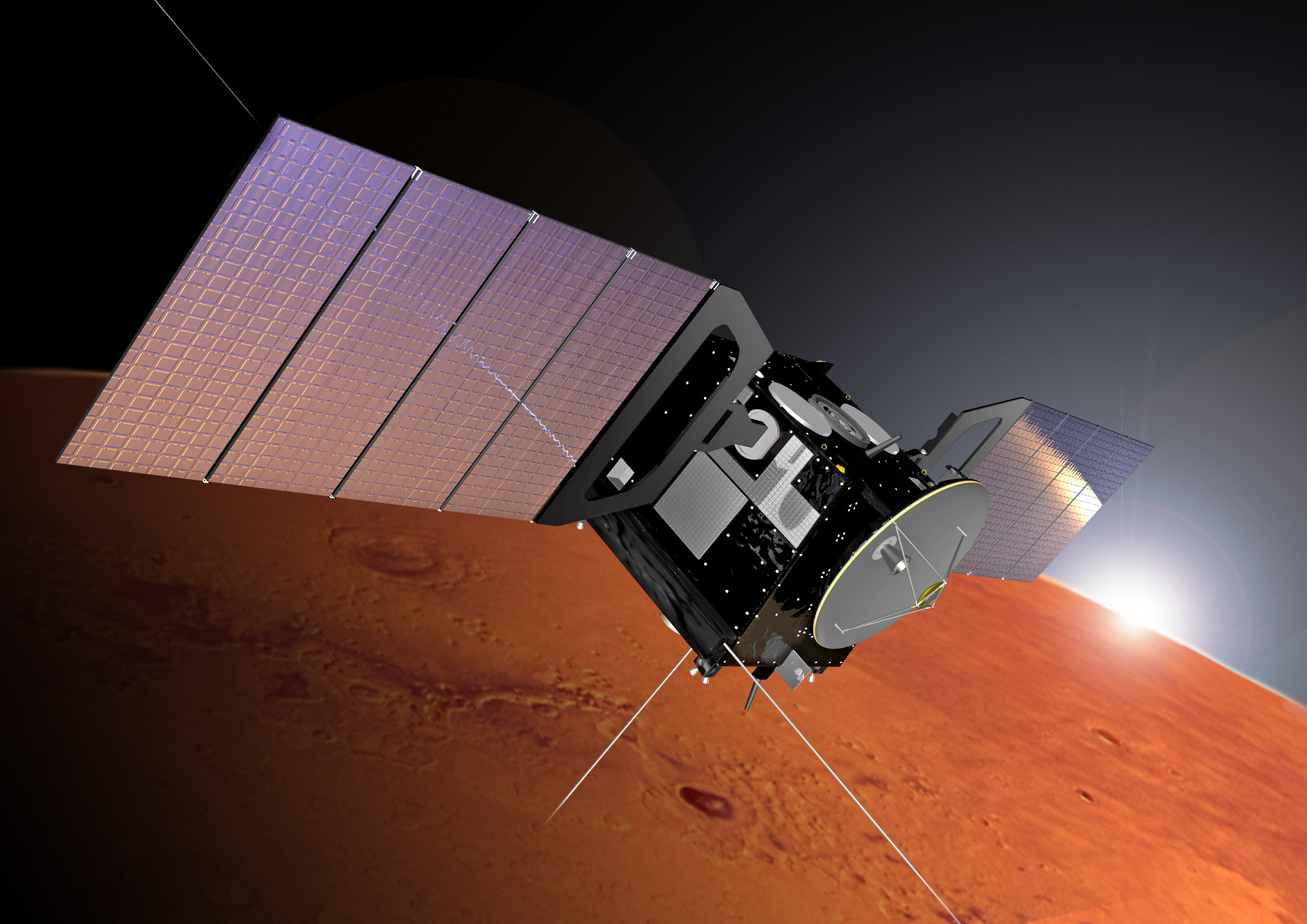
Mars Express peers into Mars' 'Grand Canyon'


ESA - Mars Express Mission patch.


July 20, 2022

Mars Express

The latest image release from ESA’s Mars Express takes us over two ruptures in the martian crust that form part of the mighty Valles Marineris canyon system.

Valles Marineris cuts across Mars like the Grand Canyon cuts across the United States, except the latter is miniscule in comparison. At 4000 km long, 200 km wide and up to 7 km deep, Valles Marineris is almost ten times longer, 20 times wider and five times deeper than the Grand Canyon. As the largest canyon system in the Solar System, it would span the distance from the northern tip of Norway to the southern tip of Sicily.

Ius and Tithonium Chasmata on Mars

There’s another big difference between the two: whilst the Grand Canyon was formed as the Colorado River eroded away rock, Valles Marineris is thought to have formed through the drifting apart of tectonic plates.

The image shows two trenches (or chasma) that form part of western Valles Marineris. On the left (south), is the 840 km-long Ius Chasma, and on the right (north) is the 805 km-long Tithonium Chasma. Whilst these high-resolution images show incredible surface detail, it is only when we look at an elevation map (see above) that we realise how spectacularly deep the chasmata are – up to 7 km! At 4809 m, the Alps’ tallest mountain Mont Blanc would be dwarfed if it was put inside Tithonium Chasma.

Ius and Tithonium Chasmata in context

At the top of Tithonium Chasma, a patch of dark sand brings colour contrast to the image. This sand may have come from the nearby Tharsis volcanic region.

Next to the dark sand dunes are two light-toned mounds (one cut in half by the upper image border). These ‘mounds’ are more like mountains, rising more than 3000 metres in height. Their surfaces have been strongly eroded by Mars’ strong winds, indicating that they are made of a weaker material than the surrounding rock.

Perspective view from inside Tithonium Chasma

Between the two mounds we see a series of smaller bumps, as shown in the second perspective view. Investigations by Mars Express have found water-bearing sulphate minerals in this region. This suggests that these bumps may have formed when liquid that once filled the chasma evaporated, although this theory is still hotly debated.

Second perspective view from inside Tithonium Chasma

To the lower right of the mound that we see fully (upper right in the second perspective view), we can see parallel lines and debris piles that indicate a recent landslide. This is also visible as a large purple area in the topography image below. The landslide was caused by the collapse of the canyon wall on the right, and is likely to have occurred relatively recently because it has not been strongly eroded.

Topography of Ius and Tithonium Chasmata

The gnarly floor of Ius Chasma is equally fascinating. As tectonic plates pulled apart, they appear to have caused jagged triangles of rock to form that look like a row of shark teeth. Over time, these rock formations have collapsed and eroded.

Ius and Tithonium Chasmata in 3D

Exploring Mars

Mars Express has been orbiting the Red Planet since 2003, imaging Mars’ surface, mapping its minerals, identifying the composition and circulation of its tenuous atmosphere, probing beneath its crust, and exploring how various phenomena interact in the martian environment.

The mission’s High Resolution Stereo Camera (HRSC), responsible for these new images, has revealed much about Mars’ diverse surface features, with recent images showing everything from wind-sculpted ridges and grooves through impact craters and channels that once carried liquid water to volcanoes, tectonic faults, river channels and ancient lava pools.

Related links:

Tharsis volcanic region: https://www.britannica.com/place/Tharsis

Mars Express: https://www.esa.int/Science_Exploration/Space_Science/Mars_Express

Images, Text, Credits: ESA/DLR/FU Berlin, CC BY-SA 3.0 IGO/NASA/MGS/MOLA Science Team.

Greetings, Orbiter.ch