mardi 24 janvier 2023

ATLAS delivers most precise luminosity measurement at the LHC


CERN - European Organization for Nuclear Research logo.


Jan 24, 2023

Precise knowledge of luminosity is crucial for both searches for new phenomena and precision measurements of known Standard Model processes

Image above: The ATLAS detector during upgrade work for Run 3 of the LHC. (Image: CERN).

When the Large Hadron Collider (LHC) is operating, it produces more than one billion proton–proton interactions every second. But exactly how many take place in the LHC experiments? Critical to every analysis of LHC data is a high-precision measurement of what is known as luminosity, that is, the total number of proton–proton interactions in a given dataset. It allows physicists to evaluate the probability of interesting proton–proton collision events occurring, as well as to predict the rates of similar-looking background processes. Isolating such events from the background processes is crucial for both searches for new phenomena and precision measurements of known Standard Model processes.

The ATLAS collaboration has recently released its most precise luminosity measurement to date. They studied data taken over the course of four years (2015–2018), covering the entire Run 2 of the LHC, to assess the total amount of luminosity delivered to the ATLAS experiment in that dataset.

What exactly did this measurement entail? When proton beams circulate in the LHC, they are arranged in “bunches” each containing more than 100 billion protons. As two bunches circulating in opposite directions cross, some of the protons interact. Determining how many interactions there are in each bunch crossing provides a measure of the luminosity. Its value depends on the number of protons per bunch, how tightly squeezed the protons are and the angle at which the bunches cross. The luminosity also depends on the number of colliding proton bunches in each beam.

ATLAS has several detectors that are sensitive to the number of particles produced in proton–proton interactions, and the average number of measured particles is often proportional to the average number of proton–proton interactions per bunch crossing. Researchers can therefore use this average to monitor the “instantaneous” luminosity in real time during data-taking periods, and to measure the cumulative (“integrated”) luminosity over longer periods of time.

While ATLAS’s luminosity-sensitive detectors provided relative measurements of the luminosity during data taking, measurement of the absolute luminosity required a special LHC beam configuration that allows the detector signals to be calibrated. Once a year, the LHC proton beams are displaced from their normal position in order to record the particle counts in the luminosity detectors. This method is called a van der Meer beam separation scan, named after physics Nobel Prize winner Simon van der Meer, who developed the idea in the 1960s for application at CERN’s Intersecting Storage Rings. It allows researchers to estimate the size of the beam and measure how densely the protons are packed in the bunches. With that information in hand, they can calibrate the detector signals.

Working in close collaboration with ATLAS researchers, LHC experts carried out van der Meer scans under low-luminosity conditions, with an average of about 0.5 proton–proton interactions per bunch crossing and very long gaps between the bunches. For comparison, the LHC typically operates with 20–50 interactions per bunch crossing, and with bunches closer together in a “train” structure. The researchers therefore need to extrapolate the results of the van der Meer scans to the normal data-taking regime using the measurements from the luminosity-sensitive detectors.

Using this approach, and after careful evaluation of the systematic effects that can influence a luminosity measurement, ATLAS physicists determined the integrated luminosity of the full Run 2 dataset that had been recorded by ATLAS and certified as good for physics analysis, to be 140.1 ± 1.2 fb–1. For comparison, 1 inverse femtobarn (fb–1) corresponds to about 100 trillion proton–proton collisions. With its uncertainty of 0.83%, the result represents the most precise luminosity measurement at a hadron collider to date. It improves upon previous ATLAS measurements by a factor of 2 and is comparable with results achieved at the ISR experiments (0.9%).

Note:

CERN, the European Organization for Nuclear Research, is one of the world’s largest and most respected centres for scientific research. Its business is fundamental physics, finding out what the Universe is made of and how it works. At CERN, the world’s largest and most complex scientific instruments are used to study the basic constituents of matter — the fundamental particles. By studying what happens when these particles collide, physicists learn about the laws of Nature.

The instruments used at CERN are particle accelerators and detectors. Accelerators boost beams of particles to high energies before they are made to collide with each other or with stationary targets. Detectors observe and record the results of these collisions.

Founded in 1954, the CERN Laboratory sits astride the Franco–Swiss border near Geneva. It was one of Europe’s first joint ventures and now has 23 Member States.

Related links:

Large Hadron Collider (LHC): https://home.cern/science/accelerators/large-hadron-collider

ATLAS experiment: https://home.cern/science/experiments/atlas

CERN’s Intersecting Storage Rings: https://home.cern/science/accelerators/intersecting-storage-rings

Standard Model: https://home.cern/science/physics/standard-model

For more information about European Organization for Nuclear Research (CERN), Visit: https://home.cern/

Image (mentioned), Animation, Text, Credits: CERN/By ATLAS collaboration.

Best regards, Orbiter.ch

lundi 23 janvier 2023

Crew Kicks off Week With Bone Research, Physics Studies


ISS - Expedition 68 Mission patch.


Jan 23, 2023

Space medicine was the top research priority aboard the International Space Station on Monday as four Expedition 68 astronauts explored healing bone conditions. The orbiting lab’s three cosmonauts spent the day studying a variety of physics, packing a resupply ship, and servicing station hardware.

Image above: The space station’s solar arrays and a small satellite orbital deployer are pictured as the orbiting lab soared above the African nation of Namibia. Image Credit: NASA.

NASA astronauts Nicole Mann, Josh Cassada, and Frank Rubio joined Flight Engineer Koichi Wakata of the Japan Aerospace Exploration Agency for an all-day bone research session in the Kibo laboratory module. The quartet worked in Kibo’s Life Science Glovebox servicing research samples for the Osteopromotive Bone Adhesive study.

Living in microgravity may affect skeletal stem cells and bone tissue regeneration, or bone repair. Researchers are studying a bone graft adhesive on the space station with the potential to reverse the effects of weightlessness on stem cells and bone tissue. Results may also benefit therapies for conditions on Earth such as osteoporosis. The astronauts will stay focused on the bone research activities through Wednesday.

International Space Station (ISS). Animation Credit: ESA

Two cosmonauts worked on a several different space physics experiments throughout Monday. Commander Sergey Prokopyev explored the behavior of clouds of highly charged particles, or plasma crystals, in a specialized chamber. Observations may lead to improved spacecraft designs, as well as a better understanding of plasmas on Earth. Flight Engineer Dmitri Petelin studied the physics of fluids exposed to magnetic and electric fields in microgravity.

The cosmonauts also worked on cargo activities and lab maintenance. Prokopyev stowed items for disposal inside the ISS Progress 81 cargo craft ahead of its departure in February. Petelin removed navigation hardware from the inside the ISS Progress 82 resupply ship then photographed the internal area of the Nauka multipurpose laboratory module to assess its potential stowage volume. Roscosmos Flight Engineer Anna Kikina spent her day servicing life support and electronics systems.

Related links:

Expedition 68: https://www.nasa.gov/mission_pages/station/expeditions/expedition68/index.html

Kibo laboratory module: https://www.nasa.gov/mission_pages/station/structure/elements/japan-kibo-laboratory

Life Science Glovebox: https://www.nasa.gov/mission_pages/station/research/experiments/explorer/Facility.html?#id=7676

Osteopromotive Bone Adhesive: https://www.nasa.gov/mission_pages/station/research/experiments/explorer/Investigation.html?#id=8846

Plasma crystals: https://www.nasa.gov/mission_pages/station/research/experiments/explorer/Investigation.html?#id=1192

Nauka multipurpose laboratory module: https://www.roscosmos.ru/tag/nauka/

Space Station Research and Technology: https://www.nasa.gov/mission_pages/station/research/overview.html

International Space Station (ISS): https://www.nasa.gov/mission_pages/station/main/index.html

Image (mentioned), Animation (mentioned), Text, Credits: NASA/Mark Garcia.

Best regards, Orbiter.ch

Mapping the Moon


ESA - European Space Agency emblem.


Jan 23, 2023

A paper published in December 2022 has analysed the rocky features of the lunar South Pole and identifies possible areas of interest for astronauts to explore and gather the best samples on the Artemis III mission.

Artemis I Moon

Now based at ESA’s technical heart ESTEC working for human and robotic exploration in The Netherlands, research fellow Sarah Boazman has been involved in the geological study of this region of the Moon since an internship at the lunar planetary institute in Houston, USA.

Rocks, boulders, craters and pixels

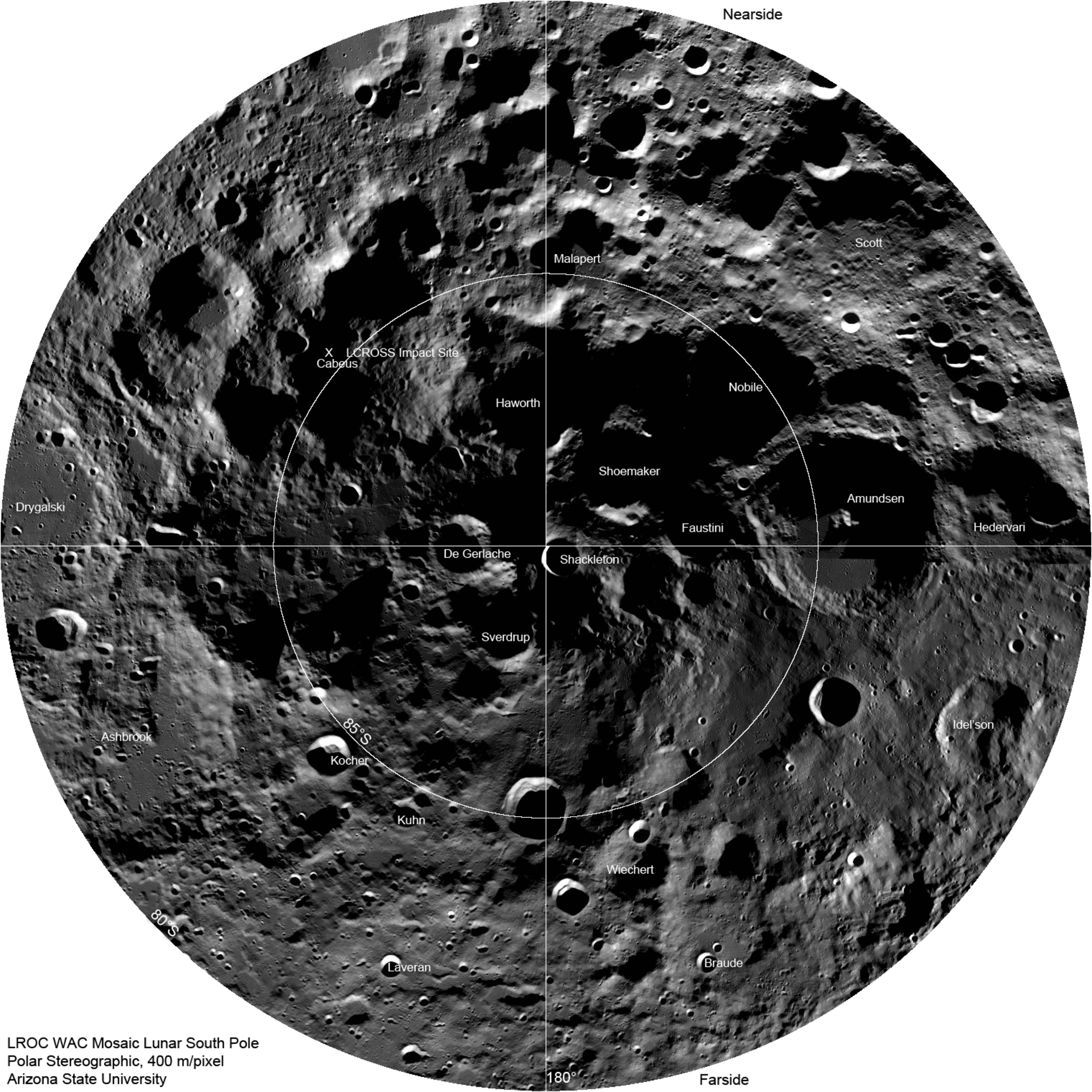
An international team has analysed many satellite images covering the lunar South Polar region, taken by the Lunar Reconnaissance Orbiter, which have a resolution of about one metre. These images allow identification of features such as boulders and rocky craters and terrain around the south polar region including the ‘connecting ridge’, one of the Artemis III candidate landing sites.

Annotated lunar south pole mosaic

Boulders can be identified as bright, high contrast features with a shadow observed behind these features. Craters were identified as bowl-shaped depressions often seen as a dark circle as light cannot always reach the crater floor and rock exposures were identified as bright high contrast features often larger than boulders but casting little to no shadow.

Boulders and rock exposures on the Moon for Artemis III

“It is amazing that we can do this research with such detailed pictures that are so beautiful” says Sarah, “geologically, recently-formed craters which have boulders surrounding the crater are the most fascinating as any samples you collect from such a crater, you can identify where the samples have come from, so when the samples are analysed back on Earth, we could understand the geology of the area better”.

Searching in the right place

The third Artemis mission will see astronauts land on the Moon around the South Pole to explore and retrieve scientifically relevant samples. The study by Sarah and colleagues has identified areas of particular interest within the Artemis III candidate landing sites, where multiple samples of boulders and rock exposures can be collected by astronauts during a future mission.

South pole of the Moon

ESA’s Pangaea geological training course is preparing astronauts for the sample-taking, allowing them to identify rocks that are of particular interest to the scientists back home.

Moonwalk on Earth

The study not only identified some of the most interesting areas to explore, but also how accessible they are. Spacesuits limit movement and therefore it is essential that samples are accessible.

Digging deeper

The data from this study is also relevant for other missions to the Moon including for ESA’s lunar ice drill, known as PROSPECT.

What is Prospect?

“The images and data are publicly available and I recommend that everybody has a look, exploring our Moon is fascinating and the other-worldly images can be inspiring.” says Sarah.

The full paper is available here: https://iopscience.iop.org/article/10.3847/PSJ/aca590/meta

Related links:

Lunar Reconnaissance Orbiter (LRO): https://lunar.gsfc.nasa.gov/

ESA’s Pangaea geological training course: https://www.esa.int/pangaea

PROSPECT images and data: https://lunar.gsfc.nasa.gov/science.html

Exploration: https://www.esa.int/Science_Exploration/Human_and_Robotic_Exploration/Exploration

Images, Text, Credits: ESA/A. Romeo/NASA/ESA/SMART-1/AMIE camera team; M. Ellouzi/B. Foing, CC BY-SA 3.0 IGO/NASA/GSFC/Arizona State University.

Greetings, Orbiter.ch

NASA to Launch New Mars Sample Receiving Project Office at Johnson


NASA / ESA - Mars Sample Return (MSR) patch.


Jan 23, 2023

NASA announced Thursday its new Mars Sample Receiving Project office, responsible for receiving and curating the first samples returned from the Red Planet, will be located at the agency’s Johnson Space Center in Houston. The safe and rapid release of Mars samples after they return to Earth to laboratories worldwide for science investigations will be a priority.

Image above: NASA’s Perseverance rover deposited the first of several samples onto the Martian surface on Dec. 21, 2022, the 653rd Martian day, or sol, of the mission. Image Credits: NASA/JPL-Caltech/MSSS.

The office will reside within Johnson’s Astromaterials Research and Exploration Science division, NASA’s organization with expertise in processing and curating extraterrestrial samples.

“NASA Johnson houses the largest and most diverse collection of astromaterials in the world, beginning with samples returned from the Apollo Program,” said Johnson Center Director Vanessa Wyche. “With our expertise, we look forward to managing the project that will receive scientifically compelling Mars samples gathered by the NASA Perseverance rover.”

Johnson will work with the agency’s Mars Exploration Program to develop and design plans for sample recovery and subsequent transition to science investigations. The project team will recover, contain, transfer, assess safety, curate, and coordinate scientific investigation of the samples collected by NASA’s Mars 2020 Perseverance rover, which are expected to arrive on Earth in 2033.

Samples returned to Earth will enhance humanity’s understanding of Mars through detailed chemical and physical analyses in laboratories around the world that are beyond the capabilities of instruments delivered to Mars. Perseverance is gathering samples in and around Jezero Crater, where billions of years ago, a river once flowed into a lake and deposited rocks and sediments in a fan shaped delta formation. Deltas are one of the best places on Mars to search for potential signs of ancient microbial life.

“Age-old samples, like those being collected on Mars, are critical in our quest to better understand our universe,” said Rep. Brian Babin of Texas. “I’m proud Johnson will lead NASA’s effort in curating these samples and play a key role in propelling our scientific discoveries forward.”

A key objective for Perseverance’s mission on Mars is astrobiology, including caching samples that may contain signs of ancient microbial life. The rover is currently characterizing the planet’s geology and past climate, paving the way for human exploration of the Red Planet, and is the first mission to collect and cache Martian rock and regolith.

“The Mars Sample Return Program is essential for the human exploration of Mars," said Rep. Sheila Jackson Lee of Texas. "Establishing this Sample Receiving Project office is a large step forward in helping us gain knowledge and make progress in our efforts to go to Mars."

“Johnson will work with the agency’s Mars Exploration Program and ESA to complete studies and develop plans for sample recovery and transportation, facility development and operation, and science investigations,” said Gerhard Kminek, ESA’s MSR lead scientist.

More Campaign Information

Returning samples to Earth from Mars is expected to be the most complex robotic space flight campaign ever attempted. The NASA-European Space Agency (ESA) Mars Sample Return Campaign promises to revolutionize humanity’s understanding of Mars by bringing scientifically selected samples to Earth for study using the most sophisticated instruments around the world. The campaign would fulfill a solar system exploration goal, a high priority since the 1970s and in the last three National Academy of Sciences Planetary Decadal Surveys.

This strategic NASA and ESA partnership would be the first mission to return scientifically selected samples from another planet and the first launch from the surface of another planet. The samples collected by NASA’s Perseverance Mars rover during its exploration of an ancient lakebed are thought to present the best opportunity to reveal clues about the early evolution of Mars, including the potential for past life. By better understanding the history of Mars, we would improve our understanding of all rocky planets in the solar system, including Earth.

For more information about the Mars Sample Return campaign, visit: https://mars.nasa.gov/msr

Image (mentioned), Text, Credits: NASA/Roxana Bardan/Karen Fox/Alana Johnson/JSC/Nilufar Ramji.

Best regards, Orbiter.ch

Why the Hubble telescope is still in the game — even as JWST wows


NASA / ESA - Hubble Space Telescope (HST) patch.


Jan 23, 2023

NASA’s nearly 33-year-old observatory still has plenty of top science to do, and astronomers want to extend its lifetime.

Hubble Space Telescope (HST) Animation Credits: NASA/ESA

Once the James Webb Space Telescope (JWST) began operations last year, the comparisons began. Astronomers and others online posted side-by-side images of the same celestial objects captured by JWST and the Hubble Space Telescope, pointing out how much crisper and more detailed those from JWST can be.

But don’t count Hubble out yet. The telescope, from NASA and the European Space Agency, is still making big discoveries, after going strong for nearly 33 years.

Image above: Astronauts replace a guidance sensor on the Hubble Space Telescope in 1999. Image Credit: NASA.

“There’s still tons of science to be done with Hubble,” says Beth Biller, an astronomer at the University of Edinburgh, UK, who chairs a committee representing scientists who use Hubble.

“People are saying, ‘Is Hubble going to be useless now?’” adds Tom Brown, head of the Hubble mission office at the Space Telescope Science Institute (STScI) in Baltimore, Maryland. “It’s not, because it has unique capabilities.”

Image above: The Pillars of Creation, a star-forming region, as imaged by Hubble (left) and JWST (right). Image Credits: NASA, ESA, CSA, STSCI, Hubble Heritage Project (STSCI, AURA).

Whereas JWST detects infrared wavelengths, making it ideal for observing distant galaxies, Hubble studies the Universe mostly in other wavelengths, including high-energy ultraviolet light emitted from marvels such as exploding stars. It also has sharp vision at visible wavelengths, allowing the telescope to take unprecedented images of stars, galaxies and cosmic phenomena closer to Earth. Because no other observatory can do those jobs as broadly and as well, Hubble is still in high demand, with researchers making many more requests for its time than the telescope has available.

Astronomers want to maximize what they can get out of Hubble while it’s still useful. Engineers estimate that the US$16-billion telescope will continue working through the end of this decade and perhaps well into the 2030s. But the race is on to acquire as much science as possible in its remaining years — and to exploit its operational overlap with JWST.

The only game in town

Many astronomers are most excited about Hubble’s ability to detect UV wavelengths, which can’t be studied well from the ground — Earth’s atmosphere filters out most of that light. NASA does not plan to have another powerful UV telescope in space until the 2040s. “In the meantime, Hubble’s pretty much the only game for a huge chunk of astrophysics,” Brown says.

That includes UV light radiating from young stars, which glow as they gobble up gas and dust. Two years ago, STScI astronomers began surveying around 200 such stars, the largest observing programme ever done using Hubble. The goal is to create a library of UV information from these stars that future astronomers can use to understand stellar evolution. The survey is 96% complete.

Hubble also shines when studying ‘transient’ phenomena, such as exploding stars, which appear without warning in the night sky and need to be studied before they fade. Several current and planned sky surveys will spot many of these phenomena, and Hubble is uniquely suited to observing them in detail in UV or visible wavelengths as soon as they are discovered. Mission operators have even introduced ‘flexible Thursdays’ into Hubble’s schedule — one Thursday per month is devoted to scheduling last-minute observations.

Astronomers are also teaching Hubble new tricks. Operators recently worked out how to use one of its instruments, the Advanced Camera for Surveys, to combine information about the spectra and polarization of light from celestial objects, which yields new insights into their nature.

Much of the focus in the upcoming years will be to coordinate Hubble and JWST observations, to get a fuller picture of cosmic phenomena. That might mean, for instance, using Hubble to look at nearby galaxies that resemble those spotted by JWST in the distant Universe, to create a timeline of galactic evolution, or to jointly study the atmospheres of exoplanets that Hubble has a long legacy of exploring.

“The power of having both of these observatories greatly increases our ability to understand all of these areas of astrophysics,” says Jennifer Wiseman, an astrophysicist at NASA’s Goddard Space Flight Center in Greenbelt, Maryland, and Hubble’s senior project scientist. “Now is the time to be using these facilities to their fullest.”

Not dead yet

Precisely how long Hubble has left isn’t known. “If I asked you when’s your car going to break down, you’re not going to have a clue, and that’s somewhat the world we’re in,” says Jim Jeletic, Hubble’s deputy programme manager at the Goddard centre.

Launched in 1990 by astronauts aboard the Space Shuttle Discovery, Hubble has needed upgrades over the years. Astronauts visited it five times between 1993 and 2009, first to fix a mirror flaw that left it with blurry vision and then to enhance its scientific instruments to keep it at the cutting edge of astronomy. “That’s kept Hubble like a new observatory over and over again,” Wiseman says. But NASA retired the space shuttle in 2011, and has no plans to service the telescope again.

Image above: In this decades-old photo, a machine shapes Hubble’s primary mirror; eventually a flaw will be discovered in the mirror that requires astronauts to fly to the observatory and install corrective optics. Image Credit: NASA.

The basic systems that keep the telescope operating — such as the solar panels and batteries that power it, and the gyroscopes that orient it in space — are functional but ageing. Sometimes, things break with no warning, such as when Hubble’s payload computer was offline for a month in 2021. Engineers ultimately got it working again, but on a backup system. They are still trying to re-boot the initial system for Hubble to use if the backup fails.

Operators are also looking for smarter ways to run the telescope to extend its lifetime. For instance, engineers changed how Hubble communicates with satellites to relay data to Earth. Instead of using the telescope’s on-board transponders in many short bursts, mission controllers now collect more data on the telescope before sending a chunk of data all at once. Switching the transponders on and off less frequently extends their lifetime.

Getting a lift

Another long-term question is how long Hubble can stay high enough to escape the drag of Earth’s atmosphere, which brings it lower in altitude and will ultimately destroy it. In the past, the telescope has orbited as high as 615 kilometres above our planet’s surface; it is currently at 535 kilometres, where it is expected to remain until around the mid-2030s.

But if the Sun reaches its predicted maximum activity in 2025, solar storms could accelerate Hubble’s demise. So NASA and aerospace company SpaceX, based in Hawthorne, California, are studying whether they can attach a SpaceX capsule to Hubble and boost it to a higher orbit. That would give NASA more time to work out how to get rid of the telescope at the end of its lifetime, by guiding it down into the ocean. The results of the orbit-boosting study are not yet scheduled for public release.

“We believe we’ll be able to keep Hubble making unique and great scientific discoveries and observations into the end of this decade, if not into the next,” Jeletic says.

In the meantime, there is plenty to do. Although Hubble has taken more than 1.5 million observations in its lifetime, it has looked at less than one-tenth of one per cent of the sky.

“It’s amazing to me, this number,” Jeletic says. “There is a lot of stuff out there that we have not looked at.”

doi: https://doi.org/10.1038/d41586-023-00136-8

Related article:

NASA, SpaceX to Study Hubble Telescope Reboost Possibility
https://orbiterchspacenews.blogspot.com/2022/09/nasa-spacex-to-study-hubble-telescope.html

Related links:

Hubble Space Telescope (HST): https://www.nasa.gov/mission_pages/hubble/main/index.html

National Aeronautics and Space Administration (NASA): https://www.nasa.gov/

SpaceX: https://www.spacex.com/

Images (mentioned), Animation (mentioned), Text, Credits: NASA/ESA/Nature/Alexandra Witze.

Greetings, Orbiter.ch

Webb Unveils Dark Side of Pre-stellar Ice Chemistry


NASA / ESA / CSA-ASC - James Webb Space Telescope (JWST) patch.


Jan 23, 2023

Webb’s View of the Molecular Cloud

The discovery of diverse ices in the darkest, coldest regions of a molecular cloud measured to date has been announced by an international team of astronomers using the NASA/ESA/CSA James Webb Space Telescope. This result allows astronomers to examine the simple icy molecules that will be incorporated into future exoplanets, while opening a new window on the origin of more complex molecules that are the first step in the creation of the building blocks of life.

If you want to build a habitable planet, ices are a vital ingredient as they are the main carriers of several key light elements — namely carbon, hydrogen, oxygen, nitrogen, and sulphur (referred to collectively as CHONS). These elements are important ingredients in both planetary atmospheres and molecules like sugars, alcohols, and simple amino acids. In our Solar System, it is thought they were delivered to Earth’s surface by impacts with icy comets or asteroids. Furthermore, astronomers believe such ices were most likely already present in the dark cloud of cold dust and gas that would eventually collapse to make the Solar System. In these regions of space, icy dust grains provide a unique setting for atoms and molecules to meet, which can trigger chemical reactions that form very common substances like water. Detailed laboratory studies have further shown that some simple prebiotic molecules can form under these icy conditions.

Webb’s View of the Molecular Cloud Chameleon I (Annotated)

Now an in-depth inventory of the deepest, coldest ices measured to date in a molecular cloud [1] has been announced by an international team of astronomers using the NASA/ESA/CSA James Webb Space Telescope. In addition to simple ices like water, the team was able to identify frozen forms of a wide range of molecules, from carbonyl sulfide, ammonia, and methane, to the simplest complex organic molecule, methanol (in the interstellar medium, organic molecules are considered to be complex when having six or more atoms). This is the most comprehensive census to date of the icy ingredients available to make future generations of stars and planets, before they are heated during the formation of young stars. These icy grains grow in size as they are funnelled into the protoplanetary discs of gas and dust around these young stars, essentially allowing astronomers to study all the potential icy molecules that will be incorporated into future exoplanets.

“Our results provide insights into the initial, dark chemistry stage of the formation of ice on the interstellar dust grains that will grow into the centimetre-sized pebbles from which planets form in discs,” said Melissa McClure, an astronomer at Leiden Observatory who is the principal investigator of the observing program and lead author of the paper describing this result. “These observations open a new window on the formation pathways for the simple and complex molecules that are needed to make the building blocks of life.”

Chameleon I Spectral Graphic

In addition to the identified molecules, the team found evidence for prebiotic molecules more complex than methanol in these dense cloud ices, and, although they didn't definitively attribute these signals to specific molecules, this proves for the first time that complex molecules form in the icy depths of molecular clouds before stars are born.

“Our identification of complex organic molecules, like methanol and potentially ethanol, also suggests that the many star and planet systems developing in this particular cloud will inherit molecules in a fairly advanced chemical state,” added Will Rocha, an astronomer at Leiden Observatory who contributed to this discovery. “This could mean that the presence of prebiotic molecules in planetary systems is a common result of star formation, rather than a unique feature of our own Solar System.”

By detecting the sulfur-bearing ice carbonyl sulfide, the researchers were able to estimate the amount of sulfur embedded in icy pre-stellar dust grains for the first time. While the amount measured is larger than previously observed, it is still less than the total amount expected to be present in this cloud, based on its density. This is true for the other CHONS elements as well. A key challenge for astronomers is understanding where these elements are hiding: in ices, soot-like materials, or rocks. The amount of CHONS in each type of material determines how much of these elements end up in exoplanet atmospheres and how much in their interiors.

Pan of the Molecular Cloud Chameleon I

“The fact that we haven't seen all of the CHONS that we expect may indicate that they are locked up in more rocky or sooty materials that we cannot measure,” explained McClure. “This could allow a greater diversity in the bulk composition of terrestrial planets.”

The ices were detected and measured by studying how starlight from beyond the molecular cloud was absorbed by icy molecules at specific infrared wavelengths visible to Webb. This process leaves behind chemical fingerprints known as absorption spectra which can be compared with laboratory data to identify which ices are present in the molecular cloud. In this study, the team targeted ices buried in a particularly cold, dense and difficult to investigate region of the Chameleon I molecular cloud, a region roughly 500 light-years from Earth which is currently in the process of forming dozens of young stars.

“We simply couldn't have observed these ices without Webb,” elaborated Klaus Pontoppidan, Webb project scientist at the Space Telescope Science Institute, who was involved in this research. “The ices show up as dips against a continuum of background starlight. In regions that are this cold and dense, much of the light from the background star is blocked and Webb’s exquisite sensitivity was necessary to detect the starlight and therefore identify the ices in the molecular cloud.”

This research forms part of the Ice Age project, one of Webb's 13 Early Release Science programs. These observations are designed to showcase Webb’s observing capabilities and allow the astronomical community to learn how to get the best from its instruments. The Ice Age team have already planned further observations, and hope to trace out the journey of ices from their formation through to the assemblage of icy comets.

“This is just the first in a series of spectral snapshots that we will obtain to see how the ices evolve from their initial synthesis to the comet-forming regions of protoplanetary discs,” concluded McClure. “This will tell us which mixture of ices — and therefore which elements — can eventually be delivered to the surfaces of terrestrial exoplanets or incorporated into the atmospheres of giant gas or ice planets.”

James Webb Space Telescope (JWST)

Notes

[1] A molecular cloud is a vast interstellar cloud of gas and dust in which molecules can form, such as hydrogen and carbon monoxide. Cold, dense clumps in molecular clouds with higher densities than their surroundings can be the sites of star formation if these clumps collapse to form protostars.

More information

Webb is the largest, most powerful telescope ever launched into space. Under an international collaboration agreement, ESA provided the telescope’s launch service, using the Ariane 5 launch vehicle. Working with partners, ESA was responsible for the development and qualification of Ariane 5 adaptations for the Webb mission and for the procurement of the launch service by Arianespace. ESA also provided the workhorse spectrograph NIRSpec and 50% of the mid-infrared instrument MIRI, which was designed and built by a consortium of nationally funded European Institutes (The MIRI European Consortium) in partnership with JPL and the University of Arizona.

Webb is an international partnership between NASA, ESA and the Canadian Space Agency (CSA).

The international team of astronomers in this study consists of M. K. McClure (Leiden Observatory, Leiden University), W. R. M. Rocha (Laboratory for Astrophysics, Leiden Observatory), K. M. Pontoppidan (Space Telescope Science Institute), N. Crouzet (Leiden Observatory, Leiden University), L. E. U. Chu (NASA Postdoctoral Program Fellow, NASA Ames Research Center), E. Dartois (Institut des Sciences Moleculaires d’Orsay (ISMO), CNRS/Univ. Paris-Saclay), T. Lamberts (Leiden Institute of Chemistry, Gorlaeus Laboratories & Leiden Observatory, Leiden University), J. A. Noble (Physique des Interactions Ioniques et Moléculaires (PIIM), CNRS/Aix-Marseille Univ.), Y. J. Pendleton (Department of Physics, University of Central Florida), G. Perotti (Max Planck Institute for Astronomy), D. Qasim (Southwest Research Institute, San Antonio, TX, USA.), M. G. Rachid (Laboratory for Astrophysics, Leiden Observatory), Z. L. Smith (School of Physical Sciences, The Open University), F. Sun (Steward Observatory, University of Arizona), Tracy L. Beck (Space Telescope Science Institute), A. C. A. Boogert (Institute for Astronomy, University of Hawai‘i at Manoa), W. A. Brown (Department of Chemistry, University of Sussex), P. Caselli (Max Planck Institute for Extraterrestrial Physics), S. B. Charnley (Solar System Exploration Division, NASA Goddard Space Flight Center), Herma M. Cuppen (Institute for Molecules and Materials, Radboud University), H. Dickinson (School of Physical Sciences,The Open University), M. N. Drozdovskaya (Center for Space and Habitability, University of Bern), E. Egami (Steward Observatory, University of Arizona), J. Erkal (Institute for Astronomy, University of Hawai‘i at Manoa), H. Fraser (School of Physical Sciences, The Open University), R. T. Garrod (Departments of Astronomy & Chemistry, University of Virginia), D. Harsono (Institute of Astronomy, Department of Physics, National Tsing Hua University), S. Ioppolo (Center for Interstellar Catalysis, Department of Physics and Astronomy, Aarhus University), I. Jiménez-Serra (Centro de Astrobiología [CAB], Ctra. de Ajalvir), M. Jin (Solar System Exploration Division, NASA Goddard Space Flight Center & Department of Physics, Catholic University of America), J. K. Jørgensen (Niels Bohr Institute, University of Copenhagen), L. E. Kristensen (Niels Bohr Institute, University of Copenhagen), D. C. Lis (Jet Propulsion Laboratory, California Institute of Technology), M. R. S. McCoustra (Institute of Chemical Sciences, Heriot-Watt University), Brett A. McGuire (Department of Chemistry, Massachusetts Institute of Technology and National Radio Astronomy Observatory), G. J. Melnick (Center for Astrophysics | Harvard & Smithsonian), Karin I. Öberg (Center for Astrophysics | Harvard & Smithsonian), M. E. Palumbo (INAF - Osservatorio Astrofisico di Catania), T. Shimonishi (Faculty of Science, Niigata University), J. A. Sturm (Leiden Observatory, Leiden University), E. F. van Dishoeck (Leiden Observatory, Leiden University), and H. Linnartz (Laboratory for Astrophysics, Leiden Observatory).

Links:

ESA Webb Seeing Farther Interactive Brochure: https://www.esa.int/About_Us/ESA_Publications/ESA_BR-348_Webb_Seeing_farther

Early Release Science Program 1309: IceAge: Chemical Evolution of Ices during Star Formation: https://www.stsci.edu/jwst/science-execution/approved-programs/dd-ers/program-1309

Release on STScI website: https://webbtelescope.org/contents/news-releases/2023/news-2023-106

Release on NASA website: https://www.nasa.gov/feature/goddard/2023/webb-unveils-dark-side-of-pre-stellar-ice-chemistry

Release on ESA website: https://www.esa.int/Science_Exploration/Space_Science/Webb/Webb_unveils_dark_side_of_pre-stellar_ice_chemistry

Science paper: https://www.nature.com/articles/s41550-022-01875-w

ESA Webb website: https://esawebb.org/

Images Credits: NASA, ESA, CSA, and M. Zamani (ESA/Webb); Science: F. Sun (Steward Observatory), Z. Smith (Open University), and the Ice Age ERS Team/NASA, ESA, CSA, and J. Olmsted (STScI), M. K. McClure (Leiden Observatory), K. Pontoppidan (STScI), N. Crouzet (Leiden University), and Z. Smith (Open University)/Animation Credits: NASA/ESA/Video Credits: ESA/Webb, NASA, CSA, STScI, M. K. McClure, F. Sun, Z. Smith, the Ice Age ERS team, N. Bartmann (ESA/Webb) and M. Zamani (ESA/Webb)/Music: Stellardrone – Twilight/Text Credits: ESA/Webb/Bethany Downer/Ninja Menning/Leiden University, The Netherlands/Melissa McClure.

Best regards, Orbiter.ch

NASA’s Lucy Mission Suspending Further Solar Array Deployment Activities


NASA - LUCY Mission patch.


Jan 23, 2023

NASA’s Lucy mission team has decided to suspend further solar array deployment activities. The team determined that operating the mission with the solar array in the current unlatched state carries an acceptable level of risk and further deployment activities are unlikely to be beneficial at this time. The spacecraft continues to make progress along its planned trajectory.

Shortly after the spacecraft’s Oct. 2021 launch, the mission team realized that one of Lucy’s two solar arrays had not properly unfurled and latched. A series of activities in 2022 succeeded in further deploying the array, placing it into a tensioned, but unlatched, state. Using engineering models calibrated by spacecraft data, the team estimates that the solar array is over 98% deployed, and it is strong enough to withstand the stresses of Lucy’s 12-year mission. The team’s confidence in the stability of the solar array was affirmed by its behavior during the close flyby of the Earth on Oct. 16, 2022, when the spacecraft flew within 243 miles (392 km) of the Earth, through the Earth’s upper atmosphere. The solar array is producing the expected level of power at the present solar range and is expected to have enough capability to perform the baseline mission with margin.

Lucy solar array deployment

The team elected to suspend deployment attempts after the attempt on Dec. 13, 2022, produced only small movement in the solar array. Ground-based testing indicated that the deployment attempts were most productive while the spacecraft was warmer, closer to the Sun. As the spacecraft is currently 123 million miles (197 million km) from the Sun (1.3 times farther from the Sun than the Earth) and moving away at 20,000 mph (35,000 km/hr), the team does not expect further deployment attempts to be beneficial under present conditions.

Due to the energy boost that the spacecraft received during last October’s Earth gravity assist, the spacecraft is now on an orbit which will take it over 315 million miles (500 million km) from the Sun before returning to Earth for a second Earth gravity assist on Dec. 12, 2024. Over the next year and a half, the team will continue to collect data on how the solar array behaves during flight. Most significantly, the team will observe how the array behaves during a maneuver in Feb. 2024, when the spacecraft operates its main engine for the first time. As the spacecraft warms up during its approach to Earth in the fall of 2024, the team will re-evaluate if additional steps to reduce risk will be needed.

Related articles:

NASA Team Troubleshoots Asteroid-Bound Lucy Across Millions of Miles
https://orbiterchspacenews.blogspot.com/2022/08/nasa-team-troubleshoots-asteroid-bound.html

NASA’s Lucy Mission Continues Solar Array Deployment Process
https://orbiterchspacenews.blogspot.com/2022/06/nasas-lucy-mission-continues-solar.html

NASA Zeroing in on Path Forward for Lucy Solar Array
https://orbiterchspacenews.blogspot.com/2022/01/nasa-zeroing-in-on-path-forward-for.html

NASA Team Remains Focused on Lucy’s Solar Arrays
https://orbiterchspacenews.blogspot.com/2021/10/nasa-team-remains-focused-on-lucys.html

NASA, ULA Launch Lucy Mission to ‘Fossils’ of Planet Formation
https://orbiterchspacenews.blogspot.com/2021/10/nasa-ula-launch-lucy-mission-to-fossils.html

Related link:

Lucy (Asteroid Mission): https://www.nasa.gov/lucy

Image, Text, Credits: NASA/Erin Morton.

Greetings, Orbiter.ch