mardi 7 février 2023

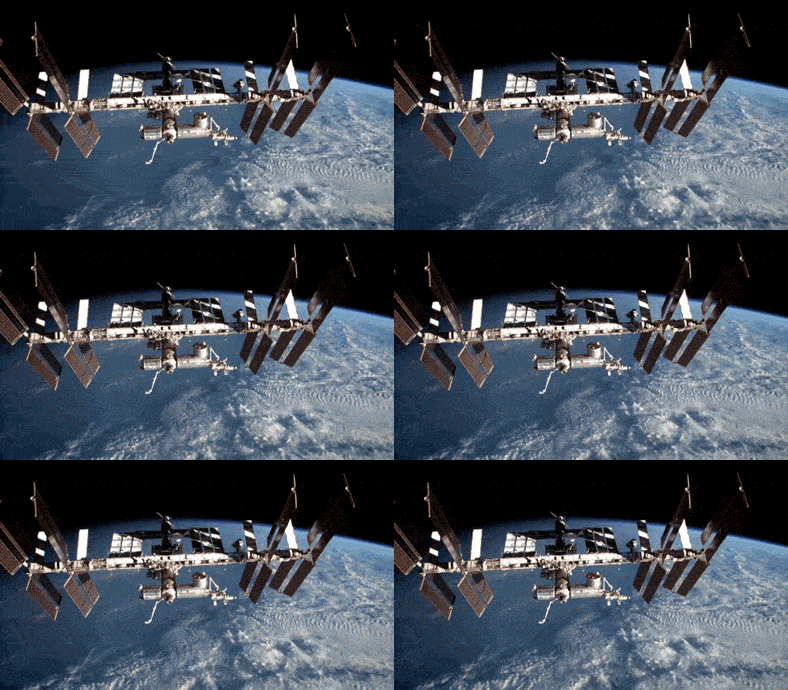
Progress MS-20 cargo spacecraft left the ISS


ROSCOSMOS - Russian Vehicles patch.


Fe 7, 2023

Progress MS-20 undocking and departure

Today, the Progress MS-20 cargo ship set sail from the International Space Station, having worked on it for more than eight months.

At 07:56:36 Moscow time, the spacecraft undocked from the Russian Zvezda module.

Progress MS-20 undocking and departure

At 11:04 Moscow time, it is planned to turn on the Progress MS-20 engine for braking to deorbit, due to which the ship will enter the atmosphere and collapse. According to the calculations of specialists from the enterprises of the State Corporation Roscosmos, unburned elements of its structure will fall in the non-navigable area of ​​the South Pacific Ocean.

The Progress MS-20 spacecraft was launched from the Baikonur Cosmodrome on June 3, 2022 by a Soyuz-2.1a carrier rocket and moored to the ISS on the same day, delivering more than 2.5 tons of cargo. With the help of the spacecraft engines, 11 ISS orbit corrections were performed.

Progress MS-20 cargo spacecraft completes space flight

Today, the Progress MS-20 cargo ship was deorbited, entered the atmosphere and collapsed. Unburned elements of its structure fell in the non-navigable area of ​​the South Pacific Ocean.

Before that, the ship undocked from the Russian service module "Zvezda" of the International Space Station, having worked on it for more than eight months.

Progress MS-20 free flight to back on Earth

The Progress MS-20 spacecraft was launched from the Baikonur Cosmodrome on June 3, 2022 by a Soyuz-2.1a carrier rocket and moored to the ISS on the same day, delivering more than 2.5 tons of cargo. With the help of the spacecraft engines, 11 ISS orbit corrections were performed.

Its place at the station will be taken by the Progress MS-22 spacecraft, which is scheduled to be launched from Baikonur on February 9.

Currently, the crew of the 68th long-term expedition is working on board the ISS, consisting of Roscosmos cosmonauts Sergey Prokopiev, Dmitry Petelin and Anna Kikina, NASA astronauts Francisco Rubio, Nicole Mann and Josh Cassada, as well as JAXA astronaut Koichi Wakata.

Related links:

ROSCOSMOS Press Releases: https://www.roscosmos.ru/38903/ and https://www.roscosmos.ru/38905/

Progress MS-20: https://www.roscosmos.ru/tag/progress-ms-20/

International Space Station (ISS): https://www.roscosmos.ru/tag/mks/

Images, Video, Text, Credits: ROSCOSMOS/SciNews/Orbiter.ch Aerospace/Roland Berga.

Best regards, Orbiter.ch

SpaceX - Falcon 9 launches Hispasat Amazonas Nexus


SpaceX - Falcon 9 / Hispasat Amazonas Nexus patch.


Feb 7, 2023

Falcon 9 carrying Hispasat Amazonas liftoff

A SpaceX Falcon 9 rocket launched the Hispasat Amazonas Nexus communications satellite to a geosynchronous transfer orbit, from Space Launch Complex 40 (SLC-40) at Cape Canaveral Air Force Station, Florida, on 7 February 2023, at 01:32 UTC (6 February, 20:32 EST).

Falcon 9 launches Hispasat Amazonas Nexus and Falcon 9 first stage landing

Following stage separation, Falcon 9’s first stage landed on the “Just Read the Instructions” drone-ship, stationed in the Atlantic Ocean. Falcon 9’s first stage (B1073) previously supported five missions: SES-22, Hakuto-R M1 and three Starlink missions.

Hispasat Amazonas Nexus deployment

Hispasat Amazonas Nexus communications satellite was successfully deployed into geosynchronous transfer orbit, approximately 36 minutes after being launched by a SpaceX Falcon 9 rocket from Space Launch Complex 40 (SLC-40) at Cape Canaveral Air Force Station, Florida, on 7 February 2023, at 01:32 UTC (6 February, 20:32 EST).

Hispasat Amazonas Nexus communications satellite

Related links:

Hispasat: https://www.hispasat.com/es/

SpaceX: https://www.spacex.com/
 
Images, Videos, Text, Credits: Hispasat/SpaceX/SciNews/Orbiter.ch Aerospace/Roland Berga.

Greetings, Orbiter.ch

lundi 6 février 2023

Astronauts Relax as Cosmonauts Prep for Cargo Mission


ISS - Expedition 68 Mission patch.


Feb 6, 2023

Four Expedition 68 crew members are off-duty today following last week’s spacewalk to upgrade the International Space Station’s power generation system. The rest of the crew is getting ready for a cargo mission due to arrive this week while continuing its ongoing cardiac research.

Four astronauts are relaxing today after a successful spacewalk on Thursday and all the preparations leading up to it. Flight Engineers Nicole Mann of NASA and Koichi Wakata of the Japan Aerospace Exploration Agency (JAXA) spent six hours and 41 minutes in the vacuum of space during the Feb. 2 excursion. The duo completed the installation of a modification kit on the station’s starboard truss structure readying the orbital outpost for its next roll-out solar array.

Image above: Astronaut Nicole Mann points the camera toward herself and takes a “space-selfie” with her helmet’s visor up during a spacewalk on Feb. 2, 2023. Image Credit: NASA.

The spacewalkers were assisted in the days leading up to last week’s spacewalk by NASA Flight Engineers Frank Rubio and Josh Cassada. The two spacewalking assistants helped Mann and Wakata in and out of their Extravehicular Mobility Units (EMUs), or spacesuits, reviewed the mod kit installation procedures with them, and monitored the spacewalking job from inside the station.

The quartet will get back to work on Tuesday resuming their ongoing space research to advance scientific knowledge and demonstrate new technologies. The four astronauts will work throughout the week exploring human research topics such as how microgravity affects blood pressure in the brain and the cardiorespiratory system. They will also look at space agricultural techniques and study the behavior of fuels in microgravity.

Image above: The Progress 81 cargo craft approaches the International Space Station for a docking to the Zvezda service module's rear port. In the foreground, is the Soyuz MS-21 crew ship docked to the Prichal docking module on the orbiting lab's Russian segment. Image Credits: NASA Johnson.

A cargo swap is planned for this week when the trash-filled ISS Progress 81 (81P) resupply ship undocks from the Zvezda service module’s rear port on Monday night. Next, the ISS Progress 83 (83P) cargo craft will launch at 1:15 a.m. EST on Wednesday then dock automatically at 3:47 a.m. on Friday to the Zvezda port vacated by the 81P.

Roscosmos Commander Sergey Prokopyev and Flight Engineer Dmitri Petelin prepared on Monday for the weekend arrival of the 83P. The cosmonaut duo practiced on a computer for the unlikely event they would need to use the telerobotically operated rendezvous unit, or TORU, and manually guide the resupply ship to a docking.

International Space Station (ISS). Animation Credit: NASA

Flight Engineer Anna Kikina attached sensors to herself on Monday morning for a 24-hour cardiac monitoring session without interfering with her normal work schedule. The electrodes not only recorded her heart’s electrical activity but also her blood pressure. Kikina then spent the rest of Monday on ventilation and communication maintenance tasks.

Related article:

NASA to Provide Live Coverage of Space Station Cargo Launch, Docking
https://www.nasa.gov/press-release/nasa-to-provide-live-coverage-of-space-station-cargo-launch-docking-1

Related links:

Expedition 68: https://www.nasa.gov/mission_pages/station/expeditions/expedition68/index.html

Blood pressure in the brain: https://www.nasa.gov/mission_pages/station/research/experiments/explorer/Investigation.html?#id=1938

Cardiorespiratory system: https://www.nasa.gov/mission_pages/station/research/experiments/explorer/Investigation.html?#id=8597

Space agricultural techniques: https://www.nasa.gov/mission_pages/station/research/experiments/explorer/Investigation.html?#id=7443

Behavior of fuels in microgravity: https://www.nasa.gov/mission_pages/station/research/experiments/explorer/Investigation.html?#id=2043

Zvezda service module: https://www.nasa.gov/mission_pages/station/structure/elements/zvezda-service-module.html

Space Station Research and Technology: https://www.nasa.gov/mission_pages/station/research/overview.html

International Space Station (ISS): https://www.nasa.gov/mission_pages/station/main/index.html

Images (mentioned), Animation (mentioned), Text, Credits: NASA/Mark Garcia.

Best regards, Orbiter.ch

Progress Underway on Moon Rockets for NASA’s Crewed Artemis Missions


NASA - ARTEMIS Program logo.


Feb 6, 2023

NASA and its partners across the country are continuing to make progress on the crewed Artemis missions with hardware for NASA’s Space Launch System (SLS) rockets for Artemis II, III, and IV already in various phases of production, assembly, and testing.

SLS proved to be the world’s most powerful rocket, when its two solid rocket boosters and four RS-25 engines produced more than 8.8 million pounds of thrust at liftoff to send NASA’s Orion spacecraft beyond the Moon and back on Artemis I. Data from the first flight of SLS is helping engineers build confidence in the rocket’s systems to safely fly crew on future lunar missions.

Image above: The engine section, right, is the last major structure that makes up the core stage of NASA’s Space Launch System rocket that will help power the Artemis II mission. Crews at NASA’s Michoud Assembly Facility in New Orleans will soon move the engine section to another part of the facility, rotate it to a horizontal position, and then integrate it to the rest of the rocket stage to join all five elements together. Image Credits: NASA/Eric Bordelon.

“The power that NASA’s Space Launch System rocket provides will enable astronauts to explore further in our solar system than ever before and discover more about the Moon, Mars, and beyond,” said John Honeycutt, SLS program manager at NASA’s Marshall Space Flight Center in Huntsville, Alabama. “NASA is on the brink of new age of deep space discovery, and the SLS team and our partners are more focused than ever to manufacture and produce SLS rockets for Artemis missions that will put boots on the Moon for decades to come.”

Like Artemis I, the SLS rockets that will power the Artemis II and III missions to the Moon will use the Block 1 configuration with the interim cryogenic propulsion stage (ICPS). Beginning with Artemis IV, the SLS rocket will evolve into a more powerful configuration called the Block 1B, which replaces the ICPS with the more dynamic Exploration Upper Stage (EUS) for in-space propulsion to send crew and large cargos to the Moon.

Images above: Technicians at Michoud Assembly Facility in New Orleans are manufacturing structures for multiple Space Launch System rockets that will power future Artemis flights. The dome of the liquid oxygen tank of the core stage for Artemis IV is currently in fabrication. Just behind the dome tool is the interank of the core stage for Artemis IV. Flight hardware of the SLS Exploration Upper Stage, a more powerful in-space propulsion stage beginning with Artemis IV, is in early production at Michoud. Crews loaded the first flight L-ring onto the Ingersol High Speed Machining Center at Michoud Jan. 18. The ring, which has an “L” shape in its finished machine state, is part of the forward end of a barrel section for the flight hardware. Images Credits: NASA/Eric Bordelon.

NASA and Boeing, lead contractor for the SLS core stage, are manufacturing the 212-foot-tall stages for Artemis II, III, and IV at NASA’s Michoud Assembly Facility in New Orleans. The Artemis II core stage is in final assembly. Once the engine section is joined to the other four elements for the Artemis II core stage at Michoud, teams will uncrate and install each of the four RS-25 engines to the stage and then ready it for delivery to NASA’s Kennedy Space Center in Florida. Technicians are simultaneously preparing for core stage assembly and outfitting activities for the Artemis III Moon rocket – the engine section for Artemis II was delivered to Kennedy in December 2022. In tandem, teams at Michoud are continuing all core stage manufacturing and production activities for the five major elements of the core stage for Artemis III and IV.

“Michoud is humming with activity as teams work on multiple SLS core stages for three different Artemis missions as well as the initial welds for the Exploration Upper Stage (EUS) for the fourth SLS flight,” said Lonnie Dutreix, director of NASA’s Michoud Assembly Facility. “Everywhere you look, you see rocket hardware that will power missions to send the first woman and the first person of color to the Moon.”

In Mississippi, at NASA’s Stennis Space Center near Bay St. Louis, Aerojet Rocketdyne, the RS-25 lead contractor, has completed work on the RS-25 engines for the third SLS flight and is working to complete the four RS-25 engines that will power the fourth flight of the rocket. Aerojet Rocketdyne is also preparing for a series of RS-25 engine tests for engines that will be used beginning with Artemis V.

Image above: All of the booster motors for the two solid rocket boosters on the SLS rocket for Artemis II are complete and will be readied for shipment from Northrop Grumman’s facilities in Utah to NASA’s Kennedy Space Center in Florida later this year. Image Credit: Northrop Grumman.

The ICPS, powered by a single RL10 engine, provides in-space propulsion to give Orion the big push it needs to fly beyond the Moon. Currently, the stage for Artemis II is in final assembly in the Horizontal Integration Facility at the contractors Boeing and United Launch Alliance’s (ULA) facilities in Florida. Meanwhile, ULA is wrapping up manufacturing operations on the ICPS for Artemis III in its facility in Decatur, Alabama, where it will undergo a high-pressure test check this spring.

The two five-segment solid rocket boosters provide more than 75% of the thrust at launch for SLS and are produced by lead booster contractor Northrop Grumman. All 10 booster motor segments for both Artemis II and Artemis III are completed and awaiting shipment to Kennedy, where work on the forward and aft assemblies is currently in progress. The booster manufacturing for the Artemis IV mission is underway at the Northrop Grumman facility in Utah.

Image above: Engineers at Marshall Space Flight Center in Huntsville, Alabama, are in the process of configuring the Systems Integration Laboratory (SIL) to the flight software and avionics configuration to support Artemis II flight software development. The flight software, which acts as the “brains” of the Space Launch System rocket and controls it in flight, is set to begin testing this year. Image Credits: NASA/Sam Lott.

Both the SLS adapters – the cone-shaped launch vehicle stage adapter (LVSA) and the Orion stage adapter (OSA) – are fully built and produced at Marshall. The adapters serve as vital connection points on the SLS rocket. With the Artemis II LVSA complete, teams are focusing efforts on the LVSA for Artemis III. The OSAs for Artemis II and III have completed painting and are being readied for final hardware installation.

Beginning with the Block 1B configuration, the interim cryogenic propulsion stage, launch vehicle stage adapter, and Orion stage adapter are replaced by the Exploration Upper Stage and interstage, which includes the universal stage adapter (USA). Dynetics and Beyond Gravity, the prime contractors for the adapter, are finalizing a full-scale demonstration test article of the USA at facilities in Decatur, Alabama.

With Artemis, NASA will land the first woman and the first person of color on the lunar surface and establish long-term exploration at the Moon in preparation for human missions to Mars. SLS and NASA’s Orion spacecraft, along with the human landing system and the Gateway in orbit around the Moon, are NASA’s foundation for deep space exploration.

For more on NASA SLS visit: https://www.nasa.gov/sls

Related links:

Artemis Program: https://www.nasa.gov/artemisprogram

Artemis I: http://www.nasa.gov/artemis-1

Artemis II: http://www.nasa.gov/artemis-ii

Marshall Space Flight Center: https://www.nasa.gov/centers/marshall/home/index.html

Kennedy Space Center (KSC): https://www.nasa.gov/centers/kennedy/home/index.html

Moon to Mars: https://www.nasa.gov/topics/moon-to-mars/

Images (mentioned), Text, Credits: NASA/Lee Mohon/Marshall Space Flight Center/Corinne Edmiston.

Greetings, Orbiter.ch

AWE Completes Space Environment Tests


ISS - Atmospheric Waves Experiment (AWE).


Feb 6, 2023

NASA’s Atmospheric Waves Experiment (AWE) has successfully completed its critical space environment tests. Planned for launch to the International Space Station, AWE will study gravity waves in Earth’s atmosphere to gain a deeper knowledge of the connections caused by climate systems throughout our atmosphere and between the atmosphere and space.

From its unique vantage point on the International Space Station, AWE will look directly down into Earth’s atmosphere to study how gravity waves travel through the upper atmosphere. Data collected by AWE will enable scientists to determine the physics and characteristics of atmospheric gravity waves and how terrestrial weather influences the ionosphere, which can affect communication with satellites.

Atmospheric Waves Experiment (AWE). Image Credit: NASA

The AWE mission is focused on understanding gravity waves in Earth’s atmosphere at altitudes between 50 and 500 kilometers, called the ionosphere-thermosphere-mesosphere system. Space weather in this region – the ionosphere in particular – can significantly disrupt space-based communication systems we rely on due to the high concentration of electrically charged particles there. By studying atmospheric gravity waves, scientists will understand more about how Earth’s weather influences upper atmospheric properties.

“AWE is a highly sensitive, precise science instrument designed to be fitted on the International Space Station and operate in the harsh space environment,” said Burt Lamborn, AWE project manager at Utah State University’s Space Dynamics Laboratory (SDL), where the tests were conducted. “To ensure that AWE will survive launch turbulence and operate as designed once in space, SDL put the instrument through its paces on the ground.”

Image above: Astronaut Scott Kelly captured this photo from the International Space Station on August 9, 2015, showing our galaxy and our home world posing together beyond the orbital outpost. The Milky Way stretches below the curve of Earth’s limb in the scene that also records a faint red band of airglow. Image Credits: NASA/Scott Kelly.

The AWE instrument underwent electromagnetic interference/electromagnetic compatibility testing to ensure it does not produce or emit electromagnetic signals that could interfere with other equipment onboard the space station, and to verify that interference from the space station will not impair AWE’s ability to produce data. AWE was also subjected to vibration testing on a shaker table that simulated the predicted launch vibration that AWE will experience. During thermal vacuum testing, AWE experienced a simulated flight environment, including cycling between hot and cold temperature extremes. Engineers performed a full-system calibration to verify that the instrument meets mission requirements and to demonstrate its performance and limitations under operational conditions.

AWE is led by Michael Taylor at Utah State University in Logan, and it is managed by the Explorers Program Office at NASA’s Goddard Space Flight Center in Greenbelt, Maryland. Utah State University’s Space Dynamics Laboratory is building the AWE instrument and will provide the mission operations center.

Related links:

Atmospheric Waves Experiment (AWE): https://blogs.nasa.gov/awe/2022/11/03/nasas-awe-mission-to-study-airglow/

International Space Station (ISS): https://www.nasa.gov/mission_pages/station/main/index.html

Images (mentioned), Text, Credits: NASA/Abbey Interrante.

Best regards, Orbiter.ch

Webb Detects Extremely Small Main-Belt Asteroid


NASA / ESA / CSA-ASC - James Webb Space Telescope (JWST) patch.


Feb 6, 2023

A previously unknown 100–200-metre asteroid — roughly the size of Rome’s Colosseum — has been detected by an international team of European astronomers using the NASA/ESA/CSA James Webb Space Telescope. Their project used data from the calibration of the Mid-InfraRed Instrument (MIRI), in which the team serendipitously detected an interloping asteroid. The object is likely the smallest observed to date by Webb and may be an example of an object measuring under 1 kilometer in length within the main asteroid belt, located between Mars and Jupiter. More observations are needed to better characterize this object’s nature and properties.

Illustration of Asteroid (Artist’s Impression)

The Solar System is teeming with asteroids and small rocky bodies — astronomers currently know of more than 1.1 million of these rocky remnants of the early days of the Solar System. The NASA/ESA/CSA James Webb Space Telescope’s ability to explore these objects at infrared wavelengths is expected to lead to groundbreaking new science, but a team of scientists have shown that Webb also has an unpredicted aptitude for serendipitously detecting small and previously unknown objects.

“We — completely unexpectedly — detected a small asteroid in publicly available MIRI calibration observations,” explained Thomas Müller, an astronomer at the Max Planck Institute for Extraterrestrial Physics in Germany. “The measurements are some of the first MIRI measurements targeting the ecliptic plane and our work suggests that many, new objects will be detected with this instrument.”

The Webb observations which revealed this small asteroid were not originally designed to hunt for new asteroids — in fact, they were calibration images of the main-belt asteroid (10920) 1998 BC1, which astronomers discovered in 1998 [1], but the calibration team considered them to have failed for technical reasons due to the brightness of the target and an offset telescope pointing. Despite this, the data on asteroid 10920 were used by the team to establish and test a new technique to constrain an object’s orbit and to estimate its size. The validity of the method was demonstrated for asteroid 10920 using the MIRI observations combined with data from ground-based telescopes and ESA’s Gaia mission [2].

In the course of the analysis of the MIRI data, the team found the smaller and previously unknown interloper in the same field of view. The team’s results suggest the object measures 100–200 meters, occupies a very low-inclination orbit, and was located in the inner main-belt region at the time of the Webb observations.

“Our results show that even ‘failed’ Webb observations can be scientifically useful, if you have the right mindset and a little bit of luck,” elaborated Müller. “Our detection lies in the main asteroid belt, but Webb's incredible sensitivity made it possible to see this roughly 100-metre object at a distance of more than 100 million kilometres.”

The detection of this asteroid — which the team suspects to be the smallest observed to date by Webb and one of the smallest detected in the main-belt — would, if confirmed as a new asteroid discovery, have important implications for our understanding of the formation and evolution of the solar system. Current models predict the occurrence of asteroids down to very small sizes, but small asteroids have been studied in less detail than their larger counterparts owing to the difficulty of observing these objects. Future dedicated Webb observations will allow astronomers to study asteroids smaller than 1 kilometer in size, providing the necessary data to refine our models of the solar system's formation.

What’s more, this result suggests that Webb will also be able to serendipitously contribute to the detection of new asteroids. The team suspect that even short MIRI observations close to the plane of the Solar System will always include a few asteroids, most of which will be unknown objects.

James Webb Space Telescope (JWST)

In order to confirm that the object detected is a newly discovered asteroid, more position data relative to background stars is required from follow-up studies to constrain the object’s orbit.  

“This is a fantastic result which highlights the capabilities of MIRI to serendipitously detect a previously undetectable size of asteroid in the main belt,” concluded Bryan Holler, Webb support scientist at the Space Telescope Science Institute in Baltimore, USA. “Repeats of these observations are in the process of being scheduled, and we are fully expecting new asteroid interlopers in those images!”

Notes

[1] The main asteroid belt is a doughnut-shaped region which contains the majority of the Solar System’s asteroids. It lies roughly between the orbits of the planets Mars and Jupiter, and is closely aligned with the ecliptic plane, the plane of the Earth’s orbit around the Sun, which is also the rough plane in which the other planets of the Solar System lie.

[2] ESA's Gaia mission is in the process of precisely measuring the positions of astronomical objects to build up an extraordinarily precise three-dimensional map of more than a thousand million stars.

More information

Webb is the largest, most powerful telescope ever launched into space. Under an international collaboration agreement, ESA provided the telescope’s launch service, using the Ariane 5 launch vehicle. Working with partners, ESA was responsible for the development and qualification of Ariane 5 adaptations for the Webb mission and for the procurement of the launch service by Arianespace. ESA also provided the workhorse spectrograph NIRSpec and 50% of the mid-infrared instrument MIRI, which was designed and built by a consortium of nationally funded European Institutes (The MIRI European Consortium) in partnership with JPL and the University of Arizona.

Webb is an international partnership between NASA, ESA and the Canadian Space Agency (CSA).

The international team of astronomers in this study consists of T. G. Müller (Max Planck Institute for Extraterrestrial Physics, Germany), M. Micheli (ESA NEO Coordination Centre, Italy), T. Santana-Ros (University of Alicante, Spain and the University of Barcelona, Spain), P. Bartczak (A. Mickiewicz University, Poland), D. Oszkiewicz, and S. Kruk (Max Planck Institute for Extraterrestrial Physics, Germany).

Links:

ESA Webb Seeing Farther Interactive Brochure: https://www.esa.int/About_Us/ESA_Publications/ESA_BR-348_Webb_Seeing_farther

ESA’s Gaia Mission: https://www.esa.int/Science_Exploration/Space_Science/Gaia

ESA’s Vision for Space Safety: https://vision.esa.int/category/agenda-2025/space-for-safety-and-security/

Release on STScI website: https://webbtelescope.org/contents/news-releases/2023/news-2023-108

Release on ESA website: https://www.esa.int/Science_Exploration/Space_Science/Webb/Webb_detects_extremely_small_main-belt_asteroid

Release on NASA website: https://www.nasa.gov/feature/goddard/2023/webb-detects-extremely-small-main-belt-asteroid

Science paper: https://www.aanda.org/10.1051/0004-6361/202245304

ESA Webb website: https://esawebb.org/

Image Credits: N. Bartmann (ESA/Webb), ESO/M. Kornmesser and S. Brunier, N. Risinger (skysurvey.org)/Animation Credits: NASA/ESA/Text Credits: ESA/Webb/Bethany Downer/Ninja Menning/Max Planck Institute for Extraterrestrial Physics/Thomas Müller.

Greetings, Orbiter.ch

dimanche 5 février 2023

ROSCOSMOS - Proton-M launches Electro-L No.4


ROSCOSMOS logo.


Feb 5, 2023

Proton-M carrying Electro-L No.4 liftoff

A Proton-M launch vehicle, with a DM-03 upper stage, launched the Electro-L No.4 meteorological satellite from the Baikonur Cosmodrome in Kazakhstan, on 5 February 2023, at 09:12:52 UTC (14:12:52 local time).

Proton-M launches Electro-L No.4

Electro-L No.4 (Электро-Л №4) is the fourth hydrometeorological geostationary satellite developed by NPO Lavochkin (Russia) and launched by Roscosmos.

Russia conducted the first space launch in 2023

On Sunday, February 5, 2023, at 12:12:51.993 Moscow time, the Proton-M launch vehicle with upper stage DM-03 and hydrometeorological spacecraft Electro-L No. 4.

The carrier rocket has worked in the normal mode, the upper stage has separated from the third stage of the rocket and is currently putting the satellite into a given orbit.

Electro-L No.4 satellite

This is the first launch of a Russian launch vehicle in 2023. For "Proton-M" this flight was the 114th, for DM-03 - the seventh in history.

The Proton-M launch vehicle was manufactured by the State Space Research and Production Center named after M.V. Khrunichev, upper stage DM-03 - Rocket and Space Corporation Energia named after S.P. Korolev, spacecraft "Electro-L" No. 4 - Scientific and Production Association named after S.A. Lavochkin (part of the Roscosmos State Corporation).

Proton-M on the launch-pad at Baikonur Cosmodrome

The Proton-M launch vehicle has been used since 2001 to launch payloads into specified orbits and departure trajectories as part of federal and commercial programs. Over the two decades of operation, it has gone through four phases of deep modernization, which made it possible to significantly improve its energy-mass and environmental characteristics. Today's launch was the 428th launch of the Proton family of rockets since 1965.

Related links:

ROSCOSMOS Press Release: https://www.roscosmos.ru/38821/

ROSCOSMOS: https://www.roscosmos.ru/

Images, Video, Text, Credits: ROSCOSMOS/ЦЭНКИ/SciNews/Orbiter.ch Aerospace/Roland Berga.

Best regards, Orbiter.ch