mardi 12 mai 2015

Samantha’s longer stay on Space Station


ESA - Futura Mission patch.

12 May 2015

ESA's Astronaut Samantha Cristoforetti

ESA astronaut Samantha Cristoforetti’s mission on the International Space Station has been extended until the beginning of June. It was planned to end this week with a return to Earth together with NASA astronaut Terry Virts and cosmonaut Anton Shkaplerov.

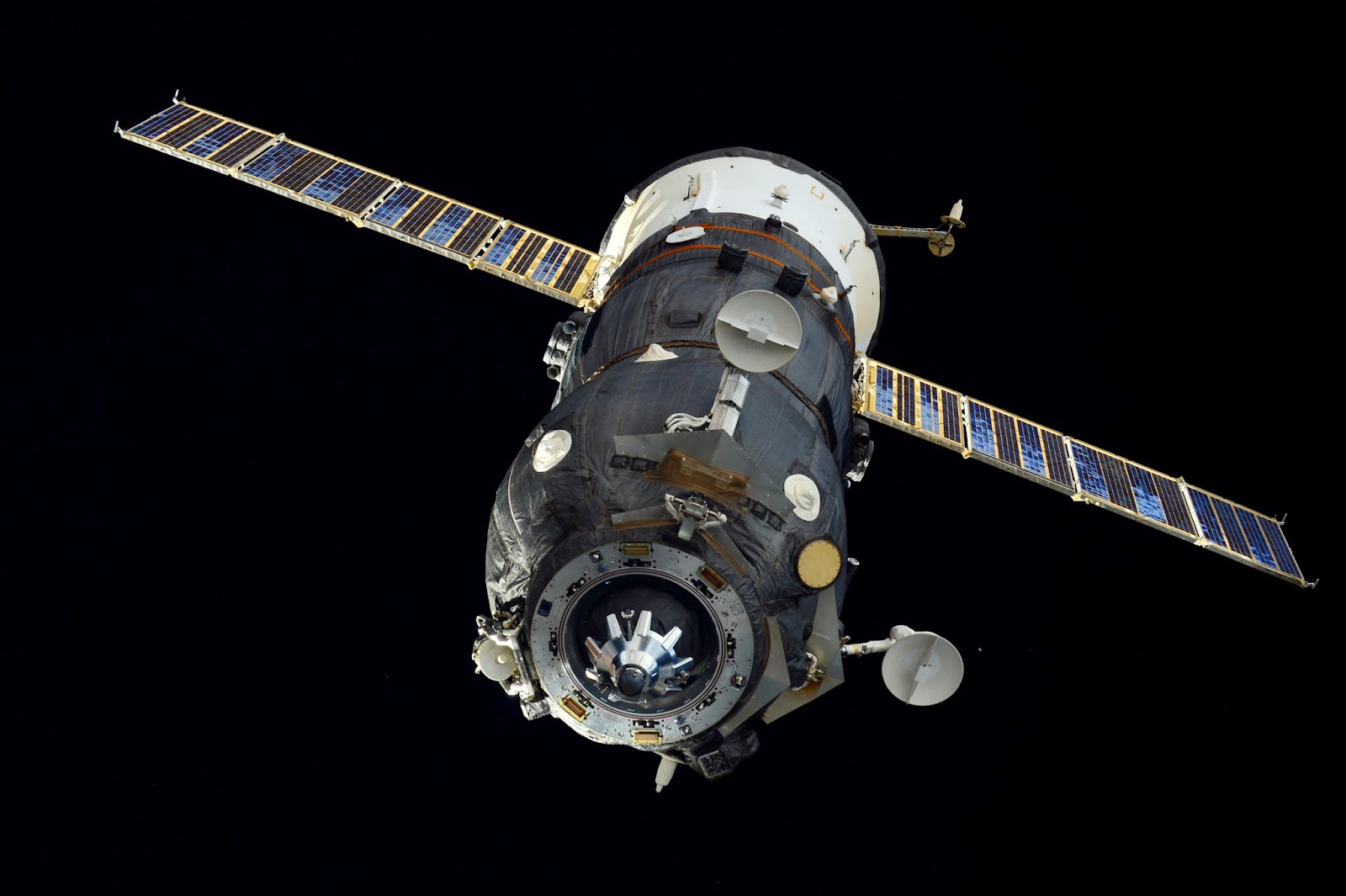
The postponement has occurred because the Russian space agency’s Progress 59 freighter failed to arrive at the Station last week, instead burning up in the atmosphere in an uncontrolled reentry.

Progress space cargo

An exact date for the return will be given by Roscosmos soon.

Five months in space

Samantha’s mission is named Futura to highlight the science and technology research she is running in weightlessness to help shape our future. She is flying as an ESA astronaut for Italy’s ASI space agency under a special agreement between ASI and NASA.

Space Station solar panels

Samantha, Terry and Anton arrived at the Station when their Soyuz TMA-15M spacecraft docked on 24 November 2014.

Since then they have seen five supply vessels arrive and leave, and worked on countless experiments.

Samantha’s cool Space Station science

As much time as possible is spent on science during their 40-hour working week. Samantha runs experiments from ASI and ESA, but takes part in more from scientists all over the world. Many are continuations from previous expeditions – the Station’s longevity is part of what makes it so special for scientists.

Connect with Samantha and experience the Futura mission through her eyes via: http://samanthacristoforetti.esa.int/

Related links:

Futura mission: http://www.esa.int/Our_Activities/Human_Spaceflight/Futura

Avamposto42: http://avamposto42.esa.int/

Agenzia Spaziale Italiana (ASI): http://www.asi.it/

Where is the International Space Station?: http://www.esa.int/Our_Activities/Human_Spaceflight/International_Space_Station/Where_is_the_International_Space_Station

Images, Video, Text, Credits: ESA/NASA.

Best regards, Orbiter.ch

Astronomers Take a New Kind of Pulse From the Sky


California Institute of Technology (Caltech) logo.

May 12, 2015

Fast Facts:

- Enormous telescope array produces videos of flickering, flashing night sky

- Produces 5,000 DVDs worth of data every day

Every night, our sky beats with the pulses of radio light waves, most of which go unseen. A new array of radio antennas in California, called the Owens Valley Long Wavelength Array, is gearing up to catch some of this action, aiming to pick up signals from flaring stars, flashing planets and potentially even more exotic objects.


Image above: A nighttime shot shows some of the antennas of the Owens Valley Long Wavelength Array in California, with the center of our galaxy in the background. Photo copyright: Gregg Hallinan.

The array has already produced a new video of the radio sky, showing how it flickers and morphs over 24 hours.

"Our new telescope lets us see the entire sky all at once, and we can image everything instantaneously," said Gregg Hallinan, an assistant professor of astronomy at the California Institute of Technology in Pasadena, and the principal investigator of the Owens Valley Long Wavelength Array.

One of the key goals of the project is to monitor extrasolar space weather -- the interaction between nearby stars and their orbiting planets. Our sun flares with radiation and hurtles particles and magnetic fields outward. Spectacular light displays, or auroras, are produced on the planets in our solar system when those particles interact with chemical elements in the planets' atmospheres. The same is true for stars beyond our sun, and, if those stars have planets, they too would, in theory, have auroras.

Measurements of these interactions in other star systems could reveal new information about the strength of planets' magnetic fields -- and thus their potential for harboring life. Magnetic fields were a critical factor in the development of life on Earth, offering protection from dangerous radiation and particles.

The radio antennas, which combine to form a powerful radio telescope, are based at Caltech's Owens Valley Radio Observatory, near Big Pine, California. Other partners include: NASA's Jet Propulsion Laboratory, Pasadena, California; Harvard University, Cambridge, Massachusetts; the University of New Mexico, Albuquerque; Virginia Tech, Blacksburg; and the U.S. Naval Research Laboratory, headquartered in Washington.

The Beat of the Radio Sky

The array's station consists of 250 low-cost antennas, each about 3 feet (1 meter) in size, spread out in the Owens Valley. Future plans include thousands of additional antennas; the more antennas in the array, the greater the image sensitivity. The small size of the antennas has benefits as well, leading to a huge field of view in the same way that binoculars can see a large patch of sky. The array covers the entire viewable sky all at once.

"Just as the antenna of your car radio can detect local radio stations no matter where they are around the car, these antennas can detect signals anywhere in the sky," said Joseph Lazio, an astronomer on the project from JPL.

The Owens Valley Long Wavelength Array might also be able to gather traces of radio light from the very first stars and galaxies.

"The biggest challenge is that this weak radiation from the early universe is obscured by the radio emission from our own Milky Way galaxy, which is about a million times brighter than the signal itself, so you have to have very carefully calibrated data to see it," said Hallinan. "That's one of the primary goals of our collaboration -- to try to get the first statistical measure of that weak signal from our cosmic dawn."

Lazio said the array will help in the design of future space missions. Some radio wavelengths are blocked or reflected off Earth's atmosphere, but in space the whole radio spectrum can be observed.

"Ultimately, we will likely need to construct a similar array of simple antennas and put it in space, or on the moon," he said.

One challenge of a project like this is managing the deluge of data. The array produces more than 5,000 DVDs worth of data every day. A supercomputer developed by a group led by Lincoln Greenhill of Harvard University for the National Science Foundation-funded Large-Aperture Experiment to Detect the Dark Ages delivers this torrent of data. It uses graphics processing units similar to those used in modern computer games to combine signals from all the antennas in real time. These combined signals are then sent to a second computer cluster, the All-Sky Transient Monitor, developed at Caltech and JPL, which produces all-sky images in real-time.

The project is funded by Caltech, JPL, NASA and the National Science Foundation.

A more detailed feature story about the project from Caltech is online at: http://www.caltech.edu/news/powerful-new-radio-telescope-array-searches-entire-sky-247-46754

More information on the Long Wavelength Array is also online at: http://lwa.unm.edu

The California Institute of Technology manages JPL for NASA.

Image (mentioned), Video, Text, Credits: NASA/JPL/Whitney Clavin.

Greetings, Orbiter.ch

lundi 11 mai 2015

Serene Saturn


NASA - Cassini Mission to Saturn patch.

May 11, 2015


From a distance Saturn seems to exude an aura of serenity and peace.

In spite of this appearance, Saturn is an active and dynamic world.  Its atmosphere is a fast-moving and turbulent place with wind speeds in excess of 1,100 miles per hour (1,800 km per hour) in places. The lack of a solid surface to create drag means that there are fewer features to slow down the wind than on a planet like Earth.

Mimas, to the upper-right of Saturn, has been brightened by a factor of 2 for visibility.

In this view, Cassini was at a subspacecraft latitude of 19 degrees North. The image was taken with the Cassini spacecraft wide-angle camera on Feb. 4, 2015 using a spectral filter centered at 752 nanometers, in the near-infrared portion of the spectrum.

The view was obtained at a distance of approximately 1.6 million miles (2.5 million kilometers) from Saturn. Image scale is 96 miles (150 kilometers) per pixel.

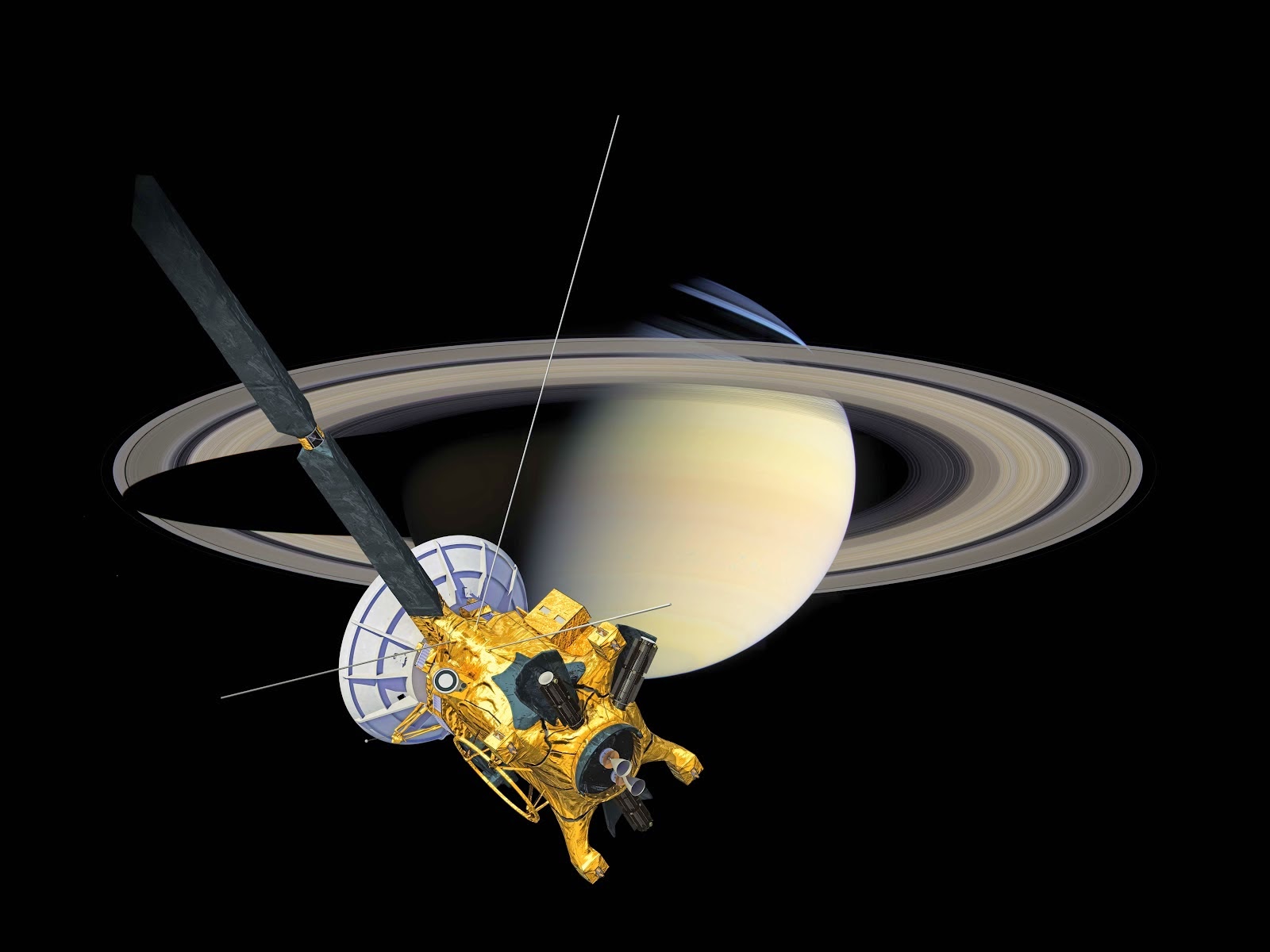
Cassini spacecraft. Image Credits: NASA/ESA

The Cassini mission is a cooperative project of NASA, ESA (the European Space Agency) and the Italian Space Agency. The Jet Propulsion Laboratory, a division of the California Institute of Technology in Pasadena, manages the mission for NASA's Science Mission Directorate, Washington. The Cassini orbiter and its two onboard cameras were designed, developed and assembled at JPL. The imaging operations center is based at the Space Science Institute in Boulder, Colorado.

For more information about the Cassini-Huygens mission visit: http://www.nasa.gov/cassini and http://saturn.jpl.nasa.gov and http://www.esa.int/Our_Activities/Space_Science/Cassini-Huygens. The Cassini imaging team homepage is at http://ciclops.org.

Images (mentioned), Text, Credits: Credit: NASA/JPL-Caltech/Space Science Institute/Tony Greicius.

Cheers, Orbiter.ch

Ceres Animation Showcases Bright Spots


NASA - Dawn Mission patch.

May 11, 2015


Animation above: This animation shows a sequence of images taken by NASA's Dawn spacecraft on May 4, 2015, from a distance of 8,400 miles (13,600 kilometers), in its RC3 mapping orbit. The image resolution is 0.8 mile (1.3 kilometers) per pixel. Image Credits: NASA/JPL-Caltech/UCLA/MPS/DLR/IDA.

The mysterious bright spots on the dwarf planet Ceres are better resolved in a new sequence of images taken by NASA's Dawn spacecraft on May 3 and 4, 2015. The images were taken from a distance of 8,400 miles (13,600 kilometers).

In this closest-yet view, the brightest spots within a crater in the northern hemisphere are revealed to be composed of many smaller spots. However, their exact nature remains unknown.

"Dawn scientists can now conclude that the intense brightness of these spots is due to the reflection of sunlight by highly reflective material on the surface, possibly ice," said Christopher Russell, principal investigator for the Dawn mission from the University of California, Los Angeles.

These images offer scientists new insights into crater shapes and sizes, and a host of other intriguing geological features on the surface. The image resolution is 0.8 mile (1.3 kilometers) per pixel.

Dawn has now concluded its first mapping orbit, in which it completed one 15-day full circle around Ceres while making a host of new observations with its scientific instruments. On May 9, the spacecraft powered on its ion engine to begin the month-long descent toward its second mapping orbit, which it will enter on June 6. In this next phase, Dawn will circle Ceres about every three days at an altitude of 2,700 miles (4,400 kilometers) -- three times closer than the previous orbit. During this phase, referred to as Dawn's survey orbit, the spacecraft will comprehensively map the surface to begin unraveling Ceres' geologic history and assess whether the dwarf planet is active. The spacecraft will pause twice to take images of Ceres as it spirals down into this new orbit.

Artist's view of Dawn spacecraft heading Ceres. Image Credits: NASA/JPL-Caltech

Dawn is the first mission to visit a dwarf planet, and the first to orbit two distinct solar system targets. It studied giant asteroid Vesta for 14 months in 2011 and 2012, and arrived at Ceres on March 6, 2015.

Dawn's mission is managed by JPL for NASA's Science Mission Directorate in Washington. Dawn is a project of the directorate's Discovery Program, managed by NASA's Marshall Space Flight Center in Huntsville, Alabama. UCLA is responsible for overall Dawn mission science. Orbital ATK Inc., in Dulles, Virginia, designed and built the spacecraft. The German Aerospace Center, Max Planck Institute for Solar System Research, Italian Space Agency and Italian National Astrophysical Institute are international partners on the mission team. For a complete list of mission participants, visit: http://dawn.jpl.nasa.gov/mission

More information about Dawn is available at the following sites: http://dawn.jpl.nasa.gov and http://www.nasa.gov/dawn

Images (mentioned), Text, Credits: NASA/JPL/Elizabeth Landau/Tony Greicius.

Greetings, Orbiter.ch

vendredi 8 mai 2015

NASA Selects Advanced Space Technology Concepts for Further Study


NASA logo.

May 8, 2015

NASA has selected 15 proposals for study under Phase I of the NASA Innovative Advanced Concepts (NIAC), a program that aims to turn science fiction into science fact through the development of pioneering technologies.

The chosen proposals cover a wide range of inventive concepts, selected for their potential to transform future aerospace missions.  Such transformational technology holds promise of accelerating NASA’s progress toward its goals of exploration beyond low-Earth orbit, and missions to an asteroid and Mars.

"The latest NIAC selections include a number of exciting concepts," said Steve Jurczyk, associate administrator for the Space Technology Mission Directorate (STMD) at NASA Headquarters in Washington. "We are working with American innovators to reimagine the future of aerospace and focus our investments on concepts to address challenges of current interests both in space and here on Earth."

NIAC Phase I awards are valued at approximately $100,000, providing awardees the funding needed to conduct a nine-month initial definition and analysis study of their concepts. If the basic feasibility studies are successful, awardees can apply for Phase II awards, valued up to $500,000 for two additional years of concept development.

"Most of the 2015 NIAC Phase I final candidates were outstanding, and choosing only 15 of them proved to be a challenge," said Jason Derleth, NIAC program executive. "We look forward to seeing how each new study will push boundaries and explore new approaches - that's what makes NIAC unique."

One of the selected proposals calls for the use of a soft-robotic rover for missions that can’t be accomplished with conventional power systems. This rover would resemble an eel with a short antenna on its back that harvests power from locally changing magnetic fields. The goal is to enable amphibious exploration of gas-giant moons like Europa.


Image above: This artist's rendering depicts 2015 NIAC Phase I Fellow Mason Peck's soft-robotic rover for planetary environments for missions that cannot be accomplished with conventional power systems. It resembles a squid, with tentacle-like structures that serve as electrodynamic 'power scavengers' to harvest power from locally changing magnetic fields. The goal is to enable amphibious exploration of gas-giant moons like Europa. Image Credits: NASA/Cornell University/NSF.

Another proposal will look at using two glider-like unmanned aerial vehicles connected by an ultra-strong cable at different altitudes that sail without propulsion. The vehicle would use wind shear in the lower stratosphere (approximately 60,000 ft.), similar to a kite surfer, where the upper aircraft provides lift and aerodynamic thrust, and the lower aircraft provides an upwind force to keep it from drifting downwind. If successful, this atmospheric satellite could remain in the stratosphere for years, enabling NASA's Earth science missions, monitoring capabilities or aircraft navigation at a fraction of the cost of orbital satellite networks.

Employing a novel mobility concept, the Cryogenic Reservoir Inventory by Cost-Effective Kinetically Enhanced Technology (CRICKET) proposal explores volatiles, such as hydrogen, nitrogen and water, stored in permanently shadowed regions on planetary bodies. Inexpensive robotic crawlers, hoppers and soccer-ball style buckey-bots would explore the surface of these dark regions for water and other compounds. Multiple bots could be used to develop a high-resolution map to aid in potentially using these resources.

NASA solicits visionary, long-term concepts for technological development based on their potential value to future and current space missions. The projects are chosen through a peer-review process that evaluates their potential, technical approach and benefits that can be realized in a reasonable timeframe. All concepts are very early in the development cycle and represent multiple technology areas, including aircraft propulsion, human life support, science instruments, unique robotic concepts and exploring other diverse technology paths needed to meet NASA's strategic goals.

NASA's early investments and partnerships with forward-thinking scientists, engineers and citizen inventors from across the nation will provide technological dividends and help maintain America's leadership in the global technology economy.

NIAC is part of NASA's Space Technology Mission Directorate, which innovates, develops, tests and flies hardware for use in NASA's future missions. During the next 18 months, the directorate will make significant new investments to address several high-priority challenges in achieving safe and affordable deep space exploration.

For a complete list of the selected proposals and more information about NIAC, visit: http://www.nasa.gov/niac

For more information about NASA's investments in space technology, visit: http://www.nasa.gov/spacetech

Image, Text, Credits: NASA/Joshua Buck/Karen Northon.

Greetings, Orbiter.ch

A Hubble Study of the Peculiar Asymmetry of NGC 949


NASA - Hubble Space Telescope patch.

May 8, 2015


This image provides the clearest ever view of galaxy NGC 949, which lies over 30 million light-years away in the constellation of Triangulum. The galaxy has an unusual shape, made more obscure due to its inclination. From our point of view, it is difficult to discern exactly what type of galaxy NGC 949 is, but it is certainly a disk galaxy of some kind, most likely a spiral.

NGC 949 was first discovered by Sir William Herschel on September 21, 1786, using an 18.7-inch reflecting telescope. The galaxy was one of about 3,000 objects Herschel cataloged as "nebulae" during an intense and systematic deep sky survey, the results of which eventually formed the bulk of the New General Catalogue (NGC).

Taken with Hubble’s Advanced Camera for Surveys (ACS), this image shows extraordinary detail. This detail allows us to see a strange asymmetric alignment in the dark lanes of dust that snake across the galaxy. The top-right half of the galaxy appears considerably more marbled with dust in this image; a curious observation explained by stars tending to favor locations towards the center of a galaxy, and dust preferring almost invariably to reside along the galactic plane.

When a galaxy is inclined as NGC 949 is, some regions — in this case the top-right — are tipped toward us and the light from the stars we see in these regions has had to travel through more dust. This causes the light to appear redder — the result of the same process that gives the sun’s light a red hue at dusk — or else disappear entirely, making the dust appear more prominent on that side of the galaxy.

Hubble orbiting the Earth

In the part tipped away from us, the light from the stars has had to pass through much less dust to reach us, so it appears brighter, and the dust is much less prominent. Were it possible to view NGC 949 from the opposite side, the apparent alignment of the dust would be reversed.

The scientific advantages of this effect were recently displayed in suitably stunning style in the M31 PHAT mosaic, which allowed astronomers to produce a partial three-dimensional dust map of M31 four times clearer than any previously attempted.

Related link:

Hubble’s Advanced Camera for Surveys (ACS): http://hubblesite.org/the_telescope/nuts_.and._bolts/instruments/acs/

For images and more information about Hubble, visit:http://www.nasa.gov/hubble and http://hubblesite.org/ and http://www.spacetelescope.org/

Image, Video, Text, Credits: ESA/Hubble & NASA/Ashley Morrow.

Best regards, Orbiter.ch

Quick Detour by NASA Curiosity Checks Ancient Valley and Rover Views Serene Sundown on Mars


NASA - Mars Science Laboratory (MSL) logo.

May 8, 2015

(Click on the image for enlarge)

Image above: This April 16, 2015, panorama from the Mast Camera on NASA's Curiosity Mars rover shows a detailed view toward two areas on lower Mount Sharp chosen for close-up inspection in subsequent weeks: "Mount Shields" and "Logan Pass." Image Credits: NASA/JPL-Caltech/MSSS.

Researchers slightly detoured NASA's Curiosity Mars rover from the mission's planned path in recent days for a closer look at a hillside site where an ancient valley had been carved out and refilled.

The rover made observations and measurements there to address questions about how the channel formed and filled. Then it resumed driving up Mount Sharp, where the mission is studying the rock layers. The layers reveal chapters in how environmental conditions and the potential to support microbial life changed in Mars' early history.

(Click on the image for enlarge)

Image above: A sweeping panorama combining 33 telephoto images into one Martian vista presents details of several types of terrain visible on Mount Sharp from a location along the route of NASA's Curiosity Mars rover. The component images were taken by the rover's Mast Camera on April 10, 2015. Image Credits: NASA/JPL-Caltech/MSSS.

Two new panoramas of stitched-together telephoto images from Curiosity's Mast Camera (Mastcam) present the increasingly hilly region the rover has been investigating, and more distant portions of Mount Sharp. These large images are online, with pan and zoom controls for exploring them, at:

http://mars.nasa.gov/msl/multimedia/deepzoom/PIA19397/

http://mars.nasa.gov/msl/multimedia/deepzoom/PIA19398/

Curiosity has been exploring on Mars since 2012. It reached the base of Mount Sharp last year after fruitfully investigating outcrops closer to its landing site and then trekking to the mountain. The main mission objective now is to examine successively higher layers of Mount Sharp. Curiosity spent several months examining the lowest levels of the mountain's basal geological unit, the Murray formation, at an outcrop called "Pahrump Hills." Then it set off toward a site called "Logan Pass," where the team anticipates a first chance to place the contact-science instruments at the end of the rover's arm onto a darker geological unit overlying or within the Murray formation.

"In pictures we took on the way from Pahrump Hills toward Logan Pass, some of the geologists on the team noticed a feature that looked like what's called an 'incised valley fill,' which is where a valley has been cut into bedrock and then filled in with other sediment," said Curiosity Project Scientist Ashwin Vasavada of NASA's Jet Propulsion Laboratory, Pasadena, California.

This unusual geometry of the rock layers was noted on the side of a rise called "Mount Shields," which sits northwest of the planned route to Logan Pass. The team chose in late April to divert the rover to the base of Mount Shields.


Image above: This map shows the route on lower Mount Sharp that NASA's Curiosity followed in April and early May 2015, in the context of the surrounding terrain. Numbers along the route identify the sol, or Martian day, on which it completed the drive reaching that point, as counted since its 2012 landing. Image Credits: NASA/JPL-Caltech/Univ. of Arizona.

"We wanted to investigate what cut into the mudstone bedrock, and what process filled it back in," Vasavada said. "The fill material looks like sand. Was the sand transported by wind or by water? What were the relative times for when the mudstone formed, when the valley was cut into it, when the cut was filled in?

“It’s exciting to see this on Mars for the first time," he continued. "Features like this on Earth capture evidence of change.  What in the environment changed to go from depositing one kind of sediment, to eroding it away in a valley, to then depositing a different kind of sediment? It’s a fascinating puzzle that Mars has left for us."

Scientists are examining the evidence collected at Mount Shields as the rover approaches its next study area, at Logan Pass.

NASA's Curiosity Rover Views Serene Sundown on Mars 


The sun dips to a Martian horizon in a blue-tinged sky in images sent home to Earth this week from NASA's Curiosity Mars rover.

For a single-frame scenic view, see: http://photojournal.jpl.nasa.gov/catalog/PIA19400

Curiosity used its Mast Camera (Mastcam) to record the sunset during an evening of skywatching on April 15, 2015.

The imaging was done between dust storms, but some dust remained suspended high in the atmosphere. The sunset observations help researchers assess the vertical distribution of dust in the atmosphere.

"The colors come from the fact that the very fine dust is the right size so that blue light penetrates the atmosphere slightly more efficiently," said Mark Lemmon of Texas A&M University, College Station, the Curiosity science-team member who planned the observations. "When the blue light scatters off the dust, it stays closer to the direction of the sun than light of other colors does. The rest of the sky is yellow to orange, as yellow and red light scatter all over the sky instead of being absorbed or staying close to the sun."

Just as colors are made more dramatic in sunsets on Earth, Martian sunsets make the blue near the sun's part of the sky much more prominent, while normal daylight makes the rusty color of the dust more prominent.

Since its August 2012 landing inside Mars' Gale Crater, Curiosity has been studying the planet's ancient and modern environments.

Malin Space Science Systems, San Diego, built and operates Curiosity's Mastcam. NASA's Jet Propulsion Laboratory, a division of the California Institute of Technology in Pasadena, built the rover and manages the project for NASA's Science Mission Directorate in Washington.

JPL, a division of the California Institute of Technology in Pasadena, built the rover and manages the project for NASA's Science Mission Directorate in Washington. For more information about Curiosity, visit: http://www.nasa.gov/msl and http://mars.jpl.nasa.gov/msl/

You can follow the mission on Facebook and Twitter at: http://www.facebook.com/marscuriosity and http://www.twitter.com/marscuriosity

Images (mentioned), Text, Credits: NASA/Dwayne Brown/JPL/Guy Webster/Tony Greicius.

Cheers, Orbiter.ch