mercredi 24 novembre 2021

Galileo prototype GIOVE-A switched off after 16 years in orbit


ESA - Galileo GIOVE Mission patch.


Nov. 24, 2021

Europe’s first prototype satellite for Galileo, GIOVE-A, has today been formally decommissioned after 16 years of work in orbit. The 2005-launched mission secured Galileo’s radio frequencies for Europe, demonstrated key hardware and probed the then-unknown radiation environment of medium-Earth orbit.

“If not for GIOVE-A the 26 Galileo satellites in orbit today would not exist,” comments Paul Verhoef, ESA’s Director of Navigation. “Its speedy development and launch opened the way for our working constellation to follow.”

GIOVE-A

ESA had begun designing Galileo at the turn of the century, and radio frequencies had been set aside for the new system by the International Telecommunications Union. But these frequency filings came with a deadline attached: the frequencies had to be used from orbit by mid-2006 or they would lapse.

Galileo In-Orbit validation Element-A, or GIOVE-A was therefore produced at a breakneck pace to meet this deadline. Developed in the second half of 2003, the satellite was designed, built, and tested before the end of 2005 – launched on 28 December of that year.

GIOVE-A launch by Soyuz

“At the time there was a lot of uncertainty: would we make it or not?” recalls Javier Benedicto, Head of the Galileo Project Department in ESA “GIOVE-A transmitted its first Galileo signal-in-space on 12 January 2006, meaning that Europe was formally in the navigation business.”

That March ESA formally confirmed it had brought the Galileo-related frequency filings into use, three months ahead of the official ITU deadline.

The mission also carried a prototype rubidium atomic clock – proving their functionality for the operational Galileo satellites that would follow – as well as a radiation instrument. Medium Earth orbit, circa 23 000 km altitude, was terra incognita at this point for European satellites, but it was known to possess enhanced radiation levels from the impinging of the outer band of Earth’s Van Allen radiation belts.

GIOVE-B

A second Galileo prototype, GIOVE-B, followed its predecessor in 2008, this mission hosting a prototype passive hydrogen maser – the second type of atomic clock that Galileo relies on – along with an enhanced payload able to transmit for the first time the GPS-Galileo common signal. Once the first Galileo satellites were in orbit and working well, ESA ended use of GIOVE-A in 2012. The satellite was placed in a ‘graveyard orbit’ 100 km above the operational satellites’ orbits, as well as GIOVE-B after its own four-year mission.

Side lobe satnav signals available to satellites in higher orbits

Control of GIOVE-A, however, passed to manufacturer Surrey Satellite Technology Ltd (SSTL) in the UK. GIOVE-A was then employed for various in-orbit experiments, including demonstrating the reception of satellite navigation signals from GPS satellites orbiting below it – based on spillover ‘sidelobe’ reception from satellites on the other side of Earth.

This proof that satnav can indeed be relied on further out into space means that satellites in geostationary orbit are making use of satnav for positioning, and, as a next step, ESA is planning to extend satnav coverage all the way to the Moon.

The satellite also continued its radiation survey of medium-Earth orbit, acquiring a unique record extending across more than 10 years, analysed by the Surrey Space Centre with ESA support. Multiple scientific papers have been written on these results, which encompass the “electron desert” of 2008-9 during what was the lowest levels of solar activity during the space era, followed by one of the largest electron storm events on record in April 2010.

Galileo constellation

A new model of the outer Van Allen belt electron fluxes, ‘MOBE-DIC’, has subsequently been produced from this dataset, helping to guide future satellite designs.

“Actually, the satellite itself is still operating well,” explains Sarah Lawrence of SSTL. “The reason for ending the mission is software obsolescence in our control centre. The decommissioning procedure involved transitioning the satellite to Earth pointing mode, turning off the reaction wheels and setting the attitude and orbit control system to standby mode, before finally switching off the on-board computer and transmitter.”

GIOVE-A

Sir Martin Sweeting, SSTL Executive Chairman, adds: “GIOVE-A over-delivered on its original lifetime and mission goals – an inspiring and game-changing mission on so many levels.”

SSTL went on to provide navigation payloads for operational Galileo satellites. Today there are 26 Galileo satellites in orbit and Galileo has become the world’s most precise satnav system, delivering metre-scale accuracy to more than 2.3 billion users around the globe. Two more Galileo satellites are currently being readied for launch.

Galileo: finding our way

About Galileo

Galileo is currently the world’s most precise satellite navigation system, serving more than two billion users around the globe. The Full Operational Capability phase of the Galileo programme is managed and funded by the European Union. The European Commission, ESA and EUSPA (the EU Agency for the Space Programme) have signed an agreement by which ESA acts as design authority and system development prime on behalf of the Commission and EUSPA as the exploitation and operation manager of Galileo/EGNOS. “Galileo” is registered as a trademark in the database of the European Union Intellectual Property Office (n° 002742237).

Related links:

Surrey Satellite Technology Ltd (SSTL): https://www.sstl.co.uk/

Navigation: https://www.esa.int/Applications/Navigation

Images, Video, Text, Credits: ESA/P. Muller/P. Carril.

Best regards, Orbiter.ch

Hubble Witnesses Shock Wave of Colliding Gases in Running Man Nebula


NASA - Hubble Space Telescope patch.


Nov 24, 2021


Image Credits: NASA, ESA, and J. Bally (University of Colorado at Boulder); Processing: Gladys Kober (NASA/Catholic University of America).

Mounded, luminous clouds of gas and dust glow in this Hubble image of a Herbig-Haro object known as HH 45. Herbig-Haro objects are a rarely seen type of nebula that occurs when hot gas ejected by a newborn star collides with the gas and dust around it at hundreds of miles per second, creating bright shock waves. In this image, blue indicates ionized oxygen (O II) and purple shows ionized magnesium (Mg II). Researchers were particularly interested in these elements because they can be used to identify shocks and ionization fronts.

This object is located in the nebula NGC 1977, which itself is part of a complex of three nebulae called The Running Man. NGC 1977 –  like its companions NGC 1975 and NGC 1973 – is a reflection nebula, which means that it doesn’t emit light on its own, but reflects light from nearby stars, like a streetlight illuminating fog.


Image above: Hubble imaged a small section of the Running Man Nebula, which lies close to the famed Orion Nebula and is a favorite target for amateur astronomers to observe and photograph. Image Credits: NASA, ESA, J. Bally (University of Colorado at Boulder), and DSS; Processing: Gladys Kober (NASA/Catholic University of America).

Hubble observed this region to look for stellar jets and planet-forming disks around young stars, and examine how their environment affects the evolution of such disks.

Hubble Space Telescope (HST): https://www.nasa.gov/mission_pages/hubble/main/index.html

Images (mentioned), Text, Credits: NASA/Andrea Gianopoulos/GSFC/Claire Andreoli.

Greetings, Orbiter.ch

Russian Port Module is Safely in Orbit Headed for Station


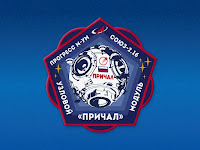
ROSCOSMOS - Prichal Port Module patch.


Nov. 24, 2021

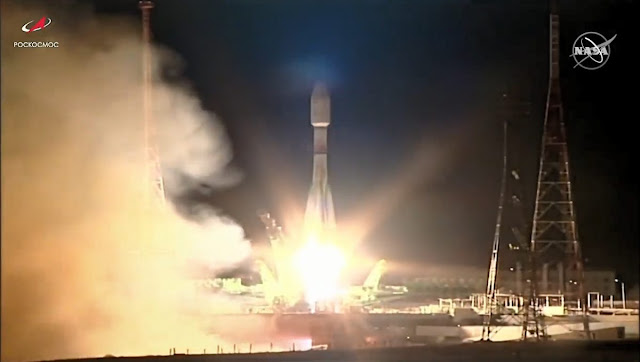
The five-ton Prichal docking module and its modified, uncrewed Russian Progress delivery spacecraft are safely in orbit headed for the International Space Station following launch at 8:06 a.m. (6:06 p.m. Baikonur time) from the Baikonur Cosmodrome in Kazakhstan.


Image above: The Russian Prichal Node Module launches from the Baikonur Cosmodrome in Kazakhstan on Nov. 24th, 2021. Image Credit: NASA TV.

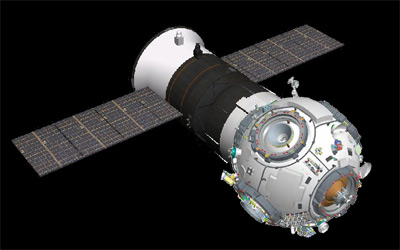
Prichal, named for the Russian word for port or berth, has five available docking ports to accommodate multiple Russian spacecraft and provide fuel transfer capability to the Nauka module.

UM (Prichal, NM, Progress-MS-UM). Image Credit: Gunter's Space Page

Progress will transport Prichal for an automated docking with the space station’s Nauka multipurpose laboratory module Friday, Nov. 26., at 10:26 a.m. Live coverage on NASA TV of rendezvous and docking will begin at 9:30 a.m.

Prichal launch

To make room for Prichal, the recently relocated, uncrewed Progress 78 cargo craft will undock from Nauka at 6:21 a.m. Thursday, Nov. 25, and follow a path to burn up upon reentry in the Earth’s atmosphere. NASA TV will not cover the Progress 78 undocking or reentry.

Related links:

NASA TV: http://www.nasa.gov/live

Nauka multipurpose laboratory module: https://www.roscosmos.ru/tag/nauka/

International Space Station (ISS): https://www.nasa.gov/mission_pages/station/main/index.html

Images (mentioned), Video, Text, Credits: NASA/Norah Moran/NASA TV/SciNews.

Best regards, Orbiter.ch
NASA, SpaceX Launch DART: First Test Mission to Defend Planet Earth


SpaceX / NASA - Falcon 9 / DART Mission patch.


Nov 24, 2021

NASA’s Double Asteroid Redirection Test (DART), the world’s first full-scale mission to test technology for defending Earth against potential asteroid or comet hazards, launched Wednesday at 1:21 a.m. EST on a SpaceX Falcon 9 rocket from Space Launch Complex 4 East at Vandenberg Space Force Base in California.

Falcon 9 carrying DART liftoff. Image Credits: SpaceX/NASA

Just one part of NASA’s larger planetary defense strategy, DART – built and managed by the Johns Hopkins Applied Physics Laboratory (APL) in Laurel, Maryland – will impact a known asteroid that is not a threat to Earth. Its goal is to slightly change the asteroid’s motion in a way that can be accurately measured using ground-based telescopes.

DART will show that a spacecraft can autonomously navigate to a target asteroid and intentionally collide with it – a method of deflection called kinetic impact. The test will provide important data to help better prepare for an asteroid that might pose an impact hazard to Earth, should one ever be discovered. LICIACube, a CubeSat riding with DART and provided by the Italian Space Agency (ASI), will be released prior to DART’s impact to capture images of the impact and the resulting cloud of ejected matter. Roughly four years after DART’s impact, ESA’s (European Space Agency) Hera project will conduct detailed surveys of both asteroids, with particular focus on the crater left by DART’s collision and a precise determination of Dimorphos’ mass.

NASA DART launch

“DART is turning science fiction into science fact and is a testament to NASA’s proactivity and innovation for the benefit of all,” said NASA Administrator Bill Nelson. “In addition to all the ways NASA studies our universe and our home planet, we’re also working to protect that home, and this test will help prove out one viable way to protect our planet from a hazardous asteroid should one ever be discovered that is headed toward Earth.”

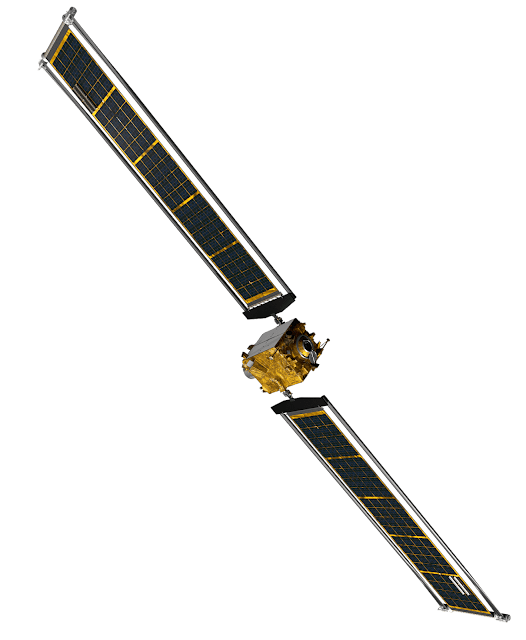
At 2:17 a.m., DART separated from the second stage of the rocket. Minutes later, mission operators received the first spacecraft telemetry data and started the process of orienting the spacecraft to a safe position for deploying its solar arrays. About two hours later, the spacecraft completed the successful unfurling of its two, 28-foot-long, roll-out solar arrays. They will power both the spacecraft and NASA’s Evolutionary Xenon Thruster – Commercial ion engine, one of several technologies being tested on DART for future application on space missions.

“At its core, DART is a mission of preparedness, and it is also a mission of unity,” said Thomas Zurbuchen, associate administrator for the Science Mission Directorate at NASA Headquarters in Washington. “This international collaboration involves DART, ASI’s LICIACube, and ESA’s Hera investigations and science teams, which will follow up on this groundbreaking space mission.”

NASA DART separation

DART’s one-way trip is to the Didymos asteroid system, which comprises a pair of asteroids. DART’s target is the moonlet, Dimorphos, which is approximately 530 feet (160 meters) in diameter. The moonlet orbits Didymos, which is approximately 2,560 feet (780 meters) in diameter.

Since Dimorphos orbits Didymos at much a slower relative speed than the pair orbits the Sun, the result of DART’s kinetic impact within the binary system can be measured much more easily than a change in the orbit of a single asteroid around the Sun.

“We have not yet found any significant asteroid impact threat to Earth, but we continue to search for that sizable population we know is still to be found. Our goal is to find any possible impact, years to decades in advance, so it can be deflected with a capability like DART that is possible with the technology we currently have,” said Lindley Johnson, planetary defense officer at NASA Headquarters. “DART is one aspect of NASA’s work to prepare Earth should we ever be faced with an asteroid hazard. In tandem with this test, we are preparing the Near-Earth Object Surveyor Mission, an space-based infrared telescope scheduled for launch later this decade and designed to expedite our ability to discover and characterize the potentially hazardous asteroids and comets that come within 30 million miles of Earth’s orbit.”

The spacecraft will intercept the Didymos system between Sept. 26 and Oct. 1, 2022, intentionally slamming into Dimorphos at roughly 4 miles per second (6 kilometers per second). Scientists estimate the kinetic impact will shorten Dimorphos’ orbit around Didymos by several minutes. Researchers will precisely measure that change using telescopes on Earth. Their results will validate and improve scientific computer models critical to predicting the effectiveness of the kinetic impact as a reliable method for asteroid deflection.

“It is an indescribable feeling to see something you’ve been involved with since the ‘words on paper’ stage become real and launched into space,” said Andy Cheng, one of the DART investigation leads at Johns Hopkins APL and the individual who came up with the idea of DART. “This is just the end of the first act, and the DART investigation and engineering teams have much work to do over the next year preparing for the main event ─ DART’s kinetic impact on Dimorphos. But tonight we celebrate!”


Image above: An illustration of NASA’s DART spacecraft and the Italian Space Agency’s (ASI) LICIACube prior to impact at the Didymos binary system. Image Credits: NASA/Johns Hopkins, APL/Steve Gribben.

DART’s single instrument, the Didymos Reconnaissance and Asteroid Camera for Optical navigation (DRACO), will turn on a week from now and provide first images from the spacecraft. DART will continue to travel just outside of Earth’s orbit around the Sun for the next 10 months until Didymos and Dimorphos will be a relatively close 6.8 million miles (11 million kilometers) from Earth.

A sophisticated guidance, navigation, and control system, working together with algorithms called Small-body Maneuvering Autonomous Real Time Navigation (SMART Nav), will enable the DART spacecraft to identify and distinguish between the two asteroids. The system will then direct the spacecraft toward Dimorphos. This process will all occur within roughly an hour of impact.

Johns Hopkins APL manages the DART mission for NASA's Planetary Defense Coordination Office as a project of the agency’s Planetary Missions Program Office. NASA provides support for the mission from several centers, including the Jet Propulsion Laboratory in Southern California, Goddard Space Flight Center in Greenbelt, Maryland, Johnson Space Center in Houston, Glenn Research Center in Cleveland, and Langley Research Center in Hampton, Virginia. The launch is managed by NASA’s Launch Services Program, based at the agency’s Kennedy Space Center in Florida. SpaceX is the launch services provider for the DART mission.

Related articles:

Launch Readiness Review Complete Ahead of NASA’s DART Mission
https://orbiterchspacenews.blogspot.com/2021/11/launch-readiness-review-complete-ahead.html

Catching asteroid deflection mission's first words
https://orbiterchspacenews.blogspot.com/2021/11/catching-asteroid-deflection-missions.html

Planetary defenders: after NASA’s DART comes ESA’s Hera
https://orbiterchspacenews.blogspot.com/2021/11/planetary-defenders-after-nasas-dart.html

For more information about the DART mission, visit: https://www.nasa.gov/dartmission

Images (mentioned), Videos, Text, Credits: NASA/Sean Potter/Grey Hautaluoma/Josh Handal/Alana Johnson/JHAPL/Justyna Surowiec/Michael Buckley/NASA TV/SciNews.

Greetings, Orbiter.ch

mardi 23 novembre 2021

Launch Readiness Review Complete Ahead of NASA’s DART Mission


SpaceX / NASA - Falcon 9 / DART Mission patch.


Nov. 23, 2021


Image above: The SpaceX Falcon 9 rocket with the Double Asteroid Redirection Test, or DART, spacecraft onboard, is seen during sunrise, Tuesday, Nov. 23, 2021, at Space Launch Complex 4E, Vandenberg Space Force Base in California. DART is the world’s first full-scale planetary defense test, demonstrating one method of asteroid deflection technology. The mission was built and is managed by the Johns Hopkins APL for NASA’s Planetary Defense Coordination Office. Photo Credits: NASA/Bill Ingalls.

A team of launch managers for NASA’s Double Asteroid Redirection Test (DART) mission have authorized approval to proceed to launch countdown at Vandenberg Space Force Base in California ahead of a scheduled launch on Tuesday, Nov. 23 at 10:21 p.m. PST (Wednesday, Nov. 24 at 1:21 a.m. EST) from the SpaceX Space Launch Complex 4.

During the Launch Readiness Review on Nov. 22, launch managers from NASA’s Launch Services Program (LSP), SpaceX, and DART mission team received an update on the mission status and any close-out actions from the previously held Flight Readiness Review. Signing the Certificate of Flight Readiness at the conclusion of the LRR were NASA’s Office of Safety and Mission Assurance; LSP’s chief engineer,  launch director, and program manager; the U.S. Space Force’s Space Launch Delta 30 commander; the DART project manager; Johns Hopkins Applied Physics Laboratory director; and the SpaceX Launch Director.


Image above: Illustration of NASA’s DART spacecraft and the Italian Space Agency’s (ASI) LICIACube prior to impact at the Didymos binary system. Image Credits: NASA/Johns Hopkins, APL/Steve Gribben.

DART is the first mission to test technologies for preventing an impact of Earth by a hazardous asteroid. DART’s target asteroid in not a threat to Earth.

Teams also recently completed integration of the Falcon 9 rocket and its payload. After moving the DART spacecraft, encapsulated in its payload fairings, from the payload processing facility to the Falcon 9 Hangar, SpaceX technicians horizontally integrated the encapsulated spacecraft to the SpaceX Falcon 9 rocket over a two-day period, Nov. 20 to 21.

An illustration of the DART spacecraft. Image Credits: NASA/John Hopkins APL

“The payload mate onto the launch vehicle is an important milestone for DART because it is the final verification to ensure the spacecraft is communicating with its ground team,” said Notlim Burgos, LSP payload mechanical engineer. “This milestone also is significant for the LSP mechanical team because it integrates the last components of the launch vehicle, completing the build of the Falcon 9 in support of NASA’s first planetary defense mission.”

DART, NASA's First Planetary Defense Test Mission

NASA’s Launch Services Program, based at Kennedy Space Center in Florida, is managing the launch. The Johns Hopkins Applied Physics Lab manages the DART mission for NASA’s Planetary Defense Coordination Office as a project of the agency’s Planetary Missions Program Office. The agency provides support for the mission from several centers, including the Jet Propulsion Laboratory in Southern California, Goddard Space Flight Center in Greenbelt, Maryland, Johnson Space Center in Houston, Glenn Research Center in Cleveland, and Langley Research Center in Hampton, Virginia.

Related articles:

Catching asteroid deflection mission's first words
https://orbiterchspacenews.blogspot.com/2021/11/catching-asteroid-deflection-missions.html

Planetary defenders: after NASA’s DART comes ESA’s Hera
https://orbiterchspacenews.blogspot.com/2021/11/planetary-defenders-after-nasas-dart.html

Related links:

NASA Television: https://www.nasa.gov/live

Double Asteroid Redirection Test (DART): https://www.nasa.gov/planetarydefense/dart

Launch Services Program (LSP): https://www.nasa.gov/centers/kennedy/launchingrockets/index.html

Planetary Defense Coordination Office: https://www.nasa.gov/planetarydefense/overview/

Images (mentioned), Text, Credits: NASA/Patti Bielling/Video Credit: JHU Applied Physics Laboratory.

Best regards, Orbiter.ch

CASC - Long March-4C launches Gaofen-3 02


CASC - Long March-4C / Gaofen-3 02 Mission patch.


Nov. 23, 2021

Long March-4C launches Gaofen-3 02

A Long March-4C launch vehicle launched the second Gaofen-3 satellite (Gaofen-3 02, 高分三号02) from the Jiuquan Satellite Launch Center, Gansu Province, northwest China, on 22 November 2021, at 23:45 UTC (23 November, at 07:45 local time).

Long March-4C launches Gaofen-3 02

According to official sources, the satellite will operate in a solar synchronous orbit at an altitude of 755 km, improving China’s “ocean observation, water conservancy applications, disaster monitoring, environmental monitoring and other fields.”

Gaofen 3 (GF 3) satellite

For more information about China Aerospace Science and Technology Corporation (CASC): http://english.spacechina.com/n16421/index.html

Images, Video, Text, Credits: China Media Group(CMG)/China Central Television (CCTV)/China Aerospace Science and Technology Corporation (CASC)/SciNews/Gunter's Space Page/Orbiter.ch Aerospace/Roland Berga.

Greetings, Orbiter.ch

Spacewalk Preps During Human Research, Robotics, and Physics Today


ISS - Expedition 66 Mission patch.


Nov. 23, 2021

Two astronauts are checking out their gear today ahead of a spacewalk planned for the end of the month. The duo along with the rest of the Expedition 66 crew also had time set aside for human research, robotics, and physics aboard the International Space Station.

NASA Flight Engineers Thomas Marshburn and Kayla Barron are getting ready for a six-and-a-half hour spacewalk scheduled for Nov. 30. The duo will exit the U.S. Quest airlock, translate over to the Port-1 truss segment, and replace a faulty antenna system. Today, the astronauts checked out spacewalking gear and inspected the tethers that will keep them attached to the station.


Image above: NASA astronaut Raja Chari is pictured aboard the station just a few hours after docking inside the SpaceX Crew Dragon Endurance on Nov. 12. Image Credit: NASA.

Afterward, Barron partnered again with NASA Flight Engineer Raja Chari for the GRASP experiment studying how microgravity affects hand-eye coordination and the vestibular system. The pair took turns wearing a virtual reality headset reaching for virtual objects to understand how the central nervous system adapts to weightlessness.

Marshburn worked throughout Tuesday collecting and stowing his blood samples in a science freezer for later analysis. The three-time station visitor also contributed to the Food Physiology study that explores the effects of diet on astronauts living long-term in space.

Astrobee. Animation Credit: NASA

Flight Engineer Matthias Maurer of ESA (European Space Agency) studied advanced robotic maneuvers today using the Astrobee robotic free-flyers. NASA astronaut Mark Vande Hei set up the Microgravity Science Glovebox to learn how to harness nanoparticles to fabricate and manufacture new materials for the InSPACE-4 physics study.

Cosmonauts Anton Shkaplerov and Pyotr Dubrov had a physical fitness test today on the station’s exercise bicycle. The Roscosmos duo strapped sensors to themselves and measured their cardiovascular function during this morning’s test. The pair split up in the afternoon and worked on life support maintenance and cargo inventory tasks.

Related links:

Expedition 66: https://www.nasa.gov/mission_pages/station/expeditions/expedition66/index.html

U.S. Quest airlock: https://www.nasa.gov/mission_pages/station/structure/elements/joint-quest-airlock

Port-1 truss segment: https://www.nasa.gov/mission_pages/station/structure/elements/truss-structure

GRASP: https://www.nasa.gov/mission_pages/station/research/experiments/explorer/Investigation.html?#id=2038

Science freezer: https://www.nasa.gov/mission_pages/station/research/experiments/explorer/Facility.html?#id=56

Food Physiology: https://www.nasa.gov/mission_pages/station/research/experiments/explorer/Investigation.html?#id=7870

Advanced robotic maneuvers: https://www.nasa.gov/mission_pages/station/research/experiments/explorer/Investigation.html?#id=7841

Astrobee: https://www.nasa.gov/mission_pages/station/research/experiments/explorer/Facility.html?#id=1891

Microgravity Science Glovebox: https://www.nasa.gov/mission_pages/station/research/experiments/explorer/Facility.html?#id=341

InSPACE-4: https://www.nasa.gov/mission_pages/station/research/experiments/explorer/Investigation.html?#id=7669

Space Station Research and Technology: https://www.nasa.gov/mission_pages/station/research/overview.html

International Space Station (ISS): https://www.nasa.gov/mission_pages/station/main/index.html

Image (mentioned), Animation (mentioned), Text, Credits: NASA/Mark Garcia.

Greetings, Orbiter.ch