mercredi 22 décembre 2021

Instrument and assembly compartment "Progress M-UM" undocked from the ISS


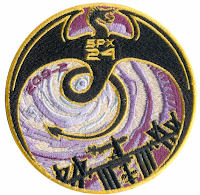
ROSCOSMOS - Prichal Port Module patch.


Dec 22, 2021

Today, December 23, 2021, at 02:03 Moscow time, the instrument-assembly compartment of the Progress M-UM cargo module undocked from the Prichal module of the International Space Station in the normal mode. Thus, he freed the airlock for subsequent docking of Russian manned and cargo ships.

Photo: Roscosmos cosmonaut Anton Shkaplerov

The Progress M-UM module ship is an assembly of the Pryhal nodal module with an instrument-assembly compartment by means of a newly developed transition compartment. The instrument-assembly compartment by design corresponds to the instrument-assembly compartment of the base ship "Progress M" with modifications to increase its rigidity and strength in connection with the mass of the ship increased to 8,180 kg.

At 02:03 Moscow time, the specialists of the TsNIIMash Mission Control Center (part of the Roscosmos State Corporation) issued a command to undock the instrument-assembly compartment from the ISS, after which they undocked from the station and sent to "free voyage". After it was withdrawn for safe removal, Russian specialists began a controlled descent of the instrument-assembly compartment from near-earth orbit.

Photo: Roscosmos cosmonaut Anton Shkaplerov

The flight pattern of the instrument-assembly compartment after separation from the Prichal module is similar to the flight pattern of this compartment of the Progress M-CO1 and Progress M-MIM2 module ships. It is expected that the propulsion system will be engaged in braking at 06:45 Moscow time and will operate for about 13 minutes. After that, the instrument-aggregate compartment will begin to de-orbit and in about 24 minutes will enter the dense layers of the Earth's atmosphere. The main part of the ship will burn up in the atmosphere, and the non-combustible elements will be flooded in the non-navigable region of the Pacific Ocean: 2,460 km from the city of Wellington and 7,030 km from the city of Santiago.

The state corporation Roscosmos has completed all the procedures to establish this area as temporarily dangerous for navigation by sea and aircraft.

Photo: Roscosmos cosmonaut Anton Shkaplerov

The instrument-and-assembly compartment of the Progress M-UM cargo vehicle-module has fully fulfilled its task of delivering the new Russian module to the International Space Station. With the help of Progress M-UM, on November 24, 2021, the Pryhal nodal module was launched. Docking with the Russian segment of the ISS took place on November 26 in automatic mode.

The "Prichal" nodal module is designed to increase the technical and operational capabilities of the ISS Russian segment. Further development of the Russian segment of the station is ensured by connecting to the nodal module of transport systems, including promising ones. The developer of the nodal module is the Rocket and Space Corporation Energia named after S.P. Queen (included in Roscosmos).

Progress M-UM undocking and departure

The "Prichal" nodal module is a spherical sealed compartment with components located inside and outside it, ensuring the performance of its tasks. It includes a body and a complex of on-board systems, including a control system for equipment, radio equipment, a system for ensuring a thermal regime, means for providing gas composition, means for controlling movement and navigation, transit lines for refueling, an active hybrid docking system, a passive hybrid docking system, means redocking.

Related articles:

Russia’s New Docking Module Arrives at Station
https://orbiterchspacenews.blogspot.com/2021/11/russias-new-docking-module-arrives-at.html

Russian Port Module is Safely in Orbit Headed for Station
https://orbiterchspacenews.blogspot.com/2021/11/russian-port-module-is-safely-in-orbit.html

Related links:

ROSCOSMOS Press Release: https://www.roscosmos.ru/33678/

Progress M-UM: https://www.roscosmos.ru/tag/progress-m-um/

RSC Energia: https://www.roscosmos.ru/tag/rkk-ehnergija/

International Space Station (ISS): https://www.roscosmos.ru/tag/mks/

Images (mentioned), Video, Text, Credits: ROSCOSMOS/RSC Energia/SciNews/Orbiter.ch Aerospace/Roland Berga.

Best regards, Orbiter.ch

Crew Unpacks Cargo Dragon and Sets up New Space Research


ISS - Expedition 66 Mission patch.


Dec 22, 2021

The SpaceX Cargo Dragon arrived just in time to deliver holiday treats, crew supplies and new science experiments to the Expedition 66 crew today. NASA Flight Engineers Raja Chari and Thomas Marshburn were on duty Wednesday morning monitoring Dragon’s automated approach and docking to the Harmony module’s space-facing port that occurred at 3:41 a.m. EST.

Less than two hours later, Dragon’s hatch was opened as Chari and NASA Flight Engineer Kayla Barron entered the vehicle and began unloading critical research hardware and samples. Marshburn offloaded and transferred rodents into new habitats that will soon be observed for the Mouse Habitat Unit-7 musculoskeletal system study.


Image above: The space station is pictured from the SpaceX Crew Dragon Endeavour during its departure and fly around on Nov. 8, 2021. Image Credit: NASA.

Astronauts Mark Vande Hei of NASA and Matthias Maurer of ESA (European Space Agency) also joined in the cargo activities beginning to unpack crew supplies, spacewalk gear, station hardware, and computer equipment to replenish the orbiting lab. Vande Hei also started setting up a new cancer study, delivered aboard Dragon, that could improve drug delivery methods as well as manufacturing processes. Dragon will stay at the station for one month before returning to Earth loaded with station hardware and completed microgravity research for analysis by engineers and scientists.

Over in the station’s Russian segment, the Progress propulsion module that delivered the Prichal docking port and attached it to the Nauka multipurpose laboratory module on Nov. 26 is due to leave today. It will undock from Prichal at 6:03 p.m. and reenter the Earth’s atmosphere several hours later for a fiery, but safe destruction above the south Pacific Ocean. Cosmonauts Anton Shkaplerov and Pyotr Dubrov will be observing the Progress when it undocks and photographing its departure from the station. NASA TV will not provide live coverage of Progress’ departure.

ASTRONAUTS DISCUSS CHRISTMAS AND NEW YEAR'S FROM ORBIT ABOARD SPACE STATION

The space station blog is taking a short break until Monday, Dec. 27, as the station’s five astronauts and two cosmonauts spend the holidays orbiting above Earth.

Related links:

Expedition 66: https://www.nasa.gov/mission_pages/station/expeditions/expedition66/index.html

Harmony module: https://www.nasa.gov/mission_pages/station/structure/elements/harmony

Mouse Habitat Unit-7: https://www.nasa.gov/mission_pages/station/research/experiments/explorer/Investigation.html?#id=8564

New cancer study: https://blogs.nasa.gov/spacestation/2021/12/22/crew-unpacks-cargo-dragon-and-sets-up-new-space-research/that%20could%20improve%20drug%20delivery%20methods%20as%20well%20as%20manufacturing%20processes

Prichal docking port: https://go.nasa.gov/3cOCFx6

Nauka multipurpose laboratory module: https://www.roscosmos.ru/tag/nauka/

Space Station Research and Technology: https://www.nasa.gov/mission_pages/station/research/overview.html

International Space Station (ISS): https://www.nasa.gov/mission_pages/station/main/index.html

Image (mentioned), Video, Text, Credits: NASA/Mark Garcia.

Greetings, Orbiter.ch

Mitsubishi Heavy Industries - Inmarsat-6 F1 launch


Mitsubishi Heavy Industries logo.


Dec 22, 2021

H-IIA Launch Vehicle carrying Inmarsat-6 F1 liftoff

Mitsubishi Heavy Industries’s H-IIA Launch Vehicle No. 45 (H-IIA F45) launched the Inmarsat-6 F1 satellite from the Yoshinobu Launch Complex, at JAXA’s Tanegashima Space Center, Japan, on 22 December 2021, at 15:32 UTC (23 December, at 00:32 JST).

Inmarsat-6 F1 launch

Inmarsat-6 F1 is the first satellite in Inmarsat’s sixth series of communications satellites.

What does cutting-edge space technology, next-generation innovation and a dual ELERA and Global Xpress payload mean for our global mobility, government and IoT customers?

I-6 F1 - the first of two Inmarsat-6 (I-6) satellites - launched from the JAXA Tanegashima Space Centre in Japan with Mitsubishi Heavy Industries on 22 December 2021 onboard its H-IIA Launch Vehicle No. 45 (HIIA F45).

Inmarsat-6 F1 satellite

The I-6 satellites are not only the most technologically advanced and largest commercial communications satellites ever launched, they are also Inmarsat’s first hybrid satellites, featuring both L-band (ELERA) and Ka-band (Global Xpress) communications payloads.

Related links:

Inmarsat: https://www.inmarsat.com/en/index.html

Mitsubishi Heavy Industries (MHI): https://www.mhi.com/

Image, Video, Text, Credits: Inmarsat/Mitsubishi Heavy Industries/SciNews/Gunter's Space Page/Orbiter.ch Aerospace/Roland Berga.

Greetings, Orbiter.ch

With Its Single “Eye,” NASA’s DART Returns First Images from Space


NASA - DART Mission logo.


Dec 22, 2021

Just two weeks after launching from Vandenberg Space Force Base in California, NASA’s Double Asteroid Redirection Test (DART) spacecraft has opened its “eye” and returned its first images from space — a major operational milestone for the spacecraft and DART team.


Image above: On Dec. 7, after opening the circular door to its telescopic imager, NASA’s DART captured this image of about a dozen stars near where the constellations Perseus, Aries and Taurus intersect. Image Credits: NASA/Johns Hopkins APL.

After the violent vibrations of launch and the extreme temperature shift to minus 80 degrees C in space, scientists and engineers at the mission operations center at the Johns Hopkins Applied Physics Laboratory in Laurel, Maryland, held their breath in anticipation. Because components of the spacecraft’s telescopic instrument are sensitive to movements as small as 5 millionths of a meter, even a tiny shift of something in the instrument could be very serious.

On Tuesday, Dec. 7, the spacecraft popped open the circular door covering the aperture of its DRACO telescopic camera and, to everyone’s glee, streamed back the first image of its surrounding environment. Taken about 2 million miles (11 light seconds) from Earth — very close, astronomically speaking —the image shows about a dozen stars, crystal-clear and sharp against the black backdrop of space, near where the constellations Perseus, Aries and Taurus intersect.


Image above: On Dec. 10, DART’s DRACO camera captured and returned this image of the stars in Messier 38, or the Starfish Cluster, which lies some 4,200 light years away. Image Credits: NASA/Johns Hopkins APL.

The DART navigation team at NASA’s Jet Propulsion Laboratory in California used the stars in the image to determine precisely how DRACO was oriented, providing the first measurements of how the camera is pointed relative to the spacecraft. With those measurements in hand, the DART team could accurately move the spacecraft to point DRACO at objects of interest, such as Messier 38 (M38), also known as the Starfish Cluster, that DART captured in another image on Dec. 10. Located in the constellation Auriga, the cluster of stars lies some 4,200 light years from Earth. Intentionally capturing images with many stars like M38 helps the team characterize optical imperfections in the images as well as calibrate how absolutely bright an object is — all important details for accurate measurements when DRACO starts imaging the spacecraft’s destination, the binary asteroid system Didymos.

DRACO (short for Didymos Reconnaissance and Asteroid Camera for Optical navigation) is a high-resolution camera inspired by the imager on NASA’s New Horizons spacecraft that returned the first close-up images of the Pluto system and of a Kuiper Belt object, Arrokoth. As DART’s only instrument, DRACO will capture images of the asteroid Didymos and its moonlet asteroid Dimorphos, as well as support the spacecraft’s autonomous guidance system to direct DART to its final kinetic impact.

NASA's DART impacting asteroid Dimorphos. Animation Credit: ESA

DART was developed and is managed by Johns Hopkins APL for NASA’s Planetary Defense Coordination Office. DART is the world's first planetary defense test mission, intentionally executing a kinetic impact into Dimorphos to slightly change its motion in space. While neither asteroid poses a threat to Earth, the DART mission will demonstrate that a spacecraft can autonomously navigate to a kinetic impact on a relatively small target asteroid, and that this is a viable technique to deflect a genuinely dangerous asteroid, if one is ever discovered. DART will reach its target on Sept. 26, 2022.

Related articles:

NASA Goddard Helps Ensure Asteroid Deflector Hits Target, Predicts and Will Observe Impact Results
https://orbiterchspacenews.blogspot.com/2021/12/nasa-goddard-helps-ensure-asteroid.html

NASA, SpaceX Launch DART: First Test Mission to Defend Planet Earth
https://orbiterchspacenews.blogspot.com/2021/11/nasa-spacex-launch-dart-first-test.html

For more information about the DART mission, visit: https://www.nasa.gov/dartmission

Images (mentioned), Animation (mentioned), Text, Credits: NASA/Tricia Talbert/Josh Handal/Alana Johnson/JHAPL/Justyna Surowiec/Michael Buckley.

Best regards, Orbiter.ch

Cargo Dragon Docks to Station with Brand New Science


SpaceX - Dragon CRS-24 Mission patch.


Dec 22, 2021


Image above: The space station is viewed from the SpaceX Cargo Dragon during its automated approach before docking. Image Credit: NASA TV.

While the International Space Station was traveling more than 260 miles over the South Pacific Ocean, a SpaceX Dragon cargo spacecraft autonomously docked to the space-facing side of the orbiting laboratory’s Harmony module at 3:41 a.m. EST, Wednesday, Dec. 22. NASA astronauts Raja Chari and Thomas Marshburn were monitoring docking operations for Dragon.

SpaceX CRS-24 Dragon docking

The Dragon launched on SpaceX’s 24th contracted commercial resupply mission at 5:07 a.m. EST, Tuesday, Dec. 21 from Launch Complex 39A at NASA’s Kennedy Space Center in Florida. After Dragon spends about one month attached to the space station, the spacecraft will return to Earth with cargo and research.

Among the science experiments Dragon is delivering to the space station are:

Bioprinting bandages

Bioprinting uses viable cells and biological molecules to print tissue structures. The German Aerospace Center study Bioprint FirstAid demonstrates a portable, handheld bioprinter that uses a patient’s own skin cells to create a tissue-forming patch to cover a wound and accelerate the healing process. On future missions to the Moon and Mars, bioprinting such customized patches could help address changes in wound healing that can occur in space and complicate treatment. Personalized healing patches also have potential benefits on Earth, providing safer and more flexible treatment anywhere needed.

Improving delivery of cancer drugs

Monoclonal antibodies, used to treat a wide range of human diseases, do not dissolve easily in liquid and so typically must be given intravenously in a clinical setting. The Center for the Advancement of Science in Space Protein Crystal Growth 20 (CASIS  PCG 20) experiment continues work on crystallizing a monoclonal antibody, pembrolizumab, that Merck Research Labs developed. It is the active ingredient in Keytruda, a drug that targets multiple cancers. Scientists analyze these crystals to learn more about the structure and behavior of the component to create drug formulations that can be administered at a doctor’s office or even at home.

Assessing infection risk

Scientists have observed that spaceflight sometimes increases the virulence of potentially harmful microbes and reduces human immune function, increasing the risk for infectious disease. Host-Pathogen assesses space-induced changes in immune status by culturing cells collected from crew members before, during, and after spaceflight with both “normal” bacteria and bacteria grown under simulated spaceflight conditions. Results could help assess the potential risk infectious microbes may pose and may support development of countermeasures. This could improve care for those with compromised immune systems on Earth.

Roots, shoots, and leaves

Multi Variable Platform (MVP) Plant-01 profiles and monitors the development of the shoots and roots of plants in microgravity. Plants could serve as a vital part of human life support systems for long-duration spaceflight and habitation of the Moon and Mars. However, space-grown plants experience stress from various factors and recent studies indicate changes in plant gene expression in response to those stressors. Improved understanding of these changes could enable the design of plants that are better suited for growth in spaceflight environments.

Toward lunar laundromats

Astronauts on the space station wear items of clothing several times, then replace them with new clothes delivered on resupply missions. Limited cargo capacity makes this a challenge, and resupply is not an option for longer missions, such as those to the Moon and Mars. In a collaboration with NASA, Procter & Gamble has developed Tide Infinity, a fully degradable detergent specifically designed for use in space, and the P&G Telescience Investigation of Detergent Experiments (PGTIDE) study the performance of its stain removal ingredients and the formulation’s stability in microgravity. Once proven in space, Tide plans to use the new cleaning methods and detergent to advance sustainable, low-resource-use laundry solutions on Earth.

Parts made in space

Turbine Superalloy Casting Module (SCM) tests a commercial manufacturing device that processes heat-resistant alloy parts in microgravity. Alloys are materials made up of at least two different chemical elements, one of which is a metal. Researchers expect more uniform microstructures and improved mechanical properties in superalloy parts processed in microgravity compared to those processed on Earth. These superior materials could improve the performance of turbine engines in industries such as aerospace and power generation on Earth.

Students and citizens as space scientists

Students enrolled in institutions of higher learning can design and build microgravity experiments as part of NASA’s Student Payload Opportunity with Citizen Science (SPOCS). As part of their experiments, selected teams include students in kindergarten through 12th grade as citizen scientists. Citizen science allows individuals who are not professional scientists to contribute to real-world research. The NASA STEM on Station project is funding experiments flying on this SpaceX resupply mission, including a study on antibiotic resistance in microgravity from Columbia University in New York and one on how microgravity affects bacteria-resistant polymers from the University of Idaho in Moscow, Idaho.

These are just a few of the hundreds of investigations currently being conducted aboard the orbiting laboratory in the areas of biology and biotechnology, physical sciences, and Earth and space science. Advances in these areas will help keep astronauts healthy during NASA’s Artemis missions to the Moon and long-duration space travel and demonstrate technologies for future human and robotic exploration beyond low-Earth orbit to the Moon and Mars.

Related article:

Detergent, Skin Bioprinter Launch on NASA’s SpaceX Resupply Mission
https://orbiterchspacenews.blogspot.com/2021/12/detergent-skin-bioprinter-launch-on.html

Related links:

Bioprint FirstAid: https://www.nasa.gov/mission_pages/station/research/experiments/explorer/Investigation.html?#id=8552

CASIS  PCG 20: https://www.nasa.gov/mission_pages/station/research/experiments/explorer/Investigation.html?#id=8616

Host-Pathogen: https://www.nasa.gov/mission_pages/station/research/experiments/explorer/Investigation.html?#id=8505

MVP Plant-01: https://www.nasa.gov/mission_pages/station/research/experiments/explorer/Investigation.html?#id=8297

PGTIDE: https://www.nasa.gov/mission_pages/station/research/experiments/explorer/Investigation.html?#id=8595

Turbine Superalloy Casting Module (SCM): https://www.nasa.gov/mission_pages/station/research/experiments/explorer/Investigation.html?#id=7859

SPOCS: https://www.nasa.gov/audience/foreducators/stem_on_station/spocs.html

NASA STEM on Station: https://www.nasa.gov/stem

International Space Station (ISS): https://www.nasa.gov/mission_pages/station/main/index.html

Image (mentioned), Video, Text, Credits: NASA/Mark Garcia/NASA TV/SciNews.

Greetings, Orbiter.ch

ESO telescopes help uncover largest group of rogue planets yet


ESO - European Southern Observatory logo.


Dec 22, 2021

Artist’s impression of a rogue planet in Rho Ophiuchi

Rogue planets are elusive cosmic objects that have masses comparable to those of the planets in our Solar System but do not orbit a star, instead roaming freely on their own. Not many were known until now, but a team of astronomers, using data from several European Southern Observatory (ESO) telescopes and other facilities, have just discovered at least 70 new rogue planets in our galaxy. This is the largest group of rogue planets ever discovered, an important step towards understanding the origins and features of these mysterious galactic nomads.

The faint red glow of a rogue planet

“We did not know how many to expect and are excited to have found so many,” says Núria Miret-Roig, an astronomer at the Laboratoire d’Astrophysique de Bordeaux, France and the University of Vienna, Austria, and the first author of the new study published today in Nature Astronomy.

Locations of the rogue planets found

Rogue planets, lurking far away from any star illuminating them, would normally be impossible to image. However, Miret-Roig and her team took advantage of the fact that, in the few million years after their formation, these planets are still hot enough to glow, making them directly detectable by sensitive cameras on large telescopes. They found at least 70 new rogue planets with masses comparable to Jupiter’s in a star-forming region close to our Sun, located within the Scorpius and Ophiuchus constellations [1].

To spot so many rogue planets, the team used data spanning about 20 years from a number of telescopes on the ground and in space. “We measured the tiny motions, the colours and luminosities of tens of millions of sources in a large area of the sky,” explains Miret-Roig. “These measurements allowed us to securely identify the faintest objects in this region, the rogue planets.”

Artist’s animation of a rogue planet in Rho Ophiuchi

The team used observations from ESO’s Very Large Telescope (VLT), the Visible and Infrared Survey Telescope for Astronomy (VISTA), the VLT Survey Telescope (VST) and the MPG/ESO 2.2-metre telescope located in Chile, along with other facilities. “The vast majority of our data come from ESO observatories, which were absolutely critical for this study. Their wide field of view and unique sensitivity were keys to our success,” explains Hervé Bouy, an astronomer at the Laboratoire d’Astrophysique de Bordeaux, France, and project leader of the new research. “We used tens of thousands of wide-field images from ESO facilities, corresponding to hundreds of hours of observations, and literally tens of terabytes of data.”

The team also used data from the European Space Agency’s Gaia satellite, marking a huge success for the collaboration of ground- and space-based telescopes in the exploration and understanding of our Universe.

The study suggests there could be many more of these elusive, starless planets that we have yet to discover. “There could be several billions of these free-floating giant planets roaming freely in the Milky Way without a host star,” Bouy explains.

Zooming into a rogue planet

By studying the newly found rogue planets, astronomers may find clues to how these mysterious objects form. Some scientists believe rogue planets can form from the collapse of a gas cloud that is too small to lead to the formation of a star, or that they could have been kicked out from their parent system. But which mechanism is more likely remains unknown.

Further advances in technology will be key to unlocking the mystery of these nomadic planets. The team hopes to continue to study them in greater detail with ESO’s forthcoming Extremely Large Telescope (ELT), currently under construction in the Chilean Atacama Desert and due to start observations later this decade. “These objects are extremely faint and little can be done to study them with current facilities,” says Bouy. “The ELT will be absolutely crucial to gathering more information about most of the rogue planets we have found.”

Notes:

[1] The exact number of rogue planets found by the team is hard to pin down because the observations don’t allow the researchers to measure the masses of the probed objects. Objects with masses higher than about 13 times the mass of Jupiter are most likely not planets, so they cannot be included in the count. However, since the team didn’t have values for the mass, they had to rely on studying the planets’ brightness to provide an upper limit to the number of rogue planets observed. The brightness is, in turn, related to the age of the planets themselves, as the older the planet, the longer it has been cooling down and reducing in brightness. If the studied region is old, then the brightest objects in the sample are likely above 13 Jupiter masses, and below if the region is on the younger side. Given the uncertainty in the age of the study region, this method gives a rogue planet count of between 70 and 170.

More information:

This research was presented in the paper “A rich population of free-floating planets in the Upper Scorpius young stellar association” to appear in Nature Astronomy (DOI: 10.1038/s41550-021-01513-x). It has received funding from the European Research Council (ERC) under the European Union’s Horizon 2020 research and innovation programme (grant agreement No 682903, P.I. H. Bouy), and from the French State in the framework of the ”Investments for the Future” Program, IdEx Bordeaux, reference ANR-10-IDEX-03-02.

The team is composed of Núria Miret-Roig (Laboratoire d’Astrophysique de Bordeaux, Univ. Bordeaux, CNRS, France [LAB]; University of Vienna, Department of Astrophysics, Austria), Hervé Bouy (LAB), Sean N. Raymond (LAB), Motohide Tamura (Department of Astronomy, Graduate School of Science, The University of Tokyo, Japan; Astrobiology Center, National Institutes of Natural Sciences, Tokyo, Japan [ABC-NINS]), Emmanuel Bertin (CNRS, UMR 7095, Institut d’Astrophysique de Paris,France [IAP]; Sorbonne Université, IAP, France) David Barrado (Centro de Astrobiología [CSIC-INTA], Depto. de Astrofísica, ESAC Campus, Spain), Javier Olivares (LAB), Phillip Galli (LAB), Jean-Charles Cuillandre (AIM, CEA, CNRS, Université Paris-Saclay, Université de Paris, France), Luis Manuel Sarro (Depto. de Inteligencia Artificial, UNED, Spain) Angel Berihuete (Depto. Estadística e Investigación Operativa, Universidad de Cádiz, Spain) & Nuria Huélamo (CSIC-INTA).

The European Southern Observatory (ESO) enables scientists worldwide to discover the secrets of the Universe for the benefit of all. We design, build and operate world-class observatories on the ground — which astronomers use to tackle exciting questions and spread the fascination of astronomy — and promote international collaboration in astronomy. Established as an intergovernmental organisation in 1962, today ESO is supported by 16 Member States (Austria, Belgium, the Czech Republic, Denmark, France, Finland, Germany, Ireland, Italy, the Netherlands, Poland, Portugal, Spain, Sweden, Switzerland and the United Kingdom), along with the host state of Chile and with Australia as a Strategic Partner. ESO’s headquarters and its visitor centre and planetarium, the ESO Supernova, are located close to Munich in Germany, while the Chilean Atacama Desert, a marvellous place with unique conditions to observe the sky, hosts our telescopes. ESO operates three observing sites: La Silla, Paranal and Chajnantor. At Paranal, ESO operates the Very Large Telescope and its Very Large Telescope Interferometer, as well as two survey telescopes, VISTA working in the infrared and the visible-light VLT Survey Telescope. Also at Paranal ESO will host and operate the Cherenkov Telescope Array South, the world’s largest and most sensitive gamma-ray observatory. Together with international partners, ESO operates APEX and ALMA on Chajnantor, two facilities that observe the skies in the millimetre and submillimetre range. At Cerro Armazones, near Paranal, we are building “the world’s biggest eye on the sky” — ESO’s Extremely Large Telescope. From our offices in Santiago, Chile we support our operations in the country and engage with Chilean partners and society.

Links:

Rogue planets uncovered (ESOcast 249 Light): https://www.eso.org/public/videos/eso2120a/

Research paper: https://www.eso.org/public/archives/releases/sciencepapers/eso2120/eso2120a_en.pdf

Video and poem about the discovery (available after embargo lifts): https://youtu.be/7ZpX4f5_LvQ

https://planetplanet.net/2021/12/22/free-floating-planets-poem/

Photos of the VLT: http://www.eso.org/public/images/archive/category/paranal/

Photos of VISTA and the VST: http://www.eso.org/public/images/archive/category/surveytelescopes/

Find out more about ESO's Extremely Large Telescope: https://elt.eso.org/

For journalists: subscribe to receive our releases under embargo in your language: https://www.eso.org/public/outreach/pressmedia/#epodpress_form

For scientists: got a story? Pitch your research: http://eso.org/sci/publications/announcements/sciann17369.html

Images Credits: ESO/M. Kornmesser/Miret-Roig et al./N. Risinger (skysurvey.org)/Videos Credits: ESO/M. Kornmesser/ESO/L. Calçada/N. Risinger (skysurvey.org)/DSS2/Miret-Roig et al./M. Kornmesser. Music: Johan B Monell - Coctail Alle/Text Credits: ESO/Bárbara Ferreira/Laboratoire d'Astrophysique de Bordeaux, Université de Bordeaux/Hervé Bouy/Department of Astrophysics, University of Vienna/Núria Miret-Roig.

Best regards, Orbiter.ch

European research for interplanetary isolation


SIRIUS-21 Mission patch.


Dec 22, 2021

Isolation affects people in different ways. Studies on how humans cope with stress in a secluded environment and with little social interaction are useful to learn about ourselves in challenging times – and to test whether our species is fit for long journeys to other planets.

SIRIUS habitation modules

An international crew began a 240-day journey of voluntary seclusion in November at the Institute of Biomedical Problems (IBMP) in Moscow, Russia. The SIRIUS-21 mission simulates a lunar expedition, including a Moon landing and a spacewalk, without ever leaving four locked chambers on Earth.

For eight months, volunteers are deprived of natural daylight and fresh air, and can only communicate with ground control and family via audio contact or email from a mockup spacecraft.

SIRIUS iIsolation crew quarters

“Almost everybody can relate to prolonged periods of isolation nowadays. This is a great opportunity for European researchers to better understand human behaviour, health and performance,” says Angelique Van Ombergen, ESA coordinator for the research.

The crew of five is taking part in dozens of research studies on neuroscience, psychology, and immunology. Four European experiments are collecting scientific data on decision-making, performance and changes in the brain.

Stress, performance and teamwork

Long confinement has an impact on team dynamics, performance and health. The ATHLETE experiment is looking at the physical and psychosocial changes taking place during and after the mission.

Fit for isolation

The science team is collecting saliva samples, video logs and questionnaires to track how variations in oxytocin and self-perception fluctuate during the different phases of the simulated mission, among other things.

Results will help refine mission training, so that astronauts can cope with the demanding space environment and have a smooth adaptation back to their lives in society.

Altered brain

Our brain experiences changes under prolonged isolation and confinement. Alterations in how humans perceive the space around them, relate to others, and react to critical situations are at the heart of the BRAIVE experiment.

Brain changes during isolation

The study investigates a whole range of parameters on the structure and function of the brain using resonance imaging (MRI scans), cognitive tests and blood and saliva samples. Results will help identify the detrimental effects and the underlying mechanisms in an effort to mitigate risks during exploration missions.

Isolation resolutions

Spending eight months cut off from the world can also have an impact on decision-making. The PArADiGM study follows the crew’s decisions through computer tests, questionnaires and biomarkers on circadian rhythms regulation, sleep and stress.

Big scientific brother

Results of the experiment will help ease the decision-making processes and come up with coping strategies to overcome difficulties.

Piloting performance

Astronauts on space missions need to pilot their spacecraft and conduct complex operations months or even years after their training on Earth. A virtual reality setup of a spacecraft cockpit combined with eye and hand-tracking technologies is putting the crew’s piloting performance to the test.

Piloting performance

SIRIUS participants will dock a Russian spacecraft to a module orbiting the Moon in different flight scenarios using a high-fidelity spacecraft simulator.

The SIMSKILL-VRexperiment analyses the piloting skills of each participant throughout the mission. Scientists expect a decrease in performance due to the degradation of both cognitive and motor skills based on previous studies ran in Antarctica.

The results will contribute to find solutions for flight safety, such as refresher courses for critical tasks and extra pilot training.

Related article:

The international experiment SIRIUS-21 starts
https://orbiterchspacenews.blogspot.com/2021/11/the-international-experiment-sirius-21.html

Related links:

SIRIUS-21: http://sirius.imbp.info/eng.html

BRAIVE experiment: https://www.nejm.org/doi/full/10.1056/NEJMc1904905

Human and Robotic Exploration: https://www.esa.int/Science_Exploration/Human_and_Robotic_Exploration

Images, Text, Credits: ESA/IBMP/NASA.

Greetings, Orbiter.ch