mercredi 3 août 2016

Moon Express becomes first private company to receive permission to go to the Moon


Moon Express Mission patch.

August 3, 2016

A US startup has received government approval to send an unmanned on the moon next year capsule.

Moon Express Lunar Lander approaching the Moon

To date only the US government, China and the then Soviet Union sent equipment on the moon.

A US startup called Moon Express received approval from the US Government to send an unmanned on the moon next year capsule, a first for a private company, she said Wednesday.

To date only the US government, China and the then Soviet Union sent equipment on the moon.

A first for a private company

"We are at present free to go explore the" eighth continent "of the Earth, the Moon, to learn and seek resources for the good of all humanity," said Bob Richards, CEO of Moon Express , founded in 2010 and based in Cape Canaveral, Florida (southeast).

The agreement was given by the Federal Agency of Aviation (FAA), which has previously consulted the White House, the State Department and the US space agency (NASA).

Moon Express Lunar Lander Testing Compact Rover

Moon Express has not yet completed construction of its capsule, called MX-1. This will take off the end of 2017 with a rocket produced by Rocket Lab, another start-up, which has currently not yet made trade mission.

"The sky is not the limit for Moon Express"

"The sky is not the limit for Moon Express, is just the launch base," said Naveen Jain, co-founder of Moon Express, which considers the coalition agreement as another "giant leap for mankind" , like the words spoken by astronaut Neil Armstrong during his first steps on the moon.

Let's Create History Together

The aim of the company is to develop a low-cost device space and explore the resources of the Moon.

"In the near future, we want to return to Earth valuable resources, lunar metals and stones," said Mr. Jain.

For more information about Moon Express, visit: http://www.moonexpress.com/

Moon Express YouTube channel: https://www.youtube.com/user/MoonExpressInc

Images, Video, Text, Credits: Moon Express / NXP / ATS / Orbiter.ch Aerospace / Roland Berga.

Greetings, Orbiter.ch

The "Jade Rabbit" completed its mission


CNSA - China National Space Administration logo.

August 3, 2016

The unmanned vehicle sent by Beijing on the moon, was definitely off, said Wednesday the Chinese state media.

 Jade Rabbit on the descent of the lunar lander

The unit was the symbol of the space ambitions of the communist regime. The population was enthusiastic about his prowess, commented extensively on social networks.

The craft unmanned said goodbye after nearly three years of mission marked by several phases of coma.

Designed for operational twelve weeks, the "Jade Rabbit" (Yutu in Mandarin) will be probed and finally walked on the moon in 31 months, linking technical and resurrections to the delight of Chinese Internet users.

The unit, symbol of space ambitions of the communist regime, had become a source of pride in China, where the population is enthusiastic about his prowess, commented extensively on social networks.

But this time the machine finally stopped for good business, said the official Xinhua news agency, citing the State Administration for Science, Technology and Industry at the service of National Defense.

"Great Success"
Half a century after the United States and their Apollo program, China has its eyes fixed on the moon, where she dreams of being the first Asian country to send a human, probably after 2025.

Jade Rabbit

Anxious to improve its technical, China had managed to land on the moon in late 2013 its Chang'e-3 probe (named after the Chinese goddess of the moon) and then land on the surface of the "Bunny jade" qualified assignment "full success".

Comments upset

On an official microblog account, a final message attributed to "Rabbit jade" Sunday offered his moving farewell to mankind: "This time it is 'good night' for ever (...) I am the rabbit which has seen the most stars! Moon said she was preparing me dream for a very long time. "

This message, together with the piece "Universal Traveler" the French group Air, was shared almost 100,000 times and provoked upset comments rains, one promised Yutu of "carrot pies by the millions."

Jade Rabbit rolling on the moon

Another social network user commented: "I do not understand why I have so much heartbroken. After all, it is only a machine. "

Symbol of Power

China spends billions of dollars to the conquest of space, seen as a symbol of the new power of the country under the ruling of the Communist Party.

China now plans to launch by 2018 a rover called Chang'e-4 on the far side of the Moon, which would be a historic first.

For more information about Jade Rabbit an China National Space Administration (CNSA), visit: https://en.wikipedia.org/wiki/China_National_Space_Administration and the official website: http://www.cnsa.gov.cn/

Images, Text, Credits: CNSA/News.cn/Xinhua/NXP/ATS/Orbiter.ch Aerospace/Roland Berga.

Best regards, Orbiter.ch

mardi 2 août 2016

GPM Looks at Historic Flooding from Slow-Moving Maryland Storms


NASA & JAXA - Global Precipitation Measurement (GPM) logo.

Aug. 2, 2016

NASA analyzed rainfall data from slow-moving storms that triggered flash floods over parts of central Maryland and caused devastating flooding in historic Ellicott City, Maryland.

A slow-moving line of heavy thunderstorms dumped as much as 6 to 7 inches of rain in about two hours' time during the evening of Saturday, July 30, over parts of Howard County in central Maryland, resulting in severe local flash flooding.


Image above: This image shows instantaneous IMERG-estimated rainfall rates at 8 p.m. EDT on July 30, 2016. It depicts a strong band of heavy rain (an inch per hour in purple areas) extending east-west over north-central Maryland extending southwestward into northern Virginia. Image Credits: NASA/JAXA/Hal Pierce.

The hardest hit area was the historic town of Ellicott City, where two people were trapped in their cars and drowned. The town suffered substantial damage to many buildings, numerous cars were tossed about, and around 150 people had to be rescued from the downtown area. The heavy rains and flooding were a result of successive waves of rather slow moving storms that merged over the area.

NOAA's National Weather Service (NWS) in Baltimore issued a public information statement about the flooding on July 31, calling it "historic heavy rainfall Saturday in Ellicott City." NWS noted that extremely heavy rain fell and a rain gauge provided by Howard County to the National Weather Service measured 6.5 inches.


Image above: Visualization of the GPM Core Observatory and Partner Satellites. Image Credits: NASA/JAXA.

A warm, humid air mass, a stationary frontal boundary, and rather weak winds aloft set the stage for the slow-moving storms. Earlier in the afternoon, storms formed up and organized along the Appalachian Mountains before moving slowly out across the Piedmont. The Piedmont is a plateau area between the Atlantic coastal plain and the Appalachians.

This slow-moving line triggered new storms along its leading edge and was eventually overtaken by a second line of successive storms moving out from the Appalachians. The result was a mass of heavy raining thunderstorms across central Maryland that slowing moved eastward before weakening over the northern Chesapeake Bay.


Image above: IMERG was also used to estimate rainfall totals for the period from July 30 at 4 p.m. EDT (8 p.m. UTC) to July 31 at 6 a.m. EDT (10 a.m. UTC). Rainfall totals across central Maryland were on the order of more than 70 mm (about 3 inches, shown in brown). The white crosses denote the location of Ellicott City, Maryland. Image Credits: NASA/JAXA/Hal Pierce.

NASA's Integrated Multi-satellite Retrievals for GPM, or IMERG, is used to make estimates of precipitation from a combination of passive microwave sensors, including the GMI microwave sensor on board the GPM, or Global Precipitation Measurement, mission satellite, and geostationary IR (infrared) data. These data were used to create images and animations at NASA's Goddard Space Flight Center in Greenbelt, Maryland. GPM is a joint mission between NASA and the Japan Aerospace Exploration Agency.

One image created showed instantaneous IMERG-estimated rainfall rates at 8 p.m. EDT on July 30 (12 a.m. UTC on July 31), 2016. IMERG showed a strong band of heavy rain extending east-west over north-central Maryland extending southwestward into northern Virginia. Within this band, rain rates are generally on the order of an inch per hour with localized areas of higher rates.


Image above: File photo of The B&O railroad bridge entrance to Ellicott City, Maryland, taken July 2014. Image Credit: courtesy of Rob Gutro.

IMERG was also used to estimate rainfall totals for the period from July 20 at 4 p.m. EDT (8 p.m. UTC) to July 31 at 6 a.m. EDT (10 a.m. UTC). Rainfall totals across central Maryland were on the order of more than 3 inches (70 mm).

On Aug. 1, 2016, because of the severity of the flooding, Howard County Maryland Executive Allan H. Kittleman signed an executive order closing a portion of Ellicott City to all but emergency vehicle and pedestrian traffic. For updated information from Howard County, visit: https://www.howardcountymd.gov/.

For more information about  GPM (Global Precipitation Measurement), visit: http://www.nasa.gov/mission_pages/GPM/main/index.html and http://global.jaxa.jp/projects/sat/gpm/topics.html

Images (mentioned), Text, Credits: NASA's Goddard Space Flight Center/Steve Lang and Rob Gutro/Rob Garner.

Greetings, Orbiter.ch

Aladin wind probe ready for Aeolus


ESA - ADM-AEOLUS Mission patch.

2 August 2016

It has been years in the making, but one of the trickiest pieces of space technology ever developed is finally ready to join its satellite for launch by the end of next year. With this milestone, we are another step closer to a better understanding of Earth’s winds.

Carrying pioneering lasers, Aeolus will be the first satellite to probe the wind globally.

These vertical slices through the atmosphere, along with information on aerosols and clouds, will advance our knowledge of atmospheric dynamics and contribute to climate research.

Profiling the world's winds

Since Aeolus will deliver measurements almost in real time, it is also set to provide much-needed information to improve weather forecasts.

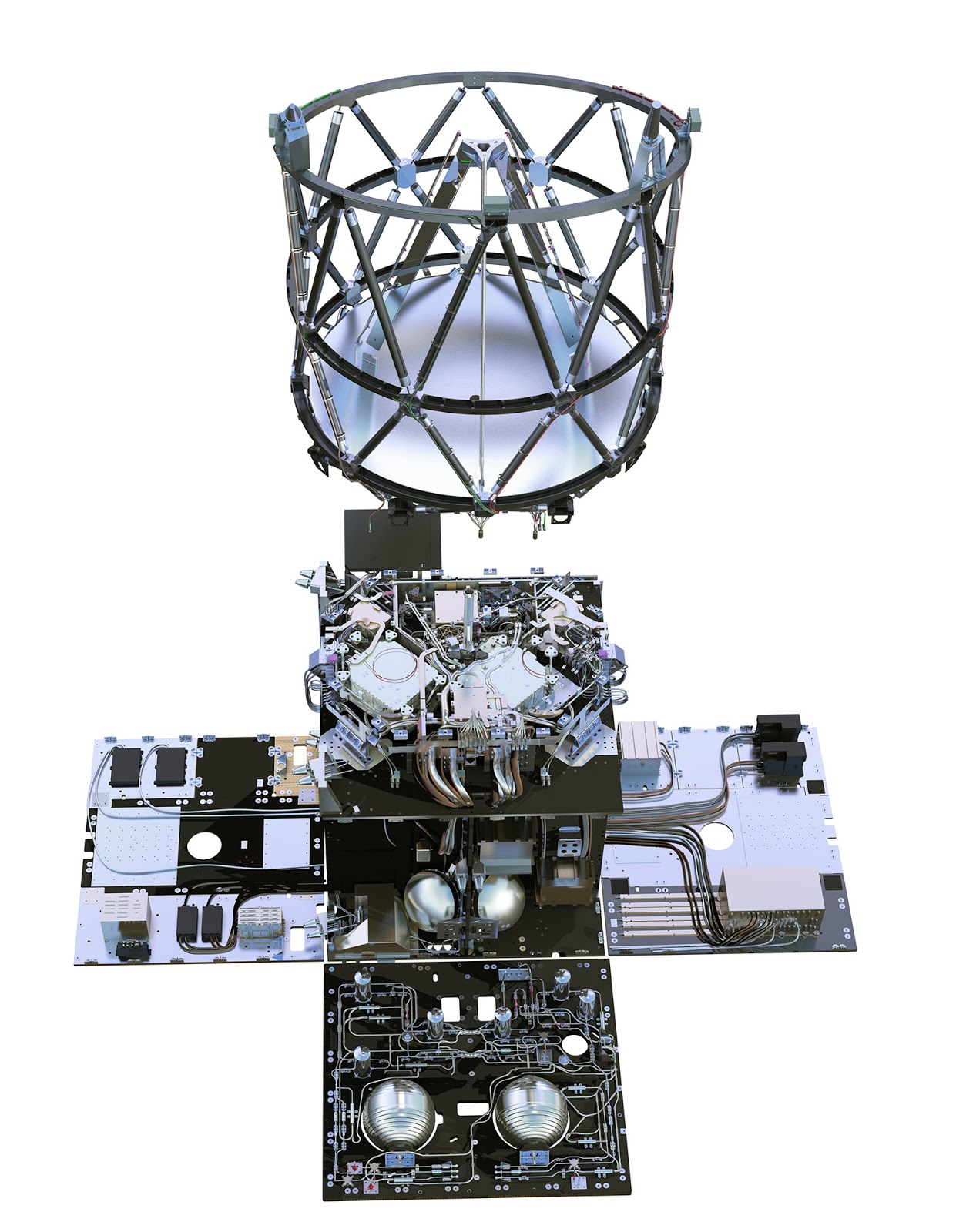
Its state-of-the-art Aladin instrument, which was designed by Airbus Defence and Space in France, incorporates two powerful lasers, a large telescope and very sensitive receivers.

The laser generates ultraviolet light that is beamed towards Earth. This light bounces off air molecules and small particles such as dust, ice and droplets of water in the atmosphere. The fraction of light that is scattered back towards the satellite is collected by Aladin’s telescope and measured.

Prof. Erland Källén, Director of Research at the European Centre for Medium Range Weather Forecasts, said, “The Aeolus mission will provide wind observations that are unique with respect to the current global observing system capabilities.

“The observations fill a gap in the global observing system and despite the many years of delay there is still a need for the mission and we expect it to have a big impact on weather forecasting.

“In the Tropics, wind information dominates atmospheric analyses and this influences the quality of weather forecasts for Europe for the week ahead.

Aladin ready for Aeolus

“Wind information from Aeolus is also expected to be important over oceans in both hemispheres for determining the position and evolution of jet streams and atmospheric fronts.”

Developing advanced new space technologies is never easy and the Aeolus mission has certainly faced its share of challenges.

For instance, the optics have to survive exposure to high-intensity laser pulses for at least three years in the unforgiving environment of space. Developing optics that could withstand these extremes took much longer than anticipated.

Nevertheless, recent tests have shown that such technical problems have been resolved.

Aladin revealed

Frederic Fabre, Project Manager for Aladin at Airbus Defence and Space, said, “This is very good news for the meteorologists and scientists who have been waiting some time for Aladin data to improve weather forecasting.

“The completion of the instrument is a result of the day-to day-involvement of the whole Aladin team including ESA, Airbus Defence & Space and several subcontractors throughout Europe.”

Denny Wernham, ESA’s Aladin Instrument Manager, remarked, “The very successful results on Aladin are testimony to the dedication, determination and expertise of the team in Toulouse, who have overcome many technical hurdles to deliver the instrument to their UK colleagues.

“It is a really tremendous achievement and we would like to congratulate them for all their efforts.”

Related links:

ESA's wind mission / ADM-Aeolus / Earth Explorers: http://www.esa.int/Our_Activities/Observing_the_Earth/The_Living_Planet_Programme/Earth_Explorers/ADM-Aeolus/ESA_s_wind_mission

Selex-ES: http://www.selex-es.com/

Airbus Defence and Space: http://airbusdefenceandspace.com/

Facts and figures:
ADM-Aeolus fact sheet: http://esamultimedia.esa.int/docs/EarthObservation/AEOLUS_factsheet_March2016.pdf

Images, Text, Credits: European Space Agency (ESA)/ATG medialab/Airbus Defence and Space.

Best regards, Orbiter.ch

New Research Reveals Fluctuating Atmosphere of Jupiter’s Volcanic Moon


GEMINI Observatory logo.


Aug. 2, 2016

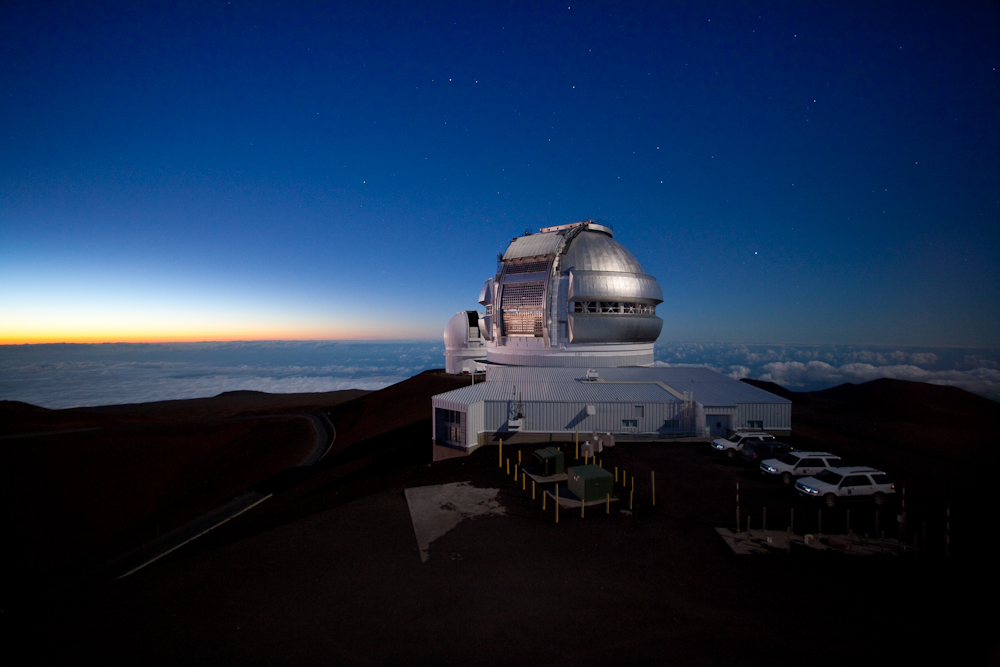
Jupiter’s volcanic moon Io has a thin atmosphere that collapses in the shadow of Jupiter, condensing as ice, according to a new study by NASA-funded researchers. The study reveals the freezing effects of Jupiter’s shadow during daily eclipses on the moon’s volcanic gases.

“This research is the first time scientists have observed this remarkable phenomenon directly, improving our understanding of this geologically active moon,” said Constantine Tsang, a scientist at the Southwest Research Institute in Boulder, Colorado. The study was published Aug. 2 in the Journal of Geophysical Research.

Image Credit: Gemini North telescope

Io is the most volcanically active object in the solar system. The volcanoes are caused by tidal heating, the result of gravitational forces from Jupiter and other moons. These forces result in geological activity, most notably volcanoes that emit umbrella-like plumes of sulfur dioxide gas that can extend up to 300 miles (480 kilometers) above Io and produce extensive basaltic lava fields that can flow for hundreds of miles.

The new study documents atmospheric changes on Io as the giant planet casts its shadow over the moon’s surface during daily eclipses. Io’s thin atmosphere, which consists primarily of sulfur dioxide (SO2) gas emitted from volcanoes, collapses as the SO2 freezes onto the surface as ice when Io is shaded by Jupiter, then is restored when the ice warms and sublimes (i.e. transforms from solid back to gas) when the moon moves out of eclipse back into sunlight.

The study used the large eight-meter Gemini North telescope in Hawaii and an instrument called the Texas Echelon Cross Echelle Spectrograph (TEXES). Data showed that Io’s atmosphere begins to “deflate” when the temperatures drop from -235 degrees Fahrenheit in sunlight to -270 degrees Fahrenheit during eclipse. Eclipse occurs two hours of every Io day (1.7 Earth days). In full eclipse, the atmosphere effectively collapses, as most of the sulfur dioxide gas settles as frost on the moon’s surface. The atmosphere redevelops as the surface warms once the moon returns to full sunlight.


Image above: Artist’s concept of the atmospheric collapse of Jupiter’s volcanic moon Io, which is eclipsed by Jupiter for two hours of each day (1.7 Earth days). The resulting temperature drop freezes sulfur dioxide gas, causing the atmosphere to “deflate,” as seen in the shadowed area on the left. Image Credits: SwRI/Andrew Blanchard.

“This confirms that Io’s atmosphere is in a constant state of collapse and repair, and shows that a large fraction of the atmosphere is supported by sublimation of SO2 ice,” said John Spencer, a co-author of the new study, also at the Southwest Research Institute. “Though Io’s hyperactive volcanoes are the ultimate source of the SO2, sunlight controls the atmospheric pressure on a daily basis by controlling the temperature of the ice on the surface.  We’ve long suspected this, but can finally watch it happen.”

Prior to the study, no direct observations of Io’s atmosphere in eclipse had been possible because Io’s atmosphere is difficult to observe in the darkness of Jupiter’s shadow.  This breakthrough was possible because TEXES measures the atmosphere using heat radiation, not sunlight, and the giant Gemini telescope can sense the faint heat signature of Io’s collapsing atmosphere.

The observations occurred over two nights in November 2013, when Io was more than 420 million miles (675 million kilometers) from Earth. On both occasions, Io was observed moving into Jupiter’s shadow for a period about 40 minutes before and after the start of the eclipse.

The research was funded by NASA’s Solar System Workings and Solar System Observations programs.

Related links:

Gemini North telescope: http://www.gemini.edu/

Solar System: https://www.nasa.gov/topics/solarsystem/index.html

Planet Jupiter: https://www.nasa.gov/jupiter

Jupiter moon Io: https://www.nasa.gov/subject/3150/io

Images (mentioned), Text, Credits: NASA/Tricia Talbert.

Greetings, Orbiter.ch

Look Up! Perseid Meteor Shower Peaks Aug. 11-12


Asteroid Watch logo.

Aug. 2, 2016

Make plans now to stay up late or set the alarm early next week to see a cosmic display of “shooting stars” light up the night sky. Known for it’s fast and bright meteors, the annual Perseid meteor shower is anticipated to be one of the best potential meteor viewing opportunities this year.

The Perseids show up every year in August when Earth ventures through trails of debris left behind by an ancient comet. This year, Earth may be in for a closer encounter than usual with the comet trails that result in meteor shower, setting the stage for a spectacular display.


Image above: An outburst of Perseid meteors lights up the sky in August 2009 in this time-lapse image. Stargazers expect a similar outburst during next week’s Perseid meteor shower, which will be visible overnight on Aug. 11 and 12. Image Credits: NASA/JPL.

“Forecasters are predicting a Perseid outburst this year with double normal rates on the night of Aug. 11-12,” said Bill Cooke with NASA’s Meteoroid Environments Office in Huntsville, Alabama. “Under perfect conditions, rates could soar to 200 meteors per hour.”

An outburst is a meteor shower with more meteors than usual. The last Perseid outburst occurred in 2009.

Every Perseid meteor is a tiny piece of the comet Swift-Tuttle, which orbits the sun every 133 years. Each swing through the inner solar system can leave trillions of small particles in its wake. When Earth crosses paths with Swift-Tuttle’s debris, specks of comet-stuff hit Earth’s atmosphere and disintegrate in flashes of light. These meteors are called Perseids because they seem to fly out of the constellation Perseus.

Most years, Earth might graze the edge of Swift-Tuttle’s debris stream, where there’s less activity. Occasionally, though, Jupiter’s gravity tugs the huge network of dust trails closer, and Earth plows through closer to the middle, where there’s more material.

This may be one of those years. Experts at NASA and elsewhere agree that three or more streams are on a collision course with Earth.

“Here’s something to think about. The meteors you’ll see this year are from comet flybys that occurred hundreds if not thousands of years ago,” said Cooke. “And they’ve traveled billions of miles before their kamikaze run into Earth’s atmosphere.”

How to Watch the Perseids

The best way to see the Perseids is to go outside between midnight and dawn on the morning of Aug. 12. Allow about 45 minutes for your eyes to adjust to the dark. Lie on your back and look straight up. Increased activity may also be seen on Aug. 12-13.

For stargazers experiencing cloudy or light-polluted skies, a live broadcast of the Perseid meteor shower will be available via Ustream overnight on Aug. 11-12 and Aug. 13-14, beginning at 10 p.m. EDT.: http://www.ustream.tv/channel/nasa-msfc

Meteor Moment: Viewing Tips.

More about the Perseids

Perseid meteors travel at the blistering speed of 132,000 miles per hour (59 kilometers per second). That’s 500 times faster than the fastest car in the world. At that speed, even a smidgen of dust makes a vivid streak of light when it collides with Earth’s atmosphere. Peak temperatures can reach anywhere from 3,000 to 10,000 degrees Fahrenheit as they speed across the sky.

The Perseids pose no danger to Earth. Most burn up 50 miles above our planet. But an outburst could mean trouble for spacecraft.

About the Meteoroid Environment Office

It’s Cooke’s job to help NASA understand and prepare for risks posed by meteoroids. He leads a team of meteor experts in the Meteoroid Environments Office at NASA’s Marshall Space Flight Center. They study meteoroids in space so that NASA can protect our nation’s satellites, spacecraft and even astronauts aboard the International Space Station from these bits of tiny space debris.

Related links:

Meteors & Meteorites: http://www.nasa.gov/topics/solarsystem/features/watchtheskies/index.html

Meteoroid Environments Office: https://www.nasa.gov/offices/meo/home/index.html

Image (mentioned), Video, Text, Credits: NASA/Jennifer Harbaugh.

Greetings, Orbiter.ch
lundi 1 août 2016

Regarding Rhea


NASA - Cassini Mission to Saturn patch.

Aug. 1, 2016


Rhea, like many moons in the outer solar system, appears dazzlingly bright in full sunlight. This is the signature of the water ice that forms most of the moon's surface.

Rhea (949 miles or 1,527 kilometers across) is Saturn's second largest moon after Titan. Its ancient surface is one of the most heavily cratered of all of Saturn's moons. Subtle albedo variations across the disk of Rhea hint at past geologic activity.

This view looks toward the anti-Saturn hemisphere of Rhea. North on Rhea is up and rotated 36 degrees to the right. The image was taken with the Cassini spacecraft narrow-angle camera on June 3, 2016 using a spectral filter which preferentially admits wavelengths of ultraviolet light centered at 338 nanometers.

The view was acquired at a distance of approximately 365,000 miles (587,000 kilometers) from Rhea and at a Sun-Rhea-spacecraft, or phase, angle of 9 degrees. Image scale is 2.4 miles (3.9 kilometers) per pixel.

The Cassini mission is a cooperative project of NASA, ESA (the European Space Agency) and the Italian Space Agency. The Jet Propulsion Laboratory, a division of the California Institute of Technology in Pasadena, manages the mission for NASA's Science Mission Directorate, Washington. The Cassini orbiter and its two onboard cameras were designed, developed and assembled at JPL. The imaging operations center is based at the Space Science Institute in Boulder, Colorado.

For more information about the Cassini-Huygens mission visit http://saturn.jpl.nasa.gov and http://www.nasa.gov/cassini. The Cassini imaging team homepage is at http://ciclops.org and ESA's website: http://www.esa.int/Our_Activities/Space_Science/Cassini-Huygens

Image, Text, Credits: NASA/JPL-Caltech/Space Science Institute/Tony Greicius.

Greetings, Orbiter.ch