mardi 21 mai 2019
Lock the Planck: the kilogram has a new definition
CERN - European Organization for Nuclear Research logo.
21 May, 2019
Since yesterday, all SI base units will be defined based on natural constants, with the kilogram the last to join the ranks
Image above: The Kibble balance built by the Swiss Federal Institute of Metrology to measure the Planck constant with ultra-high precision (Image: METAS).
Until yesterday, a kilogram was defined as the mass of the International Prototype Kilogram (IPK), a platinum–iridium cylinder located in Paris, France. While all the other base units of the International System of Units (SI) had been redefined over the years based on fundamental constants of nature or atomic properties, the kilogram had remained since the late 19th century the only one to rely on a human-made artefact.
This changes yesterday, and metrologists – those who study measurement – are excited. On the occasion of World Metrology Day, which commemorates the signing of the Metre Convention back in 1875, the kilogram has been given a new definition. From now on, it will be defined based on the most precise measurement ever made of the Planck constant, which can be expressed in terms of the SI units kilogram, metre and second. Since the latter two units are already defined by constants of nature, the value of a kilogram can be obtained without relying on comparing it with a physical reference block.
But measuring the Planck constant to a suitably high precision of ten parts per billion required decades of work by international teams across continents, and CERN played a small part in the endeavour.
In 1975, British physicist Bryan Kibble proposed a device, then known as a watt balance and now called the Kibble balance in his honour, which would allow the Planck constant to be measured precisely based on the IPK. Once the precision was achieved, the Planck constant’s value could be fixed and the definitions inverted, removing the kilogram’s dependence on the IPK. Several Kibble balances around the world were constructed to compare measurements, including one in Switzerland. METAS, the Swiss Federal Institute of Metrology, has been working on their Kibble balance project for almost two decades, the activity being led by Ali Eichenberger and Henri Baumann. Knowing CERN’s expertise in magnet systems, Eichenberger and Baumann reached out to the Laboratory to help prepare the required magnets.
“I am extremely proud to have participated in this adventure,” says Davide Tommasini from CERN’s Magnets, Superconductors and Cryostats group, who was directly involved in the project. “I do not know if the redefinition of the kilogram has a direct impact on the experiments at CERN, but the past teaches us that there are many new advancements which, at their initial moment, may not appear in their whole potential.”
In 2018, the Kibble balance in Canada measured the Planck constant with necessary ultrahigh precision, allowing a combination of measurements from around the world to help fix its value. But does it affect the value of the kilogram itself? Not really. “The Plank constant has been fixed at 6.626070150 × 10⁻³⁴ kg⋅m2/s using the IPK as standard,” explains Eichenberger. “So from today, one kilogram will stay the same. If the IPK drifts further with time then its value will change, but any mass calibration will have an uncertainty of the order of 20 parts per billion.”
So while it is a momentous occasion worthy of celebration, you won’t have to recalibrate your bathroom scales just yet.
Note:
CERN, the European Organization for Nuclear Research, is one of the world’s largest and most respected centres for scientific research. Its business is fundamental physics, finding out what the Universe is made of and how it works. At CERN, the world’s largest and most complex scientific instruments are used to study the basic constituents of matter — the fundamental particles. By studying what happens when these particles collide, physicists learn about the laws of Nature.
The instruments used at CERN are particle accelerators and detectors. Accelerators boost beams of particles to high energies before they are made to collide with each other or with stationary targets. Detectors observe and record the results of these collisions.
Founded in 1954, the CERN Laboratory sits astride the Franco–Swiss border near Geneva. It was one of Europe’s first joint ventures and now has 23 Member States.
Related links:
International System of Units (SI): https://www.bipm.org/en/measurement-units/
CERN’s Magnets, Superconductors and Cryostats group: http://te-dep.web.cern.ch/content/magnets-superconductors-and-cryostats-msc
For more information about European Organization for Nuclear Research (CERN), Visit: https://home.cern/
Image (mentioned), Text, Credits: CERN/Achintya Rao.
Greetings, Orbiter.ch
Today’s DNA, Immunity, Time Studies Boost Health in Space and on Earth
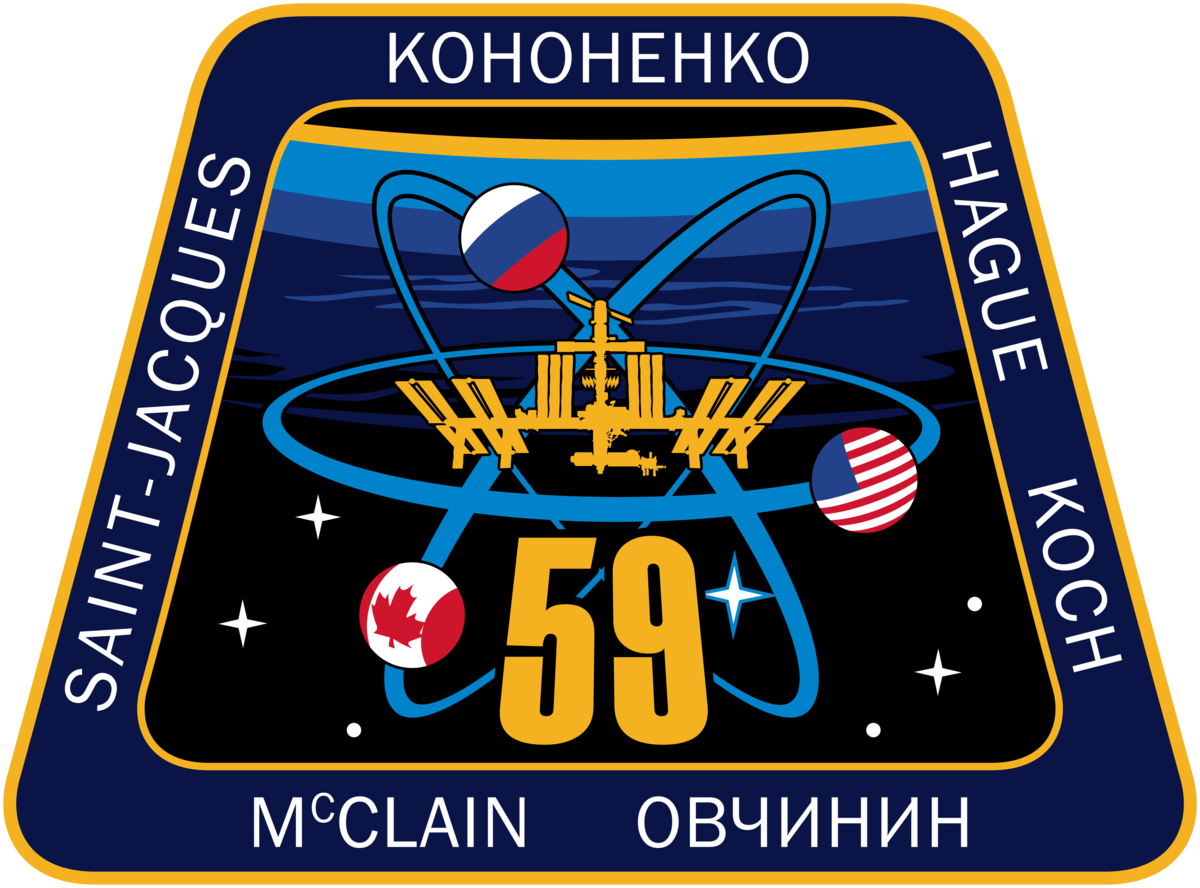
ISS - Expedition 59 Mission patch.
May 21, 2019
The Expedition 59 crew is spending all day Tuesday exploring how astronauts adjust with Earth’s gravity no longer bearing down on them. Spacewalk preparations and lab maintenance are also ongoing aboard the International Space Station.
Station crewmembers and future astronauts going to the Moon in 2024 have to adjust to the lack of a sunrise/sunset cycle humans experience everyday on Earth. As a result, time perception is impacted and may affect sleep and work patterns. Astronauts Anne McClain, Nick Hague and David Saint-Jacques started the day on a study, going on since July 2017, exploring subjective changes in time that can alter physical and cognitive performance.
Image above: The full moon is pictured from the International Space Station as the orbiting complex orbited 263 miles above the South Atlantic Ocean. Image Credit: NASA.
Hague later sequenced DNA samples for a study exploring how increased exposure to space radiation impacts crew health. He used the Biomolecule Sequencer for the investigation to demonstrate DNA sequencing in space. The Genes In Space-6 experiment is researching how space radiation damages DNA and how the cell repair mechanism works in microgravity.
Immune system studies continued full speed ahead today to test the hypothesis the immune response decreases in space. Astronaut Christina Koch teamed up with McClain and Saint-Jacques throughout the day observing mice for the study. Observations may help scientists develop advanced vaccines and therapies benefiting both astronauts and Earthlings.
From Day Into Night on the International Space Station
Image above: NASA astronaut Christina Hammock Koch posted this image of Earth taken from aboard the International Space Station. She said: "A couple times a year, theInternational Space Stationorbit happens to align over the day/night shadow line on Earth. We are continuously in sunlight, never passing into Earth’s shadow from the Sun, and the Earth below us is always in dawn or dusk. Beautiful time to cloud watch. #nofilter". Image Credit: NASA.
Commander Oleg Kononenko continues to set up a pair of Russian Orlan spacesuits and outfit the Pirs airlock as the May 29 spacewalk approaches. Flight Engineer Alexey Ovchinin worked on space cardiology research before switching to space plumbing and pumping urine into the Progress 71 cargo craft.
Related links:
Expedition 59: https://www.nasa.gov/mission_pages/station/expeditions/expedition59/index.html
Time perception: https://www.nasa.gov/mission_pages/station/research/experiments/explorer/Investigation.html?#id=7504
Biomolecule Sequencer: https://www.nasa.gov/mission_pages/station/research/experiments/explorer/Investigation.html?#id=1917
Genes In Space-6: https://www.nasa.gov/mission_pages/station/research/experiments/explorer/Investigation.html?#id=7893
Immune system studies: https://www.nasa.gov/mission_pages/station/research/experiments/explorer/Investigation.html?#id=7868
Space cardiology research: https://www.energia.ru/en/iss/researches/human/11.html
Pirs airlock: https://www.nasa.gov/mission_pages/station/structure/elements/pirs-docking-compartment
Moon in 2024: https://www.nasa.gov/specials/moon2mars/
Space Station Research and Technology: https://www.nasa.gov/mission_pages/station/research/index.html
International Space Station (ISS): https://www.nasa.gov/mission_pages/station/main/index.html
Images (mentioned), Text, Credits: NASA/Mark Garcia.
Best regards, Orbiter.ch
Space Station Science Highlights: Week of May 13, 2019
ISS - Expedition 59 Mission patch.
May 21, 2019
The members of Expedition 59 continued work on dozens of science experiments aboard the International Space Station. Many of these experiments contribute knowledge and technology needed for sustained presence on the moon as well as future longer-term space exploration, as outlined in NASA’s Moon to Mars program.
Here are details on some of the scientific investigations conducted in the orbiting lab the week of May 13:
Protecting kidney health
Image above: NASA astronaut Christina Koch conducts research inside the Life Sciences Glovebox for the Kidney Cells investigation, which seeks better treatments for kidney-related diseases on Earth and on future long-duration space missions. Image Credit: NASA.
Serious medical conditions caused by poor kidney health, including protein in the urine (proteinuria), osteoporosis, and kidney stones, occur more often and more quickly in space. This represents a threat to astronaut health on future missions deeper into space. Kidney Cells examines how microgravity and other factors of space travel affect kidney health. Knowledge gained can contribute to better treatments to protect the health of astronauts on longer duration missions to the moon and Mars and for kidney-related conditions on Earth as well. The crew performed Kidney Cell fixation inside the Life Science Glovebox (LSG) and prepared the hardware for return.
The challenges of gardening in space
International Space Station (ISS). Animation Credit: NASA
On future long-duration space missions and to maintain a sustained presence on the moon, crew members need to grow their own food. Understanding how plants respond to microgravity and demonstrating reliable vegetable production on orbit are important steps toward that goal. The crew took photos of the Veggie PONDS modules in order to examine water distribution in the units and determine why the plants do not appear to be growing as expected. The investigation uses a newly developed passive nutrient delivery system and the Veggie plant growth facility to cultivate lettuce and greens on the space station for on-orbit consumption and analysis on Earth.
Overcoming oxidative stress
Image above: Canadian Space Agency astronaut David Saint-Jacques installs experiment containers for the Nano Antioxidants investigation, which researches innovative approaches to counteract the negative effects of long-term microgravity exposure on the musculoskeletal system. Image Credit: NASA.
The crew completed an automated run with twelve experiment containers for Nano Antioxidants. This investigation studies innovative approaches to counteract the negative effects of long-term space travel on the musculoskeletal system. This research has numerous potential applications on Earth as well, including new therapies for the elderly and people with muscle atrophy disorders and other diseases involving oxidative stress.
Examining pathogen adaptation to microgravity
Image above: NASA astronaut Nick Hague conducts operations in the Microgravity Sciences Glovebox for the Micro-14 investigation. This study evaluates changes in the yeast Candida albicans in microgravity and characterizes its virulence factors. A better understanding of microbial adaption to environmental stresses contributes to maintenance of crew member health during long-duration spaceflight. Image Credit: NASA.
Micro-14 extends previous studies on the yeast Candida albicans, seeking to define mechanisms behind its cellular adaptation to spaceflight. This investigation evaluates changes at the physiological, cellular, and molecular level and characterizes virulence factors of the yeast. A better understanding of microbial adaption to environmental stresses contributes to maintenance of crew member health during long-duration spaceflight. On Earth, C. albicans can cause severe, life-threatening illness in people with compromised immune systems. The crew used the Microgravity Science Glovebox (MSG) to inoculate the investigation culture bag with the yeast.
Space to Ground: Watching the Earth Breathe: 05/17/2019
Other investigations on which the crew performed work:
- Rodent Research-12 (RR-12) examines the effects of spaceflight on the function of antibody production and immune memory using a mouse model: https://www.nasa.gov/mission_pages/station/research/experiments/explorer/Investigation.html?#id=7868
- Food Acceptability examines changes in the appeal of food aboard the space station during long-duration missions. “Menu fatigue” from repeatedly consuming the limited foods available in a closed system may contribute to the loss of body mass often experienced by crew members, potentially affecting astronaut health, especially as mission length increases.: https://www.nasa.gov/mission_pages/station/research/experiments/explorer/Investigation.html?#id=7562
- Circadian Rhythms investigates the role of the biological clock and how it changes during long-duration spaceflight in order to help address the effects of spaceflight, including reduced physical activity and microgravity, and protect crew performance and health on future longer missions: https://www.nasa.gov/mission_pages/station/research/experiments/explorer/Investigation.html?#id=869
- Genes in Space-6 evaluates the process of DNA repair in space by inducing DNA damage in cells and assessing mutation and repair at the molecular level using the miniPCR and the Biomolecule Sequencer tools aboard the ISS: https://www.nasa.gov/mission_pages/station/research/experiments/explorer/Investigation.html?#id=7893
- MicroAlgae studies the effects of microgravity on Haematococcus pluvialis, a tiny freshwater algae capable of producing astaxanthin, a powerful antioxidant that could be useful as a food supplement on long space missions: https://www.nasa.gov/mission_pages/station/research/experiments/explorer/Investigation.html?#id=7689
- MVP Cell-01 studies a disease called Post-traumatic Osteoarthritis, in which a traumatic joint injury may lead to arthritis after loss of cartilage and bone: https://www.nasa.gov/mission_pages/station/research/experiments/explorer/Investigation.html?#id=7663
Related links:
Expedition 59: https://www.nasa.gov/mission_pages/station/expeditions/expedition59/index.html
Kidney Cells: https://www.nasa.gov/mission_pages/station/research/experiments/explorer/Investigation.html?#id=7819
Veggie PONDS: https://www.nasa.gov/mission_pages/station/research/experiments/explorer/Investigation.html?#id=7581
Nano Antioxidants: https://www.nasa.gov/mission_pages/station/research/experiments/explorer/Investigation.html?#id=7744
Micro-14: https://www.nasa.gov/mission_pages/station/research/experiments/explorer/Investigation.html?#id=7642
Microgravity Science Glovebox (MSG): https://www.nasa.gov/mission_pages/station/research/experiments/explorer/Facility.html?#id=341
Spot the Station: https://spotthestation.nasa.gov/
Space Station Research and Technology: https://www.nasa.gov/mission_pages/station/research/index.html
International Space Station (ISS): https://www.nasa.gov/mission_pages/station/main/index.html
Images (mentioned), Animation (mentioned), Video (NASA), Text, Credits: NASA/Michael Johnson/Jorge Sotomayor, Lead Increment Scientist Expeditions 59/60.
Best regards, Orbiter.ch
lundi 20 mai 2019
NASA's Juno Finds Changes in Jupiter's Magnetic Field
NASA - JUNO Mission logo.
May 20, 2019
NASA's Juno mission to Jupiter made the first definitive detection beyond our world of an internal magnetic field that changes over time, a phenomenon called secular variation. Juno determined the gas giant's secular variation is most likely driven by the planet's deep atmospheric winds.
Image above: This still from an animation illustrates Jupiter's magnetic field at a single moment in time. The Great Blue Spot, an-invisible-to-the-eye concentration of magnetic field near the equator, stands out as a particularly strong feature. Image Credits: NASA/JPL-Caltech/Harvard/Moore et al.
The discovery will help scientists further understand Jupiter's interior structure — including atmospheric dynamics — as well as changes in Earth's magnetic field. A paper on the discovery was published today in the journal Nature Astronomy.
"Secular variation has been on the wish list of planetary scientists for decades," said Scott Bolton, Juno principal investigator from the Southwest Research Institute in San Antonio. "This discovery could only take place due to Juno's extremely accurate science instruments and the unique nature of Juno's orbit, which carries it low over the planet as it travels from pole to pole."
Characterizing the magnetic field of a planet requires close-up measurements. Juno scientists compared data from NASA's past missions to Jupiter (Pioneer 10 and 11, Voyager 1 and Ulysses) to a new model of Jupiter's magnetic field (called JRM09). The new model was based on data collected during Juno's first eight science passes of Jupiter using its magnetometer, an instrument capable of generating a detailed three-dimensional map of the magnetic field.
Image above: This striking view of Jupiter's Great Red Spot and turbulent southern hemisphere was captured by NASA's Juno spacecraft as it performed a close pass of the gas giant planet. Image Credits: NASA/JPL-Caltech/SwRI/MSSS/Kevin M. Gill.
What scientists found is that from the first Jupiter magnetic field data provided by the Pioneer spacecraft through to the latest data provided by Juno, there were small but distinct changes to the field.
"Finding something as minute as these changes in something so immense as Jupiter's magnetic field was a challenge," said Kimee Moore, a Juno scientist from Harvard University in Cambridge, Massachusetts. "Having a baseline of close-up observations over four decades long provided us with just enough data to confirm that Jupiter's magnetic field does indeed change over time."
Once the Juno team proved secular variation did occur, they sought to explain how such a change might come about. The operation of Jupiter's atmospheric (or zonal) winds best explained the changes in its magnetic field. These winds extend from the planet's surface to over 1,860 miles (3,000 kilometers) deep, where the planet's interior begins changing from gas to highly conductive liquid metal. They are believed to shear the magnetic fields, stretching them and carrying them around the planet.
Nowhere was Jupiter's secular variation as large as at the planet's Great Blue Spot, an intense patch of magnetic field near Jupiter's equator. The combination of the Great Blue Spot, with its strong localized magnetic fields, and strong zonal winds at this latitude result in the largest secular variations in the field on the Jovian world.
Juno spacecraft orbiting Jupiter. Animation Credit: NASA
"It is incredible that one narrow magnetic hot spot, the Great Blue Spot, could be responsible for almost all of Jupiter's secular variation, but the numbers bear it out," said Moore. "With this new understanding of magnetic fields, during future science passes we will begin to create a planetwide map of Jupiter's secular variation. It may also have applications for scientists studying Earth's magnetic field, which still contains many mysteries to be solved."
NASA's JPL manages and operates the Juno mission for the principal investigator, Scott Bolton, of the Southwest Research Institute in San Antonio. Juno is part of NASA's New Frontiers Program, which is managed by NASA's Marshall Space Flight Center in Huntsville, Alabama, for the agency's Science Mission Directorate. The Italian Space Agency (ASI) contributed two instruments, a Ka-band frequency translator (KaT) and the Jovian Infrared Auroral Mapper (JIRAM). Lockheed Martin Space in Denver built and operates the spacecraft.
More information about Juno is available at:
https://www.nasa.gov/juno and https://www.missionjuno.swri.edu
More information on Jupiter is at: https://www.nasa.gov/jupiter
The public can follow the mission on Facebook and Twitter at:
https://www.facebook.com/NASAJuno and https://www.twitter.com/NASAJuno
Images (mentioned), Animation (mentioned), Text, Credits: NASA/Tony Greicius/JPL/DC Agle.
Greetings, Orbiter.ch
Biology and Physics on Station Today Promote Moon Mission Success in 2024
ISS - Expedition 59 Mission patch.
May 20, 2019
The six residents aboard the International Space Station kicked off the workweek today exploring microgravity’s long-term impacts on biology and physics. The Expedition 59 crew is also ramping up for a fourth spacewalk at the orbital lab this year.
NASA is planning to send men and women to the Moon in 2024 and life science on the station will help flight surgeons keep lunar astronauts healthy. The space physics research will also provide critical insights to engineers designing future spacecraft and habitats for exploration missions.
Image above: A moonrise from 2016 is photographed from the space station with the Earth’s limb, the atmospheric glow and the aurora below. Image Credit: NASA.
Several dozen mice and their immune systems, which are similar to humans, are being continuously observed in specialized habitats. Flight Engineer Anne McClain tended to the mice today cleaning cages and restocking food in Japan’s Kibo laboratory module. Doctors are testing the hypothesis the immune response decreases in space and exploring advanced vaccines and therapies benefiting both astronauts and Earthlings.
NASA astronauts Christina Koch and Nick Hague also researched a variety of space biological phenomena. Koch wrapped up a pathogen study today seeking to understand why virulence increases in microgravity. Hague cleaned up Veggie Ponds botany hardware in Europe’s Columbus laboratory module where small crops of edible plants are grown. He then photographed protein crystal samples in the afternoon for a student-designed investigation as Koch assisted him.
Image above: The well-lit United States east coast from Virginia to Rhode Island is pictured from the International Space Station as it orbited above the Atlantic Ocean. Image Credit: NASA.
David Saint-Jacques of the Canadian Space Agency recorded a video demonstrating Isaac Newton’s Second and Third Laws. The video will help young students understand how force and acceleration influence air and space missions. He also transferred data captured from tiny internal satellites exploring space debris cleanup technology.
Commander Oleg Kononenko and Flight Engineer Alexey Ovchinin are getting ready for a spacewalk planned for May 29. The cosmonauts are resizing their spacesuits, inspecting the components and checking for leaks today. The duo will remove experiments, sample station surfaces and jettison obsolete hardware during their six-hour excursion.
Related links:
Expedition 59: https://www.nasa.gov/mission_pages/station/expeditions/expedition59/index.html
Spacewalk: https://www.nasa.gov/mission_pages/station/spacewalks/
Mice and their immune systems: https://www.nasa.gov/mission_pages/station/research/experiments/explorer/Investigation.html?#id=7868
Kibo laboratory module: https://www.nasa.gov/mission_pages/station/structure/elements/japan-kibo-laboratory
Pathogen study: https://www.nasa.gov/astronauts/biographies/tyler-nick-hague
Veggie Ponds: https://www.nasa.gov/mission_pages/station/research/experiments/explorer/Investigation.html?#id=7581
Columbus laboratory module: https://www.nasa.gov/mission_pages/station/structure/elements/europe-columbus-laboratory
Protein crystal samples: https://www.nasa.gov/mission_pages/station/research/experiments/explorer/Investigation.html?#id=7809
Space debris cleanup technology: https://www.nasa.gov/mission_pages/station/research/experiments/explorer/Investigation.html?#id=848
Moon in 2024: https://www.nasa.gov/specials/moon2mars/
Space Station Research and Technology: https://www.nasa.gov/mission_pages/station/research/index.html
International Space Station (ISS): https://www.nasa.gov/mission_pages/station/main/index.html
Images (mentioned), Text, Credits: NASA/Mark Garcia.
Best regards, Orbiter.ch
dimanche 19 mai 2019
Seasonal Monsoon Rains Block Key Ocean Current
NASA - Soil Moisture Active Passive (SMAP) patch.
May 19, 2019
Our oceans and the complex "conveyer belt" system of currents that connects them play an important role in regulating global climate. The oceans store heat from the Sun, and ocean currents transport that heat from the tropics to the poles. They release the heat and moisture into the air, which moderates climate nearby. But what happens if part of that conveyer belt jams?
Animation above: This animation shows a time lapse of sea surface salinity and soil moisture from NASA's Soil Moisture Active Passive (SMAP) satellite from April 2015 through February 2019. Image Credits: NASA/JPL-Caltech/GSFC.
It's not a theoretical question. Scientists have observed that a major ocean current called the Indonesia Throughflow, which provides the only tropical connection between the Pacific and Indian oceans, slows dramatically near the surface during the Northwest Asia monsoon season - usually December through March. And a team of scientists, led by Tong Lee of NASA's Jet Propulsion Laboratory in Pasadena, California, has figured out why.
"We have found that this current, which is a very important element of the global ocean current system, is significantly affected by local precipitation," Lee said. "It is fairly common knowledge that winds drive ocean currents. In this case, however, the precipitation is actually a dominant factor during the monsoon season."
It's a discovery that will improve our understanding of complex Earth processes. During this season, about 10 feet (3 meters) of rain fall over the maritime continent, a region of Southeast Asia between the Indian and Pacific oceans through which the Indonesia Throughflow current travels. This influx of local rain reduces the pressure force that drives the current through the region.
How does that work?
Gravity causes water to travel "downhill" from areas of relatively higher sea level toward areas of lower sea level unless opposed by another force. In the tropical Pacific, trade winds also influence the flow of water. They blow from east to west, causing ocean currents to transport large amounts of water from the U.S. westward toward Asia. This raises the sea level on the Asian side of the Pacific Ocean and provides enough force to keep the Indonesia Throughflow moving, connecting the two oceans.
However, the influx of rain during monsoon season temporarily but significantly raises the local sea level in the Indonesian seas that sit between the Pacific and Indian oceans enough to essentially eliminate the downhill flow. Think of it like a ball rolling freely downhill versus a ball on a flat surface, which has little momentum to move forward.
Although the slowing of this current is primarily seasonal, it still affects the amount of heat transported from the Pacific Ocean to the Indian Ocean, which can change regional climate in Southeast Asia.
Soil Moisture Active Passive (SMAP) satellite. Image Credit: NASA
"The increase in local sea level due to the seasonal freshening of seawater pushes against the normally higher sea level from the Pacific Ocean," said Lee. "It restricts the surface flow of this current during the monsoon season, which prevents a lot of the heat normally carried by the current from making its way to the Indian Ocean."
Furthermore, since all of these currents are connected globally, less warm water is transported into the Indian Ocean, and in turn, less warm water is transported from the Indian Ocean to the Atlantic Ocean over the long term. So the Indonesia Throughflow - one element of a much larger system - can have a significant effect thousands of miles away from where it flows.
The results of this study will help to improve climate models by enabling scientists to factor in these effects and changes. Titled "Maritime Continent water cycle regulates low-latitude chokepoint of global ocean circulation," the study was recently published in Nature.
NASA satellite data, particularly ocean salinity measurements from the Soil Moisture Active Passive (SMAP) satellite, were instrumental in these findings. Although SMAP was designed primarily to measure soil moisture, its radiometer is also able to measure sea surface salinity. The results of this paper demonstrate the utility of SMAP salinity data in exploring changes in the water cycle, sea level, ocean circulation and climate.
More information on SMAP is available here: https://smap.jpl.nasa.gov/
Animation (mentioned), Image (mentioned), Text, Credits: NASA/JPL/Esprit Smith.
Greetings, Orbiter.ch
Global 5G wireless networks threaten weather forecasts
Global Telecommunications Network logo.
May 19, 2019
Next-generation mobile technology could interfere with crucial satellite-based Earth observations.
Image above: Water vapour over the continental United States is shown in this false-colour satellite image from the National Oceanic and Atmospheric Administration. Image Credits: NOAA/GOES.
The US government has begun auctioning off blocks of wireless radio frequencies to be used for the next-generation mobile communications network known as 5G. But some of these frequencies lie close to those that satellites use for crucial Earth observations — and meteorologists are worried that 5G transmissions from cellphones and other equipment could interfere with their data collection.
Unless regulators or telecommunications companies take steps to reduce the risk of interference, Earth-observing satellites flying over areas of the United States with 5G wireless coverage won’t be able to detect concentrations of water vapour in the atmosphere accurately. Meteorologists in the United States and other countries rely on those data to feed into their models; without that information, weather forecasts worldwide are likely to suffer.
“This is a global problem,” says Jordan Gerth, a meteorologist at the University of Wisconsin–Madison.
The US National Oceanic and Atmospheric Administration (NOAA) and NASA are currently locked in a high-stakes negotiation with the Federal Communications Commission (FCC), which oversees US wireless networks. NOAA and NASA have asked the FCC to work with them to protect frequencies used for Earth observations from interference as 5G rolls out. But the FCC auctioned off the first chunk of the 5G spectrum with minimal protection. The sale ended on 17 April and reaped nearly US$2 billion.
Sharing the sky
Because the United States is such a large communications market, the decisions the government makes about how to deploy 5G are likely to influence global discussions on how to regulate the technology. Regulators from around the world will gather starting on 28 October in Sharm el-Sheikh, Egypt, to hammer out international agreements for which frequencies companies will be able to use for 5G transmissions, and what level of interference with Earth-observation frequencies is acceptable.
Astronomers, meteorologists and other scientists have long worked to share the spectrum with other users, sometimes shifting to different frequencies to prevent conflicts. But “this is the first time we’ve seen a threat to what I’d call the crown jewels of our frequencies — the ones that we absolutely must defend come what may”, says Stephen English, a meteorologist at the European Centre for Medium-Range Weather Forecasts in Reading, UK.
Image above: Weather Satellites, an artist's rendering of NASA's new Global Precipitation Monitoring Core Observatory and partner satellites orbiting the Earth. Image Credit: NASA.
They include the 23.8-gigahertz frequency, at which water vapour in the atmosphere emits a faint signal. Satellites, such as the European MetOp probes, monitor energy radiating from Earth at this frequency to assess humidity in the atmosphere below — measurements that can be taken during the day or at night, even if clouds are present. Forecasters feed these data into models to predict how storms and other weather systems will develop in the coming hours and days.
But a 5G station transmitting at nearly the same frequency will produce a signal that looks much like that of water vapour. “We wouldn’t know that that signal is not completely natural,” says Gerth. Forecasts would become less accurate if meteorologists incorporated those bad data into their models.
Noisy neighbours
The recent FCC auction involved 2 groups of frequencies: one between 24.25 and 24.45 gigahertz and the other between 24.75 and 25.25 gigahertz. Wireless equipment transmitting near the lower end of that range could interfere with the 23.8-gigahertz water-vapour measurement. The FCC did not respond to Nature's request for comment on the matter.
The situation is akin to having a noisy neighbour next door, Gerth says. If that person blasts music, a lot of the noise will probably bleed through the wall into your apartment. But if you can persuade the person to turn their music down, you’ll be able to sleep more peacefully.
Source: ITU
Radio-frequency engineers measure noise in units of decibel watts. Regulators set controls that limit the noise allowed; more-negative numbers indicate increasingly stringent controls. The FCC auction set a noise limit on the US 5G network of –20 decibel watts, which is much noisier than the thresholds under consideration by almost every other nation for their systems. The European Commission, for instance, has settled on –42 decibel watts for 5G base stations, and the World Meteorological Organization (WMO) is recommending –55 decibel watts.
Many hope that the WMO numbers will influence regulators to adopt strict global noise standards at the meeting in Egypt. Because of how the scale is devised, the US proposal would allow over 150 times more noise than the European proposal — and more than 3,000 times more than the WMO plan, says Eric Allaix, a meteorologist at Météo-France in Toulouse who heads a WMO steering group on radio-frequency coordination.
Future fears
There’s relatively little research on exactly how bad weather forecasts could get as interference increases at 23.8 gigahertz and other frequencies crucial for Earth observations, says Gerth. “But the more we lose, the greater the impact will be,” he says.
NOAA and NASA have reportedly finished a study on the effects of differing levels of noise interference, but it has not been made public, despite at least one formal request from Congress. A 2010 report from the National Academies of Sciences, Engineering and Medicine concluded that losing scientific access to the 23.8-gigahertz signal would eliminate 30% of all useful data in microwave frequencies, which contribute significantly to global weather forecasts.
Weather Satellites around the world. Image Credit: CEOS
And not having atmospheric data from the United States can dramatically hurt forecasts for Europe, whose weather patterns are often steered by conditions over the United States 3–4 days earlier, says English.
The Department of Commerce, which oversees NOAA, said that it "strongly supports the administration's policy to promote US leadership in secure 5G networks, while at the same time sustaining and improving critical government and scientific missions." NASA administrator Jim Bridenstine declined to comment, but spoke at length about his concerns over 5G at an agency meeting earlier this month. "This is a big deal," Bridenstine said.
The FCC plans to begin its next 5G auction, which will be the country’s largest ever, in December. It will involve three more frequency bands — some of which are used for satellite observations of precipitation, sea ice and clouds.
Related article on Nature:
https://www.nature.com/articles/d41586-019-01305-4?utm_source=Nature+Briefing&utm_campaign=ecff27402a-briefing-dy-20190429&utm_medium=email&utm_term=0_c9dfd39373-ecff27402a-42550087
Nature: https://www.nature.com/
Related link:
European Centre for Medium-Range Weather Forecasts: https://www.ecmwf.int/
Images (mentioned), Text, Credit: Nature.
Greetings, Orbiter.ch
Inscription à :
Articles (Atom)