vendredi 7 janvier 2022

Space Station Science Highlights: Week of January 3, 2022


ISS - Expedition 66 Mission patch.


Jan 7, 2022

Crew members aboard the International Space Station conducted scientific investigations during the week of Jan. 3 that included testing processing of superalloys in microgravity, studying gene expression in cotton plants, and examining the stability and function of detergent ingredients.

The space station, continuously inhabited by humans for 21 years, has supported many scientific breakthroughs. A robust microgravity laboratory with dozens of research facilities and tools, the station supports investigations spanning every major scientific discipline, conveying benefits to future space exploration and advancing basic and applied research on Earth. The orbiting lab also provides a platform for a growing commercial presence in low-Earth orbit that includes research, satellite services, and in-space manufacturing.

Here are details on some of the microgravity investigations currently taking place:

Seeking superior superalloys


Animation above: ESA astronaut Matthias Maurer installs the Turbine SCM hardware. This investigation tests the processing of superalloy turbine parts in microgravity, which could improve the performance of turbine engines in industries such as aerospace and power generation. Animation Credit: NASA.

Turbine SCM tests a commercial in-space manufacturing device to process superalloy parts in microgravity. Superalloys are metal alloys with excellent heat resistant properties. Researchers expect processing in microgravity to provide more homogeneous structure and improved mechanical properties such as microhardness. These superior qualities could improve the performance of turbine engines in industries such as aerospace and power generation. The investigation also helps demonstrate the benefits of conducting manufacturing processes aboard the orbiting lab. During the week, crew members installed the hardware.

Engineering cotton genes


Image above: NASA astronaut Kayla Barron sets up Plant Habitat-05, an experiment studying the genetics of cotton plants to identify possible ways to engineer plants with specific qualities such as drought resistance. Image Credit: NASA.

Cotton calluses are masses of identical cells that can be programmed to develop into specific plant parts, much like stem cells in mammals. Crops such as cotton plants have been cultivated to be resistant to this plant regeneration process, making it difficult to engineer varieties with specific or enhanced traits such as drought resistance. Previous research has shown that microgravity affects gene expression and associated genetic mechanisms behind regeneration. Plant Habitat-05 studies gene expression in several types of cotton calluses, which could provide a better understanding of resistance to genetic engineering and identify ways to engineer specific qualities into cotton. Crew members took photographs and harvested specific experiment plants for analysis during the week.

Safe space suds


Image above: This image shows, clockwise from bottom, NASA astronauts Raja Chari, Kayla Barron, and Thomas Marshburn and ESA astronaut Matthias Maurer. Since crew members cannot do laundry on the space station, some of their clothes eventually must be discarded. The PGTIDE investigation examines the properties of a detergent specially formulated for use in space so future missions can wash their clothes instead. Image Credit: NASA.

Crew members on the space station wear an item of clothing several times, then replace it with new clothes delivered on resupply missions. Such resupply is limited and is not an option for longer missions to the Moon and Mars. Any laundering system in space must be compatible with air purification systems in spacecraft or habitats, use a limited amount of water, and enable purification of post-laundry water back to drinkable water. Procter and Gamble Company developed a fully degradable detergent specifically for use in space. PGTIDE studies the performance of the formulation’s stain removal ingredients and stability in microgravity. The ISS U.S. National Laboratory sponsors the experiment. Crew members recently have been taking imagery of detergent samples.

Other investigations involving the crew:

- SERFE investigates the effect of contamination and corrosion on a spacesuit thermal control system and microgravity’s effect on the system’s ability to regulate astronaut body temperature under various conditions. The technology, which uses water evaporation to remove heat, supports development of spacesuits for future exploration missions.
https://www.nasa.gov/mission_pages/station/research/experiments/explorer/Investigation.html?#id=7514

- SoundSee tests the use of a sensor on the station’s Astrobee robotic platform to monitor sounds made by equipment such as life support infrastructure and exercise machines. Sounds can provide an early indication of equipment failure, and this system could provide autonomous monitoring of space station equipment.
https://www.nasa.gov/mission_pages/station/research/experiments/explorer/Investigation.html?#id=7860

https://www.nasa.gov/mission_pages/station/research/experiments/explorer/Facility.html?#id=1891

- Cytoskeleton, an investigation from ESA (European Space Agency), examines whether microgravity affects the function of cellular signaling molecules known as RhoGTPases. Results could expand knowledge about cellular function in space and on Earth and contribute to clinical medical research.
https://www.nasa.gov/mission_pages/station/research/experiments/explorer/Investigation.html?#id=1702

- Phospho-aging, an investigation from the Japan Aerospace Exploration Agency (JAXA), examines the molecular mechanism behind aging-like symptoms, such as bone and muscle loss, that can occur more rapidly in microgravity. Results could provide evidence that bone loss experienced due to aging on Earth is a cause of aging, justifying prevention of bone and muscle loss as practical anti-aging therapies that may contribute to longer healthy life spans in humans.
https://www.nasa.gov/mission_pages/station/research/experiments/explorer/Investigation.html?#id=8278

- EHS BioMole Facility demonstrates technology for monitoring the microbial environment aboard the station, an important capability for future missions that cannot return samples to Earth for analysis. Such technology has potential for monitoring microbial environments on Earth, such as water supplies in remote areas.
https://www.nasa.gov/mission_pages/station/research/experiments/explorer/Investigation.html?#id=8372

- MVP Plant-01 examines shoot and root development in plants and the molecular mechanisms behind how plants sense and adapt to changes in their environment. Results could contribute to the design of plants better able to withstand adverse environmental conditions, including long-duration spaceflight.
https://www.nasa.gov/mission_pages/station/research/experiments/explorer/Investigation.html?#id=8297

- Fluid Boiling and Condensation Experiment (FBCE) tests a two-phase heat transfer in microgravity. Two-phase systems use the heat source to change a liquid into another phase, a gas, through vaporization. These systems can be smaller and provide more efficient heat removal, important for future space missions.
https://www.nasa.gov/mission_pages/station/research/experiments/explorer/Investigation.html?#id=2064

Space to Ground: More to Come: 01/07/2022

Related links:

Expedition 66: https://www.nasa.gov/mission_pages/station/expeditions/expedition66/index.html

Turbine SCM: https://www.nasa.gov/mission_pages/station/research/experiments/explorer/Investigation.html?#id=7859

Plant Habitat-05: https://www.nasa.gov/mission_pages/station/research/experiments/explorer/Investigation.html?#id=8341

PGTIDE: https://www.nasa.gov/mission_pages/station/research/experiments/explorer/Investigation.html?#id=8595

ISS U.S. National Laboratory: https://www.issnationallab.org/

Spot the Station: https://spotthestation.nasa.gov/

Space Station Research and Technology: https://www.nasa.gov/mission_pages/station/research/overview.html

International Space Station (ISS): https://www.nasa.gov/mission_pages/station/main/index.html

Animation (mentioned), Images (mentioned), Video (NASA), Text, Credits: NASA/Ana Guzman/John Love, ISS Research Planning Integration Scientist Expedition 66.

Greetings, Orbiter.ch

BASE breaks new ground in matter–antimatter comparisons


CERN - European Organization for Nuclear Research logo.


Jan 7, 2022

The collaboration has made the most precise comparison yet between protons and antiprotons and tested whether or not they behave in the same way under the influence of gravity

View of the BASE experiment (Image: CERN)

In a paper published today in the journal Nature, the BASE collaboration at CERN reports the most precise comparison yet between protons and antiprotons, the antimatter counterparts of protons.

Analysing proton and antiproton measurements taken over a year and a half at CERN’s antimatter factory, a unique facility for antimatter production and analyses, the BASE team measured the electric charge-to-mass ratios of the proton and the antiproton with record precision. The results found these are identical to within an experimental uncertainty of 16 parts per trillion.

“This result represents the most precise direct test of a fundamental symmetry between matter and antimatter, performed with particles made of three quarks, known as baryons, and their antiparticles,” says BASE spokesperson Stefan Ulmer.

According to the Standard Model, which represents physicists’ current best theory of particles and their interactions, matter and antimatter particles can differ, for example in the way they transform into other particles, but most of their properties, including their masses, should be identical. Finding any slight difference between the masses of protons and antiprotons, or between the ratios of their electric charge and mass, would break a fundamental symmetry of the Standard Model, called CPT symmetry, and point to new physics phenomena beyond the Model.

The BASE experiment at CERN's Antimatter Factory

Such a difference could also shed light on why the universe is made up almost entirely of matter, even though equal amounts of antimatter should have been created in the Big Bang. The differences between matter and antimatter particles that are consistent with the Standard Model are smaller by orders of magnitude to be able to explain this observed cosmic imbalance.

To make their proton and antiproton measurements, the BASE team confined antiprotons and negatively charged hydrogen ions, which are negatively charged proxies for protons, in a state-of-the-art particle trap called a Penning trap. In this device, a particle follows a cyclical trajectory with a frequency, close to the cyclotron frequency, that scales with the trap’s magnetic-field strength and the particle's charge-to-mass ratio.

Alternately feeding antiprotons and negatively charged hydrogen ions one at a time into the trap, the BASE team measured, under the same conditions, the cyclotron frequencies of these two kinds of particle, allowing their charge-to-mass ratios to be compared.

Performed over four campaigns between December 2017 and May 2019, these measurements resulted in more than 24000 cyclotron-frequency comparisons, each lasting 260 seconds, between the charge-to-mass ratios of antiprotons and negatively charged hydrogen ions. From these comparisons, and after accounting for the difference between a proton and a negatively charged hydrogen ion, the BASE researchers found that the charge-to-mass ratios of protons and antiprotons are equal to within 16 parts per trillion.

“This result is four times more precise than the previous best comparison between these ratios, and the charge-to-mass ratio is now the most precisely measured property of the antiproton.” says Stefan Ulmer. “To reach this precision, we made considerable upgrades to the experiment and carried out the measurements when the antimatter factory was closed down, using our reservoir of antiprotons, which can store antiprotons for years.” Making cyclotron-frequency measurements when the antimatter factory is not in operation is ideal, because the measurements are not affected by disturbances to the experiment’s magnetic field.

In addition to comparing protons and antiprotons with an unprecedented precision, the BASE team used their measurements to place stringent limits on models beyond the Standard Model that violate CPT symmetry, as well as to test a fundamental physics law known as the weak equivalence principle.

According to this principle, different bodies in the same gravitational field undergo the same acceleration in the absence of friction forces. Because the BASE experiment is placed on the surface of the Earth, its proton and antiproton cyclotron-frequency measurements were made in the gravitational field on the Earth’s surface. Any difference between the gravitational interaction of protons and antiprotons would result in a difference between the proton and antiproton cyclotron frequencies.

Sampling the varying gravitational field of the Earth as the planet orbits around the Sun, the BASE scientists found no such difference and set a maximum value on this differential measurement of three parts in 100.

“This limit is comparable to the initial precision goals of experiments that aim to drop antihydrogen in the Earth’s gravitational field,” says Ulmer. “BASE did not directly drop antimatter in the Earth’s gravitational field, but our measurement of the influence of gravity on a baryonic antimatter particle is conceptually very similar, indicating no anomalous interaction between antimatter and gravity at the achieved level of uncertainty.”

Note:

CERN, the European Organization for Nuclear Research, is one of the world’s largest and most respected centres for scientific research. Its business is fundamental physics, finding out what the Universe is made of and how it works. At CERN, the world’s largest and most complex scientific instruments are used to study the basic constituents of matter — the fundamental particles. By studying what happens when these particles collide, physicists learn about the laws of Nature.

The instruments used at CERN are particle accelerators and detectors. Accelerators boost beams of particles to high energies before they are made to collide with each other or with stationary targets. Detectors observe and record the results of these collisions.

Founded in 1954, the CERN Laboratory sits astride the Franco–Swiss border near Geneva. It was one of Europe’s first joint ventures and now has 23 Member States.

Related links:

Nature: https://www.nature.com/articles/s41586-021-04203-w

BASE collaboration: https://home.cern/science/experiments/base

CERN’s antimatter factory: https://home.cern/science/accelerators/antiproton-decelerator

Standard Model: https://home.cern/science/physics/standard-model

For more information about European Organization for Nuclear Research (CERN), Visit: https://home.cern/

Image (mentioned), Video, Text, Credits: European Organization for Nuclear Research (CERN).

Best regards, Orbiter.ch

jeudi 6 janvier 2022

Biology, Agriculture Studies as Astronaut Begins Record-Breaking Spree


ISS - Expedition 66 Mission patch.


Jan 6, 2022

Biology and agriculture were the dominant research themes aboard the International Space Station on Thursday. Also, an Expedition 66 Flight Engineer is beginning a set of record-breaking milestones before returning to Earth at the end March.

NASA astronauts Raja Chari and Kayla Barron started work Thursday morning inside the Kibo laboratory module examining mice for the Rodent Research-18 study. The space biology experiment observes how microgravity affects the visual function and changes the retina. Barron transferred the mice back and forth into the Life Science Glovebox and restocked their habitats with food throughout the day. NASA Flight Engineer Thomas Marshburn took over the mice investigation during the afternoon.


Image above: NASA astronaut Mark Vande Hei is scheduled to return to Earth on March 30 after 355 days in space. Image Credit: NASA.

Flight Engineer Matthias Maurer of ESA (European Space Agency) started his day with a hearing test for the Acoustics Diagnostics study. The human research investigation seeks to understand how sound levels on the station affect astronauts. Maurer then spent the afternoon setting up AstroPi computer hardware to promote coding and engineering education on Earth.

NASA Flight Engineer Mark Vande Hei photographed operations for the Plant Habitat-05 experiment that is studying cotton genetics. Space botany is an important area of study as NASA and its international partners learn to sustain healthy crews on long-term missions to the Moon, Mars and beyond.

International Space Station (ISS). Animation Credit: ESA

As of Thursday, Vande Hei has lived in space continuously for 273 days, surpassing NASA astronaut Andrew Morgan‘s record of 272 days which was set on April 17, 2020. He will go on to break three more NASA records before the end of his mission at the end of March.

Vande Hei, along with Roscosmos Flight Engineer Pyotr Dubrov, arrived at the station on April 9, 2021, and are staying on the station for 355 days. Cosmonaut Anton Shkaplerov, who has been aboard the station since Oct. 5, 2021, will lead Vande Hei and Dubrov to a parachuted landing in Kazakhstan inside the Soyuz MS-19 crew ship on March 30.

Related links:

Expedition 66: https://www.nasa.gov/mission_pages/station/expeditions/expedition66/index.html

Kibo laboratory module: https://www.nasa.gov/mission_pages/station/structure/elements/japan-kibo-laboratory

Rodent Research-18: https://www.nasa.gov/mission_pages/station/research/experiments/explorer/Investigation.html?#id=7930

Life Science Glovebox: https://www.nasa.gov/mission_pages/station/research/experiments/explorer/Facility.html?#id=7676

Thomas Marshburn: https://www.nasa.gov/astronauts/biographies/thomas-h-marshburn

Acoustics Diagnostics: https://www.nasa.gov/mission_pages/station/research/experiments/explorer/Investigation.html?#id=7898

AstroPi: https://www.nasa.gov/mission_pages/station/research/experiments/explorer/Investigation.html?#id=7534

Plant Habitat-05: https://www.nasa.gov/mission_pages/station/research/experiments/explorer/Investigation.html?#id=8341

Space Station Research and Technology: https://www.nasa.gov/mission_pages/station/research/overview.html

International Space Station (ISS): https://www.nasa.gov/mission_pages/station/main/index.html

Image (mentioned), Animation (mentioned), Text, Credits: NASA/Mark Garcia.

Best regards, Orbiter.ch

Hubble Spots Star-Hatching frEGGs!


NASA & ESA - Hubble Space Telescope (HST) patch.


Jan 6, 2022


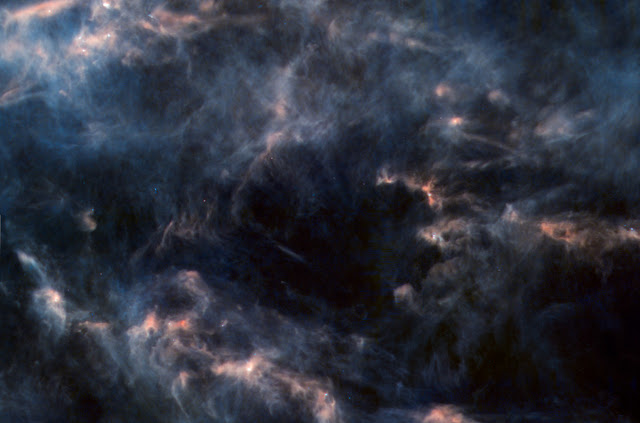
This image shows knots of cold, dense interstellar gas where new stars are forming. These Free-floating Evaporating Gaseous Globules (frEGGs) were first seen in Hubble’s famous 1995 image of the Eagle Nebula. Because these lumps of gas are dark, they are rarely seen by telescopes. They can be observed when the newly forming stars ignite, their intense ultraviolet radiation eroding the surrounding gas away and letting the denser, more resistant frEGGs remain. These frEGGs are located in the Northern Coalsack Nebula in the direction of Cygnus, the Swan.

This Hubble image also features two giant stars. The left star is a rare, giant O-type star, very bright, blue-white stars known to be the hottest in the universe. These massive stars are 10,000 to a million times the brightness of the Sun and burn themselves out quickly, in a few million years. The right star is an even more massive supergiant B-type star. Supergiant stars also burn through their fuel quickly, anywhere between a few hundred thousand years to tens of millions of years, and die in titanic supernova explosions.

Hubble Space Telescope (HST)

For more information about Hubble, visit:

http://hubblesite.org/

http://www.nasa.gov/hubble

http://www.spacetelescope.org/

Image, Animation Credits: NASA, ESA, and R. Sahai (Jet Propulsion Laboratory); Processing: Gladys Kober (NASA/Catholic University of America)/Text Credits: NASA/Yvette Smith.

Greetings, Orbiter.ch

CSS - Robotic Arm Transposition Test on China Space Station


CMS - China Manned Space logo.


Jan 6, 2022

Robotic Arm Transposition Test on China Space Station

The Tianzhou-2 cargo spacecraft was undocked from the Tianhe core module of the China Space Station on 5 January 2022, at 22:12 UTC (6 January, at 06:12 China Standard Time). The station’s robotic arm was used by controllers to move Tianzhou-2 in front of another docking port of the core module.

Robotic Arm Transposition Test on China Space Station

Tianzhou-2 was returned and re-docked to the front docking port of the Tianhe core module, on on 5 January 2022, at 22:59 UTC (6 January, at 06:59 China Standard Time). The test was conducted in preparation for the arrival of two large modules: Wentian Experiment Capusule-1 and Mengtian Experiment Capsule-2. The Tianhe core module (天和核心舱) is the first and main component of the China Space Station (中国空间站), informally known as Tiangong (天宫, Heavenly Palace).

Related articles & link:

China Space Station - Shenzhou-13 astronauts complete second spacewalk
https://orbiterchspacenews.blogspot.com/2021/12/china-space-station-shenzhou-13_27.html

China Space Station - Shenzhou-13 mission’s second spacewalk begins
https://orbiterchspacenews.blogspot.com/2021/12/china-space-station-shenzhou-13.html

China Space Station - Shenzhou-13 crew space lecture highlights
https://orbiterchspacenews.blogspot.com/2021/12/china-space-station-shenzhou-13-crew.html

China Space Station - Shenzhou-13 astronauts complete first spacewalk
https://orbiterchspacenews.blogspot.com/2021/11/china-space-station-shenzhou-13.html

China Space Station - Astronaut Wang Yaping begins first spacewalk
https://orbiterchspacenews.blogspot.com/2021/11/china-space-station-astronaut-wang.html

What’s next for the China Space Station (CSS)
https://orbiterchspacenews.blogspot.com/2021/10/whats-next-for-china-space-station-css.html

China Space Station (CSS) - Shenzhou-13 hatch opening
https://orbiterchspacenews.blogspot.com/2021/10/china-space-station-css-shenzhou-13.html

China Space Station - Shenzhou-13 mission
https://orbiterchspacenews.blogspot.com/2021/10/china-space-station-shenzhou-13-mission.html

For more information about China National Space Administration (CNSA), visit: http://www.cnsa.gov.cn/

Image, Video. Text, Credits: China National Space Administration (CNSA)/China Media Group(CMG)/China Central Television (CCTV)/SciNews/Orbiter.ch Aerospace/Roland Berga.

Best regards, Orbiter.ch

Stars may form 10 times faster than thought


Five-hundred-meter Aperture Spherical Telescope (FAST) logo.

Jan 6, 2022

Weak magnetic fields detected by China’s FAST telescope could upend theory of star formation


Image above: ust in the Taurus Molecular Cloud, seen as pink hues in far-infrared light, traces dense regions of gas where stars form. A study of one of the cloud’s stellar embryos suggests the process is fast. Image Credits: ESA/Herschel/NASA/JPL-Caltech; R. Hurt/JPL-Caltech/CC-BY-SA.

Astronomers have long thought it takes millions of years for the seeds of stars like the Sun to come together. Clouds of mostly hydrogen gas coalesce under gravity into prestellar cores dense enough to collapse and spark nuclear fusion, while magnetic forces hold matter in place and slow down the process. But observations using the world’s largest radio telescope are casting doubt on this long gestational period. Researchers have zoomed in on a prestellar core in a giant gas cloud—a nursery for hundreds of baby stars—and found the tiny embryo may be forming 10 times faster than thought, thanks to weak magnetic fields.

“If this is proven to be the case in other gas clouds, it will be revolutionary for the star formation community,” says Paola Caselli from the Max Planck Institute for Extraterrestrial Physics, who was not involved with the research.

Studying star birth and the tug of war between gravity and magnetic forces has been a challenge because the magnetic fields can be 100,000 times weaker than Earth’s. The only direct way to detect them comes from a phenomenon called the Zeeman effect, in which the magnetic fields cause so-called spectral lines to split in a way that depends on the strength of the field. These spectral lines are bright or dark patterns where atoms or molecules emit or absorb specific wavelengths of light. For gas clouds, the Zeeman splitting occurs in radio wavelengths, so radio telescopes are needed. And the dishes must be big in order to zoom in on a small region of space and reveal such a subtle effect.

Previously, researchers had used Puerto Rico’s Arecibo radio telescope—which collapsed in 2020—to study Lynds 1544, a relatively isolated stellar embryo within the Taurus Molecular Cloud, just 450 light-years away from Earth. They measured the magnetic fields in the wispy layers of gas far out from the core, where magnetic forces dominated over gravity. They also analyzed the stronger fields inside the core, where gravity nevertheless dominated because the core is 10,000 times denser than the outer layer, says Richard Crutcher, a radio astronomer at the University of Illinois, Urbana-Champaign.

What was missing was an examination of the intermediate region between the core and the outer layer. That has now come into focus with a new tracer of the Zeeman effect—a particular hydrogen absorption line—detected by the Five-hundred-meter Aperture Spherical radio Telescope (FAST), a giant dish built inside a natural basin in southwestern China.

Five-hundred-meter Aperture Spherical Telescope (FAST)

In a study published today in Nature, researchers report a magnetic field strength of 4 microgauss—no stronger than in the outer layer. “If the standard theory worked, the magnetic field needs to be much stronger to resist a 100-fold increase in cloud density. That didn’t happen,” says Di Li, the chief scientist of FAST who led the study.

“The paper basically says that gravity wins in the cloud: That’s where stars start to form, not in the dense core,” Caselli adds. “That’s a very big statement.”

The finding implies that a gas cloud could evolve into a stellar embryo 10 times quicker than previously thought, says lead author Tao-Chung Ching of the Chinese Academy of Sciences’s National Astronomical Observatories.

Li says he wants to study other molecular clouds to see whether the lessons from Lynds 1544 apply more generally. This could be done with FAST or radio telescope arrays such as the Very Large Array in New Mexico, or the upcoming Square Kilometre Array in South Africa and Australia.

Using the Zeeman effect tracer detected by FAST, astronomers might even be able to measure the magnetic field strength in the accretion disks of gas and dust around newly born stars. That would help scientists better understand the initial conditions of planet formation, says Patrick Hennebelle, a theoretical astrophysicist at the French Alternative Energies and Atomic Energy Commission.

Since it opened in 2016, FAST has been a major force in the search for spinning, collapsed stars known as pulsars. The new result shows how its sharp vision and exquisite sensitivity “should lead to major advances in all areas of radio astronomy, including star formation,” Crutcher says.

In April 2021, FAST was officially opened up to astronomers from outside China. Li says FAST received applications from 16 countries, and that some 10% to15% of the facility’s observing time has now been allocated to users outside China.

doi: 10.1126/science.acz9950

Related articles:

China to hunt aliens
https://orbiterchspacenews.blogspot.com/2020/06/china-to-hunt-aliens.html

Gigantic Chinese telescope opens to astronomers worldwide
https://orbiterchspacenews.blogspot.com/2019/09/gigantic-chinese-telescope-opens-to.html

FAST - The World largest radiotelescope in service
https://orbiterchspacenews.blogspot.com/2016/09/fast-world-largest-radiotelescope-in.html

China FAST hunt for alien life with giant telescope
https://orbiterchspacenews.blogspot.ch/2016/07/china-fast-hunt-for-alien-life-with.html

Related link:

For more information about Five-hundred-meter Aperture Spherical Telescope (FAST), visit: http://fast.bao.ac.cn/en/

Image (mentioned), Animation (FAST), Text, Credits: Science/Ling Xin.

Greetings, Orbiter.ch

New Year’s science in space for a healthier life


ESA - Cosmic Kiss Mission patch.


Jan 6, 2022

Matthias Maurer in the Cupola

Another year passes, and our muscles, bones, eyes and ears deteriorate as we age – even more so in space. Reactions in ESA astronaut Matthias Maurer’s body after barely two months on the International Space Station are giving European scientists clues on how to fight the downsides of growing old on Earth.

Vision and hearing loss

Around 70% of astronauts experience changes in the optic nerve during a long stay in space, a phenomenon known as Space-Associated Neuro-ocular Syndrome (SANS). This vision pathology is also regarded as the number two risk to human health during a mission to Mars.

Matthias and his NASA crewmates Thomas Marshburn and Raja Chari lent their eyes to the Retinal Diagnostics experiment. A special ocular lens clipped to the back of a tablet allowed the astronauts to record images of their eyes and send them to Earth.


Image above: Eóin Tuohy has his retina imaged by ESA astronaut Matthias Maurer during training at EAC.

These images will be used to train an AI model that could detect ocular changes and automatically give a diagnosis. The device will not only help astronauts exploring deep space, but also facilitate sustainable health care on our planet.

The International Space Station is far from being a quiet place. Creaking noises, humming fans and constant conferences with ground control are part of the sounds that fill Matthias’s life in space. The Acoustic Diagnostics experiment studies the effects of the background noise in the Station on the hearing of the astronauts.

https://www.podbean.com/ew/pb-abyhy-bfae33

Feeble muscles

Matthias’s muscles weaken in orbit, much like they do as people grow old. He is helping a team of medical scientists on Earth to identify how muscle mass is lost and how to prevent it.

After receiving a fresh delivery of science from the SpaceX Dragon vehicle in time for Christmas, Matthias sorted synthetic muscle cells the size of a grain of rice inside the Kubik minilab. Part of these cells will be electrically stimulated to trigger contractions in weightlessness, while others will experience artificial gravity via centrifugation.

Cells packing for ageing study

Researchers of the MicroAge project will monitor how the tissue responds to microgravity and accelerated ageing processes. This could one day help people to better maintain their strength and mobility into old age.

Another experiment looking into muscle health is Myotones. Matthias used a non-invasive, portable device on the Space Station to monitor the tone, stiffness and elasticity of certain muscles in the leg. He is one of the 12 astronauts taking part in this study to identify the best countermeasures for many people affected by strained muscles.


Image above: ESA astronaut Matthias Maurer enjoys potato soup from his home region on the International Space Station.

Matthias is also trying to optimise his fitness in space, an exercise routine that takes about two hours each day. During several workouts using the treadmill and doing squats, he put on a wearable electro muscle stimulation (EMS) suit that activated his muscles. The EasyMotion research aims to better understand physiological strain for astronauts and could lead to new rehabilitation treatments on Earth.

Maintaining body fat and muscle also comes down to diet. Matthias keeps logging his meals to track his energy intake and assess his nutrition. The NutrISS study introduces a new approach to calibrate diet and exercise for long stays in space. The science teams on Earth hope that a carefully-tailored high-protein diet could limit the typical microgravity-driven loss of bone and muscle.

Space fever and cosmic dreams

Body temperature is known to be higher in space. This 'space fever' poses a potential risk to astronaut health. The Thermo-Mini experiment has recorded Matthias’s core body temperature and circadian rhythm using a tiny thermal sensor strapped to his forehead for nearly 40 hours over three sessions.

The data will help understand this phenomenon and prove that this small device could be used in hospitals and by people working in extreme environments on Earth such as miners or firefighters.

Space fever device

When it comes to recovery, sleep plays a major role in human health and well-being. Insufficient sleep or sleep disorders can increase the risk of diseases and has an impact on people’s performance.

Matthias has been wearing a headband during his sleep for the Dreams experiment.

Sleeping crew quarters in Columbus

The device gives information about the different sleep phases and sleep efficiency. This user friendly technology could help astronauts and people on Earth to improve their sleep routines and identify potential disorders.

Related links:

Retinal Diagnostics: https://www.esa.int/About_Us/EAC/Artificial_intelligence_for_eye_health_in_space

Acoustic Diagnostics: https://esaexplores.podbean.com/e/beyond-series-space-station-sounds-e04/

Kubik minilab: https://www.esa.int/ESA_Multimedia/Images/2018/02/Kubik_on_Space_Station

MicroAge project: https://www.esa.int/Space_in_Member_States/United_Kingdom/UK_scientists_use_space_to_investigate_ageing

Myotones: https://blogs.esa.int/alexander-gerst/2018/07/05/testing-the-tone-with-myotones/

NutrISS: https://www.esa.int/ESA_Multimedia/Images/2019/09/NutrISS_experiment

Human and Robotic Exploration: https://www.esa.int/Science_Exploration/Human_and_Robotic_Exploration

Cosmic Kiss mission: https://www.esa.int/Science_Exploration/Human_and_Robotic_Exploration/Cosmic_kiss

International Space Station (ISS): https://www.esa.int/Science_Exploration/Human_and_Robotic_Exploration/International_Space_Station

Images, Video, Text, Credits: NASA/ESA/M.Maurer.

Best regards, Orbiter.ch