mercredi 29 mai 2013

Expedition 36 Crew Welcomed Aboard Space Station


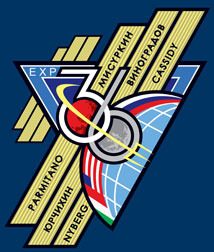
ISS - Expedition 36 Mission patch.

May 29, 2013

NASA astronaut Karen Nyberg, Russian Federal Space Agency cosmonaut Fyodor Yurchikhin and European Space Agency (ESA) astronaut Luca Parmitano joined their Expedition 36 crewmates when the hatches between their Soyuz TMA-09M spacecraft and the International Space Station opened at 12:14 a.m. EDT Wednesday.


Image above: The newly arrived flight engineers and their Expedition 36 crewmates aboard the International Space Station speak with family members and spaceflight officials gathered at Baikonur Cosmodrome in Kazakhstan. Credit: NASA TV.

The Soyuz carrying the three new Expedition 36 flight engineers docked with the station’s Rassvet module at 10:10 p.m. EDT Tuesday, completing its journey from the launch pad to the orbiting complex in less than six hours. The trio launched from the Baikonur Cosmodrome in Kazakhstan at 4:31 p.m. (2:31 a.m. Wednesday, Baikonur time) to begin the accelerated four-orbit journey to the station.

New Crewmates Welcomed Aboard Station

Flight Engineer Chris Cassidy of NASA and Commander Pavel Vinogradov and Flight Engineer Alexander Misurkin of Russian Federal Space Agency, who arrived at the station March 28, welcomed the new crew members aboard their orbital home. All six crew members then participated in a welcome ceremony with family members and mission officials gathered at Baikonur.

Expedition 36 Crew Profile

Expedition 36 will operate with its full six-person crew complement until September when Cassidy, Vinogradov and Misurkin return to Earth aboard their Soyuz TMA-08M spacecraft. Their departure will mark the beginning of Expedition 37 under the command of Yurchikhin, who along with crewmates Nyberg and Parmitano will maintain the station as a three-person crew until the arrival of three additional flight engineers in late September. Yurchikhin, Nyberg and Parmitano are scheduled to return to Earth in November.

Read more about Expedition 36: http://www.nasa.gov/mission_pages/station/expeditions/expedition36/index.html

For more information about the International Space Station (ISS), visit: http://www.nasa.gov/mission_pages/station/main/index.html

Image (mentioned), Video. Text, Credits: NASA / NASA TV.

Cheers, Orbiter.ch

mardi 28 mai 2013

Soyuz Completes Expedited Journey to Station


ROSCOSMOS - Soyuz TMA-09M Mission patch.

May 29, 2013


Image above: Soyuz TMA-09M Approaching the International Space Station. Photo credit: NASA TV / Screen capture: Orbiter.ch Aerospace.

The Soyuz TMA-09M spacecraft carrying three new Expedition 36 crew members docked with the International Space Station’s Rassvet module around 10:10 p.m. EDT Thursday, completing its journey from the launch pad to the orbiting complex in less than/about six hours.


Image above: The Soyuz TMA-09M carrying three new Expedition 36 crew members approaches the International Space Station. Photo credit: NASA TV / Screen capture: Orbiter.ch Aerospace.

Soyuz Commander Fyodor Yurchikhin of the Russian Federal Space Agency (Roscosmos), NASA astronaut Karen Nyberg and European Space Agency (ESA) astronaut Luca Parmitano launched from the Baikonur Cosmodrome in Kazakhstan at 4:31 p.m. Tuesday (2:31 a.m. Wednesday, Baikonur time) to begin the accelerated four-orbit journey to the station.

Soyuz Completes Expedited Flight to Station

After the hatches open at 11:55 p.m., the new trio will join Flight Engineer Chris Cassidy of NASA and Commander Pavel Vinogradov and Flight Engineer Alexander Misurkin of Roscosmos who docked with the orbital complex May 28. All six crew members will then participate in a welcome ceremony with family members and mission officials gathered at the Russian Mission Control Center in Korolev near Moscow.

Live NASA TV coverage of the hatch opening begins at 11:30 p.m.

Watch NASA TV: http://www.nasa.gov/multimedia/nasatv/index.html

Read more about Expedition 36: http://www.nasa.gov/mission_pages/station/expeditions/expedition36/index.html

Images (mentioned), Video, Text, Credit: NASA / NASA TV / ROSCOSMOS TV / ROSCOSMOS.

Greetings, Orbiter.ch

Three New Crew Members on Expedited Journey to Station


ROSCOSMOS - Soyuz TMA-09M Mission patch.

May 28, 2013


Image above: The Soyuz TMA-09M carrying three new Expedition 36 crew members launches from the Baikonur Cosmodrome in Kazakhstan. Photo credit: NASA TV / Screen capture: Orbiter.ch Aerospace.

The Soyuz TMA-09M spacecraft carrying three new Expedition 36 crew members launched from the Baikonur Cosmodrome in Kazakhstan at 4:31 p.m. EDT Tuesday (2:31 a.m. Wednesday, Baikonur time) to begin an accelerated six-hour journey to the International Space Station.

ISS Expedition 36 Soyuz TMA-09M Launch Take Off

Soyuz Commander Fyodor Yurchikhin of the Russian Federal Space Agency (Roscosmos), NASA astronaut Karen Nyberg and European Space Agency (ESA) astronaut Luca Parmitano will dock their Soyuz to the station’s Rassvet module at 10:16 p.m. After the hatches open at 11:55 p.m., the new trio will join Flight Engineer Chris Cassidy of NASA and Commander Pavel Vinogradov and Flight Engineer Alexander Misurkin of Roscosmos who docked with the orbital complex May 28. All six crew members will then participate in a welcome ceremony with family members and mission officials gathered at the Russian Mission Control Center in Korolev near Moscow.


Image above: Expedition 36/37 Soyuz Commander Fyodor Yurchikhin (center) and Flight Engineers Karen Nyberg (left) and Luca Parmitano give a thumbs up after the crew's press conference. Photo credit: NASA/Bill Ingalls.

Live NASA TV coverage of the docking begins at 9:30 p.m. and returns at 11:30 p.m. for the hatch opening and welcome ceremony.

Watch NASA TV: http://www.nasa.gov/multimedia/nasatv/index.html

Expedition 36 will operate with its full six-person crew complement until September when Cassidy, Vinogradov and Misurkin return to Earth aboard their Soyuz TMA-08M spacecraft. Their departure will mark the beginning of Expedition 37 under the command of Yurchikhin, who along with crewmates Nyberg and Parmitano will maintain the station as a three-person crew until the arrival of three additional flight engineers in late September. Yurchikhin, Nyberg and Parmitano are scheduled to return to Earth in November.


Image above: Expedition 36/37 Soyuz Commander Fyodor Yurchikhin (left) and Flight Engineers Luca Parmitano (right) aboard Soyuz TMA-09M during the flight. Photo credit: NASA TV / Screen capture: Orbiter.ch Aerospace.

During the 5 ½-month timeframe of Expedition 36/37, the crew is scheduled to conduct five spacewalks to prepare the complex for the installation of the Russian Multipurpose Laboratory Module in December, as well as a Nov. 9 spacewalk to take the Olympic torch outside. The crew also will welcome the arrival of several visiting cargo vehicles: ESA’s “Albert Einstein” Automated Transfer Vehicle-4 in June, a Russian Progress cargo craft in July and the Japan Aerospace Exploration Agency’s H-II Transfer Vehicle-4 in August.

Even with the challenges of managing visiting vehicle traffic and six spacewalks, the crew will continue supporting a diverse portfolio of research and technology experiments. Among the investigations that will be joining the list of approximately 1,600 station science studies conducted so far is the Hip Quantitative Computed Tomography (QCT) experiment, which will evaluate countermeasures to prevent the loss of bone density seen during long-duration space missions. The experiment, which uses 3-D analysis to collect detailed information on the quality of astronauts’ hip bones, also will increase understanding of osteoporosis on Earth.


Image above: Expedition 36/37 Soyuz Flight Engineers Karen Nyberg aboard Soyuz TMA-09M during the flight. Photo credit: NASA TV / Screen capture: Orbiter.ch Aerospace.

The station’s crew will continue research into how plants grow, leading to more efficient crops on Earth and improving understanding of how future crews could grow their own food in space. The crew also will test a new portable gas monitor designed to help analyze the environment inside the spacecraft and continue fuel and combustion experiments that past crews have undertaken. Studying how fire behaves in space will have a direct impact on future spaceflight and could lead to cleaner, more efficient combustion engines on Earth.

This is the second space mission for Nyberg, who holds a doctorate in mechanical engineering. She visited the station in 2008 as an STS-124 crew member aboard space shuttle Discovery on a mission to deliver and install pressurized module portion of the Kibo laboratory and its robotic arm.

For Yurchikhin, this is his fourth spaceflight. He flew to the station in October 2002 aboard space shuttle Atlantis. He also participated in two long-duration missions aboard the station, first as an Expedition 15 crew member in 2007 and then as a member of Expedition 24/25 in 2010. Yurchikhin has performed five spacewalks and spent more than 371 days in space.

Parmitano, a major in the Italian Air Force, is making his first spaceflight. Selected as an astronaut candidate by ESA in 2008, Parmitano was certified as an astronaut in 2011.

Read more about Expedition 36: http://www.nasa.gov/mission_pages/station/expeditions/expedition36/index.html

Images (mentioned), Video, Text, Credit: NASA / NASA TV / ROSCOSMOS TV / ROSCOSMOS.

Best regards, Orbiter.ch

vendredi 24 mai 2013

Galaxies Fed by Funnels of Fuel


Astrophysics / Exobiology.

May 24, 2013

 Cosmic Swirly Straws Feed Galaxy

Created with the help of supercomputers, this simulation shows the formation of a massive galaxy during the first 2 billion years of the universe. Hydrogen gas is gray, young stars appear blue, and older stars are red. The simulation reveals that gas flows into galaxies along filaments akin to cosmic bendy, or swirly, straws.

Computer simulations of galaxies growing over billions of years have revealed a likely scenario for how they feed: a cosmic version of swirly straws.

The results show that cold gas -- fuel for stars -- spirals into the cores of galaxies along filaments, rapidly making its way to their "guts." Once there, the gas is converted into new stars, and the galaxies bulk up in mass.

"Galaxy formation is really chaotic," said Kyle Stewart, lead author of the new study appearing in the May 20th issue of the Astrophysical Journal. "It took us several hundred computer processors, over months of time, to simulate and learn more about how this process works." Stewart, who is now at the California Baptist University in Riverside, Calif., completed the majority of this work while at NASA's Jet Propulsion Laboratory in Pasadena, Calif.

In the early universe, galaxies formed out of clumps of matter, connected by filaments in a giant cosmic web. Within the galaxies, nuggets of gas cooled and condensed, becoming dense enough to trigger the birth of stars. Our Milky Way spiral galaxy and its billions of stars took shape in this way.

The previous, standard model of galaxy formation held that hot gas sank into the centers of burgeoning galaxies from all directions. Gas clouds were thought to collide into each other, sending out shock waves, which then heated up the gas. The process is similar to jets creating sonic booms, only in the case of galaxies, the in-falling gas travels faster than the speed of sound, piling up into waves. Eventually, the gas cools and sinks to the galactic center. This process was theorized to be slow, taking up to 8 billion years.

Recent research has contradicted this scenario in smaller galaxies, showing that the gas is not heated. An alternate "cold-mode" theory of galaxy formation was proposed instead, suggesting the cold gas might funnel along filaments into galaxy centers. Stewart and his colleagues set out to test this theory and address the mysteries about how the cold gas gets into galaxies, as well as the rate at which it spirals in.

Since it would take billions of years to watch a galaxy grow, the team simulated the process using supercomputers at JPL; NASA's Ames Research Center, Moffett Field, Calif.; and the University of California, Irvine. They ran four different simulations of the formation of a galaxy like our Milky Way, starting from just 57 million years after the big bang until present day.


Image above: This still from a supercomputer simulation reveals that cool gas flows into the centers of galaxies along filaments. Image credit: Video courtesy of the N-Body Shop at University of Washington.

The simulations began with the starting ingredients for galaxies -- hydrogen, helium and dark matter -- and then let the laws of physics take over to create their galactic masterpieces. Supercomputers are needed due to the enormous number of interactions.

"The simulations are like a gigantic game of chess," said Alyson Brooks, a co-author of the paper and expert in galaxy simulations at the University of Wisconsin, Madison. "For each point in time, we have to figure out how a given particle -- our chess piece -- should move based on the positions of all of the other particles. There are tens of millions of particles in the simulation, so figuring out how the gravitational forces affect each particle is time-consuming."

When the galaxy concoctions were ready, the researchers inspected the data, finding new clues about how cold gas sinks into the galaxy centers. The new results confirm that cold gas flows along filaments and show, for the first time, that the gas is spinning around faster than previously believed. The simulations also revealed that the gas is making its way down to the centers of galaxies more quickly than what occurs in the "hot-mode" of galaxy formation, in about 1 billion years.

"We have found that the filamentary structures that galaxies are built on are key to how they build up over time, by threading gas into them efficiently," said Leonidas Moustakas, a co-author at JPL.

The researchers looked at dark matter too -- an invisible substance making up about 85 percent of matter in the universe. Galaxies form out of lumps of regular matter, so-called baryonic matter that is composed of atoms, and dark matter. The simulations showed that dark matter is also spinning at a faster rate along the filaments, spiraling into the galaxy centers.

The results help answer a riddle in astronomy about galaxies with large extended disks of material spinning around them, far from their centers. Researchers didn't understand how the outer material could be spinning so fast. The cold-mode allows for this rapid spinning, fitting another jigsaw piece into the puzzle of how galaxies grow.

"The goal of simulating galaxies is to compare them to what telescopes observe and see if we really understand how to build a galaxy," said Stewart. "It helps us makes sense of the real universe."

Other authors of the paper are: James Bullock of the University of California, Irvine; Ariyeh Maller of the New York City College of Technology, Brooklyn, N.Y., Jürg Diemand of the University of Zurich, Switzerland; and James Wadsley of the McMaster University, Hamilton, Ontario, Canada.

JPL is managed by the California Institute of Technology in Pasadena for NASA.

Image, Video, Text, Credit: courtesy of the N-Body Shop at University of Washington / NASA / JPL / Whitney Clavin.

Greetings, Orbiter.ch

Magnetar SGR 0418


NASA - Chandra X-ray Observatory patch.

May 24, 2013


This graphic shows an exotic object in our galaxy called SGR 0418+5729 (SGR 0418 for short). As described in our press release, SGR 0418 is a magnetar, a type of neutron star that has a relatively slow spin rate and generates occasional large blasts of X-rays.

The only plausible source for the energy emitted in these outbursts is the magnetic energy stored in the star. Most magnetars have extremely high magnetic fields on their surface that are ten to a thousand times stronger than for the average neutron star. New data shows that SGR 0418 doesn’t fit that pattern. It has a surface magnetic field similar to that of mainstream neutron stars.

In the image on the left, data from NASA’s Chandra X-ray Observatory shows SGR 0418 as a pink source in the middle. Optical data from the William Herschel telescope in La Palma and infrared data from NASA’s Spitzer Space Telescope are shown in red, green and blue.

On the right is an artist’s impression showing a close-up view of SGR 0418. This illustration highlights the weak surface magnetic field of the magnetar, and the relatively strong, wound-up magnetic field lurking in the hotter interior of the star. The X-ray emission seen with Chandra comes from a small hot spot, not shown in the illustration. At the end of the outburst this spot has a radius of only about 160 meters, compared with a radius for the whole star of about 12 km.

The researchers monitored SGR 0418 for over three years using Chandra, ESA's XMM-Newton as well as NASA's Swift and RXTE satellites. They were able to make an accurate estimate of the strength of the external magnetic field by measuring how its rotation speed changes during an X-ray outburst. These outbursts are likely caused by fractures in the crust of the neutron star precipitated by the buildup of stress in the stronger magnetic field lying below the surface.

Chandra X-ray Observatory. Image credit: NASA/JPL-Caltech

By modeling the evolution of the cooling of the neutron star and its crust, as well as the gradual decay of its magnetic field, the researchers estimated that SGR 0418 is about 550,000 years old. This makes SGR 0418 older than most other magnetars, and this extended lifetime has probably allowed the surface magnetic field strength to decline over time. Because the crust weakened and the interior magnetic field is relatively strong, outbursts could still occur.

The implications of this result for understanding supernova explosions and the number and evolution of magnetars is discussed in the press release.

SGR 0418 is located in the Milky Way galaxy at a distance of about 6,500 light years from Earth. These new results on SGR 0418 appear online and will be published in the June 10, 2013 issue of The Astrophysical Journal. NASA's Marshall Space Flight Center in Huntsville, Ala., manages the Chandra program for NASA's Science Mission Directorate in Washington. The Smithsonian Astrophysical Observatory controls Chandra's science and flight operations from Cambridge, Mass.

Press release: http://www.chandra.harvard.edu/press/13_releases/press_052313.html

Read more/access all images: http://www.chandra.harvard.edu/photo/2013/sgr0418/

Chandra's Flickr photoset: http://www.flickr.com/photos/nasamarshall/sets/72157606205297786/

Images, Text, Credits: X-ray: NASA/CXC/CSIC-IEEC/N.Rea et al; Optical: Isaac Newton Group of Telescopes, La Palma/WHT; Infrared: NASA/JPL-Caltech.

Best regards, Orbiter.ch

jeudi 23 mai 2013

Hubble reveals the Ring Nebula’s true shape


NASA - Hubble Space Telescope patch.

May 23, 2013


In this composite image, visible-light observations by NASA’s Hubble Space Telescope are combined with infrared data from the ground-based Large Binocular Telescope in Arizona to assemble a dramatic view of the well-known Ring Nebula. Credit: NASA, ESA, C.R. Robert O’Dell (Vanderbilt University), G.J. Ferland (University of Kentucky), W.J. Henney and M. Peimbert (National Autonomous University of Mexico). Credit for Large Binocular Telescope data: David Thompson (University of Arizona).

The Ring Nebula's distinctive shape makes it a popular illustration for astronomy books. But new observations by NASA's Hubble Space Telescope of the glowing gas shroud around an old, dying, sun-like star reveal a new twist.

"The nebula is not like a bagel, but rather, it's like a jelly doughnut, because it's filled with material in the middle," said C. Robert O'Dell of Vanderbilt University in Nashville, Tenn. He leads a research team that used Hubble and several ground-based telescopes to obtain the best view yet of the iconic nebula. The images show a more complex structure than astronomers once thought and have allowed them to construct the most precise 3-D model of the nebula.

"With Hubble's detail, we see a completely different shape than what's been thought about historically for this classic nebula," O'Dell said. "The new Hubble observations show the nebula in much clearer detail, and we see things are not as simple as we previously thought."

The Ring Nebula is about 2,000 light-years from Earth and measures roughly 1 light-year across. Located in the constellation Lyra, the nebula is a popular target for amateur astronomers.


This planetary nebula's simple, graceful appearance is thought to be due to perspective: our view from Earth looking straight into what is actually a barrel-shaped cloud of gas shrugged off by a dying central star. Hot blue gas near the energizing central star gives way to progressively cooler green and yellow gas at greater distances with the coolest red gas along the outer boundary. Credit: NASA/Hubble Heritage Team.

Previous observations by several telescopes had detected the gaseous material in the ring's central region. But the new view by Hubble's sharp-eyed Wide Field Camera 3 shows the nebula's structure in more detail. O'Dell's team suggests the ring wraps around a blue, football-shaped structure. Each end of the structure protrudes out of opposite sides of the ring.

The nebula is tilted toward Earth so that astronomers see the ring face-on. In the Hubble image, the blue structure is the glow of helium. Radiation from the white dwarf star, the white dot in the center of the ring, is exciting the helium to glow. The white dwarf is the stellar remnant of a sun-like star that has exhausted its hydrogen fuel and has shed its outer layers of gas to gravitationally collapse to a compact object.

O'Dell's team was surprised at the detailed Hubble views of the dark, irregular knots of dense gas embedded along the inner rim of the ring, which look like spokes in a bicycle wheel. These gaseous tentacles formed when expanding hot gas pushed into cool gas ejected previously by the doomed star. The knots are more resistant to erosion by the wave of ultraviolet light unleashed by the star. The Hubble images have allowed the team to match up the knots with the spikes of light around the bright, main ring, which are a shadow effect. Astronomers have found similar knots in other planetary nebulae.

Hubble in orbit. Image credit: NASA / ESA.

All of this gas was expelled by the central star about 4,000 years ago. The original star was several times more massive than our sun. After billions of years converting hydrogen to helium in its core, the star began to run out of fuel. It then ballooned in size, becoming a red giant. During this phase, the star shed its outer gaseous layers into space and began to collapse as fusion reactions began to die out. A gusher of ultraviolet light from the dying star energized the gas, making it glow.

The outer rings were formed when faster-moving gas slammed into slower-moving material. The nebula is expanding at more than 43,000 miles an hour, but the center is moving faster than the expansion of the main ring. O'Dell's team measured the nebula's expansion by comparing the new Hubble observations with Hubble studies made in 1998.

The Ring Nebula will continue to expand for another 10,000 years, a short phase in the lifetime of the star. The nebula will become fainter and fainter until it merges with the interstellar medium.

Studying the Ring Nebula's fate will provide insight into the sun's demise in another 6 billion years. The sun is less massive than the Ring Nebula's progenitor star, so it will not have an opulent ending.

"When the sun becomes a white dwarf, it will heat more slowly after it ejects its outer gaseous layers," O'Dell said. "The material will be farther away once it becomes hot enough to illuminate the gas. This larger distance means the sun's nebula will be fainter because it is more extended."

In the analysis, the research team also obtained images from the Large Binocular Telescope at the Mount Graham International Observatory in Arizona and spectroscopic data from the San Pedro Martir Observatory in Baja California, Mexico.

Notes:

The Hubble Space Telescope is a project of international cooperation between ESA and NASA.

For more information about the Hubble Space Telescope, visit:

http://hubblesite.org and http://www.nasa.gov/hubble and http://www.spacetelescope.org

Images (mentioned), Text, Credit: NASA.

Cheers, Orbiter.ch

Solar Impulse Across America 2013: Landing in Dallas


Solar Impulse - Across America 2013 patch.

May 23, 2013


Across America 2013: 2nd leg from Phoenix Sky Harbor to Dallas Forth Worth. Landing. Image credits: Solar Impulse |Revillard| Rezo.ch.

Flight Phoenix KPHX - Dallas KDFW

- Pilot: André Borschberg, Co-Founder and CEO

- Take off time: May 22nd 04:47AM MST (UTC-7)

- Landing time: May 23rd 01:08AM CDT (UTC-5)

- Flight duration: 18h21min

- Average ground speed: 84 km/h ( 45,3 kt)

- Highest altitude reached: 27 000 ft

- Flight Distance: 1541 km (~832 NM)


Across America 2013: 2nd leg from Phoenix Sky Harbor to Dallas Forth Worth. Landing. Image credits: Solar Impulse / Revillard / Rezo.ch.

Who said surfing was only possible in California?

After completing the longest distance flight in the history of the project, landing at 01:08AM CDT (UTC-5) on Thursday May 23nd at Dallas Fort Worth International Airport, André expressed two wishes. The first was to stretch his long legs as it can get quite cramped when you’re over 6’2’’ (190 cm) tall in the meager 46 ft³ (1.3 m³) cockpit. The second one proved, once again, André’s pride in his family name; Borschberg: the good living. He articulated the wish to enjoy Texas’ world-renowned steak and even asked Dallas residents to send him names of the best spots in town. Ideas; anybody?

Jokes aside, it was a unique but challenging journey. The pre-flight preparations were intense because of the specific wind conditions, manifest after sunset. This allowed André to live a true “sky surfing” experience. Because of the lightness and slow speed of the solar airplane, it literally rode the updraft and downdraft of the mountain winds. This is clearly visible on the flight profile, a phenomenon that caused the plane to rise and fall, riding the wind waves.


Across America 2013: 2nd leg from Phoenix Sky Harbor to Dallas Forth Worth. B. Piccard and A. Borschberg with the Clean Generation Flag. Image credits: Solar Impulse / Revillard / Rezo.ch.

The flight was a perfect training experience for both the pilot and the team in the Mission Control Center. It has reconfirmed the need to remain flexible and try to request, when possible, permission to fly at different altitudes to local Air Traffic Controllers. Having options can help avoid being stuck in a segment that’s experiencing unique winds – but it’s not always possible due to dense air traffic flying below the solar airplane.

Across America 2013: Landing in Dallas Forth Worth

Texan skies have certainly challenged the top ranking of California’s surfing, but now that André’s safely back on the ground, he can indulge in a good pair of cowboy boots and other more traditionally Texan sports.

For more information about Solar Impulse: http://solarimpulse.com/

Images (mentioned), Video. Text, Credit: Solar Impulse.

Greetings, Orbiter.ch