jeudi 10 février 2022

Arianespace - OneWeb 13 launch


Arianespace & Roscosmos - Flight VS27 / OneWeb 13 Mission patch.

Feb 10, 2022

Soyuz ST-B carrying OneWeb 13 liftoff

For Arianespace’s VS27 mission, a Soyuz ST-B launch vehicle launched 34 OneWeb satellites from the Soyuz Launch Complex (ELS) in Sinnamary, French Guiana, on 10 February 2022, at 18:09 UTC (15:09 local time, 21:09 MSK).

OneWeb 13 launch

VS27 is Arianespace’s thirteenth launch for the OneWeb constellation, placing OneWeb satellites #395 to #428 (a total payload of approximately 5495 kg kg) into a near-polar orbit, at an altitude of 450 km. After separation, the satellites will raise themselves to their operational Low Earth Orbit, at an altitude of 1200 km.

Mission description

Arianespace’s first launch of 2022 with Soyuz will place its satellite passengers into Low Earth Orbit. The launcher will be carrying a total payload of approximately 5,495 kg.

OneWeb #395 to #428

Flight VS27 mark the first flight of the year with OneWeb. This thirteenth mission on behalf of OneWeb will put 34 additional satellites bringing the total fleet to 428 satellites into a near-polar orbit at an altitude of 450 kilometers. After separation, the satellites will raise themselves to their operational orbit.

The satellites will deliver high-speed, low-latency enterprise grade connectivity services to a wide range of customer sectors including enterprise, government, maritime and aviation customers.

OneWeb satellite

Central to its purpose, OneWeb seeks to bring connectivity to every unconnected area where fiber cannot reach, and thereby bridge the digital divide. Once deployed, the OneWeb constellation will enable user terminals that are capable of offering 3G, LTE, 5G and Wi-Fi coverage, providing high-speed access globally – by air, sea and land.

These OneWeb missions through 2022 will enable the start of OneWeb’s global services this year.

Related links:

Arianespace: https://www.arianespace.com/

ROSCOSMOS: https://www.roscosmos.ru/

OneWeb: https://oneweb.net/

Images, Video, Text, Credits: Arianespace/OneWeb/Roscosmos/SciNews/Orbiter.ch Aerospace/Roland Berga.

Best regards, Orbiter.ch

Introducing ESA Vigil: Earth’s devoted solar defender


ESA - Virgil Mission patch.


Feb 10, 2022

In brief

It’s the first mission of its kind, set to monitor our active and unpredictable Sun and help protect us from its violent outbursts – and it has a new name.

In-depth

Once known as “Lagrange,” ESA’s upcoming space weather mission needed a new name that would reflect its vital role: helping to protect Earth’s infrastructure, satellites, inhabitants and space explorers from unpredictable but violent solar events like solar flares and ‘coronal mass ejections’.

Vigil warns Earth

With 5422 submissions from across Europe and indeed around the world – and after weeks of deliberation, countless spreadsheets, three diverse and expert judges and a lively debate – a new name has been selected for our upcoming space weather mission: ESA Vigil.

ESA Vigil

Thousands of thoughtful, clever and funny names were submitted in the Agency’s #NameTheMission mission contest, which ran from May to September 2021.

Spacecraft monitoring the Sun

Once submissions closed, a team from ESA’s Communication department and Space Weather Office reviewed all submissions putting a shortlist of just nine names before a panel of invited, external judges.

Armed with their top three respective choices, the judges then took part in a lively, two-hour video chat in which they made the case for their favourite and deliberated the merits of each. Finally, they agreed on a winner.

Introducing: ESA Vigil

“We are thrilled with our mission’s new name,” explains Juha-Pekka Luntama, ESA’s Head of Space Weather.

“When I first heard it, I thought it was just spot on. That is exactly what we do, we keep a vigilant watch and guard Earth”.

In Latin, ‘vigilis exceptus’ means sentry, or guard, while ‘vigilia’ means wakefulness and the act of keeping a devoted watch. The judges were particularly impressed with how the name resonated with the mission’s role – as a devoted guardian, keeping constant watch over the Sun, for Earth.

The patch

Almost immediately, ESA’s design team began working on a patch that would evoke Vigil’s meaning. Throughout various iterations, the symbol of a soaring, watchful bird remained.

Emmet Fletcher, Head of ESA’s Branding and Partnership Office explained the rationale behind the patch.

ESA Vigil mission patch

“In this stunning design, the team has depicted a stylised wing of protection which shelters Earth from the Sun’s hazardous radiation. The wing emanates from Vigil’s orbital position and the critical geometry of this Lagrange point relative to the Earth and Sun is traced out. To balance out the mission patch, the L5 point is emphasised with the five stars shown just above the blue Earth.”

And it’s the position of the wing, originating from the side of the Sun-Earth system, which really pleased the mission team.

“We really like the patch design and how it still incorporates the vital importance of geometry to this mission,” explains Giuseppe Mandorlo, Mission Manager for ESA Vigil.

“The Vigil mission will get a sneak peek of potentially hazardous solar activity only because of its location in space. Trailing ‘behind’ Earth at the fifth Lagrange point, ESA’s Vigil will see the side of the Sun, observing conditions before they rotate around to face our home.”

The judges

A key focus of the name campaign was to engage with a range of people from across Europe and give them the opportunity to express their perspective on our planet, space and the role of this important new mission.

To cement the most appropriate mission name, ESA decided to invite a trio of external judges who would decide on behalf of Europe and its citizens. The judges, external to ESA but experts in their varied and diverse fields, chose the winning submission.

Andrea Marcolongo

Andrea Marcolongo is an Italian writer and journalist. Currently living in Paris, she graduated in Classical Studies at the University of Milan and is the author of “The Ingenious Language: Nine Epic Reasons to Love Greek”; “The Heroic Measure”, about the myth of the Argonauts; “At the source of the words”, a compendium of ninety-nine etymologies and “Starting from Scratch. The life-changing lesson of Aeneas”.


Image above: Andrea Marcolongo is an Italian writer and journalist, author of many books including “The Ingenious Language: Nine Epic Reasons to Love Greek”.

“It was not easy to choose among the different names, languages, myths, but ‘Vigil’ was my final choice,” explains Andrea Marcolongo, best-selling Italian author and one of three judges on the panel.

“ESA Vigil is easy to remember but also smart, immediately illustrating the goals of the mission and it refers to a general idea of caring, looking after something. Moreover, as it comes from Latin, it is etymologically related with one of the most ancient languages at the core of Europe”.

Rick Brink

Rick Brink is from Hardenberg, a small town in the province of Overijssel, the Netherlands, and in 2019 was chosen as the very first Minister of Disability Affairs for the country. Rick previously also worked as a HR advisor as well as holding various other positions in politics.  Rick now runs a consultancy that helps organisations with issues relating to diversity and inclusion. Through these positions, he works to strengthen the position of people in the Netherlands who live with a disability.


Image above: Rick Brink was chosen as the very first Minister of Disability Affairs for the Netherlands and now runs a consultancy that helps organisations with issues relating to diversity and inclusion.

“A new name should always be pleasant in the mouth. ESA Vigil is one such name,” says Rick.

“It is easy to remember and easy to link to what ESA will do in the mission. In addition, I find brevity and succinctness an important criteria. As far as I'm concerned, this mission name is more than successful.”

Lucie Green

Lucie Green is a Professor of Physics, based at UCL’s Mullard Space Science Laboratory where she studies ejective activity in the atmosphere of the Sun. Lucy is interested in how such eruptions lead to stormy space weather affecting Earth and is passionate about engaging a wide range of audiences with science. Lucie is Chair of Governors at the UCL Academy, Chief Stargazer at the Society for Popular Astronomy and author of “15 Million Degrees: journey to the centre of the Sun”.


Image above: Lucie Green is interested in how solar eruptions lead to stormy space weather affecting Earth and is passionate about engaging a wide range of audiences with science.

“It was fantastic to see so many people engage in this competition and that such a thoughtful set of names were proposed for ESA’s space weather mission,” Lucie explained.

“Vigil really stood out though as capturing the essence of the mission’s aims, which are to keep a watchful eye on our active Sun and alert us to any dangerous emissions that are coming our way.”

A word from our winner

“I am deeply honored that the European Space Agency selected my proposed name, Vigil, for their upcoming solar mission,” explains Francois Gosselin, winner of the #NameTheMission campaign with his submission, Vigil.


Image above: Francois Gosselin, whose winning entry Vigil becomes the name of ESA's upcoming space weather mission.

“Living in Canada, I have been all too aware of the impact solar activity can have on Earth, such as the 1989 power outage in Quebec caused by a large solar flare.”

Vigil, from the Latin "Vigilis Exceptus", meaning "sentry" was my inspiration for this ESA mission name. Sentry, watching the Sun for incoming events and alerting us perfectly reflects the mission objective.”

Protecting modern life

We are now reliant on interlinked technologies, in space and on Earth, for our everyday lives. But this infrastructure, and all that relies on it, is vulnerable.

Solar storms can damage power grids, disrupt telecommunications and threaten satellites and the vital services they provide. At the same time, as we launch ever-more satellites into orbit we are also creating increasing amounts of debris, dramatically increasing the risk of collision for current and future missions: our success in space could be our downfall.

As part of ESA’s Vision for the future, the new Protect ‘accelerator’ will ensure the resilience of technologies on which modernity depends. By detecting and providing advance warning of oncoming solar storms, we can protect our infrastructure in space and on the ground. By fostering the sustainable use of orbits around Earth – a finite and limited resource – we can ensure the benefits of space will remain accessible to future generations.

Related links:

ESA Vigil: https://www.esa.int/Safety_Security/Vigil

Safety & Security: https://www.esa.int/Safety_Security

Space weather: https://www.esa.int/Safety_Security/Space_weather

#NameTheMission: https://twitter.com/search?q=%23NameTheMission&src=typed_query

Protect "accelerator": https://vision.esa.int/protection-of-space-assets/

Images, Video, Text, Credits: ESA/A. Baker, CC BY-SA 3.0 IGO.

Greetings, Orbiter.ch

New research sums up sea-level rise


ESA - European Space Agency emblem.


Feb 10, 2022

Sea-level rise is arguably one of the most serious consequences of the climate crisis. While using satellite data to monitor how the height of the sea is changing provides critical evidence for decision-making, satellites are also essential to measuring the individual components, such as seawater temperature and glacier melt, that contribute to the overall rise. Confidence in the accuracy of these separate measures is key. ESA-funded research now confirms that the figures match up.

Gorner Glacier melt adds to sea level rise

Global mean sea-level has risen by more than 3 cm per decade since precise satellite measurements began in the 1990s.

A good third of this rise in sea level is down to thermal expansion – as seawater warms, it expands. Nearly two thirds of the rise is because of freshwater being added to the ocean, mainly from the melting of glaciers and from the Antarctic and Greenland ice sheets, but also from the water added to the ocean from land, essentially as a result of groundwater storage depletion.

While we all understand that seas are rising because Earth is getting hotter, scientists need understand exactly what’s going on. They do this by assessing how these different contributions compare with the overall change in sea level – in other words, they assess the sea-level budget.

Global sea-level budget closure

Change in the mass of the global ocean can be assessed by determining the individual contributions from the Greenland and Antarctic ice sheets, the glaciers worldwide and changes in land water storage. Alternatively, it can be measured directly by satellites that observe tiny changes of Earth’s gravitational pull entailed by changes of ice or water masses.

ESA’s Climate Change Initiative (CCI) generates high-quality and continuous space-based records of Essential Climate Variables, including a number of variables related to sea level. The CCI Sea Level Budget Closure Project, which involves a consortium of ten European research institutes, has assessed these records, advanced and extended the analysis of data from satellites as well as from oceanographic measurements and numerical modelling.

The research, led by the Dresden University of Technology and published Earth System Science Data shows how the sum of sea-level contributions assessed on a month-to-month basis matches the total sea-level change observed by satellites.

Martin Horwath, lead author, said, “Assembling this coherent picture of sea-level and ocean-mass budgets not only required advanced datasets from satellite Earth observation and modelling. It also required the experts from various disciplines to arrive at a common framework.

“Part of our results went into the recent Sixth Assessment Report of the IPCC. Now we provide the full set of time series and their documentation.”

ESA’s Jérôme Benveniste noted, “This is the fruit from the continuity in research and development on Earth observation data analysis enabled by ESA’s Climate Change Initiative. The beauty of the results lies in the coherence of all the CCI Essential Climate Variables, which, when well-prepared and assembled, give a precise picture of our climate and its trend. The work doesn’t stop at this impressive milestone, there are still questions to be answered regarding the climate variability and its evolution.”

The results are in line with previous studies, but they gain additional confidence through the advancements of the data analysis involved. These advancements include the consistent approach to specifying the accuracy limits throughout all elements of the sea-level budget.

However, the results also call for further improvements in understanding the satellite measurements and the physical processes in question. For example, slow deformations of the solid Earth beneath the ocean affect satellite observations, and these effects need to be separated from changes within the ocean itself.

Benjamin Gutknecht from Dresden University of Technology added, “It is important to be transparent about how results depend on some choices of methodology. For example, our satellite-based numbers on ocean-mass change changed somewhat when we improved the way to account for mass displacements in the solid Earth. More research is needed for the distinction between different processes of mass transports in the Earth system.”

Related links:

CCI Sea Level Budget Closure Project: https://climate.esa.int/en/projects/sea-level-budget-closure/

Dresden University of Technology: https://essd.copernicus.org/articles/14/411/2022/

Sixth Assessment Report of the IPCC: https://www.ipcc.ch/report/ar6/wg1/

Space for our climate: https://www.esa.int/Applications/Observing_the_Earth/Space_for_our_climate

Image, Video, Text, Credits: ESA, CC BY-SA 3.0 IGO/Planetary Visions (credit: ESA CCI Sea Level Budget Closure Project/Planetary Visions).

"Warm" regards, Orbiter.ch

New Sun Missions to Help NASA Better Understand Earth-Sun Environment


NASA logo.


Feb 10, 2022

NASA has selected two science missions – the Multi-slit Solar Explorer (MUSE) and HelioSwarm – to help improve our understanding of the dynamics of the Sun, the Sun-Earth connection, and the constantly changing space environment. These missions will provide deeper insights into our universe and offer critical information to help protect astronauts, satellites, and communications signals such as GPS.


Image above: A mid-level solar flare that peaked at 8:13 p.m. EDT on Oct. 1, 2015, captured by NASA’s Solar Dynamics Observatory. Image Credits: NASA/SDO.

“MUSE and HelioSwarm will provide new and deeper insight into the solar atmosphere and space weather,” said Thomas Zurbuchen, associate administrator for science at NASA Headquarters in Washington. “These missions not only extend the science of our other heliophysics missions—they also provide a unique perspective and a novel approach to understanding the mysteries of our star.”

MUSE

The MUSE mission will help scientists understand the forces driving the heating of the Sun’s corona and the eruptions in that outermost region that are at the foundation of space weather. The mission will offer deeper insight into the physics of the solar atmosphere by using a powerful instrument known as a multi-slit spectrometer to observe the Sun’s extreme ultraviolet radiation and obtain the highest resolution images ever captured of the solar transition region and the corona.

The mission will also provide complementary observations from heliophysics research such as the Extreme UltraViolet Spectroscopic Telescope and ground-based observatories.

“MUSE will help us fill crucial gaps in knowledge pertaining to the Sun-Earth connection,” said Nicola Fox, director of the Heliophysics Division at NASA Headquarters. “It will provide more insight into space weather and complements a host of other missions within the heliophysics mission fleet.”

The primary goal of the MUSE mission is to investigate the causes of coronal heating and instability, such as flares and coronal mass ejections, and gain insight into the basic plasma properties of the corona. MUSE will obtain high-resolution images of the evolution of solar flare ribbons in a field of view focused on a large, active region on the Sun.

The principal investigator for the MUSE mission is Bart DePontieu of the Lockheed Martin Advanced Technology Center (LMATC) of Palo Alto, California. This mission has a budget of $192 million. LMATC will provide project management.

HelioSwarm

The HelioSwarm mission is a constellation or “swarm” of nine spacecraft that will capture the first multiscale in-space measurements of fluctuations in the magnetic field and motions of the solar wind known as solar wind turbulence. The Sun’s outermost atmospheric layer, the heliosphere, encompasses an enormous region of the solar system. Solar winds spread through the heliosphere, and their interactions with planetary magnetospheres and disruptions such as coronal mass ejections affect their turbulence.

Studying solar wind turbulence across large areas requires plasma measurements taken simultaneously from different points in space. HelioSwarm consists of one hub spacecraft and eight co-orbiting small satellites that range in distance from each other and the hub spacecraft. The hub spacecraft will maintain radio contact with each small satellite. All radio contact between the swarm and Earth will be conducted through the hub spacecraft and the NASA Deep Space Network of spacecraft communication antennas.

“The technical innovation of HelioSwarm’s small satellites operating together as a constellation provides the unique ability to investigate turbulence and its evolution in the solar wind,” said Peg Luce, deputy director of the Heliophysics Division.

The HelioSwarm mission’s principal investigator is Harlan Spence from the University of New Hampshire. The mission’s budget is $250 million. NASA’s Ames Research Center will provide project management.

Funding and management oversight for these missions is provided by the Heliophysics Explorers Program, managed by the Explorers Program Office at NASA’s Goddard Space Flight Center in Greenbelt, Maryland.

For more information on heliophysics missions, visit: https://www.nasa.gov/sunearth

Related link:

Extreme UltraViolet Spectroscopic Telescope: https://www.nasa.gov/press-release/nasa-approves-heliophysics-missions-to-explore-sun-earth-s-aurora

Image (mentioned), Text, Credits: NASA/Karen Fox.

Greetings, Orbiter.ch
Astra Rocket 3.3 launches ELaNa 41


Astra Space logo.


Feb 10, 2022

Astra Rocket carrying ELaNa 41 liftoff

Astra Space’s Rocket 3.3 launch vehicle (LV0008) launched NASA’s ELaNa 41 mission from Space Launch Complex 46 at Cape Canaveral Space Force Station in Florida, on 10 February 2022, at 20:00 UTC (15:00 EST).

Astra Rocket 3.3 launches ELaNa 41

The Educational Launch of Nanosatellites (ELaNa 41) mission consists of four CubeSats: BAMA-1, INCA (Ionospheric Neutron Content Analyzer), QubeSat and R5-S1.

NASA’s ELaNa 41 Mission - Mission Overview and Objective

Our objective is to successfully launch and deploy the 4 spacecraft for NASA. This will be our first mission deploying satellites, our first launch for NASA, and our first launch from Cape Canaveral, Florida.


The ELaNa 41 mission is part of NASA’s Venture Class Launch Services Demonstration 2 (VCLS Demo 2) contract under NASA’s Launch Services Program (LSP). Read and download NASA’s ELaNa 41 Mission fact sheet and learn more about the CubeSat teams flying on ELaNa 41 here: https://www.nasa.gov/content/elana-41-mission

Astra Space: https://astra.com/

Video Credits: Footage provided by NASASpaceflight LLC and Astra Space Inc. according to the “Copyright Terms of Use for licensing guidance”/SciNews/Images, Text, Credits: Astra Space/John Kraus/Orbiter.ch Aerospace/Roland Berga.

Greetings, Orbiter.ch

Rocket Lab - Next On The Pad | Welcome Back, Synspective


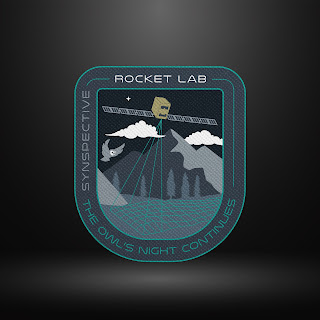
Rocket Lab - 'The Owl’s Night Continues’ patch.


Feb 10, 2022

This month we're excited to be rolling Electron out to the pad at Launch Complex 1 for our friends at Synspective. 'The Owl’s Night Continues’ is one of three dedicated missions for Synspective to build out their synthetic aperture radar (SAR) constellation.

Scheduled to launch no earlier than 28 February NZT from our private orbital spaceport Launch Complex 1, ‘The Owl’s Night Continues’ follows on from our first mission for Synspective back in December 2020 called 'The Owl’s Night Begins’.

Electron will carry a single StriX satellite to a 561km circular Earth orbit, growing Synspective’s SAR constellation that's being developed to deliver imagery that can detect millimeter-level changes to the Earth’s surface from space, independent of weather conditions on Earth and at any time of the day or night. Synspective's constellation will provide planners and first responders with collated data of metropolitan centers on a daily bases that helps with urban development, construction and infrastructure monitoring, and disaster response.


Have a safe journey! @synspective's StriX-β is on its way to New Zealand, where it will be launched with @RocketLab to its final destination!#synspective#SAR #satellite#newzealand pic.twitter.com/upzjdZ0pdR — Synspective (@synspective) January 28, 2022
https://twitter.com/synspective/status/1486855001163005952?ref_src=twsrc%5Etfw

Rocket Lab: https://www.rocketlabusa.com/

Images, Text, Credits: Rocket Lab.

Best regards, Orbiter.ch

SpaceX loses 40 satellites to geomagnetic storm a day after launch


SpaceX - Falcon 9 / Starlink Mission patch.


Feb 10, 2022

SpaceX has lost dozens of satellites after they were hit by a geomagnetic storm a day after launch, causing them to fall from orbit and burn up.

Such solar "storms" are caused by powerful explosions on the sun's surface, which spit out plasma and magnetic fields that can hit the Earth.


Image above: This Falcon 9 rocket launch on 3 February carried 49 Starlink satellites, most of which were caught by the storm. Image Credit: SpaceX.

The company, owned by billionaire Elon Musk, said up to 40 of 49 satellites from last week's launch were hit.

They had been due to join its Starlink satellite internet project.

Starlink is Mr Musk's bid to provide high-speed internet using thousands of orbiting satellites.

Starlink satellite fragment burning up in skies. Photo: Sociedad de Astronomia del Caribe

The system is relatively expensive, but can be used in places where wired connections cannot. For example, in Tonga, where January's earthquake severed the island's nation's undersea data cable, a Starlink station is being built in nearby Fiji to help restore access.

The latest 49 satellites were deployed about 210km (130 miles) above the Earth's surface. SpaceX said "each satellite achieved controlled flight" after being sent up on 3 February.

However, a day later, the geomagnetic storm hit the Earth. It is the same kind of mechanism that creates aurorae like the Northern Lights, but it can have dangerous effects too.


Image above: A geomagnetic storm destroyed up to 40 out of the 49 Elon Musk's SpaceX high-speed internet satellites on February 4, a day after they were launched to a low deployment orbit, 130 miles above Earth.

This storm warmed up the atmosphere and made it much more dense than expected.

"Onboard GPS suggests the escalation speed and severity of the storm caused atmospheric drag to increase up to 50% higher than during previous launches," SpaceX said.

SpaceX tried to put the satellites into a "safe mode", turning them to fly edge-on to minimise drag.

The drag was strong enough to stop the satellites ever getting out of that "safe mode" and back into the orbit they needed to reach to be stable. Instead, "up to 40" will fall back into the Earth's atmosphere and burn up.

Space debris over Puerto Rico (2/7/2022) SAC

Jacob Geer, the UK Space Agency's Head of Space Surveillance, said he does not expect "any part" of the satellites to hit the ground.

"Events like this are a reminder that space is challenging - getting satellites or astronauts into orbit is still not easy," he said.

SpaceX: https://www.spacex.com/

Images, Video, Text, Credits: SpaceX/BBC.com/Sociedad de Astronomia del Caribe/Orbiter.ch Aerospace/Roland Berga.

Greetings, Orbiter.ch