jeudi 25 novembre 2021

ROSCOSMOS - Soyuz-2.1b launches Kosmos-2552


ROSCOSMOS logo.


Nov. 25, 2021

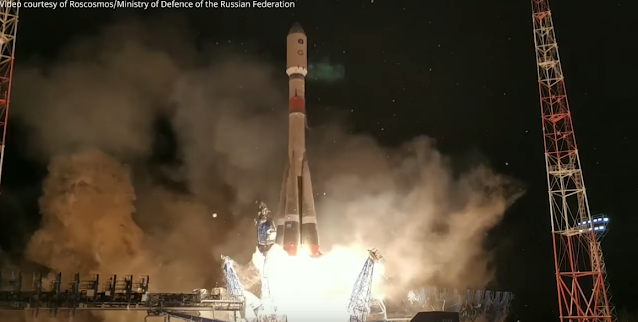
Soyuz-2.1b carrying Kosmos-2552 liftoff

A Soyuz-2.1b rocket launched the Kosmos-2552 satellite from the Plesetsk Cosmodrome, Russia, on 25 November 2021, at 01:09 UTC (04:09 local time).

Soyuz-2.1b launches Kosmos-2552

According to official sources, the satellite was placed into the desired orbit and is functioning normally. Kosmos-2552, also known as Tundra 15L or EKS-5, is part of the EKS system (Единая Космическая система).

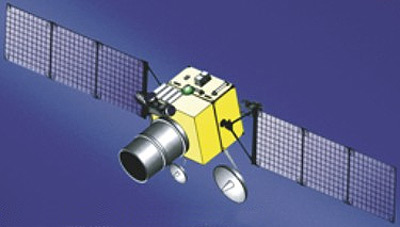
Tundra (EKS, 14F142). Image Credit: Gunter's Space Page

This satellite joins four other Tundra/EMK satellites currently in orbit around the earth, the first of which was launched in 2015.

These satellites are designed and operated to provide the Russian military with an early warning capability to detect the launches of any potential ballistic missiles towards Russia. In addition, it has been reported that the Tundra/EMK satellites also have secure communication capabilities in the case of a nuclear war.

ROSCOSMOS: http://www.roscosmos.ru/

Images, Video, Text, Credits: Roscosmos/Ministry of Defence of the Russian Federation/SciNews/Orbiter.ch Aerospace/Roland Berga.

Greetings, Orbiter.ch

ESA's riskiest flyby


ESA / NASA - Solar Orbiter Mission patch.


Nov. 25, 2021

In brief

The chance that ESA’s Solar Orbiter spacecraft will encounter space debris during its upcoming Earth flyby is very, very low. However, the risk is not zero and is greater than any other flyby ESA has performed. That there is this risk at all highlights the mess we’ve made of space – and why we need to take action to clean up after ourselves.

Solar Orbiter Earth flyby

In-depth

On 27 November, after a year and eight months flying through the inner Solar System, Solar Orbiter will swing by home to ‘drop off’ some extra energy. This will line the spacecraft up for its next six flybys of Venus. These final gravity assists will hone and tilt Solar Orbiter’s orbit, enabling the heat-protected probe to capture the first-ever direct images of our star’s poles, and much more.

Solar Orbiter’s riskiest flyby

During the upcoming flyby, Solar Orbiter is estimated to pass just 460 km from Earth’s surface at its closest approach – about 30 kilometres above the path of the International Space Station. It will travel twice through the Geostationary ring at 36 000 kilometres from Earth’s surface and even through low-Earth orbit, below 2000 kilometres – two regions littered with space junk.

How risky? It’s all relative

Before we worry too much, let’s start by pointing out that the chance of Solar Orbiter being struck by debris is very, very, very small. Earth observation missions spend their entire life in low-Earth orbit – the most debris-filled region of space, and while they perform ‘collision avoidance manoeuvres’ a few times per year, Solar Orbiter will spend only a few minutes here as it heads towards closest approach and then leaves again, onward to Venus.


Image above: The Cupola window onboard the International Space Station developed a 7-mm chip, thought to be caused by a striking object no more than a few thousandths of a millimetre across.

However small the risk, collisions with debris at low-Earth altitudes do happen. In 2016, a solar panel on ESA’s Sentinel-1A spacecraft was struck by a particle thought to be less than five millimetres in size. Despite its size, its high relative speed meant it still damaged an area 40-cm across, leading to a small reduction in onboard power and slight changes to the orientation and orbit of the satellite. Hundreds of millions of debris particles this size are currently in orbit.

Hubble, the NASA/ESA Space Telescope, has spent 31 years in Earth orbit at an altitude of around 547 kilometres. In that time, it has witnessed the skies fill with satellites and debris and felt the impact, as its own solar panels have been bombarded and degraded by small debris particles.


Animation above: In April 2020, BepiColombo flew by Earth with a close approach of 12 500 kilometres. ESA’s Space Debris Office also performed a collision risk analysis for this flyby as the spacecraft passed through Geostationary orbit, although it flew well above the debris-filled low-Earth orbit.

While the risk to Solar Orbiter during its upcoming Earth flyby is small, it’s still “non-zero”. It didn’t face this risk as it swung by Venus, nor did ESA’s Space Debris Office have to perform collision risk analysis as BepiColombo recently zipped by Mercury, or when Cassini–Huygens flew by Jupiter.

Past Earth flybys, for example, when Cassini/Huygens flew by Earth in 1999, as Rosetta returned three times in 2005, 2007 and 2009, and Juno swung by in 2013, there were fewer satellites, fewer debris and no ‘mega constellations’ in orbit. A flyby of Earth today, while still safe, is riskier than it used to be.

Interplanetary collision avoidance

ESA’s Space Debris Office recently began risk assessments based on Solar Orbiter’s trajectory and the expected position of catalogued objects in orbit around Earth, providing a collision probability for any specific close approaches.
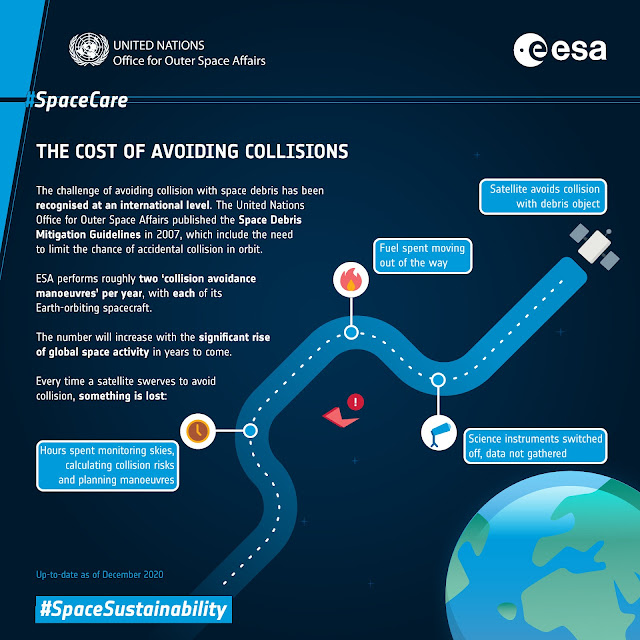
Collision avoidance: what's the cost?

In these cases, uncertainty begins high but narrows as the orbits of objects evolve. As the moment of close approach gets nearer, our observational data improves, reducing the uncertainties in the location of objects involved. As is nearly always the case, the more we know about the position of two objects, the surer we are that they will safely pass each other.

Sometimes, however, as time passes and a close approach beckons, the chance of collision increases. For each of the Sentinel missions in Earth orbit, a collision avoidance manoeuvre is performed about once every five to six months when the ‘miss distance’ with another object is considered too risky.

For Solar Orbiter, in the unlikely scenario that a manoeuvre is required to get it out the way of a potential impact, the decision would be made on Thursday 25 November, two days before close approach. It would be performed on Friday 26 November, about six hours before close approach.

ESA‘s riskiest flyby – Solar Orbiter faces Earth debris (audio podcast):

https://www.podbean.com/ew/pb-qf66t-113e5d7

All clear?

Once Solar Orbiter comes up from low-Earth orbit and passes above geostationary orbit it is out of the risk zone. This should be about one hour after its minimum distance to Earth.

As the mission zooms off, flying with ever-so-slightly less energy than it arrived with, it and its mission teams will never have to consider space debris again. For missions still in orbit, and for those yet to be launched, the situation in space is becoming ever more worrisome.

Time to Act

After decades of launches, with little thought of what would be done with satellites at the end of their lives, our space environment has become littered with space debris. While Solar Orbiter zips by, passing just momentarily through Earth’s orbital highways, it’s an important reminder that the space debris problem is unique to Earth, of our own making, and ours to clean up.

Find out how ESA is working to prevent further debris from being created and clean up what is already out there.

Related article:

Solar Orbiter returns to Earth before starting its main science mission
https://orbiterchspacenews.blogspot.com/2021/11/solar-orbiter-returns-to-earth-before.html

Related links:

Space Debris: https://www.esa.int/Safety_Security/Space_Debris

Safety & Security: https://www.esa.int/Safety_Security

Clean Space: https://www.esa.int/Safety_Security/Clean_Space

SSA - Space Situational Awareness: https://www.esa.int/Enabling_Support/Operations/Space_Situational_Awareness2

Solar Orbiter: https://www.esa.int/Science_Exploration/Space_Science/Solar_Orbiter_overview

Images, Video, Animation, Text, Credits: ESA/NASA/ATG medialab/ESA/BepiColombo/MTM, CC BY-SA 3.0 IGO.

Best regards, Orbiter.ch

CASIC - Kuaizhou-1A launches Shiyan-11


CASIC -  China Aerospace Science and Industry Corporation logo.


Nov. 25, 2021

Kuaizhou-1A carrying Shiyan-11 liftoff

A Kuaizhou-1A (KZ-1A) launch vehicle launched the Shiyan-11 satellite from the Jiuquan Satellite Launch Center, Gansu Province, northwest China, on 24 November 2021, at 23:41 UTC (25 November, at 07:41 local time).

Kuaizhou-1A launches Shiyan-11

According to official sources, Shiyan-11 (试验十一) successfully entered the predetermined orbit and will be “mainly used in the fields of land survey, urban planning, crop yield estimation, disaster prevention and reduction”.

Shiyan-11 satellite

China Aerospace Science and Industry Corporation (CASIC): https://www.cccme.org.cn/shop/tools043/index.aspx

Images, Video, Text, Credits: China Aerospace Science and Industry Corporation (CASIC)/China Media Group(CMG)/China Central Television (CCTV)/SciNews/Orbiter.ch Aerospace/Roland Berga.

Greetings, Orbiter.ch

Rocket Lab, MISSION SUCCES - Welcome to space, BlackSky


Rocket Lab - BlackSky  / Love At First Insight Mission patch.


Nov. 25, 2021

Satellite separation

With this latest lift-off from the pad at Rocket Lab Launch Complex 1,  Electron has carried its 107th satellite to space and successfully deployed the mission's two BlackSky payloads to their low Earth orbit.

Following lift-off on 18 November, 1:38 am UTC, Electron flawlessly cleared Max Q, first and second stage separation and second stage engine start, transfer of the Kick Stage and payloads to an elliptical first pass around Earth, successful Curie engine burn on the Kick Stage to move into a circular orbit, and then double payload deployment a few moments later to complete the mission within the hour after lift-off (not to mention a perigee-lowering burn from the Kick Stage after payload deployment to bring the Kick Stage closer to Earth and de-orbit faster!)

BlackSky's Gen-2 Earth-imaging satellites join the rest of their satellites in the company's LEO constellation to provide high-resolution images that are combined with artificial intelligence to provide insights to BlackSky's customers around the world.

Congratulations on mission success, BlackSky! We're thrilled to have been your launch partner once again, and look forward to our next mission with you in a few weeks time.

Electron liftoff

Catch of the day

Love At First Insight also marked a major achievement in our efforts to make Electron the world's first reusable, orbital-class commercial small rocket: the successful introduction of helicopter operations to a recovery mission for the first time.


Image above: Electron's first stage brought onboard the recovery vessel by Rocket Lab's ORCA (Ocean Recovery and Capture Apparatus) and secured to the deck for transport.

With this mission, we've once again conducted a controlled splashdown and retrieval of Electron’s first stage from the ocean after it returned from space under a parachute. While stationed 200 nautical miles offshore, Rocket Lab’s recovery helicopter successfully tracked the booster’s return to Earth as it travelled at nearly 10,000 km per hour all while maintaining communications with Rocket Lab’s Mission Control and recovery vessel stationed at sea. Electron’s first stage has now been returned to Rocket Lab’s Production Complex in Auckland, New Zealand, and is undergoing analysis and inspection to inform future recovery operations.

With the success of this mission and our operations, we're excited to confirm we're now moving to a helicopter capture attempt for our first recovery mission in 2022.


Image above: Electron's first stage brought onboard the recovery vessel by Rocket Lab's ORCA (Ocean Recovery and Capture Apparatus) and secured to the deck for transport.

Rocket Lab’s recovery helicopter will include auxiliary fuel tanks for extended flight time during the capture attempt. While Rocket Lab’s engineers and recovery vessel will also be stationed at sea, Rocket Lab’s primary objective will be to return Electron’s booster to the mainland while attached to the helicopter. Improvements to the launch vehicle for this next recovery attempt will include a thermal protection system applied to the entire stage and its nine Rutherford engines to help it endure heat of up to 2,400 degrees Celsius during re-entry, and modifications to the parachute system including an engagement line for the recovery helicopter to capture and secure the booster.


Image above: The Electron booster undergoing production with a full-stage Thermal Protection System in preparation for Rocket Lab's first helictoper capture recovery mission.

As one of only two launch companies to repeatedly recover orbital-class boosters from space, we’re ready to take the final step and begin collecting them mid-air with a helicopter to race us closer to launch, catch, repeat with the world’s first reusable, orbital-class commercial small rocket.  

Next on the pad

With all that we've achieved, we're still not done for the year. We've got another Electron lined up and ready to launch from the pad at Launch Complex 1 in December for our 23rd Electron launch!


'A Data With Destiny’ is the latest in a multi-launch agreement for BlackSky between Rocket Lab and Spaceflight Inc., which is providing integration and mission management services for BlackSky. This mission will deploy the 10th and 11th satellites of BlackSky’s low Earth orbit constellation and the two Gen-2 satellites on this mission, along with those previously launched by Rocket Lab for BlackSky, represent the largest number of satellites BlackSky has dedicated to a single launch provider to date.

'A Data With Destiny' is scheduled to launch from Launch Complex 1 on New Zealand's Mahia Peninsula during a 14-day launch window that opens in December. The mission will be Rocket Lab’s 23rd Electron launch overall and sixth mission of 2021.

Related article & link:

Rocket Lab - Electron launches “Love At First Insight”
https://orbiterchspacenews.blogspot.com/2021/11/rocket-lab-electron-launches-love-at.html

Rocket Lab: https://www.rocketlabusa.com/

Images, Animation, Text, Credits: Rocket Lab/Orbiter.ch Aerospace.

Best regards, Orbiter.ch

mercredi 24 novembre 2021

Experts continue to monitor the rapprochement of a fragment of a Falcon 9 rocket with the ISS


ROSCOSMOS logo.


Nov. 24, 2021

Employees of the Main Information and Analytical Center of the Automated System for Warning of Hazardous Situations in Near-Earth Space TsNIIMash (part of the Roscosmos State Corporation) continue to monitor the situation with the approach of November 25, 2021 at 07:18 Moscow time, a fragment of the Falcon 9 launch vehicle from the International space station (ISS).

International Space Station (ISS). Image Credit: NASA

According to Russian experts, the minimum distance between the ISS and this object will be over 5.3 km. The situation is under control.

The station and the crew of the 66th long-term expedition are working as usual. As of November 24, 2021, this fragment does not pose a threat to the ISS; an evasive maneuver is not required.

Related article:

Fragment of Falcon 9 rocket will approach the ISS at a distance of 5.5 km
https://orbiterchspacenews.blogspot.com/2021/11/fragment-of-falcon-9-rocket-will.html

Related links:

Roscomos Press Release: https://www.roscosmos.ru/33445/

TsNIIMash: https://www.roscosmos.ru/tag/cniimash/

MCC: https://www.roscosmos.ru/tag/cup/

International Space Station (ISS): https://www.roscosmos.ru/tag/mks/

Image (mentioned), Text, Credits: ROSCOSMOS/TsNIIMash/MCC/Orbiter.ch Aerospace/Roland Berga.

Greetings, Orbiter.ch

New Module Heads to Station During Spacewalk Preps and Science Today


ISS - Expedition 66 Mission patch.


Nov. 24, 2021

Russia’s newest docking port, the Prichal module, launched today and will arrive on Friday at the International Space Station. Meanwhile, the seven-member Expedition 66 crew is continuing spacewalk preparations while keeping up with ongoing advanced space research.

A Russian Progress spacecraft launched from Kazakhstan at 8:06 a.m. EST (6:06 p.m. Baikonur time) today carrying the five-ton Prichal docking module into Earth orbit. The new module, controlled by the Progress vehicle, will automatically dock to the Nauka multipurpose laboratory module on Friday at 10:26 a.m. Once attached Prichal will provide five additional docking ports and fuel transfer capability to the orbiting lab.


Image above: A Russian Progress spacecraft launched from Kazakhstan at 8:06 a.m. EST (6:06 p.m. Baikonur time) today carrying the Prichal docking module into Earth orbit. Image Credit: NASA TV.

Roscosmos cosmonauts Anton Shkaplerov and Pyotr Dubrov will be on duty Friday monitoring Prichal’s arrival. Friday’s approach and docking will be covered live on NASA TV, the NASA app, and the agency’s website beginning at 9:30 a.m.

Two NASA astronauts have begun focusing on an upcoming spacewalk planned for Nov. 30. Flight Engineers Thomas Marshburn and Kayla Barron checked out spacewalking tools and emergency jetpacks today they would use in the unlikely event they became untethered from the station. The duo is timelined to spend about six-and-a-half hours replacing a faulty antenna system on the Port-1 truss segment.


International Space Station (ISS). Image Credit: NASA

Flight Engineers Raja Chari of NASA and Matthias Maurer of ESA (European Space Agency) focused on human research strapping sensors to themselves for a pair of exercise studies. Chari performed a fitness test on an exercise cycle to measure his aerobic capacity in space. Maurer then took his turn on the exercise bike wearing a mask and a heart monitor to demonstrate cardio-pulmonary diagnosis aboard the orbiting lab. NASA Flight Engineer Mark Vande Hei serviced the COLBERT treadmill inspecting and cleaning its components.

NASA and SpaceX are targeting Tuesday, Dec. 21, at 5:06 a.m. EST for launch of the company’s 24th commercial resupply services mission to the International Space Station from Launch Complex 39A at NASA’s Kennedy Space Center in Florida. Dragon will bring food, supplies, and scientific investigations to the orbiting crew, including a protein crystal growth study that could improve the delivery of cancer treatment drugs and a handheld bioprinter that could one day be used to print tissue directly onto wounds to faster healing.

Related article:

Russian Port Module is Safely in Orbit Headed for Station
https://orbiterchspacenews.blogspot.com/2021/11/russian-port-module-is-safely-in-orbit.html

Related links:

Expedition 66: https://www.nasa.gov/mission_pages/station/expeditions/expedition66/index.html

Nauka multipurpose laboratory module: https://www.roscosmos.ru/tag/nauka/

NASA TV: https://www.nasa.gov/nasalive

Port-1 truss segment: https://www.nasa.gov/mission_pages/station/structure/elements/truss-structure

Exercise cycle: https://www.nasa.gov/mission_pages/station/research/experiments/explorer/Facility.html?#id=821

Aerobic capacity: https://www.nasa.gov/mission_pages/station/research/experiments/explorer/Investigation.html?#id=644

Cardio-pulmonary diagnosis: https://www.nasa.gov/mission_pages/station/research/experiments/explorer/Investigation.html?#id=7574

COLBERT treadmill: https://www.nasa.gov/mission_pages/station/research/experiments/explorer/Facility.html?#id=752

Protein crystal growth study: https://www.nasa.gov/mission_pages/station/research/experiments/explorer/Investigation.html?#id=8616

Handheld bioprinter: https://www.nasa.gov/mission_pages/station/research/experiments/explorer/Investigation.html?#id=8552

Space Station Research and Technology: https://www.nasa.gov/mission_pages/station/research/overview.html

International Space Station (ISS): https://www.nasa.gov/mission_pages/station/main/index.html

Images (mentioned), Text, Credits: NASA/Mark Garcia.

Best regards, Orbiter.ch

Gaia reveals that most Milky Way companion galaxies are newcomers to our corner of space


ESA - Gaia Mission patch.


Nov. 24, 2021

Data from ESA’s Gaia mission is re-writing the history of our galaxy, the Milky Way. What had traditionally been thought of as satellite galaxies to the Milky Way are now revealed to be mostly newcomers to our galactic environment.

A dwarf galaxy is a collection of between thousand and several billion stars. For decades it has been widely believed that the dwarf galaxies that surround the Milky Way are satellites, meaning that they are caught in orbit around our galaxy, and have been our constant companions for many billions of years. Now the motions of these dwarf galaxies have been computed with unprecedented precision thanks to data from Gaia’s early third data release and the results are surprising.

François Hammer, Observatoire de Paris - Université Paris Sciences et Lettres, France, and colleagues from across Europe and China, used the Gaia data to calculate the movements of 40 dwarf galaxies around the Milky Way. They did this by computing a set of quantities known as the three-dimensional velocities for each galaxy, and then using those to calculate the galaxy’s orbital energy and the angular (rotational) momentum.

They found that these galaxies are moving much faster than the giant stars and star clusters that are known to be orbiting the Milky Way. So fast, that they couldn’t be in orbit yet around the Milky Way, where interactions with our galaxy and its contents would have sapped their orbital energy and angular momentum.

Dwarf galaxies around the Milky Way (Click on the image for enlarge)

Our galaxy has cannibalised a number of dwarf galaxies in its past. For example, 8-10 billion years ago, a dwarf galaxy called Gaia-Enceladus was absorbed by the Milky Way. Its stars can be identified in Gaia data because of the eccentric orbits and range of energies they possess.

More recently, 4-5 billion years ago, the Sagittarius dwarf galaxy was captured by the Milky Way and is currently in the process of being pulled to pieces and assimilated. The energy of its stars is higher than those of Gaia-Enceladus, indicating the shorter time that they have been subject to the Milky Way’s influence.

In the case of the dwarf galaxies in the new study, which represents the majority of the dwarf galaxies around the Milky Way, their energies are higher still. This strongly suggests that they have only arrived in our vicinity in the last few billion years.

The discovery mirrors one made about the Large Magellanic Cloud (LMC), a larger dwarf galaxy so close to the Milky Way that it is visible as a smudge of light in the night sky from the southern hemisphere. The LMC was also thought to be a satellite galaxy of the Milky Way until the 2000s, when astronomers measured its velocity and found that it was travelling too fast to be gravitationally bound. Instead of a companion, LMC is visiting for the first time. Now we know that the same is true for most of the dwarf galaxies too.

So will these newcomers settle into orbit or simply pass us by? “Some of them will be captured by the Milky Way and will become satellites,” says François.

But saying exactly which ones is difficult because it depends on the exact mass of the Milky Way, and that is a quantity that is difficult for astronomers to calculate with any real accuracy. Estimates vary by a factor of two.

Gaia

The discovery of the dwarf galaxy energies is significant because it forces us to re-evaluate the nature of the dwarf galaxies themselves.

As a dwarf galaxy orbits, the Milky Way’s gravitational pull will try to wrench it apart. In physics this is known as a tidal force. “The Milky Way is a big galaxy, so its tidal force is simply gigantic and it's very easy to destroy a dwarf galaxy after maybe one or two passages,” says François.

In other words, becoming a companion to the Milky Way is a death sentence for dwarf galaxies. The only thing that could resist our galaxy’s destructive grip is if the dwarf had a significant quantity of dark matter. Dark matter is the mysterious substance that astronomers think exists in the universe to provide the extra gravity to hold individual galaxies together.

And so, in the traditional view that the Milky Way’s dwarfs were satellite galaxies that had been in orbit for many billions of years, it was assumed that they must be dominated by dark matter to balance the Milky Way’s tidal force and keep them intact. The fact that Gaia has revealed that most of the dwarf galaxies are circling the Milky Way for the first time means that they do not necessarily need to include any dark matter at all, and we must re-assess whether these systems are in balance or rather in the process of destruction.

“Thanks in large part to Gaia, it is now obvious that the history of the Milky Way is far more storied than astronomers had previously understood. By investigating these tantalising clues, we hope to further tease out the fascinating chapters in our galaxy’s past,” says Timo Prusti, Gaia Project Scientist, ESA.

Notes for editors

“Gaia EDR3 proper motions of Milky Way Dwarfs. II: Velocities, Total Energy and Angular Momentum” by Francois Hammer et al. will be published online by The Astrophysical Journal on 24 November 2021. DOI: https://iopscience.iop.org/article/10.3847/1538-4357/ac27a8

This study was performed with the Gaia Early Data Release 3, which was released on 3 December 2020. The full third data release is planned for the second quarter of 2022.

Related links:

ESA’s Gaia mission: https://www.esa.int/Science_Exploration/Space_Science/Gaia

Gaia’s early third data release:

Gaia’s new data takes us to the Milky Way’s anticentre and beyond
https://orbiterchspacenews.blogspot.com/2020/12/gaias-new-data-takes-us-to-milky-ways.html

Image, Animation, Text, Credits: ESA/Gaia/DPAC, CC BY-SA 3.0 IGO.

Greetings, Orbiter.ch