mardi 12 octobre 2021

Gardening, dreams and new records in space: a September of science


ESA - Alpha Mission (animated) patch.


Oct. 12, 2021

International Space Station in 2021

As International Space Station crew members prepared for an action-packed October, they broke records, tested virtual reality headsets and even grew plants in microgravity. Read on for science highlights from a stellar September in space.

Green thumbs galore

There are plants aplenty on the International Space Station, with several investigations looking into different aspects of plant behaviour in microgravity.

Chile peppers from Hatch, New Mexico growing on the International Space Station

A NASA experiment, known as Plant Habitat-04, has astronauts tending to New Mexico Hatch Green Chili peppers – a species that takes a long time to germinate and bear fruit. APEX-08 focuses on cress and the mechanisms plants use to modulate the stress of microgravity, while a new European investigation, Eklosion, studies the psychological benefits of gardening and observing nature off our Earth.

This French-led student experiment centres on a small capsule that reproduces natural light and enables astronauts to tend to and watch the growth of a Marigold plant. The bottom segment of the capsule contains small messages and scents from Earth. Throughout September, ESA astronaut Thomas Pesquet took photos and documented attempts to grow the plant in its capsule as others on Earth grew and shared images of their own Marigolds on Twitter using hashtag #EklosionISS.

Do astronauts dream of space?

Another CNES-led experiment Dreams uses a special headband to evaluate the sleep quality of astronauts in orbit. On 24 September, Thomas performed his third session, donning this special headband before he drifted off and completing a questionnaire upon waking.

Studying how sleep is influenced by life in weightlessness and isolation through collection and analysis of neuroscientific data will help prepare for future missions to the Moon and Mars.

Ahead of the game

Special headgear is not confined to crew quarters. Familiar European experiment Grasp (Gravitational References for Sensimotor Performance) and more recent additions Immersive Exercise and Pilote all make use of VR headsets to study and enhance life in low-Earth orbit.

Thomas grasping in VR space for science

Astronauts exercise for around two hours a day, six days a week. Even on Earth, this kind of routine could get monotonous. Immersive Exercise aims to develop a virtual environment for crew members using virtual reality to help with motivation as they exercise in space.

Pilote uses the same headset but for a different purpose. This experiment evaluates a new way to provide tactile and visual feedback to astronauts during robotic operations. The headset and a haptic device recreate the feeling of pressure and touch when tele-operating a robotic arm. Results will improve control interfaces on the Space Station and future spacecraft for lunar and martian missions.

Thomas investigated some drifting and flickering of scenes that had been occurring during Immersive Exercise and Pilote. New software was uploaded, tests were run and performance has improved.

A new European record

Not strictly science, but we could not wrap up our September summary without mentioning the spacewalk.

Spacewalk wave

On Sunday 12 September, Thomas and Japanese Aerospace Exploration Agency JAXA astronaut Aki Hoshide broke a record when they stepped beyond the airlock in the first spacewalk performed without an American or Russian spacewalker.

The purpose of this spacewalk was to prepare the Station’s P4 truss for further installation of the new iROSA roll-out arrays. All went well and Thomas secured another record – the most cumulative spacewalking hours by a European astronaut.

Scratching the surface

With so much science happening in orbit every single day, not to mention technology demonstrations, maintenance and operations, this is just a small slice of what is on offer. For more on activities during Thomas’s Alpha mission and science in space, visit the Alpha webpage.

Stay tuned throughout October for exciting events including Thomas’s time as International Space Station commander and ESA astronaut Matthias Maurer’s first journey to space.

Related links:

Grasp: https://www.esa.int/ESA_Multimedia/Images/2018/06/Alexander_Gerst_during_the_Grasp_Experiment#.YWQBhNMkMQc.link

Alpha webpage: https://www.esa.int/Science_Exploration/Human_and_Robotic_Exploration/Alpha

Images, Video, Text, Credits: ESA/ROSCOSMOS/NASA.

Greetings, Orbiter.ch

Meet the 42: ESO images some of the biggest asteroids in our Solar System


ESO - European Southern Observatory logo.


Oct. 12, 2021

42 asteroids imaged by ESO’s VLT (annotated)

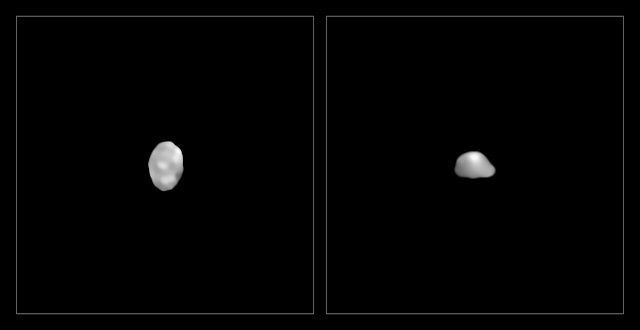
Using the European Southern Observatory’s Very Large Telescope (ESO’s VLT) in Chile, astronomers have imaged 42 of the largest objects in the asteroid belt, located between Mars and Jupiter. Never before had such a large group of asteroids been imaged so sharply. The observations reveal a wide range of peculiar shapes, from spherical to dog-bone, and are helping astronomers trace the origins of the asteroids in our Solar System.

Ceres and Vesta

The detailed images of these 42 objects are a leap forward in exploring asteroids, made possible thanks to ground-based telescopes, and contribute to answering the ultimate question of life, the Universe, and everything [1].

Ausonia and Urania

“Only three large main belt asteroids, Ceres, Vesta and Lutetia, have been imaged with a high level of detail so far, as they were visited by the space missions Dawn and Rosetta of NASA and the European Space Agency, respectively,” explains Pierre Vernazza, from the Laboratoire d’Astrophysique de Marseille in France, who led the asteroid study published today in Astronomy & Astrophysics. "Our ESO observations have provided sharp images for many more targets, 42 in total."

Sylvia and Lamberta

The previously small number of detailed observations of asteroids meant that, until now, key characteristics such as their 3D shape or density had remained largely unknown. Between 2017 and 2019, Vernazza and his team set out to fill this gap by conducting a thorough survey of the major bodies in the asteroid belt.

Kalliope and Psyche

Most of the 42 objects in their sample are larger than 100 km in size; in particular, the team imaged nearly all of the belt asteroids larger than 200 kilometres, 20 out of 23. The two biggest objects the team probed were Ceres and Vesta, which are around 940 and 520 kilometres in diameter, whereas the two smallest asteroids are Urania and Ausonia, each only about 90 kilometres.

Poster of 42 asteroids in our Solar System and their orbits (black background)

By reconstructing the objects’ shapes, the team realised that the observed asteroids are mainly divided into two families. Some are almost perfectly spherical, such as Hygiea and Ceres, while others have a more peculiar, “elongated” shape, their undisputed queen being the “dog-bone” asteroid Kleopatra.

Poster of 42 asteroids in our Solar System and their orbits (blue background)

By combining the asteroids’ shapes with information on their masses, the team found that the densities change significantly across the sample. The four least dense asteroids studied, including Lamberta and Sylvia, have densities of about 1.3 grams per cubic centimetre, approximately the density of coal. The highest, Psyche and Kalliope, have densities of 3.9 and 4.4 grammes per cubic centimetre, respectively, which is higher than the density of diamond (3.5 grammes per cubic centimetre).

Looking at the identity cards of eight asteroids in our Solar System

This large difference in density suggests the asteroids’ composition varies significantly, giving astronomers important clues about their origin. “Our observations provide strong support for substantial migration of these bodies since their formation. In short, such tremendous variety in their composition can only be understood if the bodies originated across distinct regions in the Solar System,” explains Josef Hanuš of the Charles University, Prague, Czech Republic, one of the authors of the study. In particular, the results support the theory that the least dense asteroids formed in the remote regions beyond the orbit of Neptune and migrated to their current location.

42 asteroids in our Solar System and their orbits

These findings were made possible thanks to the sensitivity of the Spectro-Polarimetric High-contrast Exoplanet REsearch (SPHERE) instrument mounted on ESO’s VLT [2]. “With the improved capabilities of SPHERE, along with the fact that little was known regarding the shape of the largest main belt asteroids, we were able to make substantial progress in this field,” says co-author Laurent Jorda, also of the Laboratoire d'Astrophysique de Marseille.

Astronomers will be able to image even more asteroids in fine detail with ESO’s upcoming Extremely Large Telescope (ELT), currently under construction in Chile and set to start operations later this decade. “ELT observations of main-belt asteroids will allow us to study objects with diameters down to 35 to 80 kilometres, depending on their location in the belt, and craters down to approximately 10 to 25 kilometres in size,” says Vernazza. “Having a SPHERE-like instrument at the ELT would even allow us to image a similar sample of objects in the distant Kuiper Belt. This means we’ll be able to characterise the geological history of a much larger sample of small bodies from the ground.”

Notes:

[1] In The Hitchhiker's Guide to the Galaxy by Douglas Adams, the number 42 is the answer to the "Ultimate Question of Life, the Universe, and Everything." Today, 12 October 2021, is the 42nd anniversary of the publication of the book.

https://en.wikipedia.org/wiki/The_Hitchhiker%27s_Guide_to_the_Galaxy_(novel)

[2] All observations were conducted with the Zurich IMaging POLarimeter (ZIMPOL), an imaging polarimeter subsystem of the SPHERE instrument that operates at visible wavelengths.

More information:

This research was presented in a paper to appear in Astronomy & Astrophysics (https://www.aanda.org/10.1051/0004-6361/202141781).

The team is composed of P. Vernazza (Aix Marseille University, CNRS, CNES, Laboratoire d’Astrophysique de Marseille, France [LAM]), M. Ferrais (LAM), L. Jorda (LAM), J. Hanuš (Institute of Astronomy, Faculty of Mathematics and Physics, Charles University, Prague, Czech Republic [CU]), B. Carry (Université Côte d’Azur, Observatoire de la Côte d’Azur, CNRS, Laboratoire Lagrange, France [OCA]), M. Marsset (Department of Earth, Atmospheric and Planetary Sciences, MIT, Cambridge, USA [MIT]),  M. Brož (CU), R. Fetick (French Areospace Lab [ONERA] and LAM), M. Viikinkoski (Mathematics & Statistics, Tampere University, Finland [TU]), F. Marchis (LAM and SETI Institute, Carl Sagan Center, Mountain View, USA),  F. Vachier (Institut de mécanique céleste et de calcul des éphémérides, Observatoire de Paris, PSL Research University, CNRS, Sorbonne Universités, UPMC University Paris 06 and Université de Lille, France [IMCCE]),  A. Drouard (LAM), T. Fusco (French Areospace Lab [ONERA] and LAM),  M. Birlan (IMCCE and Astronomical Institute of Romanian Academy, Bucharest, Romania [AIRA]),  E. Podlewska-Gaca (Faculty of Physics, Astronomical Observatory Institute, Adam Mickiewicz University, Poznan, Poland [UAM]), N. Rambaux (IMCCE), M. Neveu (University of Maryland College Park, NASA Goddard Space Flight Center, US [UMD]), P. Bartczak (UAM), G. Dudziński (UAM),  E. Jehin (Space sciences, Technologies and Astrophysics Research Institute, Université de Liège, Belgium [STAR]), P. Beck (Institut de Planetologie et d’Astrophysique de Grenoble, UGA-CNRS, France [OSUG]), J. Berthier (IMCCE), J. Castillo-Rogez (Jet Propulsion Laboratory, California Institute of Technology, Pasadena,USA [JPL]), F. Cipriani (European Space Agency, ESTEC - Scientific Support Office, Noordwijk, The Netherlands [ESTEC]​​), F. Colas (IMCCE), C. Dumas (Thirty Meter Telescope, Pasadena, USA [TMT]), J. Ďurech (CU),  J. Grice (Laboratoire Atmosphères, Milieux et Observations Spatiales, CNRS and Université de Versailles Saint-Quentin-en-Yvelines, Guyancourt, France [UVSQ] and School of Physical Sciences, The Open University, Milton Keynes, UK [OU]),  M. Kaasalainen (TU), A. Kryszczynska (UAM), P. Lamy (Departamento de Fisica, Ingeniería de Sistemas y Teoría de la Señal, Universidad de Alicante, Alicante, Spain), H. Le Coroller (LAM), A. Marciniak (UAM), T. Michalowski (UAM), P. Michel (OCA), T. Santana-Ros (Institut de Ciències del Cosmos, Universitat de Barcelona, Spain and European Southern Observatory, Santiago, Chile), P. Tanga (OCA), A. Vigan (LAM), O. Witasse (ESTEC), B. Yang (European Southern Observatory, Santiago, Chile), P. Antonini (Observatoire des Hauts Pays, Bédoin, France), M. Audejean (Observatoire de Chinon, Chinon, France), P. Aurard (AMU, Observatoire de Haute Provence, Institut Pythéas, Saint-Michel l’Observatoire, France [OHP]), R. Behrend (Geneva Observatory, Sauverny, Switzerland and High Energy Physics and Astrophysics Laboratory, Cadi Ayyad University, Marrakech, Morocco [UCA]), Z. Benkhaldoun (UCA), J. M. Bosch (B74, Avinguda de Catalunya 34, 25354 Santa Maria de Montmagastrell (Tarrega), Spain), A. Chapman (Cruz del Sur Observatory, San Justo city, Buenos Aires, Argentina), L. Dalmon (OHP), S. Fauvaud (Observatoire du Bois de Bardon, Taponnat, France and Association T60, Observatoire Midi-Pyrénées, Toulouse, France), Hiroko Hamanowa (Hong Kong Space Museum, Tsimshatsui, Hong Kong, PR China [HKSM]), Hiromi Hamanowa (HKSM), J. His (OHP), A. Jones (I64, SL6 1XE, Maidenhead, UK), D-H. Kim (Korea Astronomy and Space Science Institute, Daejeon, Korea [KASI] and Chungbuk National University, Chungdae-ro, Seowon-gu, Cheongju-si, Chungcheongbuk-do, Korea), M-J. Kim (KASI), J. Krajewski (Faculty of Physics, Astronomical Observatory Institute, Adam Mickiewicz University, Poznań, Poland), O. Labrevoir (OHP), A. Leroy (Observatoire OPERA, Saint Palais, France [OPERA] and Uranoscope, Gretz-Armainvilliers, France), F. Livet (Institut d’Astrophysique de Paris, Paris, France, UMR 7095 CNRS et Sorbonne Universités), D. Molina (Anunaki Observatory, Calle de los Llanos, Manzanares el Real, Spain), R. Montaigut (Club d’Astronomie de Lyon Ampere, Vaulx-en-Velin, France and OPERA), J. Oey (Kingsgrove, NSW, Australia), N. Payre (OHP), V. Reddy (Planetary Science Institute, Tucson, USA), P. Sabin (OHP), A. G. Sanchez (Rio Cofio Observatory, Robledo de Chavela, Spain), and L. Socha (Cicha 43, 44-144 Nieborowice, Poland).

ESO is the foremost intergovernmental astronomy organisation in Europe and the world’s most productive ground-based astronomical observatory by far. It has 16 Member States: Austria, Belgium, the Czech Republic, Denmark, France, Finland, Germany, Ireland, Italy, the Netherlands, Poland, Portugal, Spain, Sweden, Switzerland and the United Kingdom, along with the host state of Chile and with Australia as a Strategic Partner. ESO carries out an ambitious programme focused on the design, construction and operation of powerful ground-based observing facilities enabling astronomers to make important scientific discoveries. ESO also plays a leading role in promoting and organising cooperation in astronomical research. ESO operates three unique world-class observing sites in Chile: La Silla, Paranal and Chajnantor. At Paranal, ESO operates the Very Large Telescope and its world-leading Very Large Telescope Interferometer as well as two survey telescopes, VISTA working in the infrared and the visible-light VLT Survey Telescope. Also at Paranal ESO will host and operate the Cherenkov Telescope Array South, the world’s largest and most sensitive gamma-ray observatory. ESO is also a major partner in two facilities on Chajnantor, APEX and ALMA, the largest astronomical project in existence. And on Cerro Armazones, close to Paranal, ESO is building the 39-metre Extremely Large Telescope, the ELT, which will become “the world’s biggest eye on the sky”.

Links:

Meet 42 Asteroids in Our Solar System (ESOcast 243 Light): https://www.eso.org/public/videos/eso2114a/

Research paper: https://www.eso.org/public/archives/releases/sciencepapers/eso2114/eso2114a.pdf

Photos of the VLT: http://www.eso.org/public/images/archive/category/paranal/

Find out more about ESO's Extremely Large Telescope: https://elt.eso.org/

For journalists: subscribe to receive our releases under embargo in your language: https://www.eso.org/public/outreach/pressmedia/#epodpress_form

For scientists: got a story? Pitch your research: http://eso.org/sci/publications/announcements/sciann17277.html

Images Credits: ESO/M. Kornmesser/Vernazza et al./MISTRAL algorithm (ONERA/CNRS)/ESO/Vernazza et al./MISTRAL algorithm (ONERA/CNRS)/Videos Credits: ESO/L. Calçada/Vernazza et al./MISTRAL algorithm (ONERA/CNRS)/ESO/M. Kornmesser/Vernazza et al./MISTRAL algorithm (ONERA/CNRS)/Text Credits: ESO/Bárbara Ferreira/Laboratoire d’Astrophysique de Marseille/Laurent Jorda/Pierre Vernazza/Charles University, Prague (CZ)/Josef Hanuš.

Best regards, Orbiter.ch

lundi 11 octobre 2021

ISS will be "raised" above the Earth by almost a kilometer on Tuesday


ROSCOSMOS - Russian Vehicles patch.


Oct. 11, 2021

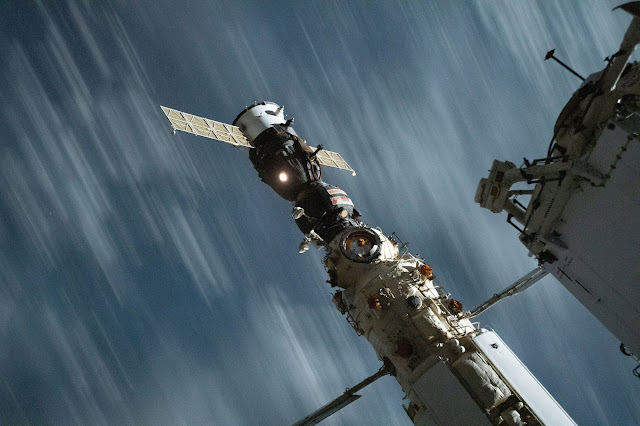
The planned correction of the orbit of the International Space Station is scheduled for October 12, 2021. It is carried out with the aim of forming ballistic conditions before launching into a near-earth orbit and further landing of the Soyuz MS-20 manned transport vehicle with the crew of the 20th visiting expedition (for Soyuz MS generation) to the International Space Station.

Soyuz MS-18 relocation

According to preliminary data from the ballistic and navigation support service of the Flight Control Center TsNIIMash (part of the Roscosmos State Corporation), at 10:05 Moscow time, a command will be issued to turn on the engines of the Zvezda service module of the ISS Russian segment, which will operate for 38.9 seconds ... After carrying out the corrective maneuver, the station's orbit altitude should increase by 940 meters, and the average altitude should increase to 420.45 km.

The orbital parameters of the International Space Station after the maneuver should be:

- Orbital period: 92.92 min;
- Orbital inclination: 51.66 degrees;
- Minimum orbital altitude: 419.44 km;
- Maximum orbit height: 441.11 km.


Now the crew of Roscosmos cosmonauts Oleg Novitsky, Pyotr Dubrov and Anton Shkaplerov, participants of the scientific and educational project "Challenge" - directed by Klim Shipenko and actress Yulia Peresild, as well as NASA astronauts Mark Vande Hei, Shane Kimbrough and Megan McArthur are working on board the International Space Station, European Space Agency (ESA) astronaut Thomas Pesquet and Japan Aerospace Exploration Agency (JAXA) astronaut Akihiko Hoshide.

Related links:

ROSCOSMOS Press Release: https://www.roscosmos.ru/32918/

TsNIIMash: https://www.roscosmos.ru/tag/cniimash/

MCC: https://www.roscosmos.ru/tag/cup/

Soyuz MS-20: https://www.roscosmos.ru/tag/sojuz-ms-20/

International Space Station (ISS): https://www.roscosmos.ru/tag/mks/

Image, Text, Credits: ROSCOSMOS/MCC/Orbiter.ch Aerospace/Roland Berga.

Greetings, Orbiter.ch

La Palma volcano: How satellites help us monitor eruptions


ESA- Copernicus Programme logo.


Oct. 11, 2021

Since the Cumbre Vieja volcano began erupting on 19 September 2021, lava has burned through homes, roads and farmlands causing mass destruction on the west part of the Canary Island of La Palma. Satellite imagery has helped authorities monitor and manage the ongoing crisis. From capturing images of the rivers of lava, to measuring gas emissions and assessing damage, the fleet of Copernicus Sentinel satellites have been providing crucial data for local teams.

It has been over three weeks of continuous activity at Cumbre Vieja, which means ‘The Old Summit’ in Spanish. On Saturday 9 October, it was reported that parts of the northern face of the volcano’s cone collapsed, leading the lava to overflow in different directions. On Sunday 11 October, 21 seismic movements were detected, with the largest measuring 3.8 on the Richter scale, according to the National Geographic Institute of Spain (IGN).

A build-up of ash and dust on the runway forced authorities in La Palma to close the island’s airport, according to Spain’s airport authority AENA. It has been the second time the airport has been closed due to ash build-up since the eruption began on 19 September.

Copernicus Sentinel-2 satellite

In stunning new images taken on 10 October, the new river of lava belched from the Cumbre Vieja volcano has been captured by the Copernicus Sentinel-2 mission. This Sentinel-2 images have been processed in true colour, using the shortwave infrared channel to highlight the new flow of lava.

New lava river captured by Copernicus Sentinel-2

The Volcanology Institute of the Canary Islands (Involcan) stated that the lava flow, with temperatures up to 1240°C, destroyed the few remaining buildings still standing north of the Todoque neighbourhood.

In response to the ongoing eruption, the Copernicus Emergency Mapping Service was activated. Since its activation, the service has released 17 monitoring mapping products to monitor the lava flow which has affected 497 hectares of land and destroyed over 1100 buildings (as of 8 October).

Satellites in orbit carry different instruments that provide a wealth of complementary information to better understand volcanic eruptions. Atmospheric sensors can identify the gases and aerosols released by the eruption, as well as quantify their wider environmental impact.

Sulphur dioxide concentrations on 6 October 2021

This image shows the sulphur dioxide emissions from the eruption on 6 October captured by the Copernicus Sentinel-5P satellite, moving over the Atlantic Ocean towards Central America. Sentinel-5P can monitor sulphur dioxide, aerosol and ash emitted by volcanic eruptions and follow its movement through the atmosphere.

ESA’s Copernicus Sentinel-5P mission manager, Claus Zehner, comments, “This volcanic eruption demonstrates how Sentinel data can support different operational Copernicus services. Sentinel-5P sulphur dioxide measurements can be used by the Copernicus Atmospheric Monitoring Service to help aviation companies to avoid volcanic ash and sulphur dioxide plume encounters.

Copernicus Sentinel-5P satellite

“Sentinel-2 lava flow measurements can support the Copernicus Emergency Management Service in case of natural disasters like a volcanic eruption.”

Sulphur dioxide concentrations can be monitored using the Copernicus Sentinel-5P Volcanic Sulphur Dioxide online platform. Using data from the Copernicus Sentinel-5P satellite, the platform shows the daily sulphur dioxide concentrations coming primarily from volcanic sources. The platform can be accessed by clicking here: https://maps.s5p-pal.com/so2/

Related links:

Copernicus Emergency Mapping Service: https://emergency.copernicus.eu/mapping/list-of-components/EMSR546

Copernicus: https://www.esa.int/Applications/Observing_the_Earth/Copernicus

Sentinel-2: https://www.esa.int/Applications/Observing_the_Earth/Copernicus/Sentinel-2

Sentinel-5P: https://www.esa.int/Applications/Observing_the_Earth/Copernicus/Sentinel-5P

Images, Text, Credits: ESA/Contains modified Copernicus Sentinel data (2021), processed by ESA, CC BY-SA 3.0 IGO. 

Best regards, Orbiter.ch

Zhurong during the Mars solar conjunction


CNSA - Tianwen-1 (天問-1) Mission to Mars logo.


Oct. 11, 2021

Mars solar conjunction

Due to the Mars solar conjunction, that is expected to impact communication from mid-September to late October 2021, the Zhurong rover entered an inactivity phase in its exploration of Utopia Planitia, Mars.

Zhurong during the Mars solar conjunction

Jia Yang, deputy chief designer of the Tianwen-1 mission, explains the state of the rover. Tianwen-1 (天问一号) is China’s first Mars exploration mission with an orbiter, a lander and a rover named Zhurong (祝融).

Related articles (archives):

Zhurong's first weather report from Mars & Tianwen-1 orbiter delays move into science orbit
https://orbiterchspacenews.blogspot.com/2021/08/zhurongs-first-weather-report-from-mars.html

Zhurong completes its designed mission
https://orbiterchspacenews.blogspot.com/2021/08/zhurong-completes-its-designed-mission.html

Tianwen-1 and Zhurong – a new phase of Mars exploration
https://orbiterchspacenews.blogspot.com/2021/08/tianwen-1-and-zhurong-new-phase-of-mars.html

Tianwen-1 Mission to Mars - Close-Up of Zhurong’s Parachute
https://orbiterchspacenews.blogspot.com/2021/07/tianwen-1-mission-to-mars-close-up-of.html

Tianwen-1 Mission to Mars - New images from Zhurong
https://orbiterchspacenews.blogspot.com/2021/07/tianwen-1-mission-to-mars-new-images.html

Zhurong landing on Mars & Sounds of Zhurong’s descend onto Mars
https://orbiterchspacenews.blogspot.com/2021/06/zhurong-landing-on-mars-sounds-of.html

Zhurong rover and Tianwen-1 lander on Mars
https://orbiterchspacenews.blogspot.com/2021/06/zhurong-rover-and-tianwen-1-lander-on.html

Tianwen-1 Lander and Zhurong Rover seen by NASA’s Mars Reconnaissance Orbiter
https://orbiterchspacenews.blogspot.com/2021/06/tianwen-1-lander-and-zhurong-rover-seen.html

Zhurong is roving on Mars!
https://orbiterchspacenews.blogspot.com/2021/05/zhurong-is-roving-on-mars.html

Why the China Mars rover’s landing site has geologists excited & Zhurong’s first images from Mars
https://orbiterchspacenews.blogspot.com/2021/05/why-china-mars-rovers-landing-site-has.html

Tianwen-1 orbiter relays Zhurong rover’s data and images
https://orbiterchspacenews.blogspot.com/2021/05/tianwen-1-orbiter-relays-zhurong-rovers.html

Zhurong landed on Mars! The Tianwen-1 rover is on Utopia Planitia (Videos)
https://orbiterchspacenews.blogspot.com/2021/05/zhurong-landed-on-mars-tianwen-1-rover.html

China succeeds in landing its rover on Mars
https://orbiterchspacenews.blogspot.com/2021/05/china-succeeds-in-landing-its-rover-on.html

Related link:

For more information about China National Space Administration (CNSA), visit: http://www.cnsa.gov.cn/

Image, Video, Text, Credits: China National Space Administration (CNSA)/China Media Group(CMG)/China Central Television (CCTV)/SciNews/Orbiter.ch Aerospace/Roland Berga.

Greetings, Orbiter.ch

Scaling up ESA’s asteroid facilities


ESA - European Space Agency patch.


Oct. 11, 2021

The new heart of ESA’s Planetary Defence Office was inaugurated today, heralding a new chapter in the Agency’s work to protect Earth from dangerous near-Earth objects, aka asteroids.

Visualisation of asteroid Itokawa

For years, ESA has been dedicated to opening our eyes to hazards in space, and when it came to asteroids this meant ensuring Europe had the capability to detect, track and understand what’s out there.

In 2019, ESA adopted a renewed ’Space Safety’ programme, and ESA’s Planetary Defenders are not only building new, state-of-the-art telescopic eyes on the sky but are working with the international community to devise, build and fly missions to help test asteroid deflection for the first time.

With the greater responsibility, comes the need for expanded coordination facilities serving as the central hub for the Agency’s asteroid data and analysis efforts.

ESA's Near-Earth Object Coordination Centre is upsized and renovated

“Our new NEOCC and its activities are an important tool of international cooperation, reflecting the global character of the dangers we all face due to asteroids,” says ESA Director General Josef Aschbacher.

“ESA’s Planetary Defence Office is in regular close contact with all major organisations monitoring asteroid risk, from NASA’s Planetary Defense Coordination Office and their Center for NEO studies, to the UN-endorsed committees that help coordinate the global effort.

"The Planetary Defence Office is also performing technical management of the recently initiated activities on space safety within the European Union. Our activities are part of a worldwide community effort, and the NEOCC shows that Europe and ESA in particular can bring something substantial and indispensable to the table.”

A new home for ESA’s asteroid ‘sorting hat’

What was once a modest office at ESA’s ESRIN establishment, in Frascati, Italy, has been renovated into a much more capable facility to serve as ESA’s Near-Earth Object Coordination Centre, NEOCC.

The new site will also serve as the main data hub for daily observation data from ESA’s future Flyeye telescopes, the first of which is now being assembled and integrated at a factory in Milan.

“The NEOCC is central to ESA’s Planetary Defence Office. Think of it a little like Europe’s asteroid ‘sorting hat’,” explains Detlef Koschny, acting Head of ESA’s Planetary Defence Office.

Future Flyeye survey telescope

“A key activity of the office, for example, is compiling the Asteroid Risk List. The NEOCC ranks any asteroid with a greater-than-zero chance of impacting Earth, then pools all available observations – getting more if necessary – until we know each object’s precise orbit.”

Luca Conversi, Manager of the NEOCC, expands, “Asteroid observations and data come in from across the globe, and every day the Coordination Centre team use this to determine the orbit and impact risk from ancient cosmic bodies.”

“As is nearly always the case, the more we understand an object’s path, the more certain we are that it won’t strike Earth. But we are preparing for the day this isn’t the case.”

The Centre is in fact the central access point to an entire network of European data sources and information providers, as well as the provider of vital asteroid orbital information, impact monitoring, risk analyses and more.

Graphic (collage) showing relative sizes of possible target asteroids and other known asteroids

Contributing to and coordinating observations of asteroids and comets in the Solar System, the NEOCC also evaluates and monitors the threat posed by any space rocks that come near Earth, proposing mitigation measures if needed, for example to emergency response agencies in case of an imminent impact.

ESA’s Planetary Defence Office currently consists of 15 people, half of whom work at the NEOCC, and the remainder at other ESA establishments including ESTEC in the Netherlands, ESOC in Germany and ESAC in Spain.

“With the inauguration of a NEO Coordination Centre in ESRIN, an important milestone has been achieved,” says Giorgio Saccoccia, President of the Italian Space Agency (ASI).

A new home for Planetary Defence in Europe

“Planetary Defence is a priority for Italy, as witnessed also by the participation to the first asteroid deflection experiment through the DART, LICIACube and Hera missions. Our Country supports since the very beginning the ESA programmes devoted to space safety as an opportunity to give value to the worldwide expertise of the Italian scientific community working on the asteroid hazard.

“Over the years, ESA has successfully advanced the key areas of impact monitoring, asteroid tracking, and discovery observations, thanks to the impressive work of a team of highly skilled experts. They deserve the beautiful state-of the art logistic environment being inaugurated today at ESRIN: it is a clear sign that we are on the right track in the path of taking care of our planet and its citizens.”

Leading Europe’s response, collaborating with the world

As the Planetary Defence Office leads Europe’s response to the asteroid threat, it works side-by-side with the international community, and in particular collaborates closely with NASA’s Planetary Defense Coordination Office, while the NEOCC works closely with CNEOS, the Center for NEO Studies at NASA/JPL in California.

In addition, ESA is a member of two UN-endorsed organisations: the International Asteroid Warning Network (IAWN), which is currently coordinated by NASA; and the Space Mission Planning Advisory Group (SMPAG), chaired by ESA. SMPAG is the group in charge of preparing an international space-based response to any future asteroid threat.

Asteroid detected! Now what?

ESA also works closely with the USA-based Minor Planet Center, the international clearing house for high-quality data on near-Earth objects, and the Agency also performs technical management for some of the recently initiated space safety activities within the European Union.

Last but not least, ESA has an agreement with the European Southern Observatory to use their Very Large Telescope for vital asteroid follow-up observations.

How worried should we really be?

Large, extinction-level impacts are extremely rare. And while they can do great damage, an asteroid impact is the only natural disaster we can, in principle, prevent – but to do this, we need time. Deflection and mitigation missions are possible, but they take years to become reality and to fly out to meet a target asteroid.

Asteroid Ryugu

More frequent are Earth impacts come from medium-sized asteroids, of which there are many more scattered throughout the Solar System. For these objects, early warning is also vital. While asteroids of this size don’t always reach the ground, they can create large airbursts on entry into the atmosphere, which can do damage to buildings and infrastructure in the local area, even causing injury, for example, from suddenly broken windows.

In both cases, ESA is at the forefront, detecting risky objects, understanding their path, and working on solutions to keep us safe.

Related links:

ESA’s Planetary Defence Office: https://www.esa.int/Safety_Security/Planetary_Defence

Space Safety: https://www.esa.int/Safety_Security

ESA’s ESRIN: https://www.esa.int/About_Us/ESRIN

ESA’s Near-Earth Object Coordination Centre (NEOCC): https://www.esa.int/Safety_Security/Near-Earth_Object_Coordination_Centre

Flyeye telescopes: https://www.esa.int/ESA_Multimedia/Images/2016/10/Flyeye_telescope

Asteroid Risk List: https://neo.ssa.esa.int/risk-list

ESA’s ESTEC: https://www.esa.int/About_Us/ESTEC

ESA’s ESOC: https://www.esa.int/About_Us/ESOC

ESA’s ESAC: https://www.esa.int/About_Us/ESAC

Italian Space Agency (ASI): https://www.asi.it/en/

NASA’s Planetary Defense Coordination Office: https://www.nasa.gov/planetarydefense/

Center for NEO Studies at NASA/JPL in California (CNEOS): https://cneos.jpl.nasa.gov/

International Asteroid Warning Network (IAWN): https://iawn.net/

Space Mission Planning Advisory Group (SMPAG): https://www.unoosa.org/oosa/en/ourwork/topics/neos/smpag.html

Minor Planet Center: https://www.minorplanetcenter.net/iau/mpc.html

European Southern Observatory (ESO): https://www.eso.org/public/germany/

Images Credits: ESA/A. Baker, CC BY-SA 3.0 IGO/Image composite by AOES Medialab, © ESA 2001. Original photos courtesy of NASA/JPL, JHU/APL/JAXA, University of Tokyo, Kochi University, Rikkyo University, Nagoya University, Chiba Institute of Technology, Meiji University, University of Aizu, AIST/Video Credits: JAXA, ESO/L. Calçada/M. Kornmesser/Nick Risinger (skysurvey.org)/Text Credit: ESA.

Best regards, Orbiter.ch
dimanche 10 octobre 2021

Comet de Vico-Swift-NEAT


Moscow Planetarium logo.


Oct. 10, 2021

In the history of astronomy, there are cases when one and the same comet was lost several times, but each new discovery added a new name to its existing name. This fully applies to the history of observations of comet 54P / de Vico-Swift-NEAT. The comet was first discovered on 23 August 1844 by the Italian astronomer Francesco de Vico. Then the comet was at a distance of 30 million km from the Earth and 178 million km from the Sun.


Image above: Comet De Vico, photographed on the morning of October 4, 1995 at Elmcrest Observatory, located near Kingsville, Missouri, USA.

French astronomers Paul Logier and Felix Mauve, who observed the comet on September 9 of the same year, pointed to the existence of similarities with comets previously observed. They calculated an orbital period for it - 4.9 years. After the first discovery, the comet was named after the discoverer de Vico. However, within fifty years after 1844, the comet was lost.

On November 21, 1894, it was rediscovered by the American astronomer Edward Swift. As in 1844, the comet was in the constellation Aquarius and was described as a faint object with a small core and a short faint tail. The German astronomer Adolph Berberich, using calculations, suggested that this is the comet de Vico of 1844, and the name of the comet became somewhat longer - comet de Vico-Swift. After that, the comet was again included in the list of the lost. However, it is absolutely certain that the identity of Comet de Vico of 1844 and Comet Swift of 1894 was proved only in 1965, after calculations by the English astronomer Brian Marsden, who suggested that the comet's phenomenon in 1965 would be favorable for observations. The forecast was fully confirmed, but the comet was lost again.


And already in 2002, a group of American astronomers working in the framework of the Near-Earth Asteroid Tracking program - tracking near-Earth asteroids, announced the discovery of a new comet, temporarily designated P / 2002 T4. The Japanese astronomer K. Muraoka determined that this object is the previously discovered comet de Vico - Swift, and another component appeared in the name of the comet - NEAT.

Thus, the four times open comet received its modern name - 54P / de Vico-Swift-NEAT. Time will tell whether it will be final.

Source: Moscow Planetarium.

Related links:

ROSCOSMOS Press Release: https://www.roscosmos.ru/32884/

Moscow Planetarium: https://www.roscosmos.ru/tag/moskovskiy-planetariy/

Comet: https://www.roscosmos.ru/tag/kometa/

Images, Text, Credits: ROSCOSMOS/Moscow Planetarium/Orbiter.ch Aerospace/Roland Berga.

Greetings, Orbiter.ch